
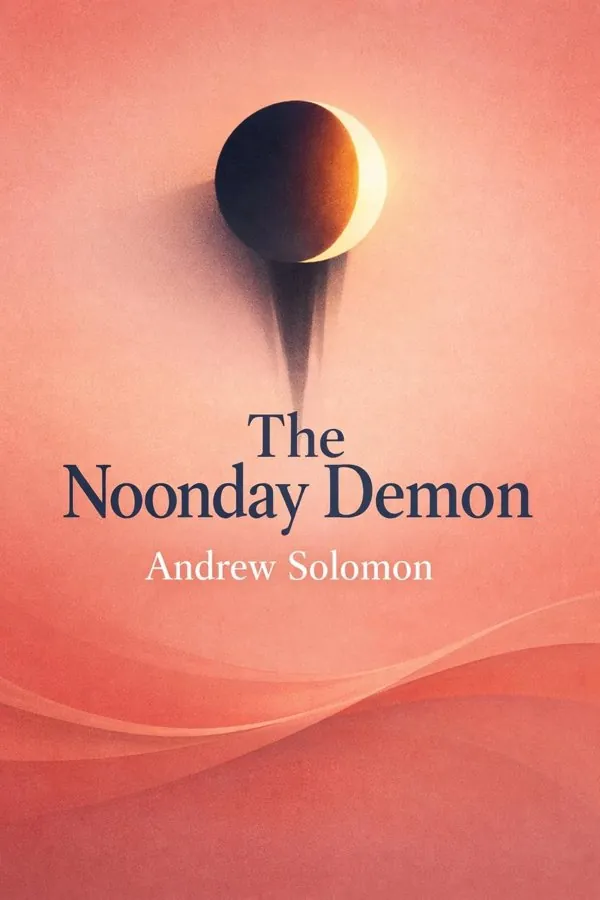
The Noonday Demon: An Atlas of Depression: Summary & Key Insights
 10 min9 chaptersAudio available
Key Takeaways from The Noonday Demon: An Atlas of Depression
A modern diagnosis often feels clinical and isolated, yet depression has haunted human beings for centuries under different names, symbols, and explanations.
One of Solomon’s most powerful insights is that depression is not simply intense sadness; it is an assault on the machinery of being.
There is no single road out of depression, and one of Solomon’s central contributions is his insistence on complexity without despair.
Depression has biological roots, but biology alone cannot explain the full lived reality of the illness.
No one becomes depressed in a vacuum.
What Is The Noonday Demon: An Atlas of Depression About?
The Noonday Demon: An Atlas of Depression by Andrew Solomon is a mental_health book spanning 9 pages. Depression is often described as sadness, but Andrew Solomon shows that this description barely touches the reality of the illness. In The Noonday Demon: An Atlas of Depression, he creates a sweeping, deeply humane portrait of depression as both a private torment and a public crisis. The book blends memoir, investigative journalism, cultural criticism, history, politics, and science, moving from Solomon’s own devastating episodes of depression to broader questions about diagnosis, medication, therapy, suicide, social stigma, and global attitudes toward mental illness. What makes this book so powerful is its refusal to simplify. Solomon does not present depression as a single problem with a single cause or cure; instead, he maps its many forms and meanings with emotional honesty and intellectual rigor. His authority comes not only from extensive research and interviews, but from lived experience. He writes as someone who has suffered, sought treatment, and wrestled with the language needed to explain what depression does to a life. The result is a landmark work that helps readers understand depression more clearly, compassionately, and completely.
This FizzRead summary covers all 9 key chapters of The Noonday Demon: An Atlas of Depression in approximately 10 minutes, distilling the most important ideas, arguments, and takeaways from Andrew Solomon's work. Also available as an audio summary and Key Quotes Podcast.
The Noonday Demon: An Atlas of Depression
Depression is often described as sadness, but Andrew Solomon shows that this description barely touches the reality of the illness. In The Noonday Demon: An Atlas of Depression, he creates a sweeping, deeply humane portrait of depression as both a private torment and a public crisis. The book blends memoir, investigative journalism, cultural criticism, history, politics, and science, moving from Solomon’s own devastating episodes of depression to broader questions about diagnosis, medication, therapy, suicide, social stigma, and global attitudes toward mental illness. What makes this book so powerful is its refusal to simplify. Solomon does not present depression as a single problem with a single cause or cure; instead, he maps its many forms and meanings with emotional honesty and intellectual rigor. His authority comes not only from extensive research and interviews, but from lived experience. He writes as someone who has suffered, sought treatment, and wrestled with the language needed to explain what depression does to a life. The result is a landmark work that helps readers understand depression more clearly, compassionately, and completely.
Who Should Read The Noonday Demon: An Atlas of Depression?
This book is perfect for anyone interested in mental_health and looking to gain actionable insights in a short read. Whether you're a student, professional, or lifelong learner, the key ideas from The Noonday Demon: An Atlas of Depression by Andrew Solomon will help you think differently.
- ✓Readers who enjoy mental_health and want practical takeaways
- ✓Professionals looking to apply new ideas to their work and life
- ✓Anyone who wants the core insights of The Noonday Demon: An Atlas of Depression in just 10 minutes
Want the full summary?
Get instant access to this book summary and 100K+ more with Fizz Moment.
Get Free SummaryAvailable on App Store • Free to download
Key Chapters
A modern diagnosis often feels clinical and isolated, yet depression has haunted human beings for centuries under different names, symbols, and explanations. Solomon begins by showing that before psychiatry defined depressive disorders, earlier cultures described similar states as melancholy, spiritual desolation, black bile, or moral collapse. These older frameworks were imperfect, but they remind us that depression is not a fashionable invention or a contemporary weakness. It is a recurring human experience that societies have interpreted through religion, philosophy, medicine, and art.
This historical perspective matters because it changes how we think about suffering. If depression has appeared across civilizations, then the illness cannot be dismissed as laziness, poor character, or a symptom of modern excess alone. At the same time, history reveals how beliefs shape treatment. In one era, a depressed person might have been told to pray harder; in another, to rest; in another, to take medication. None of these frameworks is complete by itself. Solomon’s point is that every age builds a story around despair, and those stories influence whether sufferers are blamed, pitied, feared, or helped.
In practical terms, this insight encourages humility. Families, clinicians, and patients benefit when they see depression not as a personal failure but as part of a long human struggle to understand the mind. Reading memoir, poetry, and history alongside medical information can make the experience feel less alien and less shameful.
Actionable takeaway: When confronting depression, widen the frame—learn both the medical facts and the historical language of suffering, because understanding reduces stigma and deepens compassion.
One of Solomon’s most powerful insights is that depression is not simply intense sadness; it is an assault on the machinery of being. It changes energy, appetite, memory, concentration, sexuality, hope, and even the ability to imagine improvement. In his personal account, depression arrives gradually, then totally, turning ordinary life into an unbearable burden. Tasks that once felt effortless become impossible. Love remains present in theory but inaccessible in feeling. The world does not only look darker; it becomes stripped of meaning.
This distinction is crucial because many people underestimate depression by comparing it to temporary grief, stress, or disappointment. Solomon makes clear that clinical depression often involves numbness, agitation, self-loathing, paralysis, and cognitive distortion. A person may know intellectually that they are loved and safe, yet feel emotionally condemned and unreachable. This is why advice like “cheer up,” “be grateful,” or “try harder” often deepens the wound. It mistakes incapacity for unwillingness.
In everyday life, recognizing depression’s totalizing nature changes how we respond. Employers may need to see reduced performance as a health issue rather than indifference. Friends may need to keep reaching out even when the depressed person withdraws. Individuals experiencing symptoms may need to treat the condition as urgent, not as something to simply push through.
Actionable takeaway: If depression is affecting sleep, focus, appetite, motivation, or the ability to function, name it as a real illness and seek support early instead of waiting for willpower to fix what willpower alone cannot.
There is no single road out of depression, and one of Solomon’s central contributions is his insistence on complexity without despair. Treatment can include medication, psychotherapy, hospitalization, lifestyle changes, social support, or combinations of all of these. For some people, antidepressants are lifesaving; for others, they are only partially effective, difficult to tolerate, or not enough on their own. Therapy may uncover patterns, trauma, and self-defeating beliefs, but insight does not always immediately relieve symptoms. Recovery, when it comes, is often uneven and requires persistence.
Solomon resists ideological extremes. He rejects both the belief that medication is a shallow shortcut and the belief that biology explains everything. Instead, he presents treatment as practical problem-solving in the face of profound suffering. If a person cannot get out of bed, take care of children, or stop imagining death, the first priority is relief and safety. That may mean trying several medications, changing doctors, using talk therapy, or accepting temporary intensive care. Improvement is not a betrayal of depth; it is the restoration of life.
For readers, this message is immensely useful. Many people give up after one failed medication, one unhelpful therapist, or one disappointing month. Solomon’s broader view suggests that unsuccessful treatment attempts are not proof of hopelessness; they are part of an often messy search for what works for a particular person.
Actionable takeaway: Approach treatment like a structured experiment—track symptoms, stay honest with clinicians, and be willing to adjust the plan rather than concluding too soon that nothing can help.
Depression has biological roots, but biology alone cannot explain the full lived reality of the illness. Solomon explores genetics, brain chemistry, inheritance, and the physiological systems that shape mood. This scientific lens is important because it helps dismantle the myth that depression is merely a bad attitude. Some people are more vulnerable because of family history, neurochemical patterns, inflammatory processes, or other bodily factors that make depressive episodes more likely or more severe.
Yet Solomon also warns against reducing a person to a malfunctioning brain. Two individuals with similar biological vulnerability may experience depression differently depending on childhood, stress, relationships, work, poverty, trauma, and culture. Brain science can illuminate mechanisms, but it does not eliminate meaning. A scan may show altered activity; it cannot fully describe shame after job loss, despair after bereavement, or the cumulative damage of chronic isolation.
This balanced view has practical consequences. It supports medical treatment without turning human suffering into a purely technical problem. For example, a person might benefit from antidepressants while also needing better sleep, reduced substance use, a safer home environment, and therapy for unresolved trauma. Likewise, understanding family history can help someone take symptoms seriously sooner, rather than waiting until a crisis develops.
Actionable takeaway: Treat depression as both biological and personal—use scientific knowledge to guide care, but also examine the life conditions, stressors, and relationships that may be worsening the illness.
It is easy to think of depression as private, but Solomon argues that public policy profoundly shapes who suffers, who gets help, and who falls through the cracks. Insurance systems determine access to therapy and medication. Disability law affects whether people can survive periods of incapacity. Education policy influences mental health support in schools. Poverty, discrimination, war, and social neglect all raise the burden of psychological distress. In this sense, depression is not only a personal tragedy; it is a political issue.
This idea becomes especially important when we consider unequal access. A wealthy person with good insurance may be able to try multiple specialists, medications, and treatment programs. Someone without money or social capital may be told to wait months for care, rely on overburdened clinics, or simply endure. Stigma also has political dimensions: if governments underfund mental health, society sends the message that this suffering matters less.
Solomon does not deny personal responsibility; rather, he insists that individual resilience cannot substitute for humane systems. A nation that treats depression seriously invests in prevention, crisis lines, affordable care, family support, and workplace protections. A nation that ignores these needs leaves vulnerable people to fend for themselves when they are least able to do so.
Actionable takeaway: Think of mental health as a civic issue—support policies, employers, schools, and healthcare structures that make treatment accessible, affordable, and dignified rather than treating recovery as a purely individual task.
One of the book’s hardest truths is that depression can become lethal. Solomon addresses suicide not romantically but with grave clarity: for many depressed people, death does not appear as a dramatic choice but as an imagined escape from unbearable psychic pain. This is why suicidal thinking must be taken seriously even when the person seems high-functioning, articulate, or outwardly calm. The mind in depression can make annihilation feel rational.
A crucial contribution of Solomon’s discussion is that it helps readers understand the difference between passive despair and acute risk while acknowledging that these states can shift quickly. Thoughts like “everyone would be better off without me,” “I can’t do this anymore,” or “I just want it to stop” may be expressions of profound danger, not exaggeration. Shame often keeps people from disclosing these thoughts, especially if they fear judgment, hospitalization, or burdening others.
In practical terms, this chapter pushes readers toward vigilance and directness. Asking someone whether they are thinking about hurting themselves does not plant the idea; it opens space for honesty. Removing access to lethal means, involving professionals, staying physically present, and creating a safety plan can save lives. Compassion must become action.
Solomon’s treatment of suicide is sobering, but not hopeless. He emphasizes that many people who once wanted to die later feel grateful to have survived.
Actionable takeaway: Treat suicidal language as urgent—ask directly, involve qualified help immediately, and prioritize safety over discomfort or secrecy.
Depression tests intimacy because it distorts both giving and receiving love. Solomon examines how partners, parents, children, and friends are affected when one person becomes depressed. The illness often creates painful paradoxes: the depressed person may desperately need closeness yet withdraw from it, crave reassurance yet reject it, or fear abandonment while becoming hard to reach. Loved ones may feel helpless, exhausted, guilty, resentful, or frightened.
What makes this insight valuable is its realism. Solomon does not sentimentalize support. Love matters deeply, but affection alone cannot cure clinical depression. A devoted spouse cannot simply talk someone out of despair. At the same time, relationships can be stabilizing in ways medicine cannot replace. Being accompanied to appointments, reminded to eat, protected from isolation, and treated as fully human during illness can make treatment possible and recovery more sustainable.
This perspective also helps caregivers set boundaries. Supporting a depressed person does not mean accepting abuse, erasing one’s own needs, or becoming the sole treatment plan. Healthy love includes honesty, patience, and the willingness to involve professionals when necessary. It also includes remembering that the illness is influencing behavior, even when the consequences are still painful.
In ordinary life, this means replacing vague support with practical care: offer rides, simplify decisions, schedule check-ins, and ask what is actually useful.
Actionable takeaway: Use love as a steady structure, not a magical solution—show up consistently, encourage treatment, and protect the well-being of both the sufferer and the caregiver.
Although depression is universal, it is never experienced in a purely universal way. Solomon’s global reporting shows that culture shapes how people describe symptoms, what they believe causes suffering, whether they seek help, and what forms treatment takes. In some societies, depression is discussed openly as illness; in others, it appears mainly through bodily complaints, spiritual language, or silence. Stigma also varies: some communities offer collective care, while others attach humiliation to any sign of mental vulnerability.
This cultural lens is especially useful because it prevents narrow assumptions. A Western clinical vocabulary may not capture how another society experiences despair. Someone may say they have headaches, weakness, or a “heavy heart” rather than calling themselves depressed. That does not make the suffering less real. It simply means that diagnosis and treatment must be attentive to local meanings and norms.
The same is true within multicultural societies. Clinicians, families, and readers should be careful not to impose one story about what depression should look like. Effective care may require translators, culturally informed therapists, community leaders, faith-sensitive approaches, or adaptations in how symptoms are assessed.
Solomon’s broader lesson is that human pain is shared, but the language around pain is learned. Compassion improves when we listen across those differences.
Actionable takeaway: When trying to understand depression in yourself or others, pay attention to culture—ask how suffering is being expressed, what explanations feel meaningful, and what forms of help will actually be accepted.
All Chapters in The Noonday Demon: An Atlas of Depression
About the Author
Andrew Solomon is an American writer, lecturer, and advocate whose work explores psychology, identity, politics, and family life. He is best known for The Noonday Demon: An Atlas of Depression, a landmark study of depression that blends memoir with investigative reporting, and Far from the Tree, an acclaimed book about families raising children who differ significantly from them in identity or ability. Solomon’s writing is known for its emotional honesty, intellectual range, and deep compassion for complicated human experiences. He has contributed to major publications and has become a prominent public voice on mental health, resilience, and social inclusion. His authority comes from a rare combination of rigorous research and personal candor, allowing him to write about suffering and difference with unusual depth and humanity.
Get This Summary in Your Preferred Format
Read or listen to the The Noonday Demon: An Atlas of Depression summary by Andrew Solomon anytime, anywhere. FizzRead offers multiple formats so you can learn on your terms — all free.
Available formats: App · Audio · PDF · EPUB — All included free with FizzRead
Download The Noonday Demon: An Atlas of Depression PDF and EPUB Summary
Key Quotes from The Noonday Demon: An Atlas of Depression
“A modern diagnosis often feels clinical and isolated, yet depression has haunted human beings for centuries under different names, symbols, and explanations.”
“One of Solomon’s most powerful insights is that depression is not simply intense sadness; it is an assault on the machinery of being.”
“There is no single road out of depression, and one of Solomon’s central contributions is his insistence on complexity without despair.”
“Depression has biological roots, but biology alone cannot explain the full lived reality of the illness.”
“It is easy to think of depression as private, but Solomon argues that public policy profoundly shapes who suffers, who gets help, and who falls through the cracks.”
Frequently Asked Questions about The Noonday Demon: An Atlas of Depression
The Noonday Demon: An Atlas of Depression by Andrew Solomon is a mental_health book that explores key ideas across 9 chapters. Depression is often described as sadness, but Andrew Solomon shows that this description barely touches the reality of the illness. In The Noonday Demon: An Atlas of Depression, he creates a sweeping, deeply humane portrait of depression as both a private torment and a public crisis. The book blends memoir, investigative journalism, cultural criticism, history, politics, and science, moving from Solomon’s own devastating episodes of depression to broader questions about diagnosis, medication, therapy, suicide, social stigma, and global attitudes toward mental illness. What makes this book so powerful is its refusal to simplify. Solomon does not present depression as a single problem with a single cause or cure; instead, he maps its many forms and meanings with emotional honesty and intellectual rigor. His authority comes not only from extensive research and interviews, but from lived experience. He writes as someone who has suffered, sought treatment, and wrestled with the language needed to explain what depression does to a life. The result is a landmark work that helps readers understand depression more clearly, compassionately, and completely.
You Might Also Like
Big Feelings: How to Be Okay When Things Are Not Okay
Liz Fosslien, Mollie West Duffy
10 min
Creative Arts Therapies Handbook: Art, Music and Dance Therapy Practices for Wellbeing
Susan I. Buchalter
10 min
Emotional First Aid: Healing Rejection, Guilt, Failure, and Other Everyday Hurts
Guy Winch
10 min
Lost Connections: Why You're Depressed and How to Find Hope
Johann Hari
10 min
No Time to Panic: How to Stop Worrying and Embrace Life
Matt Gutman
10 min
Overcoming Mobbing: A Recovery Guide for Workplace Aggression and Bullying
Maureen Duffy, Len Sperry
10 minBrowse by Category
Ready to read The Noonday Demon: An Atlas of Depression?
Get the full summary and 100K+ more books with Fizz Moment.