
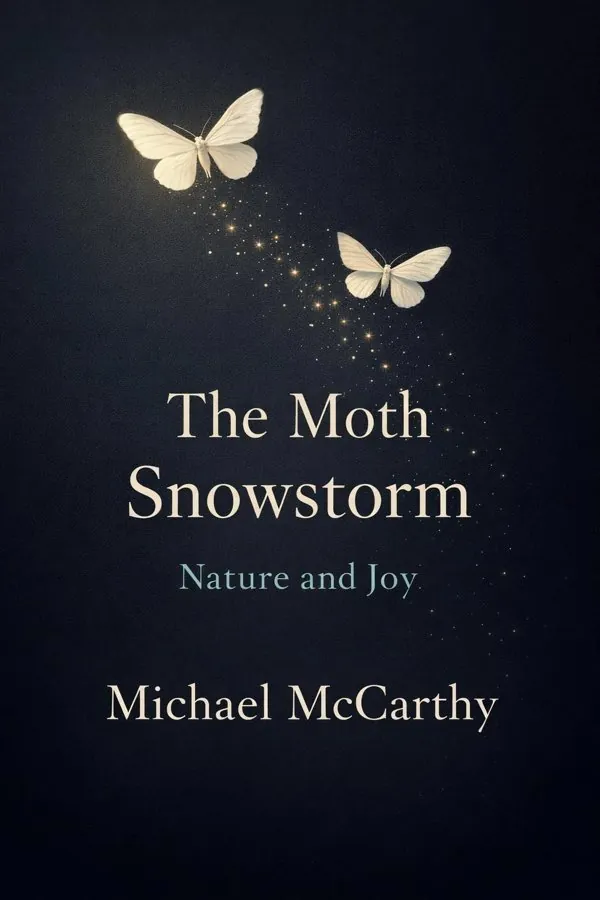
The Moth Snowstorm: Nature and Joy: Summary & Key Insights
 10 min10 chaptersAudio available
What Is The Moth Snowstorm: Nature and Joy About?
The Moth Snowstorm: Nature and Joy by Michael McCarthy is a environment book spanning 10 pages. A lyrical and deeply personal meditation on the natural world, 'The Moth Snowstorm' explores humanity’s emotional and spiritual connection to nature. Michael McCarthy blends memoir, environmental journalism, and philosophical reflection to argue that joy in nature is essential to our well-being and survival. Through vivid recollections of his childhood and decades of reporting on environmental decline, McCarthy makes a passionate case for rekindling our love for the living world.
This FizzRead summary covers all 10 key chapters of The Moth Snowstorm: Nature and Joy in approximately 10 minutes, distilling the most important ideas, arguments, and takeaways from Michael McCarthy's work. Also available as an audio summary and Key Quotes Podcast.
The Moth Snowstorm: Nature and Joy
A lyrical and deeply personal meditation on the natural world, 'The Moth Snowstorm' explores humanity’s emotional and spiritual connection to nature. Michael McCarthy blends memoir, environmental journalism, and philosophical reflection to argue that joy in nature is essential to our well-being and survival. Through vivid recollections of his childhood and decades of reporting on environmental decline, McCarthy makes a passionate case for rekindling our love for the living world.
Who Should Read The Moth Snowstorm: Nature and Joy?
This book is perfect for anyone interested in environment and looking to gain actionable insights in a short read. Whether you're a student, professional, or lifelong learner, the key ideas from The Moth Snowstorm: Nature and Joy by Michael McCarthy will help you think differently.
- ✓Readers who enjoy environment and want practical takeaways
- ✓Professionals looking to apply new ideas to their work and life
- ✓Anyone who wants the core insights of The Moth Snowstorm: Nature and Joy in just 10 minutes
Want the full summary?
Get instant access to this book summary and 100K+ more with Fizz Moment.
Get Free SummaryAvailable on App Store • Free to download
Key Chapters
The image that gives this book its title came from my own memory—a vivid recollection of driving through the darkness as a young man and seeing moths swirl in the beams. It was common, ordinary even, yet astonishing. The air seemed thick with wings, with the weight of life itself. And then, as the years passed, I realized that this spectacle was gone. When modern car headlights illuminated the night, they revealed emptiness. The moth snowstorm had vanished.
That disappearance stands as a metaphor not only for the decline of species but for the dwindling of our awareness. The abundance of life that once enveloped Britain was more than a backdrop; it was a presence that spoke to the soul. Without realizing it, we lived in dialogue with the natural world. The snowstorm of moths was nature’s language—a living expression of plenitude. Its loss is therefore not merely ecological; it is moral and emotional. It signals the erasure of something that once sustained us inwardly.
Recounting this memory was my way of bridging past and present, abundance and absence. The moth snowstorm symbolizes both what was and what might still be regained if we dare to look with love. I use it to evoke the simple truth that our world, once rich beyond imagining, has been quietly thinned by human indifference. Yet it also reminds us of possibility, of the way a single recollection can spark care, and how care can lead to renewal.
When I look back on my childhood along the Wirral coast, it becomes clear that my lifelong devotion to nature was born not of instruction but of encounter. I remember fields and hedgerows alive with songbirds; the bluebells in the woods, the buttercups shining in meadows. These were not just sights—they were experiences of belonging.
My home life bore shadows of grief—my mother suffered a breakdown and was taken from me when I was still a boy. The natural world became both comfort and teacher. Amid personal sorrow, I found solace in its rhythms. The birds and flowers asked nothing of me except attention, and in their company I discovered what psychologists might call resilience but what I prefer to call joy—the simple state of being moved by what is beautiful and alive.
This intimacy shaped everything that followed. For when we love nature early, its decline becomes impossible to ignore. The child’s wonder becomes the adult’s conscience. In sharing my story, I mean to remind you that our emotional bond with nature is not sentimental indulgence. It is formative. It gives meaning and moral texture to existence. Without it, we risk becoming clever but hollow—inhabitants of a world stripped of feeling.
+ 8 more chapters — available in the FizzRead app
All Chapters in The Moth Snowstorm: Nature and Joy
About the Author
Michael McCarthy is a British environmental journalist and author. He served as environment editor for The Independent and The Times, and has received multiple awards for his writing on nature and conservation. His work often focuses on the intersection of ecological loss and human emotion.
Get This Summary in Your Preferred Format
Read or listen to the The Moth Snowstorm: Nature and Joy summary by Michael McCarthy anytime, anywhere. FizzRead offers multiple formats so you can learn on your terms — all free.
Available formats: App · Audio · PDF · EPUB — All included free with FizzRead
Download The Moth Snowstorm: Nature and Joy PDF and EPUB Summary
Key Quotes from The Moth Snowstorm: Nature and Joy
“The image that gives this book its title came from my own memory—a vivid recollection of driving through the darkness as a young man and seeing moths swirl in the beams.”
“When I look back on my childhood along the Wirral coast, it becomes clear that my lifelong devotion to nature was born not of instruction but of encounter.”
Frequently Asked Questions about The Moth Snowstorm: Nature and Joy
The Moth Snowstorm: Nature and Joy by Michael McCarthy is a environment book that explores key ideas across 10 chapters. A lyrical and deeply personal meditation on the natural world, 'The Moth Snowstorm' explores humanity’s emotional and spiritual connection to nature. Michael McCarthy blends memoir, environmental journalism, and philosophical reflection to argue that joy in nature is essential to our well-being and survival. Through vivid recollections of his childhood and decades of reporting on environmental decline, McCarthy makes a passionate case for rekindling our love for the living world.
You Might Also Like

A Life on Our Planet: My Witness Statement and a Vision for the Future
David Attenborough
10 min
A Sky Full Of Birds
Matt Merritt
10 min
Carbon Zero: Imagining Cities That Can Save the Planet
Alex Steffen
10 min
Eaarth: Making a Life on a Tough New Planet
Bill McKibben
10 min
The Social Contract and Environmental Governance
Various Editors
10 min
The Wild Places
Robert Macfarlane
10 minBrowse by Category
Ready to read The Moth Snowstorm: Nature and Joy?
Get the full summary and 100K+ more books with Fizz Moment.