
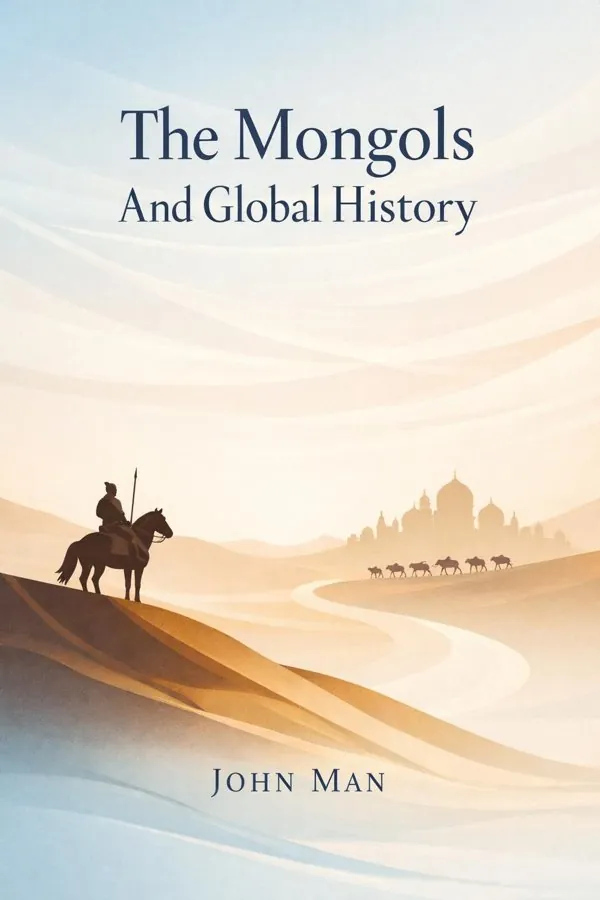
The Mongols And Global History: Summary & Key Insights
by John Man
 10 min8 chaptersAudio available
What Is The Mongols And Global History About?
The Mongols And Global History by John Man is a world_history book spanning 8 pages. This book explores the Mongol Empire’s profound influence on world history, examining how Mongol conquests reshaped trade, culture, and political systems across Eurasia. John Man provides a detailed narrative of the empire’s rise under Genghis Khan and its lasting global legacy.
This FizzRead summary covers all 8 key chapters of The Mongols And Global History in approximately 10 minutes, distilling the most important ideas, arguments, and takeaways from John Man's work. Also available as an audio summary and Key Quotes Podcast.
The Mongols And Global History
This book explores the Mongol Empire’s profound influence on world history, examining how Mongol conquests reshaped trade, culture, and political systems across Eurasia. John Man provides a detailed narrative of the empire’s rise under Genghis Khan and its lasting global legacy.
Who Should Read The Mongols And Global History?
This book is perfect for anyone interested in world_history and looking to gain actionable insights in a short read. Whether you're a student, professional, or lifelong learner, the key ideas from The Mongols And Global History by John Man will help you think differently.
- ✓Readers who enjoy world_history and want practical takeaways
- ✓Professionals looking to apply new ideas to their work and life
- ✓Anyone who wants the core insights of The Mongols And Global History in just 10 minutes
Want the full summary?
Get instant access to this book summary and 100K+ more with Fizz Moment.
Get Free SummaryAvailable on App Store • Free to download
Key Chapters
Before Genghis Khan emerged, Eurasia was a mosaic of kingdoms and tribes bound by fragile ties of trade and diplomacy. The Silk Road, despite its legendary fame, was fragmented and perilous, with merchants negotiating routes plagued by warring states and banditry. China was divided between the Jin, the Tangut Western Xia, and the struggling remnants of Song power in the south. In Central Asia, the Khwarezmian Empire seemed mighty but internally unstable, and across the Islamic world, political authority had fractured.
This pre-Mongol world lacked unity. Cultures flourished, yet boundaries were fiercely guarded. Communication between societies was sporadic. In many ways, Eurasia at the end of the twelfth century was ready for disruption—ready for a force that could redraw the lines connecting east and west.
In my research and journeys, I found that the environment from which the Mongols arose was as critical to their destiny as their leader. The steppe, with its harsh winds and endless horizons, produced a people resilient, mobile, and unburdened by the limitations of settled states. Mongol tribes competed fiercely for grazing land and resources, yet shared a deep cultural backbone—an oral tradition, a common code of honor, and a reverence for spirit and survival. It was from this crucible of hardship that a leader with vision could emerge and wield transformation not only over his kin but the world.
Temüjin, the man we now remember as Genghis Khan, was born into uncertainty and betrayal. His father, Yesügei, was poisoned by rival tribes when Temüjin was still a boy, leaving his family outcast and vulnerable. Yet from these earliest trials came the steel of his character. He learned the necessity of loyalty, the pain of isolation, and the power of negotiation.
Temüjin’s genius lay not just in his ability to command armies, but in his understanding of unity. He saw clearly that the endless tribal feuds weakened the Mongols. He began a campaign not of conquest at first, but of persuasion—binding followers through merit rather than lineage, rewarding courage and skill instead of ancestry. This quiet revolution reshaped Mongol social order.
The transformation of loosely connected tribes into a purposeful confederation was painstaking. Through alliances sealed by marriage and diplomacy, through ruthless deals and decisive battles, Temüjin consolidated power. Each victory brought not just territory but an idea: that Mongols were stronger together. When, in 1206, he was proclaimed 'Genghis Khan'—Universal Ruler—the ceremony was both political and spiritual. It marked the dawn of an empire guided by his vision of discipline, mobility, and divine mandate to rule the world under eternal blue heaven.
+ 6 more chapters — available in the FizzRead app
All Chapters in The Mongols And Global History
About the Author
Get This Summary in Your Preferred Format
Read or listen to the The Mongols And Global History summary by John Man anytime, anywhere. FizzRead offers multiple formats so you can learn on your terms — all free.
Available formats: App · Audio · PDF · EPUB — All included free with FizzRead
Download The Mongols And Global History PDF and EPUB Summary
Key Quotes from The Mongols And Global History
“Before Genghis Khan emerged, Eurasia was a mosaic of kingdoms and tribes bound by fragile ties of trade and diplomacy.”
“Temüjin, the man we now remember as Genghis Khan, was born into uncertainty and betrayal.”
Frequently Asked Questions about The Mongols And Global History
The Mongols And Global History by John Man is a world_history book that explores key ideas across 8 chapters. This book explores the Mongol Empire’s profound influence on world history, examining how Mongol conquests reshaped trade, culture, and political systems across Eurasia. John Man provides a detailed narrative of the empire’s rise under Genghis Khan and its lasting global legacy.
You Might Also Like
The Age of Capital
Eric Hobsbawm
10 min
The Gulag Archipelago
Aleksandr Solzhenitsyn
10 min
Jerusalem: The Biography
Simon Sebag Montefiore
10 min
The Anglo-Saxons
James Campbell
10 min
The Boer War
Thomas Pakenham
10 min
The Industrial Revolutionaries: The Making of the Modern World 1776–1914
Gavin Weightman
10 minBrowse by Category
Ready to read The Mongols And Global History?
Get the full summary and 100K+ more books with Fizz Moment.