

The Mindful Path to Self-Compassion: Freeing Yourself from Destructive Thoughts and Emotions: Summary & Key Insights
 10 min9 chaptersAudio available
Key Takeaways from The Mindful Path to Self-Compassion: Freeing Yourself from Destructive Thoughts and Emotions
One of the book’s most powerful insights is that pain is inevitable, but self-attack is optional.
We often believe our emotions are facts, but mindfulness shows they are experiences that move through us.
Many people find it easier to comfort a friend than to comfort themselves.
The emotions we resist most often become the ones that dominate us.
The inner critic is often loudest when we need support most.
What Is The Mindful Path to Self-Compassion: Freeing Yourself from Destructive Thoughts and Emotions About?
The Mindful Path to Self-Compassion: Freeing Yourself from Destructive Thoughts and Emotions by Christopher K. Germer is a mental_health book spanning 7 pages. Many people assume that self-criticism is the price of growth. We push ourselves, replay mistakes, and believe harsh inner judgment will make us stronger, kinder, or more successful. In The Mindful Path to Self-Compassion, Christopher K. Germer challenges that assumption and offers a more healing alternative: learning to meet pain with awareness, kindness, and emotional balance. The book shows that self-compassion is not self-pity, weakness, or self-indulgence. It is a practical skill that helps us face suffering without being overwhelmed by it. Drawing from psychology, mindfulness practice, and years of clinical work, Germer explains why difficult emotions often intensify when we resist them, and how mindful self-compassion can interrupt cycles of shame, anxiety, and emotional reactivity. He combines research-backed insights with accessible exercises readers can apply in everyday life, from moments of embarrassment to deeper experiences of grief, fear, and loneliness. As a clinical psychologist, Harvard Medical School lecturer, and leading voice in compassion-based therapy, Germer brings both scientific credibility and humane wisdom. The result is a grounded, encouraging guide to relating to yourself with the same care you would offer someone you love.
This FizzRead summary covers all 9 key chapters of The Mindful Path to Self-Compassion: Freeing Yourself from Destructive Thoughts and Emotions in approximately 10 minutes, distilling the most important ideas, arguments, and takeaways from Christopher K. Germer's work. Also available as an audio summary and Key Quotes Podcast.
The Mindful Path to Self-Compassion: Freeing Yourself from Destructive Thoughts and Emotions
Many people assume that self-criticism is the price of growth. We push ourselves, replay mistakes, and believe harsh inner judgment will make us stronger, kinder, or more successful. In The Mindful Path to Self-Compassion, Christopher K. Germer challenges that assumption and offers a more healing alternative: learning to meet pain with awareness, kindness, and emotional balance. The book shows that self-compassion is not self-pity, weakness, or self-indulgence. It is a practical skill that helps us face suffering without being overwhelmed by it.
Drawing from psychology, mindfulness practice, and years of clinical work, Germer explains why difficult emotions often intensify when we resist them, and how mindful self-compassion can interrupt cycles of shame, anxiety, and emotional reactivity. He combines research-backed insights with accessible exercises readers can apply in everyday life, from moments of embarrassment to deeper experiences of grief, fear, and loneliness. As a clinical psychologist, Harvard Medical School lecturer, and leading voice in compassion-based therapy, Germer brings both scientific credibility and humane wisdom. The result is a grounded, encouraging guide to relating to yourself with the same care you would offer someone you love.
Who Should Read The Mindful Path to Self-Compassion: Freeing Yourself from Destructive Thoughts and Emotions?
This book is perfect for anyone interested in mental_health and looking to gain actionable insights in a short read. Whether you're a student, professional, or lifelong learner, the key ideas from The Mindful Path to Self-Compassion: Freeing Yourself from Destructive Thoughts and Emotions by Christopher K. Germer will help you think differently.
- ✓Readers who enjoy mental_health and want practical takeaways
- ✓Professionals looking to apply new ideas to their work and life
- ✓Anyone who wants the core insights of The Mindful Path to Self-Compassion: Freeing Yourself from Destructive Thoughts and Emotions in just 10 minutes
Want the full summary?
Get instant access to this book summary and 100K+ more with Fizz Moment.
Get Free SummaryAvailable on App Store • Free to download
Key Chapters
One of the book’s most powerful insights is that pain is inevitable, but self-attack is optional. When something goes wrong, many people instinctively respond with blame: “What’s wrong with me?” “Why can’t I handle this?” “I always fail.” Germer argues that this reflex feels responsible, but in reality it adds a second layer of suffering to the original wound. Instead of helping us recover, self-criticism often drains motivation, narrows perspective, and intensifies shame.
This pattern usually begins early. Many of us learn that approval must be earned and that mistakes should be met with pressure rather than care. Over time, the inner critic starts to sound like a protector, promising improvement through harshness. But research and clinical experience suggest the opposite: people grow more effectively when they feel safe enough to acknowledge failure without collapsing into self-hatred.
Germer invites readers to see self-criticism not as discipline, but as a habit of threat. If you spill coffee before an important meeting, forget a deadline, or say something awkward in a conversation, the critical mind quickly turns a small incident into a judgment about your whole identity. Self-compassion interrupts that spiral by replacing condemnation with honesty and warmth: “This is hard.” “I made a mistake.” “I’m still worthy of care.”
This shift does not excuse harmful behavior or lower standards. It simply creates an inner climate where change becomes possible. We are more likely to learn from pain when we are not busy defending ourselves from our own attacks.
Actionable takeaway: The next time you notice self-criticism, pause and ask, “What hurts right now?” Respond to that pain directly with one kind sentence, such as, “This is difficult, and I can support myself through it.”
We often believe our emotions are facts, but mindfulness shows they are experiences that move through us. Germer describes mindfulness as the capacity to notice thoughts, feelings, and bodily sensations without immediately trying to suppress, fix, or obey them. This simple shift—from being lost in experience to observing experience—creates crucial psychological space.
When difficult emotions arise, the usual tendency is to react automatically. Anxiety triggers avoidance. Shame triggers withdrawal. Anger triggers defensiveness. Mindfulness interrupts this chain by helping us notice what is happening in real time. Instead of “I am a failure,” mindfulness helps us recognize, “A thought about failure is arising.” Instead of “I can’t bear this feeling,” we begin to see, “There is tightness in my chest, fear in my mind, and an urge to escape.”
This distinction matters because awareness weakens fusion. Once we can witness inner events, we are less likely to be controlled by them. Germer emphasizes that mindfulness is not cold detachment. It is intimate attention, the willingness to stay present with life as it is. In daily life, this might mean noticing your clenched jaw during a stressful email, recognizing sadness while washing dishes, or taking one conscious breath before reacting in an argument.
Mindfulness also helps us detect the early signs of emotional overwhelm. The sooner we notice tension, rumination, or numbness, the easier it becomes to respond with care instead of escalation. Over time, this practice builds steadiness and trust in our capacity to face experience.
Actionable takeaway: Choose one routine activity today—walking, drinking tea, or checking messages—and practice being fully present for one minute. Notice sensations, thoughts, and emotions without judgment, simply naming what is here.
Many people find it easier to comfort a friend than to comfort themselves. Germer argues that this gap reveals how deeply we misunderstand compassion. We assume kindness must be earned, or that offering warmth to ourselves will make us complacent. In fact, self-compassion is the practice of relating to our own suffering with the same concern, patience, and care we naturally extend to others.
Germer presents self-compassion as having three core elements: mindfulness, common humanity, and kindness. Mindfulness helps us notice suffering without exaggerating or denying it. Common humanity reminds us that imperfection is part of being human, not proof that we are uniquely broken. Kindness is the emotional tone that softens our response and makes healing possible.
Imagine missing an important opportunity and feeling crushed. A self-critical response says, “You ruined everything.” A self-compassionate response says, “This really hurts. Anyone would feel disappointed. Let me take care of myself right now.” The second response does not remove accountability; it removes unnecessary cruelty.
Germer emphasizes that self-compassion often feels unfamiliar at first, especially for people who have survived criticism, neglect, or trauma. Warmth may even feel uncomfortable or undeserved. That is why the practice begins gently: with a hand on the heart, a soothing phrase, or simply the intention not to abandon yourself.
As self-compassion develops, it becomes an internal refuge. It allows us to fail, grieve, feel insecure, and still remain connected to our worth. Rather than waiting until we are perfect to be kind to ourselves, we learn that kindness is what helps us grow.
Actionable takeaway: When you are struggling, ask, “What would I say to a dear friend right now?” Then offer those exact words to yourself, slowly and sincerely.
The emotions we resist most often become the ones that dominate us. Germer explains that many forms of psychological suffering come not only from fear, sadness, anger, or shame themselves, but from our desperate attempts to push them away. We distract ourselves, numb out, overanalyze, or force positivity. These strategies may bring temporary relief, but they often increase distress in the long run.
Self-compassion offers a different response: turning toward difficult emotions with curiosity and tenderness. This does not mean indulging every feeling or acting on every impulse. It means acknowledging what is present and allowing it enough room to be felt safely. When sadness arises, for example, we can notice the heaviness in the body, the story in the mind, and the longing underneath it. When shame appears, we can recognize the urge to hide and respond with reassurance rather than punishment.
Germer often encourages readers to anchor themselves in the body. Emotions are not just mental events; they are physical experiences. Anxiety may appear as fluttering in the stomach, grief as pressure in the throat, anger as heat in the face. By attending to sensations directly, we reduce the tendency to get lost in catastrophic thinking.
Practical applications include pausing during conflict instead of reacting instantly, sitting quietly with loneliness instead of reaching for constant distraction, or naming embarrassment after making a mistake instead of pretending it did not matter. These moments of emotional honesty build resilience.
The goal is not to eliminate difficult feelings but to develop a new relationship with them. Emotions become more workable when they are met with acceptance and care.
Actionable takeaway: The next time a strong emotion appears, pause and ask, “Where do I feel this in my body?” Stay with the sensation for three breaths and silently say, “This too belongs.”
The inner critic is often loudest when we need support most. It appears after mistakes, rejection, conflict, or vulnerability, and it usually claims to be helping: “If I stay hard on myself, I won’t mess up again.” Germer shows that beneath this voice is often fear—the fear of failure, abandonment, humiliation, or loss of control. In that sense, the critic is less an enemy than a misguided protector.
This reframing is important because trying to destroy the inner critic can become another form of inner warfare. Instead, Germer suggests getting curious about it. What is the critic trying to prevent? What does it fear would happen if it stopped attacking? Often, the answer reveals an unmet need for safety, competence, or belonging.
For example, someone who harshly replays every social interaction may discover a deep fear of rejection. A perfectionist who cannot rest may uncover a belief that love depends on achievement. Once these fears are seen clearly, compassion can be directed not only toward the wounded part of the self, but even toward the critic itself.
Practical methods include giving the critic a name, writing down its common messages, and answering them with a kinder, wiser voice. If the critic says, “You’re so weak for feeling this,” the compassionate response might be, “Feeling pain does not make me weak. It makes me human.” Over time, the critic loses some of its authority because it is no longer the only voice in the room.
Transformation does not mean the critic disappears forever. It means we stop automatically believing it and start responding from a deeper place of wisdom.
Actionable takeaway: Write down one recurring self-critical thought and respond to it in writing from the perspective of a compassionate mentor who understands your fear but refuses to shame you.
Self-compassion is not a skill reserved for meditation cushions, therapy offices, or moments of crisis. Germer emphasizes that its true power emerges in ordinary life, woven into the small interactions and disappointments of each day. The practice becomes real when it meets traffic, parenting stress, body image concerns, work pressure, relationship tension, and the thousand moments when we feel not good enough.
This means self-compassion must be portable. It can look like softening your shoulders after reading a harsh message, excusing yourself for a brief breathing pause before a presentation, or acknowledging exhaustion instead of pushing through on pure willpower. It may involve speaking more gently to yourself when looking in the mirror, setting a boundary rather than people-pleasing, or choosing rest without guilt.
Germer stresses repetition over intensity. A single profound insight may inspire us, but lasting change usually comes from many small compassionate moments. Brief practices matter: placing a hand on the heart, saying, “May I be kind to myself,” taking three mindful breaths, or remembering that others struggle too. These micro-practices gradually reshape emotional habits.
Integrating mindfulness and compassion into daily life also means noticing when we leave ourselves. We abandon ourselves when we ignore pain, override limits, or adopt impossible standards. Returning to ourselves can be surprisingly simple: slowing down, telling the truth internally, and responding with warmth.
The more frequently self-compassion is practiced in ordinary situations, the more available it becomes during major stress. Daily life becomes both the classroom and the training ground.
Actionable takeaway: Pick one recurring stress point in your day—commuting, email, meals, bedtime—and attach a 30-second self-compassion practice to it so kindness becomes part of your routine.
Resilience is often described as toughness, but Germer presents a more humane definition: the ability to remain connected to ourselves during difficulty. Real resilience is not emotional numbness or relentless positivity. It is the capacity to bend without breaking, to feel deeply without being destroyed, and to recover with wisdom rather than self-contempt.
Self-compassion strengthens resilience because it reduces the secondary damage caused by shame and resistance. When setbacks happen—and they always do—people who respond with kindness are more likely to regulate their emotions, seek support, and learn from the experience. Those who respond with harsh self-judgment often become stuck in avoidance, rumination, or hopelessness.
Consider the difference after a personal disappointment such as a breakup, job rejection, or health setback. A self-critical reaction says, “This proves I’m not enough.” A self-compassionate reaction says, “This hurts deeply, and I need care while I heal.” The second response creates emotional stability without denying reality. It also makes courage possible, because when we know we will not punish ourselves for falling, we become more willing to try again.
Germer also links resilience to common humanity. Remembering that suffering is shared reduces isolation, one of the most painful aspects of distress. We begin to understand that struggle is not a sign of failure but part of the human condition.
In this way, compassion does not merely soothe pain in the moment; it changes our long-term relationship to adversity. We become sturdier not because life gets easier, but because we stop turning against ourselves when life gets hard.
Actionable takeaway: After your next setback, resist the urge to evaluate your worth. Instead, ask, “What would help me recover wisely from this?” Then take one supportive step.
Suffering often comes with a hidden message: “It’s just me.” Germer identifies this sense of isolation as one of the most painful features of emotional struggle. When we feel ashamed, anxious, or inadequate, we tend to imagine that everyone else is coping better, living better, or feeling more secure. This illusion intensifies distress because it turns ordinary human pain into evidence of personal defect.
A key part of self-compassion is recognizing common humanity—the understanding that imperfection, loss, confusion, and emotional pain are built into the human experience. This perspective does not minimize individual suffering. Rather, it places suffering in a wider context that makes it more bearable. Instead of “I’m broken because I’m struggling,” the story becomes, “Struggling is part of being alive.”
This shift has practical effects. A parent overwhelmed by exhaustion may stop seeing their fatigue as failure and start seeing it as a common strain of caregiving. A student frozen by self-doubt may realize that insecurity often accompanies learning. Someone grieving may find relief in knowing that love and loss are inseparable parts of life.
Germer encourages readers to use language that reinforces connection. Phrases like “This is a moment of suffering” and “Others feel this too” remind us that pain need not exile us from humanity. In fact, it can deepen our connection to others by softening judgment and increasing empathy.
When we no longer interpret pain as proof of unworthiness, we become less defensive and more open. That openness supports healing, intimacy, and courage.
Actionable takeaway: When you feel ashamed or alone in your struggle, say to yourself, “I am not the only one. Many people know this feeling.” Let that reminder reduce the pressure to be uniquely flawless.
Profound emotional change rarely happens through insight alone. Germer emphasizes that self-compassion is a trainable capacity, developed through repetition, patience, and willingness to begin again. For many readers, this is encouraging: you do not need a perfect mindset before you can heal. You need practices that slowly reshape how you relate to pain.
These practices can be formal or informal. Formal practices include loving-kindness meditation, affectionate breathing, compassionate body scans, and reflective journaling. Informal practices include speaking kindly to yourself after a mistake, taking a soothing touch break during stress, or pausing to acknowledge sadness before moving on with your day. What matters most is consistency and sincerity, not performance.
Germer also warns against turning self-compassion into another achievement project. If you judge yourself for not being calm, kind, or mindful enough, the practice has been pulled back into the logic of self-improvement through pressure. Self-compassion grows best in an atmosphere of non-striving. Some days you will feel warmth; other days you may feel numb, resistant, or irritated. All of that can be included in the practice.
Over time, small acts of inner kindness accumulate. Neural pathways shift. Emotional reactivity softens. The body learns that distress does not have to lead to self-abandonment. This is one of the book’s most hopeful messages: change does not require becoming a different person. It begins with meeting the person you already are more gently.
Actionable takeaway: Start with one simple practice you can sustain for a week—such as three mindful breaths with a hand on your heart each morning—and focus on repetition rather than intensity.
All Chapters in The Mindful Path to Self-Compassion: Freeing Yourself from Destructive Thoughts and Emotions
About the Author
Christopher K. Germer, PhD, is a clinical psychologist, teacher, and internationally recognized authority on mindfulness and self-compassion. He serves as a lecturer on psychiatry at Harvard Medical School and is a founding member of the Institute for Meditation and Psychotherapy. Germer is best known for helping integrate contemplative practices with modern psychotherapy, making mindfulness and compassion-based approaches accessible to both clinicians and general readers. His work draws on decades of clinical experience, meditation practice, and research into emotional healing. Through his books, workshops, and professional training programs, he has played a major role in popularizing self-compassion as a practical tool for reducing shame, anxiety, and self-criticism. His writing is valued for combining scientific credibility with warmth, clarity, and deep psychological insight.
Get This Summary in Your Preferred Format
Read or listen to the The Mindful Path to Self-Compassion: Freeing Yourself from Destructive Thoughts and Emotions summary by Christopher K. Germer anytime, anywhere. FizzRead offers multiple formats so you can learn on your terms — all free.
Available formats: App · Audio · PDF · EPUB — All included free with FizzRead
Download The Mindful Path to Self-Compassion: Freeing Yourself from Destructive Thoughts and Emotions PDF and EPUB Summary
Key Quotes from The Mindful Path to Self-Compassion: Freeing Yourself from Destructive Thoughts and Emotions
“One of the book’s most powerful insights is that pain is inevitable, but self-attack is optional.”
“We often believe our emotions are facts, but mindfulness shows they are experiences that move through us.”
“Many people find it easier to comfort a friend than to comfort themselves.”
“The emotions we resist most often become the ones that dominate us.”
“The inner critic is often loudest when we need support most.”
Frequently Asked Questions about The Mindful Path to Self-Compassion: Freeing Yourself from Destructive Thoughts and Emotions
The Mindful Path to Self-Compassion: Freeing Yourself from Destructive Thoughts and Emotions by Christopher K. Germer is a mental_health book that explores key ideas across 9 chapters. Many people assume that self-criticism is the price of growth. We push ourselves, replay mistakes, and believe harsh inner judgment will make us stronger, kinder, or more successful. In The Mindful Path to Self-Compassion, Christopher K. Germer challenges that assumption and offers a more healing alternative: learning to meet pain with awareness, kindness, and emotional balance. The book shows that self-compassion is not self-pity, weakness, or self-indulgence. It is a practical skill that helps us face suffering without being overwhelmed by it. Drawing from psychology, mindfulness practice, and years of clinical work, Germer explains why difficult emotions often intensify when we resist them, and how mindful self-compassion can interrupt cycles of shame, anxiety, and emotional reactivity. He combines research-backed insights with accessible exercises readers can apply in everyday life, from moments of embarrassment to deeper experiences of grief, fear, and loneliness. As a clinical psychologist, Harvard Medical School lecturer, and leading voice in compassion-based therapy, Germer brings both scientific credibility and humane wisdom. The result is a grounded, encouraging guide to relating to yourself with the same care you would offer someone you love.
You Might Also Like

Big Feelings: How to Be Okay When Things Are Not Okay
Liz Fosslien, Mollie West Duffy
10 min
Creative Arts Therapies Handbook: Art, Music and Dance Therapy Practices for Wellbeing
Susan I. Buchalter
10 min
Emotional First Aid: Healing Rejection, Guilt, Failure, and Other Everyday Hurts
Guy Winch
10 min
Lost Connections: Why You're Depressed and How to Find Hope
Johann Hari
10 min
No Time to Panic: How to Stop Worrying and Embrace Life
Matt Gutman
10 min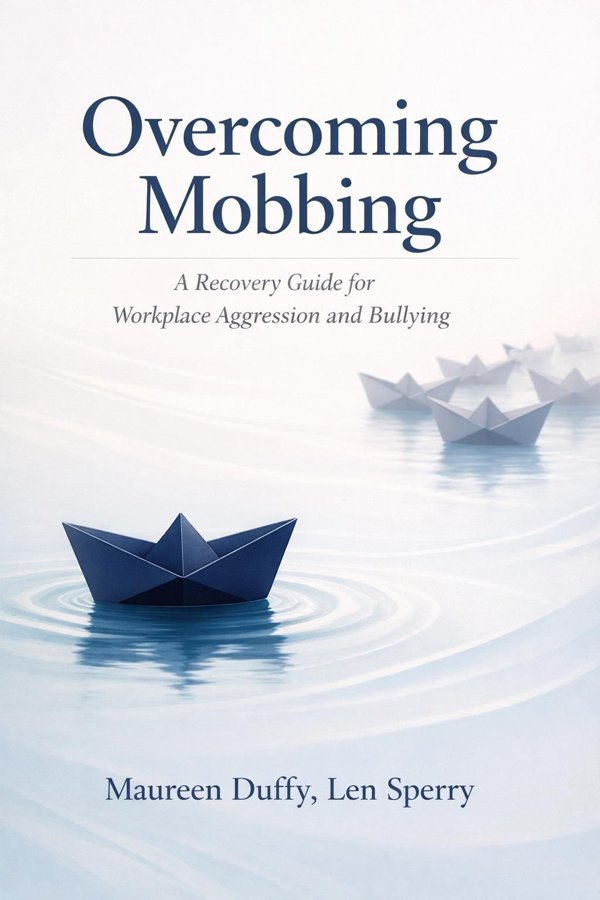
Overcoming Mobbing: A Recovery Guide for Workplace Aggression and Bullying
Maureen Duffy, Len Sperry
10 minBrowse by Category
Ready to read The Mindful Path to Self-Compassion: Freeing Yourself from Destructive Thoughts and Emotions?
Get the full summary and 100K+ more books with Fizz Moment.