
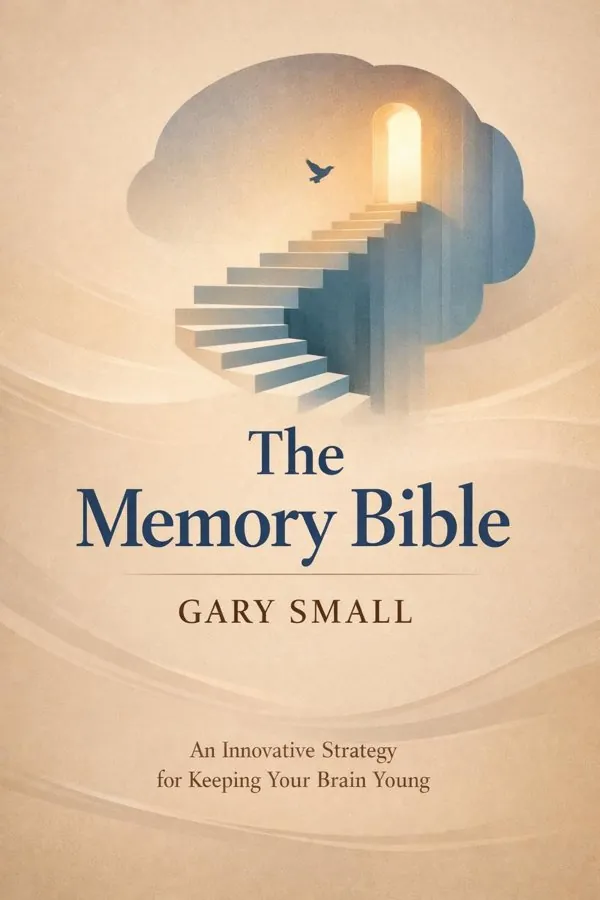
The Memory Bible: An Innovative Strategy for Keeping Your Brain Young: Summary & Key Insights
by Gary Small
 10 min9 chaptersAudio available
Key Takeaways from The Memory Bible: An Innovative Strategy for Keeping Your Brain Young
One of the most important ideas in this book is that occasional forgetfulness does not automatically signal serious decline.
A powerful brain program does not depend on a single miracle supplement or one special puzzle.
The brain is economical: it strengthens what it uses and lets underused pathways weaken.
Forgetfulness is often less about weak memory than about overloaded attention.
The brain may represent only a small portion of body weight, but it is one of the body’s most energy-demanding organs.
What Is The Memory Bible: An Innovative Strategy for Keeping Your Brain Young About?
The Memory Bible: An Innovative Strategy for Keeping Your Brain Young by Gary Small is a neuroscience book spanning 8 pages. Memory feels personal, almost mysterious, yet Gary Small argues that it is also highly trainable. In The Memory Bible, he brings together neuroscience, psychiatry, aging research, and practical self-care to show that keeping the brain sharp is not a matter of luck. It is the result of habits. Rather than treating forgetfulness as an unavoidable consequence of getting older, Small presents a structured program for protecting attention, improving recall, and reducing the everyday lapses that make people fear cognitive decline. What makes the book valuable is its blend of scientific credibility and usable advice. Small is a psychiatrist, a professor at UCLA, and a leading researcher on memory and aging. He translates brain science into actions readers can actually take: mental workouts, stress-reduction techniques, dietary adjustments, physical exercise, social engagement, and smart use of technology. The result is both reassuring and motivating. The book matters because it reframes brain aging as something people can influence. For anyone who wants to stay mentally agile, think more clearly, and preserve cognitive vitality over time, The Memory Bible offers a practical roadmap grounded in research rather than hype.
This FizzRead summary covers all 9 key chapters of The Memory Bible: An Innovative Strategy for Keeping Your Brain Young in approximately 10 minutes, distilling the most important ideas, arguments, and takeaways from Gary Small's work. Also available as an audio summary and Key Quotes Podcast.
The Memory Bible: An Innovative Strategy for Keeping Your Brain Young
Memory feels personal, almost mysterious, yet Gary Small argues that it is also highly trainable. In The Memory Bible, he brings together neuroscience, psychiatry, aging research, and practical self-care to show that keeping the brain sharp is not a matter of luck. It is the result of habits. Rather than treating forgetfulness as an unavoidable consequence of getting older, Small presents a structured program for protecting attention, improving recall, and reducing the everyday lapses that make people fear cognitive decline.
What makes the book valuable is its blend of scientific credibility and usable advice. Small is a psychiatrist, a professor at UCLA, and a leading researcher on memory and aging. He translates brain science into actions readers can actually take: mental workouts, stress-reduction techniques, dietary adjustments, physical exercise, social engagement, and smart use of technology. The result is both reassuring and motivating. The book matters because it reframes brain aging as something people can influence. For anyone who wants to stay mentally agile, think more clearly, and preserve cognitive vitality over time, The Memory Bible offers a practical roadmap grounded in research rather than hype.
Who Should Read The Memory Bible: An Innovative Strategy for Keeping Your Brain Young?
This book is perfect for anyone interested in neuroscience and looking to gain actionable insights in a short read. Whether you're a student, professional, or lifelong learner, the key ideas from The Memory Bible: An Innovative Strategy for Keeping Your Brain Young by Gary Small will help you think differently.
- ✓Readers who enjoy neuroscience and want practical takeaways
- ✓Professionals looking to apply new ideas to their work and life
- ✓Anyone who wants the core insights of The Memory Bible: An Innovative Strategy for Keeping Your Brain Young in just 10 minutes
Want the full summary?
Get instant access to this book summary and 100K+ more with Fizz Moment.
Get Free SummaryAvailable on App Store • Free to download
Key Chapters
One of the most important ideas in this book is that occasional forgetfulness does not automatically signal serious decline. Many people misinterpret normal age-related changes in attention and recall as proof that their brains are failing. Gary Small challenges that fear by explaining that memory is not a single fixed ability. It is a collection of processes involving attention, storage, emotional relevance, and retrieval. When any one of these steps is disrupted, memory appears weaker even if the brain remains fundamentally healthy.
Small explains that as we age, some mental processes become slower, especially recalling names, multitasking, or learning unfamiliar systems under pressure. But slower processing is not the same as incapacity. The brain retains plasticity throughout life, meaning it can continue to form new connections and strengthen old ones. That makes lifestyle choices highly significant. Sleep, exercise, stress levels, diet, and intellectual engagement all influence how efficiently neurons communicate.
This perspective is liberating because it shifts the conversation from fear to management. Instead of asking, “Am I losing my mind?” readers can ask, “What conditions help my brain perform better?” For example, someone who forgets appointments may not have a memory disease at all; they may be distracted, sleep-deprived, chronically stressed, or overcommitted. Improving these inputs can improve recall.
The practical lesson is to observe patterns before assuming the worst. Notice when memory works well and when it fails. Are lapses linked to fatigue, anxiety, or overload? Treat memory as a system that can be supported. Actionable takeaway: stop viewing every memory slip as irreversible decline, and begin tracking the daily habits that most affect your attention and recall.
A powerful brain program does not depend on a single miracle supplement or one special puzzle. Small’s core framework is broader and more realistic: lasting memory improvement comes from the interaction of four pillars—mental exercise, nutrition, physical activity, and stress management. Each one supports the others, and neglecting one can weaken the whole system.
Mental exercise helps keep neural circuits active. Nutrition provides the biological raw materials the brain needs to function efficiently. Physical activity improves circulation, oxygen delivery, and mood, all of which influence cognition. Stress management protects the brain from the damaging effects of chronic cortisol exposure, which can interfere with concentration and memory retrieval. Together, these pillars create the conditions for brain resilience.
Small’s approach stands out because it is integrative. Someone who does crossword puzzles but lives on processed food, never exercises, and stays under constant stress should not expect ideal cognitive performance. Likewise, a physically fit person who never challenges their mind may also plateau. The point is balance. The healthiest memory strategy is not extreme specialization but consistent support across multiple dimensions of life.
A simple example is a person who begins walking daily, adds more antioxidant-rich foods, practices brief breathing exercises, and learns a new skill such as photography or a language app. None of these changes alone is magical, but together they produce momentum. Better sleep, improved mood, stronger attention, and more confidence often follow.
Actionable takeaway: design a weekly memory plan with one habit from each pillar—for example, three brisk walks, one daily mental challenge, more brain-friendly meals, and ten minutes of stress reduction each day.
The brain is economical: it strengthens what it uses and lets underused pathways weaken. That is why mental stimulation matters so much. Small argues that cognitive training is not about becoming a trivia champion; it is about keeping neural networks flexible, responsive, and efficient. When the brain is challenged in novel ways, it must adapt, and that adaptation helps preserve mental sharpness.
Not all mental activity is equally valuable. Passive habits, such as watching familiar television for hours, demand little from the brain. More effective forms of stimulation require focus, novelty, and effort. Learning to play an instrument, practicing memory drills, reading challenging material, doing strategic games, or acquiring digital skills all force the brain to encode, retrieve, and manipulate information. Variety is especially important because different activities recruit different functions such as language, spatial reasoning, attention, and executive control.
Small also highlights that memory improves when people use specific techniques rather than relying on repetition alone. Visualization, association, chunking, and linking new information to emotionally meaningful images all help retention. For example, if you meet someone named Rose, imagine them handing you a red rose. That vivid image gives the brain an extra retrieval cue.
Mental training works best when it is enjoyable and sustainable. A person who dreads brain exercises will quit quickly. But someone who chooses personally meaningful challenges—gardening plans, family history research, learning chess, or using mnemonic techniques in daily life—will engage more consistently.
Actionable takeaway: spend at least 15 to 20 minutes a day on a mentally demanding activity that is both new and interesting, and pair it with one memory technique such as visualization or association.
Forgetfulness is often less about weak memory than about overloaded attention. Small emphasizes that stress is one of the most underestimated causes of memory problems. When the mind is preoccupied by deadlines, worry, conflict, or chronic tension, attention narrows in unhealthy ways. Information is either not encoded clearly in the first place or becomes harder to retrieve later.
At the biological level, persistent stress raises levels of hormones such as cortisol. In short bursts, these responses can be useful. But when stress becomes chronic, they can impair concentration, disrupt sleep, increase irritability, and interfere with the brain systems involved in memory. This is why people under pressure often walk into a room and forget why they are there, lose track of names, or repeatedly misplace objects.
Small does not treat emotional health as separate from cognitive health. Anxiety, depression, loneliness, and unresolved emotional strain all consume mental resources. A calm mind remembers better because it can attend better. Practical methods such as deep breathing, meditation, structured relaxation, journaling, time management, and therapy can all support memory by reducing internal noise.
Consider someone who constantly multitasks through emails, family obligations, and financial concerns. Their brain may not be failing; it may be operating under chronic overload. If they build brief pauses into the day, sleep more consistently, and learn to reset after stressful moments, memory often improves naturally.
Actionable takeaway: identify your biggest daily stress trigger and pair it with a specific calming response, such as five slow breaths, a short walk, or a ten-minute meditation, to protect attention before memory slips occur.
The brain may represent only a small portion of body weight, but it is one of the body’s most energy-demanding organs. Small argues that what people eat directly affects how well they think, remember, and age cognitively. Nutrition is not merely about long-term disease prevention; it influences daily mental clarity, mood stability, and sustained attention.
The book points readers toward a brain-supportive eating pattern rich in antioxidants, healthy fats, vitamins, minerals, and steady energy sources. Fruits and vegetables help reduce oxidative stress, which can damage cells over time. Fish and other sources of omega-3 fatty acids support neuronal membranes. Whole grains and balanced meals help avoid extreme blood sugar swings that can impair concentration. Hydration also matters, since even mild dehydration can affect alertness and mental performance.
Small is also careful about the allure of supplements. While some may help in specific cases, he does not present pills as substitutes for an overall healthy lifestyle. Good nutrition works best as part of a larger system that includes movement, sleep, and emotional balance. Readers are encouraged to be skeptical of exaggerated claims and to focus first on sustainable dietary patterns.
A practical application might include replacing a sugary breakfast with oatmeal, berries, nuts, and yogurt, or choosing fish and leafy greens more often than processed meals. These are not glamorous interventions, but they create the metabolic stability the brain needs.
Actionable takeaway: choose one brain-friendly upgrade for each meal this week, such as adding colorful vegetables, reducing highly processed foods, increasing water intake, or including healthy fats that support cognitive function.
Many people think of memory as a purely mental issue, but Small makes clear that brain health is inseparable from physical health. Exercise is one of the most reliable, evidence-based tools for preserving cognition because it improves blood flow, supports cardiovascular function, boosts mood, and may encourage the growth and maintenance of neural connections.
Physical activity helps the brain in several ways at once. It increases oxygen and nutrient delivery, reduces risk factors linked to cognitive decline, and supports better sleep and emotional regulation. It also combats the lethargy and low mood that often reduce motivation for mental effort. In this sense, exercise creates a foundation on which other memory practices can work better.
Importantly, Small’s message is practical rather than extreme. Readers do not need to become athletes. Regular walking, swimming, cycling, stretching, dance classes, or strength training can all contribute. The best exercise plan is one that can be maintained consistently. For older adults especially, balance and flexibility work may also reduce fall risk and preserve confidence, which indirectly supports active engagement with life.
The psychological benefits matter too. A brisk walk can clear mental fog, lower tension, and restore the focus needed to remember tasks or absorb new information. Someone who takes a morning walk before work may notice they are less scattered and more mentally available all day.
Actionable takeaway: schedule movement like a medication for your brain—aim for regular exercise most days of the week, even if you start with just 20 to 30 minutes of walking and gradually build from there.
Modern technology is both a cognitive aid and a cognitive trap. Small recognizes that digital tools can make life more organized, but he also warns that overreliance on them can weaken attention and increase mental fragmentation. The issue is not whether technology is good or bad. It is whether it is being used deliberately.
Calendars, reminder apps, contact lists, and note systems can compensate for ordinary forgetfulness and reduce cognitive load. For busy adults, these tools can be enormously helpful. Setting recurring reminders for medications, appointments, or birthdays is not a sign of weakness; it is a form of intelligent adaptation. External supports free the brain for higher-level thinking.
At the same time, constant notifications, shallow browsing, and perpetual multitasking train the mind to switch focus rapidly rather than sustain it. This can impair deep encoding, which is essential for memory. If you never fully attend to a conversation, article, or instruction, the information has little chance of sticking. Digital overload can therefore mimic poor memory when the deeper issue is chronic distraction.
Small’s advice implies a balanced strategy: use technology as a support system, not as a substitute for attention. For example, you might use a phone reminder to prompt a task, but then consciously rehearse the task mentally or write it down by hand. You can also create distraction-free periods for reading, conversation, or concentrated work.
Actionable takeaway: audit your digital habits and make one change that improves focus—turn off nonessential notifications, use reminders strategically, and create at least one daily block of uninterrupted attention.
Knowledge alone rarely changes memory. Small’s deeper contribution is not just listing helpful habits, but showing that brain health depends on integration and repetition. People often read excellent advice, feel inspired, and then return to routines that undermine attention, energy, and recall. Lasting cognitive improvement happens when healthy behaviors become structured parts of daily life.
This means building systems instead of relying on motivation. A system might include keeping keys in the same place, using a master calendar, exercising at a fixed time, planning meals ahead, practicing a nightly wind-down for better sleep, and doing mental exercises during a morning routine. Such structure reduces friction and conserves attention. It also minimizes the chaos that people often mistake for memory loss.
Small encourages readers to personalize the program. A useful memory strategy for one person may be unrealistic for another. The right plan considers work demands, personality, health conditions, and current habits. Someone who dislikes gyms may do better with dancing or walking. Someone who cannot meditate for twenty minutes may start with two. The goal is consistency, not perfection.
This integrated approach also helps people notice progress. Better concentration, fewer misplaced items, more confidence in conversations, and improved energy are all signs that the system is working. Small’s message is ultimately hopeful: the brain responds to care when care is sustained.
Actionable takeaway: choose three memory-supportive routines you can repeat daily or weekly, write them into your schedule, and track them for one month so brain health becomes a practice rather than a wish.
All Chapters in The Memory Bible: An Innovative Strategy for Keeping Your Brain Young
About the Author
Gary Small, M.D., is a psychiatrist, neuroscientist, and expert on aging whose work has focused on memory, brain health, and Alzheimer’s disease. He has served as a professor of psychiatry at the University of California, Los Angeles, and led the UCLA Longevity Center, where he studied how lifestyle, stress, and aging affect cognitive performance. Known for bridging rigorous research and public education, Small has helped bring neuroscience into everyday conversations about how to stay mentally sharp over time. His writing combines clinical insight with practical guidance, making complex topics accessible to general readers. Through books, research, and media appearances, he has become a widely recognized voice on cognitive wellness, healthy aging, and the habits that support lifelong brain vitality.
Get This Summary in Your Preferred Format
Read or listen to the The Memory Bible: An Innovative Strategy for Keeping Your Brain Young summary by Gary Small anytime, anywhere. FizzRead offers multiple formats so you can learn on your terms — all free.
Available formats: App · Audio · PDF · EPUB — All included free with FizzRead
Download The Memory Bible: An Innovative Strategy for Keeping Your Brain Young PDF and EPUB Summary
Key Quotes from The Memory Bible: An Innovative Strategy for Keeping Your Brain Young
“One of the most important ideas in this book is that occasional forgetfulness does not automatically signal serious decline.”
“A powerful brain program does not depend on a single miracle supplement or one special puzzle.”
“The brain is economical: it strengthens what it uses and lets underused pathways weaken.”
“Forgetfulness is often less about weak memory than about overloaded attention.”
“The brain may represent only a small portion of body weight, but it is one of the body’s most energy-demanding organs.”
Frequently Asked Questions about The Memory Bible: An Innovative Strategy for Keeping Your Brain Young
The Memory Bible: An Innovative Strategy for Keeping Your Brain Young by Gary Small is a neuroscience book that explores key ideas across 9 chapters. Memory feels personal, almost mysterious, yet Gary Small argues that it is also highly trainable. In The Memory Bible, he brings together neuroscience, psychiatry, aging research, and practical self-care to show that keeping the brain sharp is not a matter of luck. It is the result of habits. Rather than treating forgetfulness as an unavoidable consequence of getting older, Small presents a structured program for protecting attention, improving recall, and reducing the everyday lapses that make people fear cognitive decline. What makes the book valuable is its blend of scientific credibility and usable advice. Small is a psychiatrist, a professor at UCLA, and a leading researcher on memory and aging. He translates brain science into actions readers can actually take: mental workouts, stress-reduction techniques, dietary adjustments, physical exercise, social engagement, and smart use of technology. The result is both reassuring and motivating. The book matters because it reframes brain aging as something people can influence. For anyone who wants to stay mentally agile, think more clearly, and preserve cognitive vitality over time, The Memory Bible offers a practical roadmap grounded in research rather than hype.
More by Gary Small

You Might Also Like
Anxious
Joseph LeDoux
10 min
Hallucinations
Oliver Sacks
10 min
The Biological Mind: How Brain, Body, and Environment Collaborate to Make Us Who We Are
Alan Jasanoff
10 min
The Feeling of Life Itself: Why Consciousness Is Widespread but Can't Be Computed
Christof Koch
10 min
The No-Nonsense Meditation Book
Steven Laureys
10 min
A General Theory of Love
Thomas Lewis, Fari Amini, Richard Lannon
10 minBrowse by Category
Ready to read The Memory Bible: An Innovative Strategy for Keeping Your Brain Young?
Get the full summary and 100K+ more books with Fizz Moment.