
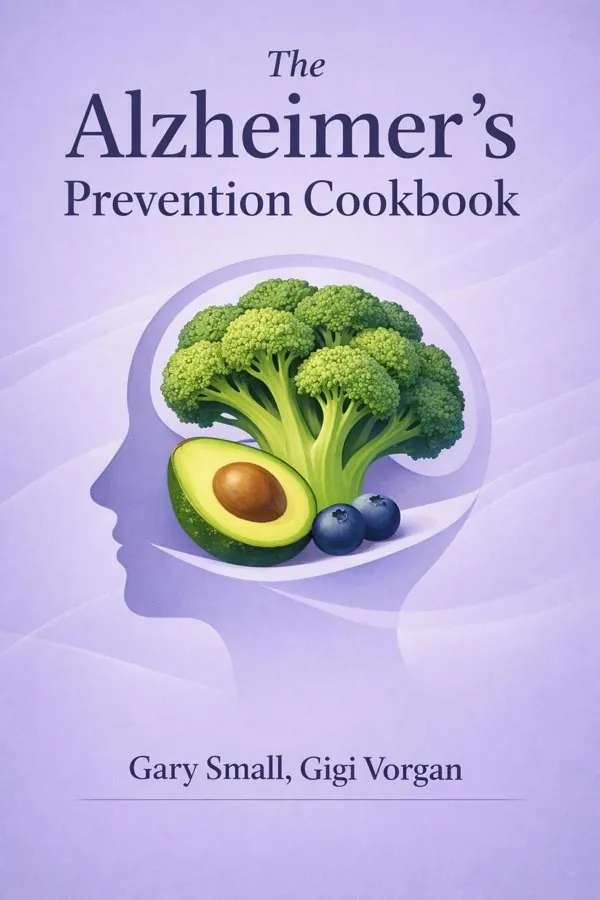
The Alzheimer’s Prevention Cookbook: 100 Recipes to Boost Brain Health: Summary & Key Insights
 10 min5 chaptersAudio available
What Is The Alzheimer’s Prevention Cookbook: 100 Recipes to Boost Brain Health About?
The Alzheimer’s Prevention Cookbook: 100 Recipes to Boost Brain Health by Gary Small, Gigi Vorgan is a health_med book spanning 5 pages. This cookbook presents 100 recipes designed to promote brain health and reduce the risk of Alzheimer’s disease. Drawing on the latest research in neuroscience and nutrition, Dr. Gary Small and Gigi Vorgan combine practical dietary advice with delicious, easy-to-prepare meals that support cognitive function and overall well-being.
This FizzRead summary covers all 5 key chapters of The Alzheimer’s Prevention Cookbook: 100 Recipes to Boost Brain Health in approximately 10 minutes, distilling the most important ideas, arguments, and takeaways from Gary Small, Gigi Vorgan's work. Also available as an audio summary and Key Quotes Podcast.
The Alzheimer’s Prevention Cookbook: 100 Recipes to Boost Brain Health
This cookbook presents 100 recipes designed to promote brain health and reduce the risk of Alzheimer’s disease. Drawing on the latest research in neuroscience and nutrition, Dr. Gary Small and Gigi Vorgan combine practical dietary advice with delicious, easy-to-prepare meals that support cognitive function and overall well-being.
Who Should Read The Alzheimer’s Prevention Cookbook: 100 Recipes to Boost Brain Health?
This book is perfect for anyone interested in health_med and looking to gain actionable insights in a short read. Whether you're a student, professional, or lifelong learner, the key ideas from The Alzheimer’s Prevention Cookbook: 100 Recipes to Boost Brain Health by Gary Small, Gigi Vorgan will help you think differently.
- ✓Readers who enjoy health_med and want practical takeaways
- ✓Professionals looking to apply new ideas to their work and life
- ✓Anyone who wants the core insights of The Alzheimer’s Prevention Cookbook: 100 Recipes to Boost Brain Health in just 10 minutes
Want the full summary?
Get instant access to this book summary and 100K+ more with Fizz Moment.
Get Free SummaryAvailable on App Store • Free to download
Key Chapters
We now know that what we eat directly affects how we think, remember, and feel. Over decades, neuroscientific research has confirmed that diets rich in antioxidants and anti-inflammatory compounds can reduce the accumulation of beta-amyloid plaques—the sticky proteins linked to Alzheimer’s disease. In my clinical practice, I’ve seen how even modest nutritional improvements can enhance mood and mental sharpness within weeks.
In this section, I explain the physiological mechanisms underlying these effects. Oxidative stress, which arises from free radicals produced during normal metabolism, triggers inflammation that weakens neuronal connections. Foods such as colorful vegetables, berries, nuts, and olive oil counteract this damage through their powerful polyphenols and vitamin E content. Similarly, omega-3 fatty acids—abundant in salmon, flaxseed, and walnuts—nourish neuronal membranes, keeping them flexible so neurons communicate effectively.
The recipes in this book are crafted around those principles. Rather than prescribing restrictive diets, I encourage you to build meals that naturally provide the nutrients your brain craves. For instance, a blueberry walnut smoothie delivers plant-based omega-3s and antioxidant compounds in one refreshing blend. By replacing processed sugars and saturated fats with nutrient-rich whole foods, the brain’s biochemistry shifts toward protection and repair. What feels like an act of cooking becomes an act of prevention.
Each scientific insight we include is backed by real-world applicability—because knowledge only matters when it changes how you live. Brain health is not a single intervention; it’s a daily rhythm. Our goal is to help you make that rhythm delicious.
The brain thrives on a balanced supply of essential fats, vitamins, and minerals. Omega-3s act as structure-builders for neurons; B vitamins facilitate neurotransmitter synthesis; zinc and magnesium regulate nerve signaling; and antioxidants like vitamin C and E defend cells against oxidative decay.
I often ask patients to imagine their brains like a garden. Omega-3s provide the fertile soil—without them, neuronal membranes dry and stiffen. Antioxidants are the protectors, shielding fragile cells from toxic assaults. Vitamins and minerals, meanwhile, are the gardeners ensuring everything grows in harmony. If any component is missing, the entire ecosystem suffers.
Consider how a single meal can embody these principles. A grilled salmon fillet with spinach sautéed in olive oil and sprinkled with turmeric provides protein for neurotransmission, leafy greens for folate, and the spice’s curcumin for its powerful anti-inflammatory effects. Combined, these nutrients form a synergy that supports learning and memory. Similarly, using colorful produce across your meals guarantees diversity of antioxidants—each pigment signaling a different set of protective molecules.
Through these examples, we invite you to become mindful of what fuels your brain daily. Not by counting calories, but by appreciating nutrients as tools of cognitive longevity. Every ingredient carries a story of resilience, and by cooking with them, you’re writing your own.
+ 3 more chapters — available in the FizzRead app
All Chapters in The Alzheimer’s Prevention Cookbook: 100 Recipes to Boost Brain Health
About the Authors
Dr. Gary Small is a professor of psychiatry and aging at UCLA and a leading expert on brain health and memory. Gigi Vorgan is a writer and producer who has coauthored several books with Dr. Small on memory and healthy aging.
Get This Summary in Your Preferred Format
Read or listen to the The Alzheimer’s Prevention Cookbook: 100 Recipes to Boost Brain Health summary by Gary Small, Gigi Vorgan anytime, anywhere. FizzRead offers multiple formats so you can learn on your terms — all free.
Available formats: App · Audio · PDF · EPUB — All included free with FizzRead
Download The Alzheimer’s Prevention Cookbook: 100 Recipes to Boost Brain Health PDF and EPUB Summary
Key Quotes from The Alzheimer’s Prevention Cookbook: 100 Recipes to Boost Brain Health
“We now know that what we eat directly affects how we think, remember, and feel.”
“The brain thrives on a balanced supply of essential fats, vitamins, and minerals.”
Frequently Asked Questions about The Alzheimer’s Prevention Cookbook: 100 Recipes to Boost Brain Health
The Alzheimer’s Prevention Cookbook: 100 Recipes to Boost Brain Health by Gary Small, Gigi Vorgan is a health_med book that explores key ideas across 5 chapters. This cookbook presents 100 recipes designed to promote brain health and reduce the risk of Alzheimer’s disease. Drawing on the latest research in neuroscience and nutrition, Dr. Gary Small and Gigi Vorgan combine practical dietary advice with delicious, easy-to-prepare meals that support cognitive function and overall well-being.
More by Gary Small, Gigi Vorgan
You Might Also Like

On Immunity
Eula Biss
10 min
The Three-Body Problem
Liu Cixin
10 min
Community Health Volunteer Toolkit: Training and Practical Activities
World Health Organization
10 min
Healing Back Pain: The Mind-Body Connection
John E. Sarno
10 min
Health Literacy for All: Practical Guides to Communicate Health Information (Compilations)
World Health Organization
10 min
The Complete Guide to Sports Supplements: An Evidence-Based Review
Anita Bean
10 minBrowse by Category
Ready to read The Alzheimer’s Prevention Cookbook: 100 Recipes to Boost Brain Health?
Get the full summary and 100K+ more books with Fizz Moment.