
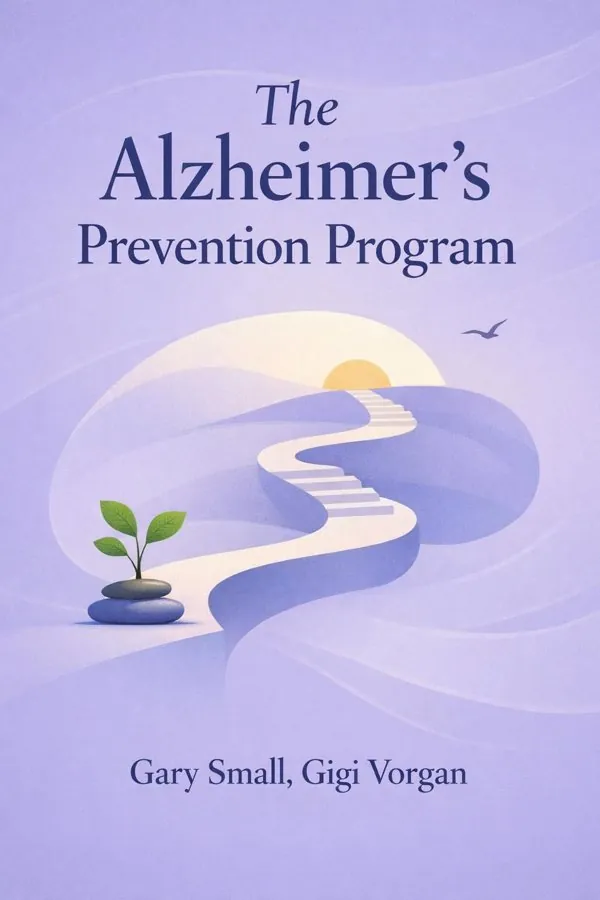
The Alzheimer’s Prevention Program: Keep Your Brain Healthy for the Rest of Your Life: Summary & Key Insights
 10 min5 chaptersAudio available
What Is The Alzheimer’s Prevention Program: Keep Your Brain Healthy for the Rest of Your Life About?
The Alzheimer’s Prevention Program: Keep Your Brain Healthy for the Rest of Your Life by Gary Small, Gigi Vorgan is a health_med book spanning 5 pages. This book presents a comprehensive lifestyle-based approach to reducing the risk of Alzheimer’s disease. Drawing on decades of research, Dr. Gary Small and Gigi Vorgan outline a four-week program that integrates diet, physical exercise, mental stimulation, and stress management to maintain cognitive health and memory. The program emphasizes practical daily habits and scientifically supported strategies for long-term brain wellness.
This FizzRead summary covers all 5 key chapters of The Alzheimer’s Prevention Program: Keep Your Brain Healthy for the Rest of Your Life in approximately 10 minutes, distilling the most important ideas, arguments, and takeaways from Gary Small, Gigi Vorgan's work. Also available as an audio summary and Key Quotes Podcast.
The Alzheimer’s Prevention Program: Keep Your Brain Healthy for the Rest of Your Life
This book presents a comprehensive lifestyle-based approach to reducing the risk of Alzheimer’s disease. Drawing on decades of research, Dr. Gary Small and Gigi Vorgan outline a four-week program that integrates diet, physical exercise, mental stimulation, and stress management to maintain cognitive health and memory. The program emphasizes practical daily habits and scientifically supported strategies for long-term brain wellness.
Who Should Read The Alzheimer’s Prevention Program: Keep Your Brain Healthy for the Rest of Your Life?
This book is perfect for anyone interested in health_med and looking to gain actionable insights in a short read. Whether you're a student, professional, or lifelong learner, the key ideas from The Alzheimer’s Prevention Program: Keep Your Brain Healthy for the Rest of Your Life by Gary Small, Gigi Vorgan will help you think differently.
- ✓Readers who enjoy health_med and want practical takeaways
- ✓Professionals looking to apply new ideas to their work and life
- ✓Anyone who wants the core insights of The Alzheimer’s Prevention Program: Keep Your Brain Healthy for the Rest of Your Life in just 10 minutes
Want the full summary?
Get instant access to this book summary and 100K+ more with Fizz Moment.
Get Free SummaryAvailable on App Store • Free to download
Key Chapters
When people think of brain health, they often imagine crossword puzzles or memory games. Few realize that what you put on your plate is just as influential. The food you eat directly affects inflammation, oxidative stress, and the brain’s energy supply—all key factors in the development of Alzheimer’s disease. That’s why our journey begins in the kitchen.
During my years studying cognitive aging, I observed how patients who shifted toward brain-healthy diets often stabilized their memory. The science backs this up. Diets rich in omega-3 fats, antioxidants, and polyphenols—found in fish, nuts, berries, and colorful vegetables—help neutralize the volatile molecules known as free radicals that damage brain cells. In contrast, trans fats and excessive sugars accelerate the inflammatory processes that underlie many chronic diseases, including dementia.
In this first week, I ask readers to focus on variety and freshness rather than deprivation. One of my patients, Ellen, a retired teacher, began her transformation by simply replacing her morning pastry with oatmeal topped with blueberries. Within weeks, her energy rose, and she reported fewer afternoon mental slumps. What happened was more than placebo—her blood sugar stabilized, and so did her concentration. Nutrition’s impact on the brain is cumulative, much like interest in a savings account. Every balanced meal is an investment in future cognition.
We emphasize the Mediterranean-style eating pattern because its benefits have been repeatedly demonstrated across populations. It is not a fad diet but a lifelong framework emphasizing olive oil over butter, fish and legumes over red meat, and abundant plant-based foods rich in phytonutrients. Cooking with herbs like rosemary and turmeric adds both flavor and neuroprotective compounds. Hydration also matters—dehydration can mimic memory loss. So even the humble act of sipping water becomes part of Alzheimer’s prevention.
I encourage readers to experiment—prepare meals with family, rediscover the joy of mindful eating, and notice how the body and brain respond. The point is not perfection; it’s consistent awareness. Each forkful sends a biochemical signal, and over time, those signals become the biology of resilience.
When we design interventions to protect memory, we cannot separate the brain from the body. They are extensions of one living system. Exercise, more than any other lifestyle factor, has repeatedly shown the power to increase neurogenesis—the birth of new brain cells—in the hippocampus, the region central to memory and learning.
In our second week, I invite you to see movement not as a chore, but as mental nourishment. Aerobic exercise improves blood flow, delivering oxygen and nutrients essential for neuron survival. Strength training preserves muscle mass and metabolic balance, supporting insulin regulation—a crucial link between diabetes and dementia risk.
Consider the story of Harold, a middle-aged accountant who found himself forgetting routine appointments. After starting a simple walking regimen, gradually adding light resistance work, he not only lost weight but regained confidence in his memory performance. Scientific imaging studies confirm what Harold felt: physically active individuals show larger hippocampal volume and greater connectivity in brain networks that regulate attention and executive function.
Exercise also acts as a stress buffer. Physical activity encourages the release of endorphins and growth factors such as BDNF (Brain-Derived Neurotrophic Factor), which fosters synaptic plasticity—the brain’s ability to form new connections. In essence, exercise turns on your brain’s repair mechanisms.
It’s not about running marathons. If you find joy in dancing, gardening, swimming, or yoga, those count too. Choose activities you can sustain emotionally as well as physically. The most beneficial exercise is the one you’ll do regularly, not the one you dread. As you move, your cognition moves forward as well.
+ 3 more chapters — available in the FizzRead app
All Chapters in The Alzheimer’s Prevention Program: Keep Your Brain Healthy for the Rest of Your Life
About the Authors
Gary Small, M.D., is a professor of psychiatry and director of the UCLA Longevity Center, known for his research on memory and aging. Gigi Vorgan is a writer and producer who has collaborated with Dr. Small on several books about brain health and lifestyle medicine.
Get This Summary in Your Preferred Format
Read or listen to the The Alzheimer’s Prevention Program: Keep Your Brain Healthy for the Rest of Your Life summary by Gary Small, Gigi Vorgan anytime, anywhere. FizzRead offers multiple formats so you can learn on your terms — all free.
Available formats: App · Audio · PDF · EPUB — All included free with FizzRead
Download The Alzheimer’s Prevention Program: Keep Your Brain Healthy for the Rest of Your Life PDF and EPUB Summary
Key Quotes from The Alzheimer’s Prevention Program: Keep Your Brain Healthy for the Rest of Your Life
“When people think of brain health, they often imagine crossword puzzles or memory games.”
“When we design interventions to protect memory, we cannot separate the brain from the body.”
Frequently Asked Questions about The Alzheimer’s Prevention Program: Keep Your Brain Healthy for the Rest of Your Life
The Alzheimer’s Prevention Program: Keep Your Brain Healthy for the Rest of Your Life by Gary Small, Gigi Vorgan is a health_med book that explores key ideas across 5 chapters. This book presents a comprehensive lifestyle-based approach to reducing the risk of Alzheimer’s disease. Drawing on decades of research, Dr. Gary Small and Gigi Vorgan outline a four-week program that integrates diet, physical exercise, mental stimulation, and stress management to maintain cognitive health and memory. The program emphasizes practical daily habits and scientifically supported strategies for long-term brain wellness.
More by Gary Small, Gigi Vorgan
You Might Also Like

On Immunity
Eula Biss
10 min
The Three-Body Problem
Liu Cixin
10 min
Community Health Volunteer Toolkit: Training and Practical Activities
World Health Organization
10 min
Healing Back Pain: The Mind-Body Connection
John E. Sarno
10 min
Health Literacy for All: Practical Guides to Communicate Health Information (Compilations)
World Health Organization
10 min
The Complete Guide to Sports Supplements: An Evidence-Based Review
Anita Bean
10 minBrowse by Category
Ready to read The Alzheimer’s Prevention Program: Keep Your Brain Healthy for the Rest of Your Life?
Get the full summary and 100K+ more books with Fizz Moment.