
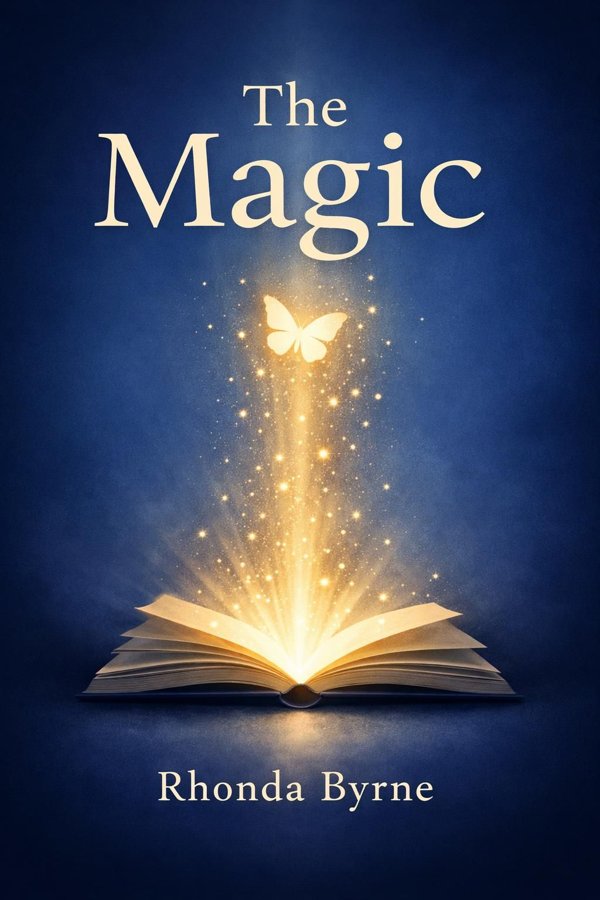
The Magic: Summary & Key Insights
by Rhonda Byrne
 10 min9 chaptersAudio available
Key Takeaways from The Magic
A striking idea sits at the center of The Magic: what you appreciate expands in your awareness and, according to Byrne, in your life itself.
Most people underestimate how quickly the mind adapts to what is good.
Transformation often begins not with dramatic revelation but with disciplined noticing.
Nothing changes the tone of a relationship faster than the lens through which you view the other person.
A powerful insight in The Magic is that gratitude becomes transformative only when it moves from idea to ritual.
What Is The Magic About?
The Magic by Rhonda Byrne is a positive_psych book spanning 5 pages. What if the single habit most capable of changing your life was not harder work, better planning, or more willpower, but gratitude? In The Magic, Rhonda Byrne argues that sincere, consistent gratitude is a transformative force that can improve health, relationships, finances, happiness, and your overall experience of daily life. Building on the themes that made The Secret a global phenomenon, Byrne focuses here on one specific practice: learning to appreciate what you already have so fully that your mindset, emotions, and actions begin to shift in powerful ways. The book is structured as a 28-day journey, with one exercise for each day, designed to help readers turn gratitude from an occasional feeling into a disciplined way of living. Byrne’s authority comes from her influential role in popularizing the Law of Attraction and from her ability to translate spiritual ideas into simple daily rituals. Whether or not you fully embrace her metaphysical framework, The Magic offers a practical reminder that attention shapes experience, and that gratitude can become a powerful catalyst for personal change.
This FizzRead summary covers all 9 key chapters of The Magic in approximately 10 minutes, distilling the most important ideas, arguments, and takeaways from Rhonda Byrne's work. Also available as an audio summary and Key Quotes Podcast.
The Magic
What if the single habit most capable of changing your life was not harder work, better planning, or more willpower, but gratitude? In The Magic, Rhonda Byrne argues that sincere, consistent gratitude is a transformative force that can improve health, relationships, finances, happiness, and your overall experience of daily life. Building on the themes that made The Secret a global phenomenon, Byrne focuses here on one specific practice: learning to appreciate what you already have so fully that your mindset, emotions, and actions begin to shift in powerful ways. The book is structured as a 28-day journey, with one exercise for each day, designed to help readers turn gratitude from an occasional feeling into a disciplined way of living. Byrne’s authority comes from her influential role in popularizing the Law of Attraction and from her ability to translate spiritual ideas into simple daily rituals. Whether or not you fully embrace her metaphysical framework, The Magic offers a practical reminder that attention shapes experience, and that gratitude can become a powerful catalyst for personal change.
Who Should Read The Magic?
This book is perfect for anyone interested in positive_psych and looking to gain actionable insights in a short read. Whether you're a student, professional, or lifelong learner, the key ideas from The Magic by Rhonda Byrne will help you think differently.
- ✓Readers who enjoy positive_psych and want practical takeaways
- ✓Professionals looking to apply new ideas to their work and life
- ✓Anyone who wants the core insights of The Magic in just 10 minutes
Want the full summary?
Get instant access to this book summary and 100K+ more with Fizz Moment.
Get Free SummaryAvailable on App Store • Free to download
Key Chapters
A striking idea sits at the center of The Magic: what you appreciate expands in your awareness and, according to Byrne, in your life itself. She presents gratitude not as a polite social habit but as an energetic force that activates the Law of Attraction. In this view, your dominant emotional state sends out a signal. Complaint, resentment, and lack attract more experiences that feel heavy and limiting. Gratitude, by contrast, aligns you with abundance, possibility, and positive outcomes.
Byrne’s larger point is psychological as much as spiritual. When you focus on what is already working, your attention shifts away from absence and toward resources. That changes how you interpret events, how you speak, and how you act. A person who feels grateful for their job, for example, often brings more energy and creativity to work than someone who constantly dwells on what is missing. Gratitude can make you more patient in relationships, more hopeful during setbacks, and more willing to notice opportunities you would otherwise ignore.
The book encourages readers to see gratitude as the starting point rather than the reward. You do not wait until life becomes perfect to feel thankful. You become thankful first, and that emotional orientation begins to influence your decisions and behavior. Even readers skeptical of metaphysical claims can recognize the practical truth here: your mindset affects your perception, and perception affects your outcomes.
Actionable takeaway: For one week, begin each morning by naming three things you already have that make your life easier, safer, or richer, and notice how that changes your mood and choices throughout the day.
Most people underestimate how quickly the mind adapts to what is good. The Magic begins by confronting this tendency directly through one of its foundational practices: counting your blessings. Byrne asks readers to write down ten things they are grateful for each day and briefly explain why. This simple exercise is designed to interrupt habitual negativity and retrain attention toward what is present, valuable, and life-giving.
The power of this practice lies in specificity. It is one thing to say, “I’m grateful for my family.” It is far more emotionally potent to write, “I’m grateful my sister called when I was stressed yesterday because it reminded me I’m not alone.” Specific gratitude creates feeling, and feeling, in Byrne’s system, is what gives gratitude its force. The exercise becomes a form of mental and emotional conditioning, helping you build a reflex of appreciation.
This matters because the human mind naturally scans for problems. That bias can be useful for survival, but in modern life it often becomes chronic dissatisfaction. Counting blessings does not deny difficulties; it broadens your perspective so hardship does not become the whole story. Over time, this daily inventory can make you more resilient, less reactive, and more aware of the support that already surrounds you.
In practice, the exercise can include major gifts and ordinary comforts: hot water, a working phone, a supportive friend, a recent meal, a safe commute, or a useful lesson learned from failure. The more honestly you feel the gratitude, the more meaningful the ritual becomes.
Actionable takeaway: Every morning for seven days, write ten blessings and add a short reason for each, then reread the list slowly and say “thank you” after every item.
Transformation often begins not with dramatic revelation but with disciplined noticing. In the first week of The Magic, Byrne guides readers to awaken their sensitivity to the goodness woven through ordinary life. These early practices are intentionally simple because they aim to establish a new baseline: gratitude should become a daily orientation, not an occasional response to extraordinary events.
The exercises in these opening days encourage appreciation for physical health, food, work, money, and supportive relationships. Byrne also introduces symbolic tools, such as carrying a gratitude stone and mentally returning to appreciation before sleep. These rituals may seem small, but they are designed to keep gratitude active across the day rather than confined to one reflective moment.
The deeper lesson is that everyday life contains countless unnoticed gifts. A functioning body, a bed to sleep in, clean clothes, transportation, electricity, a kind message, or a meal prepared by someone else are all forms of support that easily become invisible through familiarity. Byrne wants readers to reverse that invisibility. When you become aware of ordinary blessings, life starts to feel less random and more generously structured.
This week also lays emotional groundwork for the rest of the program. You cannot sustainably practice gratitude in difficult areas if you have not first learned how to recognize what is already going well. These early days train the mind to stop rushing past value. They teach that gratitude is less about forcing positivity and more about seeing clearly.
Actionable takeaway: Choose three routine moments today, such as breakfast, commuting, or getting into bed, and pause for ten seconds at each one to consciously appreciate what is making that moment possible.
Nothing changes the tone of a relationship faster than the lens through which you view the other person. In The Magic, Byrne emphasizes gratitude as a way to soften resentment, increase appreciation, and improve the quality of connection with family, friends, colleagues, and partners. Her argument is that relationships often deteriorate not only because of major conflicts, but because appreciation is replaced by criticism, assumption, and emotional bookkeeping.
Byrne encourages readers to focus on the strengths, kindnesses, and contributions of the people in their lives. This does not mean ignoring harmful behavior or abandoning boundaries. It means deliberately noticing what is valuable instead of allowing irritation to dominate awareness. If you are grateful that a coworker is reliable, a partner is loyal, or a parent made sacrifices for you, your behavior changes. You become more patient, more generous, and more likely to communicate with warmth.
One of the most practical parts of this idea is the reminder that gratitude can be expressed both privately and directly. You may write about what you appreciate in someone, silently bless them, or tell them specifically what they have done that matters to you. A relationship often improves when one person begins to interact from appreciation rather than habitual complaint.
Even difficult relationships can benefit from selective gratitude. You may not be grateful for all aspects of a person, but you can often identify one lesson, one act of care, or one quality that deserves recognition. That shift can reduce emotional rigidity and create room for healthier responses.
Actionable takeaway: Think of one important person in your life and write down five specific things you appreciate about them, then communicate at least one of those appreciations to them today.
A powerful insight in The Magic is that gratitude becomes transformative only when it moves from idea to ritual. During the middle phase of the 28-day program, Byrne deepens the practice by attaching gratitude to recurring situations: money, work, health, and daily interactions. Her method recognizes a simple truth about habit formation: what you repeat in concrete contexts begins to shape your identity.
Rather than keeping gratitude abstract, Byrne asks readers to apply it to specific points of friction. If money causes anxiety, practice appreciation for every dollar, every bill you can pay, and every service money provides. If work feels draining, focus on the benefits your job currently gives you, whether income, learning, structure, or experience. If your body feels imperfect, start by appreciating what it still does for you each day.
These exercises matter because they challenge conditional thinking. Many people believe they will feel grateful once their finances improve, once their body looks different, or once they find ideal work. Byrne reverses that order. She argues that gratitude should be practiced precisely in the areas where lack is most strongly felt. By changing your emotional relationship to those areas, you reduce resistance and become more open to taking constructive action.
The repetition of these rituals also creates continuity. Gratitude is no longer reserved for good moods. It becomes a method you use when paying bills, eating meals, walking to work, speaking to others, or reflecting before sleep. That regularity is what gives the practice depth.
Actionable takeaway: Pick one stressful area of life and create a gratitude ritual tied to it, such as saying “thank you for the money I have and the money on its way” every time you make a purchase or pay a bill.
One of the boldest claims in The Magic is that gratitude should not be limited to pleasant experiences. Byrne suggests that even difficulties can become objects of gratitude because they often contain hidden lessons, redirections, or strengths that would otherwise remain undeveloped. This is not a call to glorify pain. It is a call to search for meaning in hardship instead of relating to it only through resistance.
This idea is especially important because adversity tends to narrow awareness. When something goes wrong, the mind fixates on unfairness, loss, and immediate discomfort. Gratitude widens the frame. A breakup may reveal what you truly need in a partner. A health scare may awaken respect for your body. Financial struggle may teach discipline, creativity, or humility. A professional setback may push you toward work that is more aligned.
Byrne’s approach asks readers to trust that there is value to be extracted even from unwelcome events. Whether or not you accept this in spiritual terms, the psychological benefit is clear. Gratitude in difficulty helps reduce victimhood and restore agency. It asks, “What can this experience teach me?” instead of only, “Why is this happening to me?”
This is not always easy, especially in moments of fresh pain. The practice may begin with very small acknowledgments: gratitude for support received, for inner strength discovered, or for the fact that a difficulty did not become worse. Over time, this mindset can make you more resilient and less defined by circumstance.
Actionable takeaway: Identify one recent challenge and write down three things it revealed, taught, or strengthened in you, then thank the experience for at least one of those gifts.
Much of The Magic is devoted to the practical arenas people worry about most: health, finances, and work. Byrne argues that gratitude can shift your experience in each of these areas by changing your emotional state and increasing your awareness of what is available rather than what is lacking. Her message is not that gratitude replaces action, but that it changes the quality of action by replacing fear with appreciation.
In health, gratitude begins with acknowledging what your body already does. Even if you face illness or limitation, your body may still breathe, digest, heal, move, or sense the world. That appreciation can support more caring behavior, such as rest, nourishment, treatment, and patience. In money, Byrne advises readers to stop treating every expense as evidence of scarcity. Paying for rent, food, transport, or services can be reframed as evidence that you are receiving value and participating in exchange. In work, gratitude helps uncover hidden benefits in your current role while making you more likely to notice opportunities for advancement or change.
The common thread is focus. When you direct attention to what is functioning and supportive, you become less paralyzed by lack. Gratitude can reduce emotional noise, making better decisions more likely. It does not guarantee instant healing, wealth, or career success, but it does create a mindset that supports steadier, more constructive engagement.
Byrne wants readers to stop using dissatisfaction as their primary motivator. Appreciation, in her framework, is not passive. It is energizing.
Actionable takeaway: Choose one area—health, money, or work—and list ten things in that area that are already helping you, no matter how small, then revisit the list whenever worry takes over.
A subtle but essential lesson in The Magic is that gratitude is effective only when it is emotionally alive. Byrne repeatedly stresses that the words “thank you” are not enough if they are spoken mechanically. The transformative element is feeling. Gratitude has power, in her system, because it changes your state from within. Without sincere emotion, the practice risks becoming a hollow ritual.
This distinction matters because many self-help methods fail when they become too performative. People recite affirmations, make lists, or repeat phrases while remaining emotionally detached. Byrne’s insistence on feeling helps guard against that trap. She invites readers to pause, imagine, remember, and emotionally connect with what they are appreciating. A thankful thought about clean water, for example, becomes far more powerful when you consider how essential it is and how many people lack easy access to it.
The book’s rituals are designed to generate that emotional charge. Writing gratitude by hand, touching a symbolic object, reflecting before sleep, and speaking words of thanks after recalling a blessing all help move gratitude from concept into lived experience. The goal is to create a bodily sense of appreciation, warmth, relief, or joy.
This also means authenticity matters more than perfection. If you cannot feel grateful for ten things, start with one that genuinely moves you. If your gratitude feels faint, slow down instead of forcing intensity. Real appreciation, even if quiet, is more transformative than exaggerated positivity.
Actionable takeaway: The next time you write or say something you are grateful for, stop and spend twenty seconds vividly imagining life without it, then feel the difference before saying “thank you.”
The final section of The Magic makes an important point: gratitude is not meant to end when the program does. Byrne presents the 28 days as initiation, not completion. The deeper aim is to establish gratitude as a permanent lens through which you interpret life, make decisions, and respond to both blessings and setbacks.
By the last phase of the book, readers have practiced gratitude across many domains and are invited to integrate it more fully into their identity. This means thanking before receiving, appreciating small moments as they happen, and returning to gratitude quickly after frustration. Byrne wants gratitude to become your default setting, a way of meeting life with openness instead of chronic dissatisfaction.
What makes this sustainable is personalization. Not every exercise will resonate equally with every reader, but the larger principle is adaptable. Some people may keep a nightly gratitude journal. Others may express appreciation aloud, pause before meals, send thank-you messages, or mentally bless difficult situations. The point is continuity. Gratitude should be woven into ordinary life in a way that feels natural enough to maintain.
The long-term reward, according to Byrne, is a life that feels richer, more connected, and more responsive. Even outside her metaphysical claims, there is wisdom here. A grateful person often notices more beauty, enjoys relationships more deeply, recovers from setbacks more quickly, and feels less deprived by comparison.
Actionable takeaway: At the end of the 28-day program, choose your three most effective gratitude practices and commit to continuing them for the next thirty days so gratitude becomes a lifestyle rather than a temporary challenge.
All Chapters in The Magic
About the Author
Rhonda Byrne is an Australian author and television producer best known for creating The Secret, the global bestseller and media phenomenon that brought the Law of Attraction into mainstream popular culture. After a successful career in television, she turned to writing and publishing inspirational works focused on mindset, gratitude, personal power, and intentional living. Her major books include The Secret, The Power, The Magic, Hero, and later titles that continue to explore spiritual and self-development themes. Byrne’s work is known for translating broad metaphysical ideas into accessible language and simple daily practices. Although her teachings are sometimes controversial among more scientifically minded readers, her influence on modern self-help is undeniable, and her books have inspired millions of people worldwide to think differently about gratitude, belief, and personal transformation.
Get This Summary in Your Preferred Format
Read or listen to the The Magic summary by Rhonda Byrne anytime, anywhere. FizzRead offers multiple formats so you can learn on your terms — all free.
Available formats: App · Audio · PDF · EPUB — All included free with FizzRead
Download The Magic PDF and EPUB Summary
Key Quotes from The Magic
“A striking idea sits at the center of The Magic: what you appreciate expands in your awareness and, according to Byrne, in your life itself.”
“Most people underestimate how quickly the mind adapts to what is good.”
“Transformation often begins not with dramatic revelation but with disciplined noticing.”
“Nothing changes the tone of a relationship faster than the lens through which you view the other person.”
“A powerful insight in The Magic is that gratitude becomes transformative only when it moves from idea to ritual.”
Frequently Asked Questions about The Magic
The Magic by Rhonda Byrne is a positive_psych book that explores key ideas across 9 chapters. What if the single habit most capable of changing your life was not harder work, better planning, or more willpower, but gratitude? In The Magic, Rhonda Byrne argues that sincere, consistent gratitude is a transformative force that can improve health, relationships, finances, happiness, and your overall experience of daily life. Building on the themes that made The Secret a global phenomenon, Byrne focuses here on one specific practice: learning to appreciate what you already have so fully that your mindset, emotions, and actions begin to shift in powerful ways. The book is structured as a 28-day journey, with one exercise for each day, designed to help readers turn gratitude from an occasional feeling into a disciplined way of living. Byrne’s authority comes from her influential role in popularizing the Law of Attraction and from her ability to translate spiritual ideas into simple daily rituals. Whether or not you fully embrace her metaphysical framework, The Magic offers a practical reminder that attention shapes experience, and that gratitude can become a powerful catalyst for personal change.
More by Rhonda Byrne


You Might Also Like
Don't Sweat the Small Stuff... and It's All Small Stuff
Richard Carlson
10 min
Option B
Sheryl Sandberg & Adam Grant
10 min
Hallelujah Anyway: Rediscovering Mercy
Anne Lamott
10 min
I Can Do It: How to Use Affirmations to Change Your Life
Louise Hay
10 min
The Coffee Bean: A Simple Lesson to Create Positive Change
Jon Gordon, Damon West
10 min
The Happiness Hypothesis: Finding Modern Truth in Ancient Wisdom
Jonathan Haidt
10 minBrowse by Category
Ready to read The Magic?
Get the full summary and 100K+ more books with Fizz Moment.