
The Long Tail: Why the Future of Business Is Selling Less of More: Summary & Key Insights
 10 min4 chaptersAudio available
What Is The Long Tail: Why the Future of Business Is Selling Less of More About?
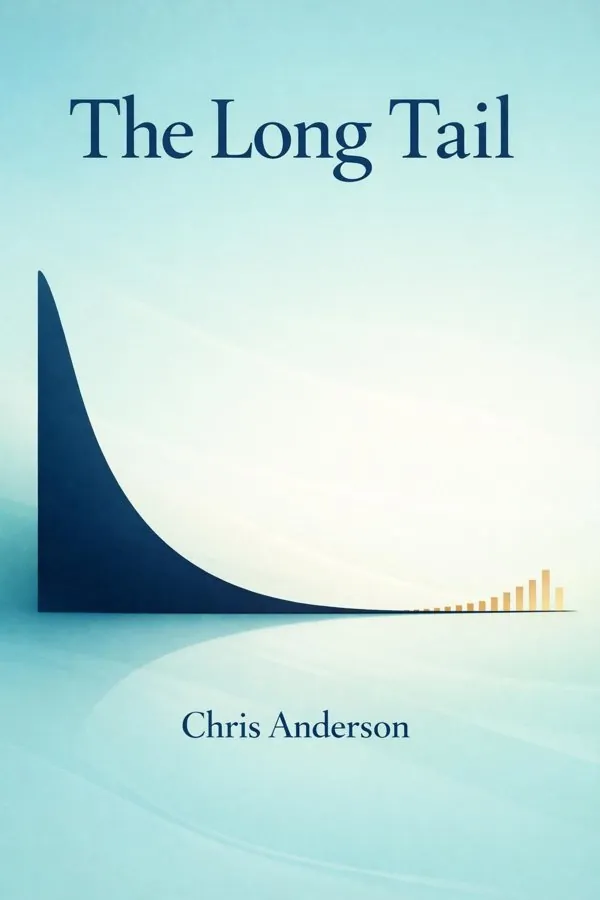
The Long Tail: Why the Future of Business Is Selling Less of More by Chris Anderson is a economics book spanning 4 pages. The Long Tail explores how the internet and digital distribution have transformed markets by enabling niche products to thrive alongside mainstream hits. Chris Anderson argues that the future of business lies in catering to smaller audiences with diverse interests rather than focusing solely on mass-market bestsellers. The book examines examples from music, movies, books, and retail, showing how the 'long tail' of demand reshapes economics and consumer behavior.
This FizzRead summary covers all 4 key chapters of The Long Tail: Why the Future of Business Is Selling Less of More in approximately 10 minutes, distilling the most important ideas, arguments, and takeaways from Chris Anderson's work. Also available as an audio summary and Key Quotes Podcast.
The Long Tail: Why the Future of Business Is Selling Less of More
The Long Tail explores how the internet and digital distribution have transformed markets by enabling niche products to thrive alongside mainstream hits. Chris Anderson argues that the future of business lies in catering to smaller audiences with diverse interests rather than focusing solely on mass-market bestsellers. The book examines examples from music, movies, books, and retail, showing how the 'long tail' of demand reshapes economics and consumer behavior.
Who Should Read The Long Tail: Why the Future of Business Is Selling Less of More?
This book is perfect for anyone interested in economics and looking to gain actionable insights in a short read. Whether you're a student, professional, or lifelong learner, the key ideas from The Long Tail: Why the Future of Business Is Selling Less of More by Chris Anderson will help you think differently.
- ✓Readers who enjoy economics and want practical takeaways
- ✓Professionals looking to apply new ideas to their work and life
- ✓Anyone who wants the core insights of The Long Tail: Why the Future of Business Is Selling Less of More in just 10 minutes
Want the full summary?
Get instant access to this book summary and 100K+ more with Fizz Moment.
Get Free SummaryAvailable on App Store • Free to download
Key Chapters
For decades, business revolved around the pursuit of hits—best-selling albums, blockbuster movies, top-rated television. The assumption was simple: success meant reaching the largest number of people possible. But why? Because we lived in a world limited by inventory and distribution. In a physical store, only the most popular items earned their keep. The shelves imposed a ruthless constraint—every inch had to justify itself through velocity of sales.
In the book, I trace how this hit-centric model shaped industries and created a winner-take-all dynamic. Record labels poured millions into a few artists, publishers chased guaranteed bestsellers, and consumers were conditioned to equate popularity with quality. But this was always an artifact of scarcity, not human preference. People’s tastes were diverse and fragmented, yet most of those tastes couldn’t be reflected in the marketplace.
With the advent of digital distribution, that limitation evaporated. An online retailer could stock millions of titles, regardless of how often each one sold. Streaming services could offer entire catalogs, not just the latest releases. Once inventory ceased to be the tyrant, the market’s true shape began to emerge—a long, graceful tail extending far beyond the hits. In that tail lay the quiet revelation that when people are given infinite choice, they make it.
The Long Tail illustrates this shift as a curve: at the steep head are the hits, but stretching endlessly outward are the niches. Each niche in isolation may look trivial, but collectively they add up to vast revenue and cultural diversity. The long tail is not about abandoning the hits—it’s about understanding that the majority of potential demand lives beyond them.
As I describe through examples like Amazon’s book catalog and Rhapsody’s music database, digital marketplaces thrive precisely because they unlock this hidden value. The old economy needed mass audiences; the new one honors microaudiences. The hits still exist, but now they coexist with an infinite universe of niche interests—and the balance of power has started to shift.
The emergence of online platforms didn’t just change supply—it transformed demand. When I looked deeper into customer data from sites like Netflix, I noticed something extraordinary: consumers weren’t merely rediscovering obscure titles; they were actively exploring new ones. This was the hallmark of a fundamental change in behavior. When people can find almost anything, they start looking for everything.
But choice, by itself, isn’t enough. The digital world introduced abundance, and abundance requires filters. Search engines, recommendation algorithms, and user reviews became the navigational tools of this new economy. These were the pipes through which attention flowed, leading from the hits down the long tail. Instead of a handful of marketers deciding what everyone should hear, millions of users began curating their own experiences.
I explore how Netflix’s data-driven recommendation system expanded the audience for older, niche films. A title that might have lingered untouched on a DVD shelf suddenly found thousands of viewers once algorithms connected it to the right interests. Amazon’s “customers who bought this also bought” mechanism plays a similar role—it helps users discover overlooked books or products that precisely match their preferences.
What this shows is that the long tail depends not only on infinite inventory but also on effective discovery. Without guidance, abundance would overwhelm us. With it, the tail becomes navigable, and millions of niche choices bubble to the surface. As consumers, we’re no longer restricted to what’s marketed the most—we’re empowered to find what matches us best.
This democratization of discovery has immense implications for creators. You no longer need to secure retail shelf space or beg a distributor for access. The challenge has shifted from production to visibility. To succeed in the long tail, the goal isn’t mass appeal—it’s resonance with the right audience. When that happens, even a micro-market can be sustainable, and success becomes a distributed phenomenon rather than a centralized one.
+ 2 more chapters — available in the FizzRead app
All Chapters in The Long Tail: Why the Future of Business Is Selling Less of More
About the Author
Chris Anderson is an American author and entrepreneur best known for his work as editor-in-chief of Wired magazine. He has written influential books on technology and business, including The Long Tail and Free, focusing on how digital innovation changes economic models and creative industries.
Get This Summary in Your Preferred Format
Read or listen to the The Long Tail: Why the Future of Business Is Selling Less of More summary by Chris Anderson anytime, anywhere. FizzRead offers multiple formats so you can learn on your terms — all free.
Available formats: App · Audio · PDF · EPUB — All included free with FizzRead
Download The Long Tail: Why the Future of Business Is Selling Less of More PDF and EPUB Summary
Key Quotes from The Long Tail: Why the Future of Business Is Selling Less of More
“For decades, business revolved around the pursuit of hits—best-selling albums, blockbuster movies, top-rated television.”
“The emergence of online platforms didn’t just change supply—it transformed demand.”
Frequently Asked Questions about The Long Tail: Why the Future of Business Is Selling Less of More
The Long Tail: Why the Future of Business Is Selling Less of More by Chris Anderson is a economics book that explores key ideas across 4 chapters. The Long Tail explores how the internet and digital distribution have transformed markets by enabling niche products to thrive alongside mainstream hits. Chris Anderson argues that the future of business lies in catering to smaller audiences with diverse interests rather than focusing solely on mass-market bestsellers. The book examines examples from music, movies, books, and retail, showing how the 'long tail' of demand reshapes economics and consumer behavior.
More by Chris Anderson
You Might Also Like
Business Adventures
John Brooks
10 min
Nudge
Richard H. Thaler, Cass R. Sunstein
10 min
The Hitchhiker"s Guide to the Galaxy
Douglas Adams
10 minThe Muqaddimah
Ibn Khaldun
10 minThe Outsiders
William N. Thorndike
10 min
A Little History of Economics
Niall Kishtainy
10 minBrowse by Category
Ready to read The Long Tail: Why the Future of Business Is Selling Less of More?
Get the full summary and 100K+ more books with Fizz Moment.