

The Little Stranger: Summary & Key Insights
by Sarah Waters
 10 min9 chaptersAudio available
Key Takeaways from The Little Stranger
Sometimes the places we admire most reveal the desires we have never admitted.
Decline is often most unsettling when it happens slowly enough to be mistaken for normal life.
War does not end when peace is declared; it continues in bodies, habits, and damaged expectations.
Families are often most trapped not by walls, but by roles they cannot stop performing.
One of the novel’s sharpest insights is that class tension rarely announces itself openly; it disguises itself as politeness, concern, and proper behavior.
What Is The Little Stranger About?
The Little Stranger by Sarah Waters is a bestsellers book spanning 4 pages. Set in the uneasy years after World War II, The Little Stranger is a masterful gothic novel about a country doctor, a fading aristocratic family, and a house that seems to absorb every fear, resentment, and unspoken grief within its walls. Dr. Faraday, a respectable physician from modest origins, becomes increasingly involved with the Ayres family of Hundreds Hall, once a grand Warwickshire estate now sliding into financial and emotional ruin. What begins as a social and medical relationship slowly turns into an intimate obsession, as strange disturbances unsettle the household and blur the line between haunting and psychological collapse. The novel matters because it uses the language of the ghost story to explore deeper anxieties: class ambition, postwar decline, damaged identity, and the power of repression. Sarah Waters is especially suited to this material. Known for her richly textured historical fiction and sharp psychological insight, she combines period detail with subtle suspense, creating a novel that is both a chilling mystery and a profound study of England in transition. The result is haunting not because it offers easy answers, but because it refuses them.
This FizzRead summary covers all 9 key chapters of The Little Stranger in approximately 10 minutes, distilling the most important ideas, arguments, and takeaways from Sarah Waters's work. Also available as an audio summary and Key Quotes Podcast.
The Little Stranger
Set in the uneasy years after World War II, The Little Stranger is a masterful gothic novel about a country doctor, a fading aristocratic family, and a house that seems to absorb every fear, resentment, and unspoken grief within its walls. Dr. Faraday, a respectable physician from modest origins, becomes increasingly involved with the Ayres family of Hundreds Hall, once a grand Warwickshire estate now sliding into financial and emotional ruin. What begins as a social and medical relationship slowly turns into an intimate obsession, as strange disturbances unsettle the household and blur the line between haunting and psychological collapse. The novel matters because it uses the language of the ghost story to explore deeper anxieties: class ambition, postwar decline, damaged identity, and the power of repression. Sarah Waters is especially suited to this material. Known for her richly textured historical fiction and sharp psychological insight, she combines period detail with subtle suspense, creating a novel that is both a chilling mystery and a profound study of England in transition. The result is haunting not because it offers easy answers, but because it refuses them.
Who Should Read The Little Stranger?
This book is perfect for anyone interested in bestsellers and looking to gain actionable insights in a short read. Whether you're a student, professional, or lifelong learner, the key ideas from The Little Stranger by Sarah Waters will help you think differently.
- ✓Readers who enjoy bestsellers and want practical takeaways
- ✓Professionals looking to apply new ideas to their work and life
- ✓Anyone who wants the core insights of The Little Stranger in just 10 minutes
Want the full summary?
Get instant access to this book summary and 100K+ more with Fizz Moment.
Get Free SummaryAvailable on App Store • Free to download
Key Chapters
Sometimes the places we admire most reveal the desires we have never admitted. Dr. Faraday’s connection to Hundreds Hall begins long before the main events of the novel. As a child, he once visited the estate with his mother, a servant, and was dazzled by its elegance, privilege, and distance from his own social position. Years later, when he returns as a country doctor in 1947, the house is no longer radiant. It is worn down, expensive to maintain, and sustained more by habit than vitality. Yet Faraday’s fascination only deepens. He does not simply visit Hundreds Hall; he is drawn into it emotionally, socially, and psychologically.
This relationship between the doctor and the house is one of the novel’s central engines. Hundreds Hall functions not only as a setting, but as an object of longing. For Faraday, it represents beauty, authority, and the class world from which he was excluded. His attachment appears professional and sympathetic on the surface, but Waters steadily reveals that it contains hunger, envy, and possessiveness. He wants to help the Ayres family, but he also wants access to what they symbolize.
In practical terms, this idea helps explain why Faraday is such an unreliable guide. He notices physical details with clinical precision, yet he often misreads emotional and moral truths because his own ambitions distort them. Readers can apply this insight beyond fiction: when we feel unusually invested in a workplace, family system, or social circle, it is worth asking what hidden longing that environment awakens in us.
Actionable takeaway: when a place or institution exerts a powerful pull on you, examine whether you love it for what it is, or for what it promises about who you might become.
Decline is often most unsettling when it happens slowly enough to be mistaken for normal life. Hundreds Hall is not ruined in a dramatic, romantic way. Its decay is domestic, incremental, and painfully believable: neglected rooms, worn upholstery, reduced staff, cold spaces no one can afford to heat, and repairs forever postponed. Sarah Waters uses this gradual deterioration to create a mood of quiet dread. The house is not simply old; it is failing, and everyone in it is forced to adapt to that failure.
Roderick Ayres, the heir, reflects this condition in human form. Scarred and impaired by wartime injury, he returns home physically altered and emotionally unstable. His suffering is personal, but it also symbolizes a broader national exhaustion. Postwar Britain is trying to maintain inherited structures that no longer function as they once did. The gentry can no longer rely on servants, wealth, or social deference. Their identity persists, but the world that sustained it is disappearing.
Waters turns architecture into psychology. The crumbling plaster, unused rooms, and atmosphere of strain do not just surround the family; they shape how the family feels. In modern life, people experience similar pressure when they live within systems in decline, whether that means a struggling business, a fractured household, or a community losing its economic base. Material environments affect mental states. A failing structure can intensify anxiety, defensiveness, and conflict.
The genius of the novel is that the house’s decline never remains merely symbolic. It becomes active, almost accusatory, as if neglect itself has acquired force. Actionable takeaway: pay attention to the environments you inhabit, because deterioration in spaces, routines, and institutions often signals deeper emotional and social distress before anyone says it aloud.
War does not end when peace is declared; it continues in bodies, habits, and damaged expectations. Roderick Ayres is one of the clearest embodiments of this truth in The Little Stranger. Once positioned to inherit privilege and authority, he returns from military service injured, in pain, and unable to resume the role for which he was raised. His impairment is not merely a personal tragedy. It reveals the instability of a social order that depends on healthy heirs, inherited confidence, and the illusion of continuity.
Roderick’s growing distress is easy for others to label as nerves, weakness, or even madness, but Waters makes his decline more complex. He lives in a house that demands stewardship he can barely provide, under a class code that expects dignity and control, while carrying trauma that resists neat expression. As strange incidents escalate, his fear makes him appear less credible, which deepens his isolation. This dynamic is painfully recognizable: people under visible strain are often dismissed just when they most need to be taken seriously.
The novel also shows how war reshapes families. Roderick’s injury burdens not only him but the entire household. Practical decisions, emotional roles, and future plans all become uncertain. Readers can apply this insight broadly to any life disruption that alters capability: illness, unemployment, caregiving, or grief can unsettle identity long after the original event.
Waters refuses to separate psychological stress from social pressure. Roderick is not just a damaged man; he is a damaged heir in a damaged age. His inability to hold everything together reflects a larger collapse of inherited structures.
Actionable takeaway: when someone seems irritable, fearful, or unstable after a major life rupture, look beyond surface behavior and ask what invisible burden they are still being asked to carry.
Families are often most trapped not by walls, but by roles they cannot stop performing. Caroline Ayres and her mother, Mrs. Ayres, show two different forms of captivity inside Hundreds Hall. Caroline is practical, intelligent, and less enchanted by aristocratic pretensions than other members of her family. She sees the estate’s impracticality and understands that change may be necessary. Yet she remains tied to the house by duty, habit, and maternal obligation. Mrs. Ayres, by contrast, is deeply attached to memory. Her emotional life is organized around what the house once was, what her family once represented, and what has already been lost.
This contrast gives the novel much of its emotional force. Caroline seems more realistic than her mother, but realism alone does not free her. She is still shaped by expectations about care, loyalty, and endurance. Dr. Faraday imagines that marriage could offer her escape, but Waters complicates that fantasy. Faraday’s interest in Caroline is sincere in some respects, yet it is also bound up with his own desire to enter the world of Hundreds Hall. He does not fully see how constrained she already is.
The dynamic between mother and daughter also reflects a broader social pattern. In moments of historical change, women are often tasked with preserving emotional continuity while bearing the practical costs of decline. They maintain appearances, absorb tension, and defer their own desires.
Readers may recognize versions of this in their own lives: staying in a draining family system, a stale career, or a one-sided relationship because leaving would feel like betrayal. Actionable takeaway: if responsibility is preventing you from imagining a different future, ask whether your loyalty is truly helping others or merely preserving a pattern that no longer serves anyone.
One of the novel’s sharpest insights is that class tension rarely announces itself openly; it disguises itself as politeness, concern, and proper behavior. Dr. Faraday is outwardly respectable, helpful, and measured. He is a professional man, educated and socially mobile, and he appears to represent merit in a changing England. Yet his relationship with the Ayres family is saturated with class feeling. He admires them, resents them, judges them, and longs to belong among them. These reactions coexist, and that coexistence is what makes him such a compelling narrator.
Sarah Waters avoids simplistic class politics. The Ayreses are not merely villains of privilege, nor is Faraday a straightforward outsider hero. Instead, the novel shows how deeply class shapes emotional life. Faraday’s attention to etiquette, household order, and social positioning reveals a man who has internalized exclusion. His fascination with Hundreds Hall is partly romantic, but also acquisitive. He wants recognition from the family, and perhaps more than recognition. He wants what their world has historically denied him.
This idea remains highly relevant. Many people today still navigate institutions where status is coded through accent, education, taste, confidence, or inherited cultural knowledge. Resentment may emerge not as open anger, but as overinvestment, criticism, or subtle efforts to control. The novel encourages readers to notice how aspiration can merge with hostility.
Faraday’s professionalism often shields him from scrutiny, including his own. He can interpret his involvement as care, even when it may contain self-interest. This is a useful warning for anyone in advisory or helping roles.
Actionable takeaway: when your wish to be accepted by a group becomes intense, examine whether that desire is quietly reshaping your motives, judgments, and sense of fairness.
The most disturbing stories are often the ones that refuse to tell us exactly what is real. The Little Stranger works brilliantly because it never settles the question of whether Hundreds Hall is haunted by a supernatural force, by the family’s repression, or by Dr. Faraday himself in ways he cannot acknowledge. Strange noises, violent incidents, and emotional disturbances accumulate throughout the novel, but Waters withholds definitive explanation. This ambiguity is not a trick; it is the novel’s method.
By refusing certainty, Waters forces readers to confront how meaning is made. Every event can be interpreted in multiple ways. A scratch on a wall may be an accident, a symptom, or a sign. A panic may be evidence of possession, trauma, or manipulation. The result is a story in which fear comes not only from what happens, but from the instability of interpretation. We are reminded that human beings desperately want causes, especially during crisis, and will often choose the explanation that best protects their identity.
This insight applies far beyond ghost stories. In workplaces, families, and communities, people regularly face ambiguous situations and rush to narratives that confirm their assumptions. The novel models a more difficult truth: uncertainty is psychologically taxing, but it can also expose the limits of our confidence.
Faraday in particular demonstrates how dangerous interpretation can be when filtered through self-interest. Because he narrates the story, readers must constantly assess whether his explanations are clarifying events or obscuring them.
Actionable takeaway: when a troubling situation seems to have an obvious explanation, pause and test at least two other possibilities before deciding what is really happening.
What is buried does not disappear; it returns in altered forms. One reason The Little Stranger feels so unsettling is that its horror emerges from repression rather than spectacle. The characters do not speak openly about many of the forces driving them: grief, shame, class resentment, sexual unease, dependency, disappointment, and anger. Instead, these emotions circulate indirectly, surfacing as tension, miscommunication, compulsive habits, and possibly supernatural disturbance.
Sarah Waters excels at showing how restraint can become threatening. The Ayres family values composure, routine, and civility, but these very virtues make them vulnerable. Nothing can be processed honestly, because too much depends on maintaining dignity. Faraday shares this tendency. As a doctor and narrator, he presents himself as rational and disciplined, yet his emotional life is tightly controlled, which makes it harder for him to recognize his own darker impulses.
In practical life, repression often works similarly. People may insist they are fine while their stress appears through insomnia, irritability, headaches, or disproportionate reactions. Organizations can do the same by avoiding conflict until tensions erupt in damaging ways. The novel dramatizes what happens when a system cannot bear the truth of its own emotional condition.
This is why the haunting, whatever its source, feels earned. It is the form taken by everything the household cannot openly acknowledge. Horror becomes a language for forbidden feeling.
Actionable takeaway: when anxiety in a relationship or environment seems strangely disproportionate, ask what emotions are being managed indirectly instead of expressed clearly and safely.
A nation can be haunted just as surely as a house. The Little Stranger is not only about one family’s collapse, but about England after the war: fatigued, economically strained, socially unsettled, and uncertain about what traditions can still survive. Hundreds Hall stands at the intersection of these pressures. Its decline reflects changing taxation, shrinking domestic service, and the waning authority of the landed gentry. But the novel goes further by showing that historical transition is not abstract. It is lived through meals, repairs, social visits, illnesses, and humiliations.
Waters captures a society in which older hierarchies remain emotionally powerful even as they become materially unsustainable. This creates a strange atmosphere of suspended time. People know the old order is ending, yet they continue performing it. That gap between knowledge and behavior generates much of the novel’s melancholy. It also explains why the house feels haunted: the past is not gone enough to be past.
Readers today can connect this to moments when institutions lose legitimacy but retain symbolic power. Whether in education, politics, work culture, or family traditions, people often inhabit structures they no longer fully believe in because no clear replacement has emerged. The resulting uncertainty can feel eerie and destabilizing.
By embedding social history inside a gothic narrative, Waters shows that collective change leaves emotional residue. Public transformation is experienced privately, in shame, nostalgia, and fear.
Actionable takeaway: when navigating periods of transition, identify which customs or assumptions you are maintaining from genuine value and which you are preserving only because their disappearance feels unsettling.
The most haunting endings do not answer questions; they force us to reconsider everything we thought we understood. The final movement of The Little Stranger delivers exactly that effect. After escalating tension, loss, and catastrophe, the novel leaves readers with an image of lingering attachment rather than closure. Dr. Faraday remains bound to Hundreds Hall in a way that feels both tragic and deeply suspicious. His continued presence invites a devastating possibility: that the true force haunting the house may be inseparable from his own unresolved desire.
What makes this ending so powerful is its moral ambiguity. Waters never turns Faraday into a simple villain, yet she steadily strips away the comfort of trusting his account. His self-image as helper, rational observer, and potential rescuer is undermined by the pattern of his involvement. The closer he moves toward possession, the more destruction follows. Whether or not he causes events directly, the novel suggests that longing itself can become invasive when it refuses limits.
This has a practical human lesson. People often narrate their actions in generous terms while ignoring the controlling, needy, or possessive elements hidden within them. We may believe we are helping when we are intruding, loving when we are claiming, or preserving something when we are preventing necessary change.
The ending asks readers to examine not just what happened at Hundreds Hall, but how desire can distort perception and ethics. It is a challenge to the habit of assuming our motives are pure simply because they feel sincere.
Actionable takeaway: after any emotionally charged conflict, revisit your role in it and ask not only what you intended, but what you may have wanted that you could not admit even to yourself.
All Chapters in The Little Stranger
About the Author
Sarah Waters is a British novelist known for blending historical fiction with psychological tension, social insight, and meticulous period detail. Born in Wales in 1966, she studied at the University of Kent and later earned a PhD in English Literature, with academic work that helped shape her deep interest in Victorian and modern British culture. She first gained major attention with Tipping the Velvet and went on to write acclaimed novels including Affinity, Fingersmith, The Night Watch, and The Little Stranger. Her fiction often explores class, identity, repression, sexuality, and the hidden pressures beneath respectable social life. Waters is widely admired for her ability to make the past feel vivid, intimate, and unsettling, while also using historical settings to illuminate enduring human fears and desires.
Get This Summary in Your Preferred Format
Read or listen to the The Little Stranger summary by Sarah Waters anytime, anywhere. FizzRead offers multiple formats so you can learn on your terms — all free.
Available formats: App · Audio · PDF · EPUB — All included free with FizzRead
Download The Little Stranger PDF and EPUB Summary
Key Quotes from The Little Stranger
“Sometimes the places we admire most reveal the desires we have never admitted.”
“Decline is often most unsettling when it happens slowly enough to be mistaken for normal life.”
“War does not end when peace is declared; it continues in bodies, habits, and damaged expectations.”
“Families are often most trapped not by walls, but by roles they cannot stop performing.”
“One of the novel’s sharpest insights is that class tension rarely announces itself openly; it disguises itself as politeness, concern, and proper behavior.”
Frequently Asked Questions about The Little Stranger
The Little Stranger by Sarah Waters is a bestsellers book that explores key ideas across 9 chapters. Set in the uneasy years after World War II, The Little Stranger is a masterful gothic novel about a country doctor, a fading aristocratic family, and a house that seems to absorb every fear, resentment, and unspoken grief within its walls. Dr. Faraday, a respectable physician from modest origins, becomes increasingly involved with the Ayres family of Hundreds Hall, once a grand Warwickshire estate now sliding into financial and emotional ruin. What begins as a social and medical relationship slowly turns into an intimate obsession, as strange disturbances unsettle the household and blur the line between haunting and psychological collapse. The novel matters because it uses the language of the ghost story to explore deeper anxieties: class ambition, postwar decline, damaged identity, and the power of repression. Sarah Waters is especially suited to this material. Known for her richly textured historical fiction and sharp psychological insight, she combines period detail with subtle suspense, creating a novel that is both a chilling mystery and a profound study of England in transition. The result is haunting not because it offers easy answers, but because it refuses them.
More by Sarah Waters



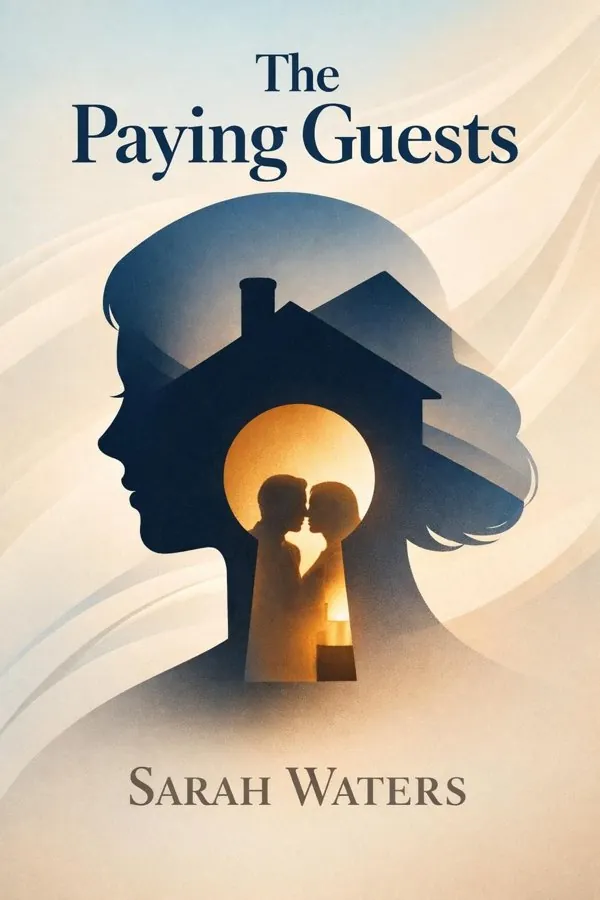
You Might Also Like

The Godfather
Mario Puzo
10 min
The Handmaid's Tale
Margaret Atwood
10 min
The Hunger Games
Suzanne Collins
10 min
The Nightingale
Kristin Hannah
10 min
The Seven Husbands of Evelyn Hugo
Taylor Jenkins Reid
10 min
Backwater Justice
Fern Michaels
10 minBrowse by Category
Ready to read The Little Stranger?
Get the full summary and 100K+ more books with Fizz Moment.