
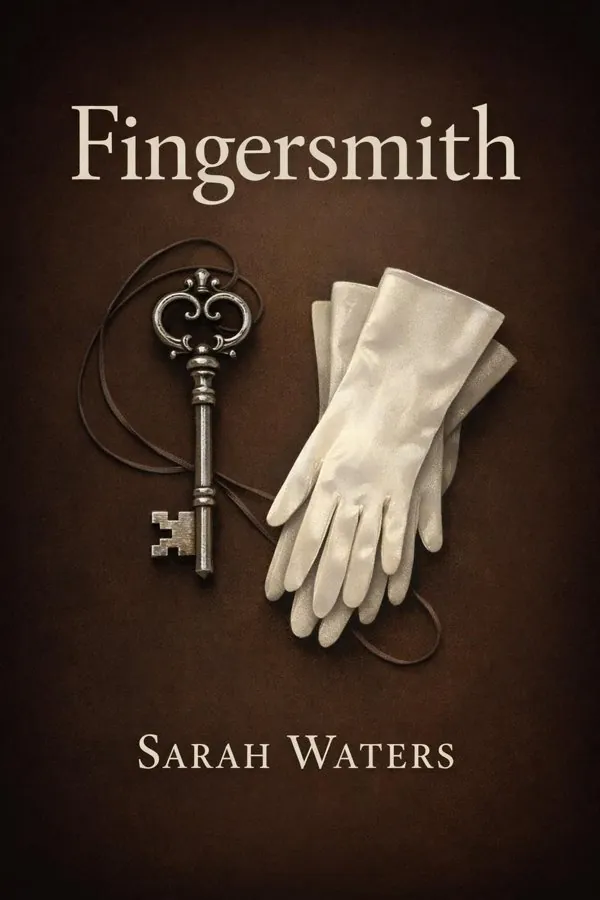
Fingersmith: Summary & Key Insights
by Sarah Waters
 10 min9 chaptersAudio available
Key Takeaways from Fingersmith
Every great deception begins by exploiting what people most want to believe.
Oppression often feels less like violence at first than like atmosphere.
The most dangerous force in a plot built on calculation is genuine feeling.
A great twist does more than surprise; it forces you to reinterpret everything you thought you understood.
Perspective is never neutral; the person telling the story determines its moral shape.
What Is Fingersmith About?
Fingersmith by Sarah Waters is a classics book spanning 5 pages. Sarah Waters’s Fingersmith is a dazzling Victorian novel of crime, confinement, desire, and betrayal. Set between the grimy streets of London and the eerie isolation of a country estate, it begins as the story of Sue Trinder, an orphan raised among thieves, who is drawn into a con meant to rob a sheltered heiress named Maud Lilly. What starts as a familiar swindle quickly deepens into something far stranger and more emotionally dangerous, as loyalties shift, identities fracture, and love emerges in places where manipulation first took root. The novel matters because it does far more than deliver twists. Waters uses the machinery of sensation fiction—orphans, madhouses, inheritance plots, and hidden schemes—to expose the rigid structures of class, gender, and sexual power in Victorian England. At the same time, she creates two unforgettable heroines whose voices make the story intimate as well as suspenseful. Waters is especially authoritative here because she combines meticulous historical research with a modern psychological and feminist insight, reviving the nineteenth-century gothic tradition while reshaping it around women’s experiences. Fingersmith is both a page-turning plot and a profound exploration of how people survive systems designed to control them.
This FizzRead summary covers all 9 key chapters of Fingersmith in approximately 10 minutes, distilling the most important ideas, arguments, and takeaways from Sarah Waters's work. Also available as an audio summary and Key Quotes Podcast.
Fingersmith
Sarah Waters’s Fingersmith is a dazzling Victorian novel of crime, confinement, desire, and betrayal. Set between the grimy streets of London and the eerie isolation of a country estate, it begins as the story of Sue Trinder, an orphan raised among thieves, who is drawn into a con meant to rob a sheltered heiress named Maud Lilly. What starts as a familiar swindle quickly deepens into something far stranger and more emotionally dangerous, as loyalties shift, identities fracture, and love emerges in places where manipulation first took root. The novel matters because it does far more than deliver twists. Waters uses the machinery of sensation fiction—orphans, madhouses, inheritance plots, and hidden schemes—to expose the rigid structures of class, gender, and sexual power in Victorian England. At the same time, she creates two unforgettable heroines whose voices make the story intimate as well as suspenseful. Waters is especially authoritative here because she combines meticulous historical research with a modern psychological and feminist insight, reviving the nineteenth-century gothic tradition while reshaping it around women’s experiences. Fingersmith is both a page-turning plot and a profound exploration of how people survive systems designed to control them.
Who Should Read Fingersmith?
This book is perfect for anyone interested in classics and looking to gain actionable insights in a short read. Whether you're a student, professional, or lifelong learner, the key ideas from Fingersmith by Sarah Waters will help you think differently.
- ✓Readers who enjoy classics and want practical takeaways
- ✓Professionals looking to apply new ideas to their work and life
- ✓Anyone who wants the core insights of Fingersmith in just 10 minutes
Want the full summary?
Get instant access to this book summary and 100K+ more with Fizz Moment.
Get Free SummaryAvailable on App Store • Free to download
Key Chapters
Every great deception begins by exploiting what people most want to believe. In Fingersmith, Sarah Waters opens in the bustling criminal underworld of Victorian London, where Sue Trinder has been raised in Mrs. Sucksby’s house among thieves, tricksters, and opportunists. This environment matters because it shapes Sue’s instincts: she is clever, observant, affectionate, and morally flexible in ways that make perfect sense within her world. When the charming conman Richard Rivers, known as Gentleman, recruits her into a scheme to help him seduce and rob the wealthy heiress Maud Lilly, the plan appears simple. Sue will become Maud’s maid, encourage the courtship, and help ensure the marriage. Once Maud is legally tied to Gentleman, he intends to have her committed to an asylum and seize her fortune.
Waters uses this setup to show how fraud depends not only on lies but on social roles. Sue can pass as a servant because class already renders servants nearly invisible. Gentleman can pose as respectable because Victorian society is eager to trust male polish and confidence. The con works by moving inside existing hierarchies rather than challenging them.
In practical terms, the opening teaches readers to pay attention to systems, not just individuals. In workplaces, families, or politics, manipulation often succeeds because institutions already reward surface appearances. People trust titles, accents, education, or manners even when they should question motives.
Actionable takeaway: when evaluating a situation, ask not only “Who might be lying?” but also “What assumptions make this lie easy to believe?”
Oppression often feels less like violence at first than like atmosphere. When Sue arrives at Briar, Maud Lilly’s decaying country estate, the novel shifts from urban vitality to gothic suffocation. The house is quiet, cold, and ritualized, ruled by Maud’s uncle Christopher Lilly, a collector and scholar of pornography who keeps his niece under strict control. Briar is not merely a backdrop; it is a machine for discipline. The hushed hallways, formal routines, and emotional repression all work to make Maud appear fragile, passive, and dependent.
Sue initially reads Maud through the assumptions of her own class experience. She sees a sheltered lady, soft and naive, someone who must be coaxed toward Gentleman’s proposal. But as they live in close proximity, Sue begins to notice the strain beneath Maud’s elegance. Her delicacy is partly performance, partly damage. Waters is brilliant here in showing how environments shape identity. Briar has trained Maud to conceal thought, mute feeling, and survive through compliance.
This idea applies beyond fiction. Many controlling systems—families, schools, workplaces, relationships—operate through silence, routine, and the narrowing of alternatives. A person may appear timid or inscrutable not because that is their essence, but because they have learned that self-protection requires opacity.
Waters asks readers to look beneath presentation. The person who seems reserved may be enduring conditions you cannot see. The institution that looks civilized may be quietly coercive.
Actionable takeaway: when someone’s behavior seems difficult to read, consider what environment may have taught them to stay hidden.
The most dangerous force in a plot built on calculation is genuine feeling. As Sue settles into life at Briar, her relationship with Maud begins to exceed the boundaries of the con. What starts as observation becomes tenderness; what begins as manipulation becomes attachment. Waters develops this transformation slowly, through intimate acts of care: dressing, brushing hair, sharing rooms, reading moods, noticing fear. These scenes matter because they reveal how emotional closeness can emerge inside structures designed for exploitation.
Sue is supposed to help deliver Maud to ruin, yet she starts to believe that Gentleman is unworthy of her. Her desire to protect Maud grows alongside an attraction she can barely name. In a Victorian setting, where language for female same-sex desire is constrained and distorted, Waters lets emotion arrive before full comprehension. This gives the romance both urgency and realism. Love here is not sentimental rescue. It is confusion, risk, and the unsettling recognition that another person matters more than the plan.
In everyday life, this key idea speaks to the limits of instrumental thinking. People often enter relationships with scripts—professional alliances, family expectations, social roles, strategic goals. But authentic connection can disrupt those scripts. It may reveal that what seemed practical is actually cruel, or that success in one system requires betraying your own emerging values.
Waters suggests that intimacy can become a form of knowledge. Sue understands Maud more truthfully once she cares for her, though that understanding remains incomplete.
Actionable takeaway: if a plan begins to conflict with your growing empathy, pause and ask whether the plan still deserves your loyalty.
A great twist does more than surprise; it forces you to reinterpret everything you thought you understood. Fingersmith delivers one of contemporary fiction’s most memorable reversals when Sue, convinced she has outmaneuvered Gentleman to save Maud, discovers that she has instead been set up. Rather than Maud being committed to an asylum after marriage, it is Sue who is declared mad and imprisoned. The shock is not only plot-based. It tears apart Sue’s sense of identity, agency, and trust.
Waters uses this turn to expose how fragile selfhood becomes when institutions validate false narratives. Sue knows who she is, yet doctors, papers, and legal structures say otherwise. In a society where poor women have little authority over their own stories, truth can be overwritten by class power and bureaucratic force. The asylum becomes the ultimate symbol of social control: a place where inconvenient women are not debated but erased.
This part of the novel offers a wider lesson about gaslighting, social credibility, and vulnerability. People with less status are often easier to disbelieve. A confident liar backed by documents, money, or respectability can redefine reality for everyone else. The question is not just whether truth exists, but who gets recognized as a credible witness to it.
Readers can apply this insight by being cautious about narratives certified by authority alone. Official versions are not always just versions. Listening carefully to those with the least institutional power often reveals what dominant systems prefer to hide.
Actionable takeaway: when accounts conflict, examine who benefits from being believed and who lacks the power to defend themselves.
Perspective is never neutral; the person telling the story determines its moral shape. In the middle section of Fingersmith, Sarah Waters retells major events from Maud Lilly’s point of view, transforming the novel from a tale of betrayal into a layered account of mutual entrapment. What seemed like Maud’s innocence from Sue’s perspective is revealed as a more complex condition: Maud has also been coerced, trained, and used. Under her uncle’s control, she has spent years assisting in the cataloging and reading of obscene texts, living in intimate proximity to exploitation while outwardly maintaining ladylike composure. Gentleman’s scheme offers her not freedom exactly, but one possible route out.
Maud’s narration forces readers to reconsider easy categories such as victim and villain. She has participated in deception, but from within a life structured by domination. Waters resists moral simplification, showing how oppressed people may harm others while trying to survive. This is one of the novel’s greatest achievements: it expands empathy without erasing responsibility.
In practical terms, this idea matters whenever we evaluate conflict. A first account, however convincing, may not capture the constraints shaping another person’s choices. Seeing a situation from a second perspective does not necessarily excuse betrayal, but it can deepen understanding of why harmful decisions were made.
Waters also uses Maud’s voice to explore desire, shame, literacy, and self-fashioning. Maud’s intelligence has been cultivated for degrading purposes, yet that same intelligence becomes part of her eventual resistance.
Actionable takeaway: before making a final judgment, ask what hidden pressures or histories might look different from the other side of the story.
Class in Fingersmith is not just a social category; it is a costume people wear, a language they mimic, and a prison they struggle to escape. Sue can move into a great house as a maid because service is expected from someone of her background, while Gentleman can adopt the manners of refinement because class privilege often rests on performance as much as pedigree. Maud, despite her apparent status, is also trapped by class expectations: as a genteel woman with money, she is valuable precisely because she can be managed, exchanged, and displayed.
Waters shows that Victorian society depends on constant theatricality. Speech, dress, posture, education, and domestic etiquette all signal rank, yet those signals can be forged. This creates suspense in the novel, but it also drives a deeper argument: the social order pretends to be natural while actually being maintained through repeated acts of recognition and exclusion. Those who perform class convincingly gain access; those who fail are exposed and punished.
This remains highly relevant. Modern life still rewards people who know how to display the “right” cultural codes, whether in job interviews, elite schools, or professional settings. Accent, confidence, taste, and familiarity with institutions can matter as much as ability. Waters reminds us that merit is often judged through social performance.
At the same time, the novel does not suggest that performance alone liberates. Passing can offer temporary mobility, but structural power remains unequally distributed. Sue and Maud must do more than imitate roles; they must build a life outside the frameworks that define them.
Actionable takeaway: notice which social rules are presented as natural, and question how much they depend on learned performance rather than real worth.
What society tries hardest to suppress often becomes the source of its deepest challenge. One of the most powerful elements in Fingersmith is its portrayal of female desire—not as scandalous ornament, but as a force that unsettles patriarchal control. Both Sue and Maud have been placed inside systems that commodify women. Men seek to profit from Maud’s body and inheritance; institutions regulate Sue’s freedom and credibility. Yet their growing desire for one another opens a space not organized around male possession.
Waters is careful not to romanticize this entirely. Desire emerges amid deceit, fear, and unequal knowledge. But its importance lies in its capacity to generate a different future. In a world where women are supposed to be passive objects of exchange, Sue and Maud become subjects of longing and choice. Their intimacy is therefore emotional, sexual, and political all at once.
This idea has broad application. Desire, in the novel’s sense, is not merely attraction; it is the recognition of a self beyond imposed roles. People begin resisting control when they can imagine wanting something other than what authority has prescribed for them. That may mean love, creative work, independence, safety, or self-definition.
The novel also highlights how shame is used to enforce obedience. Maud’s education in pornography and Sue’s criminal upbringing are both meant to mark them as tainted. Yet neither woman is reducible to those narratives. Their desires become meaningful precisely because they arise out of damaged conditions and still point beyond them.
Actionable takeaway: pay attention to the desires that make you feel most alive—they may reveal the life that social pressure has taught you to deny.
Suspense is most rewarding when it enlarges understanding rather than simply hiding information. Fingersmith is often praised for its twists, but Waters’s real accomplishment lies in how she uses misdirection to deepen the novel’s themes. The shifting narration, withheld facts, and strategic revelations do not exist only to shock readers. They replicate the uncertainty of living inside systems built on secrecy, manipulation, and unequal knowledge.
Sue does not know Maud’s full circumstances. Maud does not control the plans around her as fully as she seems to. Readers, aligned first with one voice and then another, experience how partial every perspective is. This structure turns reading into an ethical exercise. We are made to trust, misjudge, revise, and question our appetite for simple heroes and villains.
In practical terms, the novel offers a lesson about storytelling itself. The first version we hear—whether in media, personal conflict, or public debate—often feels complete because human minds crave coherence. But coherence can be manufactured by omission. Waters trains readers to become more attentive, less complacent, and more willing to revise conclusions in light of new evidence.
This does not mean all truths are relative. Rather, it means truth is often layered, and honest judgment requires patience. The novel’s structure models intellectual humility: being wrong is not failure if it leads to fuller understanding.
Actionable takeaway: when a story feels perfectly tidy, treat that as a reason to look closer; complexity is often a sign that you are getting nearer to the truth.
Freedom in Fingersmith does not arrive as purity or social restoration; it arrives through hard-won self-recognition and chosen attachment. By the final movement of the novel, both Sue and Maud have lost the identities imposed on them. Sue’s assumptions about her origins, loyalty, and place in the world have been shattered. Maud has fled one system of control only to discover that escape without trust can become another kind of isolation. The resolution matters because it refuses easy repair. Neither woman can return to innocence. They must construct a life from damaged knowledge.
Waters links this process to the reclaiming of narrative authority. Early in the novel, other people define Sue and Maud: thieves, gentlemen, guardians, doctors, legal documents. By the end, the crucial question is not what society names them but what they choose with and for each other. Their reunion carries emotional force because it is not based on fantasy. It follows betrayal, misunderstanding, and the painful recognition of mutual vulnerability.
This ending offers a practical insight about identity. Many people inherit roles from family, class, institutions, or trauma. Real autonomy rarely means discovering some untouched “true self.” More often, it means selecting which bonds, values, and stories to keep building after inherited ones collapse.
The novel’s hope is therefore mature rather than naive. Love does not erase the past, but it can create a livable future when paired with honesty and choice.
Actionable takeaway: if old labels no longer fit, focus less on recovering who you were and more on deliberately choosing who you want to become with the people you trust.
All Chapters in Fingersmith
About the Author
Sarah Waters is a British novelist celebrated for her vivid historical fiction and her reinvention of classic literary forms through feminist and queer perspectives. Born in Wales in 1966, she studied English literature and later completed a PhD focused on lesbian and gay historical fiction, an academic background that deeply informs her work. Waters rose to prominence with Tipping the Velvet and quickly established herself as a major literary voice with novels such as Affinity, Fingersmith, The Night Watch, and The Paying Guests. Her fiction is known for meticulous period detail, suspenseful plotting, and a sharp interest in how class, gender, sexuality, and power shape private lives. By blending scholarly insight with narrative energy, Waters has become one of the most acclaimed contemporary writers of historical fiction in English.
Get This Summary in Your Preferred Format
Read or listen to the Fingersmith summary by Sarah Waters anytime, anywhere. FizzRead offers multiple formats so you can learn on your terms — all free.
Available formats: App · Audio · PDF · EPUB — All included free with FizzRead
Download Fingersmith PDF and EPUB Summary
Key Quotes from Fingersmith
“Every great deception begins by exploiting what people most want to believe.”
“Oppression often feels less like violence at first than like atmosphere.”
“The most dangerous force in a plot built on calculation is genuine feeling.”
“A great twist does more than surprise; it forces you to reinterpret everything you thought you understood.”
“Perspective is never neutral; the person telling the story determines its moral shape.”
Frequently Asked Questions about Fingersmith
Fingersmith by Sarah Waters is a classics book that explores key ideas across 9 chapters. Sarah Waters’s Fingersmith is a dazzling Victorian novel of crime, confinement, desire, and betrayal. Set between the grimy streets of London and the eerie isolation of a country estate, it begins as the story of Sue Trinder, an orphan raised among thieves, who is drawn into a con meant to rob a sheltered heiress named Maud Lilly. What starts as a familiar swindle quickly deepens into something far stranger and more emotionally dangerous, as loyalties shift, identities fracture, and love emerges in places where manipulation first took root. The novel matters because it does far more than deliver twists. Waters uses the machinery of sensation fiction—orphans, madhouses, inheritance plots, and hidden schemes—to expose the rigid structures of class, gender, and sexual power in Victorian England. At the same time, she creates two unforgettable heroines whose voices make the story intimate as well as suspenseful. Waters is especially authoritative here because she combines meticulous historical research with a modern psychological and feminist insight, reviving the nineteenth-century gothic tradition while reshaping it around women’s experiences. Fingersmith is both a page-turning plot and a profound exploration of how people survive systems designed to control them.
More by Sarah Waters

You Might Also Like




Browse by Category
Ready to read Fingersmith?
Get the full summary and 100K+ more books with Fizz Moment.