
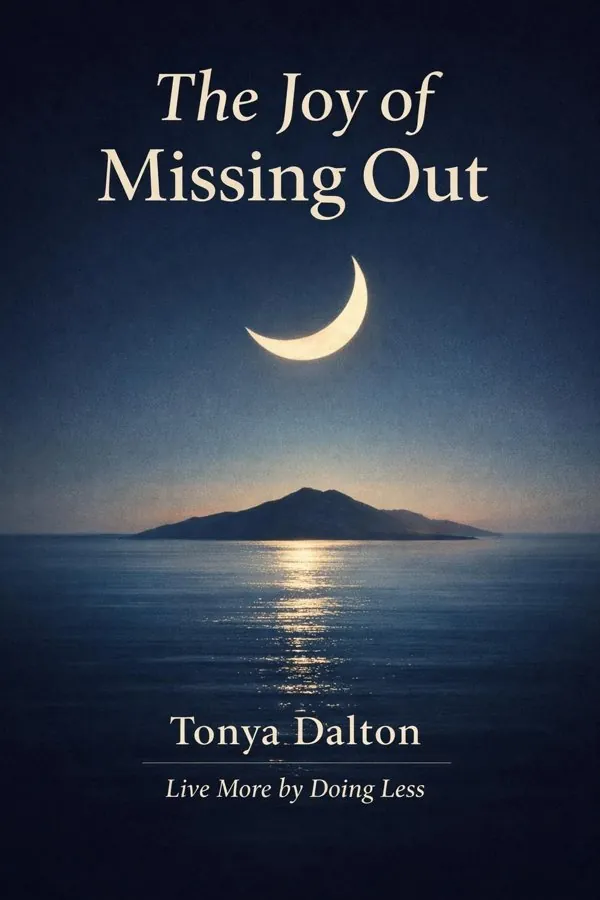
The Joy of Missing Out: Live More by Doing Less: Summary & Key Insights
by Tonya Dalton
 10 min9 chaptersAudio available
Key Takeaways from The Joy of Missing Out: Live More by Doing Less
One of the most powerful traps in modern life is the feeling that if you are not doing everything, you are somehow falling behind.
Busyness has become one of the most socially rewarded forms of self-destruction.
A meaningful life rarely happens by accident.
Many people say everything is important when what they really mean is that they have not yet chosen.
Without boundaries, priorities remain fragile wishes.
What Is The Joy of Missing Out: Live More by Doing Less About?
The Joy of Missing Out: Live More by Doing Less by Tonya Dalton is a productivity book spanning 6 pages. In The Joy of Missing Out, Tonya Dalton makes a bold but liberating argument: the problem is not that we have too little time, but that we have filled our lives with too many things that do not truly matter. In a culture that praises hustle, packed calendars, and constant availability, Dalton challenges the belief that doing more leads to a better life. Instead, she introduces JOMO—the Joy of Missing Out—as a practical philosophy for living with intention, clarity, and peace. This is not a call to disengage from ambition or responsibility. It is an invitation to stop confusing busyness with purpose and start aligning your days with your values. Drawing on her work as a productivity expert and founder of inkWELL Press Productivity Co., Dalton combines mindset shifts with realistic strategies for priorities, boundaries, and focus. The result is a refreshing productivity book for people who feel overwhelmed, overcommitted, or stretched thin. It matters because it offers a better definition of success: not how much you can squeeze into a day, but how fully you can live the life that matters most to you.
This FizzRead summary covers all 9 key chapters of The Joy of Missing Out: Live More by Doing Less in approximately 10 minutes, distilling the most important ideas, arguments, and takeaways from Tonya Dalton's work. Also available as an audio summary and Key Quotes Podcast.
The Joy of Missing Out: Live More by Doing Less
In The Joy of Missing Out, Tonya Dalton makes a bold but liberating argument: the problem is not that we have too little time, but that we have filled our lives with too many things that do not truly matter. In a culture that praises hustle, packed calendars, and constant availability, Dalton challenges the belief that doing more leads to a better life. Instead, she introduces JOMO—the Joy of Missing Out—as a practical philosophy for living with intention, clarity, and peace. This is not a call to disengage from ambition or responsibility. It is an invitation to stop confusing busyness with purpose and start aligning your days with your values. Drawing on her work as a productivity expert and founder of inkWELL Press Productivity Co., Dalton combines mindset shifts with realistic strategies for priorities, boundaries, and focus. The result is a refreshing productivity book for people who feel overwhelmed, overcommitted, or stretched thin. It matters because it offers a better definition of success: not how much you can squeeze into a day, but how fully you can live the life that matters most to you.
Who Should Read The Joy of Missing Out: Live More by Doing Less?
This book is perfect for anyone interested in productivity and looking to gain actionable insights in a short read. Whether you're a student, professional, or lifelong learner, the key ideas from The Joy of Missing Out: Live More by Doing Less by Tonya Dalton will help you think differently.
- ✓Readers who enjoy productivity and want practical takeaways
- ✓Professionals looking to apply new ideas to their work and life
- ✓Anyone who wants the core insights of The Joy of Missing Out: Live More by Doing Less in just 10 minutes
Want the full summary?
Get instant access to this book summary and 100K+ more with Fizz Moment.
Get Free SummaryAvailable on App Store • Free to download
Key Chapters
One of the most powerful traps in modern life is the feeling that if you are not doing everything, you are somehow falling behind. Tonya Dalton begins by confronting the culture of FOMO—the Fear of Missing Out—which quietly shapes decisions, schedules, and self-worth. FOMO tells us to say yes to every invitation, pursue every opportunity, follow every trend, and stay constantly connected so we do not miss the next important thing. The result is not a richer life but a fragmented one. We become reactive instead of intentional, exhausted instead of fulfilled.
JOMO offers a radically different lens. The Joy of Missing Out is the peace that comes from knowing you are choosing what matters most, even when that means declining other options. It is not laziness, avoidance, or isolation. It is confident selectivity. Dalton reframes missing out as a sign of maturity: every meaningful yes requires many thoughtful nos. If you are fully present at your child’s recital, you are missing a networking event. If you are protecting a quiet evening to rest, you are missing one more social obligation. JOMO teaches that this is not failure; it is alignment.
This shift has emotional as well as practical consequences. It reduces comparison, lowers anxiety, and helps you evaluate opportunities through your own values rather than other people’s expectations. Instead of asking, “What if I regret not doing this?” Dalton encourages readers to ask, “Does this fit the life I want to build?” That question restores agency.
A practical way to apply this is to create a personal filter for decisions. Before saying yes, ask whether the commitment supports your priorities, energy, and season of life. If it does not, let it go without apology. Actionable takeaway: replace fear-based decision-making with a simple rule—choose what is meaningful over what is merely available.
Busyness has become one of the most socially rewarded forms of self-destruction. Dalton argues that many people wear packed schedules like badges of honor because modern culture often equates being busy with being important. The fuller the calendar, the more productive and valuable we imagine ourselves to be. But this equation is deeply flawed. Being busy is not the same as being effective, and exhaustion is not proof of significance.
The hidden costs of busyness show up everywhere. Relationships suffer because attention is always divided. Work quality declines because constant context-switching weakens concentration. Mental and emotional health deteriorate because rest is treated as indulgence rather than necessity. Even leisure becomes performative, another item to optimize or document instead of genuinely enjoy. Dalton exposes this lifestyle as unsustainable: people can stay in motion for a long time, but they cannot stay deeply well while doing so.
The book encourages readers to distinguish between activity and progress. A day can be full yet unimportant. You might answer dozens of emails, attend several meetings, run errands, and still make no movement on the projects or relationships that matter most. Dalton’s insight is that overload often creates the illusion of purpose while actually pulling us away from it.
A useful application is to perform a “busy audit.” For one week, list your recurring commitments and note whether each one is essential, meaningful, delegated, postponed, or unnecessary. This reveals where energy is leaking. Many people discover they are spending their best hours on low-value tasks simply because those tasks shout the loudest.
Actionable takeaway: stop measuring your life by how full it feels and start measuring it by whether your time reflects your true priorities.
A meaningful life rarely happens by accident. Dalton’s central argument is that if you do not decide what matters, the world will decide for you. Emails, notifications, requests, social pressure, and habit will gladly fill every open space. Intentional living means stepping back and choosing your actions based on your values rather than your impulses or other people’s demands.
This begins with clarity. Dalton urges readers to identify the roles, relationships, and goals that genuinely define a good life for them. That answer will differ from person to person. For one individual, intention may mean protecting mornings for creative work. For another, it may mean being emotionally available for family after work. For someone else, it may mean simplifying their commitments to preserve health. The important point is that intentionality is personal. It cannot be outsourced to trends or borrowed from someone else’s ideal routine.
Dalton also shows that intention should guide small daily decisions, not just major life plans. The life you want is built in ordinary moments: whether you check your phone during dinner, whether you commit to one more volunteer role, whether you spend your best energy on strategic work or administrative noise. These seemingly minor choices compound over time into either alignment or drift.
One practical method is to write a short personal mission statement and define three current priorities. Then use those priorities as a filter each week. If a task or commitment does not support them, question whether it deserves your time. This approach keeps values visible and turns intention into action.
Actionable takeaway: define what matters most in this season of your life and let that clarity become the standard against which you evaluate new obligations, routines, and opportunities.
Many people say everything is important when what they really mean is that they have not yet chosen. Dalton emphasizes that true priorities are not long wish lists. By definition, a priority is what comes first. When we claim to have ten top priorities, we are usually avoiding the discomfort of trade-offs. But without trade-offs, there can be no focus.
Dalton encourages readers to get honest about the difference between urgent and important. Urgent things demand attention now, but important things create lasting value. A ringing phone, a last-minute request, or a crowded inbox may feel pressing, yet they often crowd out deeper work, long-term planning, rest, and connection. This is why many people feel productive all day but strangely unfulfilled by evening: they served urgency but neglected meaning.
Ruthless clarity involves deciding what deserves your best time, not your leftover time. For example, if writing a book matters, it should not be squeezed into random scraps of energy after every other demand has taken its share. If health matters, movement and sleep cannot remain optional. If relationships matter, quality time must be scheduled with the same seriousness as professional obligations. Dalton’s point is simple but demanding: priorities become visible in calendars, habits, and boundaries, not intentions alone.
A practical exercise is to identify your top three priorities for the next 90 days and assign each one a concrete weekly action. That might mean two evenings reserved for family, three focused work blocks for a major project, or a daily walk for physical and mental health. These actions make priorities measurable.
Actionable takeaway: stop asking whether everything can fit and start asking what deserves to come first, then protect that choice with time on your calendar.
Without boundaries, priorities remain fragile wishes. Dalton argues that many people know what matters to them but still fail to live accordingly because they do not protect their time, energy, and attention from constant intrusion. Boundaries are often misunderstood as selfish or rigid, yet in this book they are framed as tools of stewardship. They make it possible to give your best to the right things instead of diluted fragments to everything.
Boundaries can take many forms. They may be physical, such as a closed office door or a phone-free dinner table. They may be time-based, such as not checking email after a certain hour. They may be relational, such as declining requests that exceed your capacity. They may also be internal, involving the willingness to disappoint others temporarily so you do not permanently betray your own values.
Dalton is especially strong on the emotional challenge of setting boundaries. People often overcommit not because they lack scheduling skills but because they fear guilt, conflict, or being seen as unhelpful. Yet every unguarded yes creates an invisible no somewhere else—to rest, to family, to focused work, to health. Boundaries reveal those hidden costs.
Practical systems help boundaries hold. You can create standard responses for invitations, batch communication into designated windows, or establish theme days for certain categories of work. For example, a manager might reserve mornings for strategic tasks and afternoons for meetings. A parent might create one evening a week with no outside commitments. These systems reduce decision fatigue and make boundaries easier to maintain.
Actionable takeaway: choose one recurring area where your time gets drained and install a clear boundary this week, then communicate it calmly and consistently.
Willpower is an unreliable foundation for a meaningful life. Dalton stresses that if you must make every good decision from scratch each day, chaos will eventually win. That is why JOMO is not only a mindset but also a practical structure. Systems and habits reduce friction, preserve energy, and make intentional living sustainable.
A system is simply a repeatable way of handling common demands so they do not consume unnecessary thought. Meal planning, weekly reviews, automated bill payments, prepared morning routines, and designated planning sessions are all examples. These systems may seem ordinary, but their impact is profound: they free mental space for more important choices. Instead of constantly reacting, you begin operating from a stable base.
Dalton also highlights the value of habit loops tied to priorities. If deep work matters, create a ritual that signals focus: same time, same place, same opening action. If family connection matters, make a habit of eating together or checking in without devices. If rest matters, install an evening shutdown routine. Habits turn values into patterns.
The point is not to optimize every minute into a machine-like existence. Rather, good systems remove clutter so you can be more human, more present, and less overwhelmed. They support flexibility by reducing avoidable disorder. A chaotic home morning, for instance, can consume emotional energy before the day even begins. A simple system for clothes, lunches, and departure times can change the tone of the entire household.
Actionable takeaway: identify one repetitive source of stress and design a small system around it this week, so your future self is not forced to solve the same problem over and over again.
A distracted life can look productive from the outside while feeling empty from the inside. Dalton argues that one of the greatest casualties of overcommitment is presence. When attention is constantly split, we are physically in one place but mentally in several others. We answer messages while listening to loved ones, think about work during rest, and carry digital noise into every silence. Over time, this weakens joy because joy depends on noticing.
The book treats presence as a practice, not a personality trait. You do not become present by accident in a world designed to fracture your attention. You become present by removing distractions, slowing your pace, and intentionally returning to the moment in front of you. Dalton connects this directly to JOMO: when you stop chasing every possible experience, you can inhabit the one you actually chose.
Mindfulness and gratitude play important roles here. Gratitude interrupts the habit of scanning for what is missing by helping you recognize what is already good. Mindfulness interrupts autopilot by grounding attention in what is happening now. For example, instead of rushing through breakfast while checking headlines and replying to texts, you might sit, breathe, and begin the day with intention. Instead of half-listening during a conversation, you might put the phone away and fully engage. These changes are small but cumulative.
Presence also improves performance. Focused attention leads to better work, deeper listening, and more meaningful rest. It is not merely a wellness concept; it is a practical advantage in every domain of life.
Actionable takeaway: choose one daily activity—meals, meetings, walks, or family time—and make it completely device-free so you can rebuild the habit of full attention.
Many people are exhausted not because they are failing, but because they are chasing a definition of success they never consciously chose. Dalton invites readers to examine where their standards come from. Are they pursuing promotions, social visibility, endless productivity, and external validation because those goals truly matter to them, or because they have absorbed them from culture? JOMO begins to feel possible only when success is no longer measured by comparison.
This redefinition is deeply personal. For some, success may still include ambition, growth, and meaningful work. Dalton does not argue against achievement. Instead, she argues against success that costs you your peace, relationships, health, and sense of self. A promotion may be worthwhile for one person and misaligned for another. A full social calendar may energize one person and deplete another. The goal is not to choose less by default, but to choose wisely.
A practical way to apply this is to separate external markers from internal ones. External markers include income, titles, followers, and visible accomplishments. Internal markers include calm, integrity, presence, health, and meaningful contribution. Dalton suggests that lasting fulfillment comes when external pursuits are guided by internal values rather than replacing them.
Readers can ask reflective questions: What kind of life do I want to remember? What do I want my days to feel like? What achievements are worth the trade-offs they require? These questions reveal whether your current path is aligned or inherited.
Actionable takeaway: write your own definition of success in one paragraph, focusing on how you want to live and feel, then compare it with how your time is currently spent.
The real strength of Dalton’s book is that it does not leave JOMO as an inspiring slogan. She frames it as an ongoing lifestyle practice built through repeated choices. Living JOMO means noticing when fear, obligation, or comparison is pulling you off course and gently returning to what matters. It is less a one-time reset than a daily rhythm of alignment.
In practice, this means reviewing commitments regularly, honoring your current season of life, and staying flexible. What matters most when raising small children may differ from what matters during a career transition or a period of caregiving. Dalton’s approach allows for this. JOMO is not about rigidly protecting the same routines forever. It is about continually making sure your life reflects your real priorities now.
Integration also requires self-compassion. Many readers will recognize themselves in patterns of overcommitment, people-pleasing, and distraction. Dalton does not suggest perfection. There will still be busy weeks, unexpected demands, and moments when you say yes for the wrong reasons. The point is not to eliminate every excess instantly but to build awareness and recover more quickly.
A useful practice is a weekly reset: review what gave you energy, what drained it, what mattered, and where you acted from obligation instead of intention. This keeps JOMO active rather than theoretical. Over time, small consistent corrections produce a very different life—one with more room, more calm, and more meaning.
Actionable takeaway: end each week with a ten-minute reflection on where your time aligned with your values and choose one adjustment for the week ahead.
All Chapters in The Joy of Missing Out: Live More by Doing Less
About the Author
Tonya Dalton is an author, speaker, and productivity expert known for helping people create lives that are both effective and intentional. She is the founder of inkWELL Press Productivity Co., a company focused on planning tools and systems that support purposeful living. Dalton’s work stands out because she moves beyond traditional time-management advice and emphasizes values, priorities, and sustainable habits. Rather than promoting hustle for its own sake, she advocates a form of productivity rooted in clarity, presence, and alignment. Through her books, talks, and teaching, she has reached a wide audience of professionals, parents, and leaders who want to reduce overwhelm and focus on what matters most. The Joy of Missing Out reflects her core philosophy: success is not about doing more, but about choosing wisely and living with intention.
Get This Summary in Your Preferred Format
Read or listen to the The Joy of Missing Out: Live More by Doing Less summary by Tonya Dalton anytime, anywhere. FizzRead offers multiple formats so you can learn on your terms — all free.
Available formats: App · Audio · PDF · EPUB — All included free with FizzRead
Download The Joy of Missing Out: Live More by Doing Less PDF and EPUB Summary
Key Quotes from The Joy of Missing Out: Live More by Doing Less
“One of the most powerful traps in modern life is the feeling that if you are not doing everything, you are somehow falling behind.”
“Busyness has become one of the most socially rewarded forms of self-destruction.”
“A meaningful life rarely happens by accident.”
“Many people say everything is important when what they really mean is that they have not yet chosen.”
“Without boundaries, priorities remain fragile wishes.”
Frequently Asked Questions about The Joy of Missing Out: Live More by Doing Less
The Joy of Missing Out: Live More by Doing Less by Tonya Dalton is a productivity book that explores key ideas across 9 chapters. In The Joy of Missing Out, Tonya Dalton makes a bold but liberating argument: the problem is not that we have too little time, but that we have filled our lives with too many things that do not truly matter. In a culture that praises hustle, packed calendars, and constant availability, Dalton challenges the belief that doing more leads to a better life. Instead, she introduces JOMO—the Joy of Missing Out—as a practical philosophy for living with intention, clarity, and peace. This is not a call to disengage from ambition or responsibility. It is an invitation to stop confusing busyness with purpose and start aligning your days with your values. Drawing on her work as a productivity expert and founder of inkWELL Press Productivity Co., Dalton combines mindset shifts with realistic strategies for priorities, boundaries, and focus. The result is a refreshing productivity book for people who feel overwhelmed, overcommitted, or stretched thin. It matters because it offers a better definition of success: not how much you can squeeze into a day, but how fully you can live the life that matters most to you.
You Might Also Like
Browse by Category
Ready to read The Joy of Missing Out: Live More by Doing Less?
Get the full summary and 100K+ more books with Fizz Moment.