
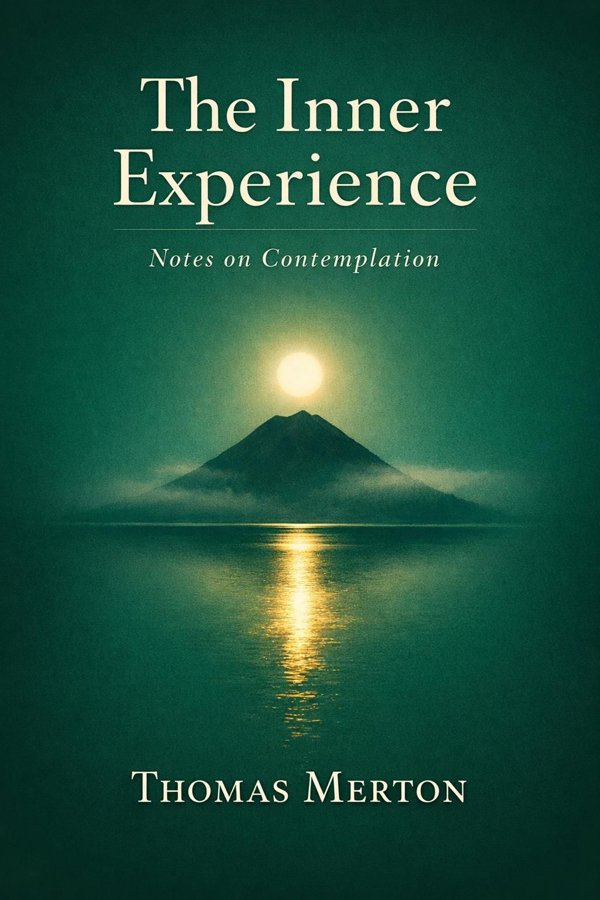
The Inner Experience: Notes on Contemplation: Summary & Key Insights
 10 min7 chaptersAudio available
What Is The Inner Experience: Notes on Contemplation About?
The Inner Experience: Notes on Contemplation by Thomas Merton is a eastern_wisdom book spanning 7 pages. This posthumously published work by Thomas Merton explores the nature of contemplative experience and the inner life of the soul. Written during the 1940s and revised later, it reflects Merton’s deep engagement with Christian mysticism, monastic spirituality, and the contemplative tradition. The book examines the stages of contemplation, the relationship between action and contemplation, and the transformative power of divine union.
This FizzRead summary covers all 7 key chapters of The Inner Experience: Notes on Contemplation in approximately 10 minutes, distilling the most important ideas, arguments, and takeaways from Thomas Merton's work. Also available as an audio summary and Key Quotes Podcast.
The Inner Experience: Notes on Contemplation
This posthumously published work by Thomas Merton explores the nature of contemplative experience and the inner life of the soul. Written during the 1940s and revised later, it reflects Merton’s deep engagement with Christian mysticism, monastic spirituality, and the contemplative tradition. The book examines the stages of contemplation, the relationship between action and contemplation, and the transformative power of divine union.
Who Should Read The Inner Experience: Notes on Contemplation?
This book is perfect for anyone interested in eastern_wisdom and looking to gain actionable insights in a short read. Whether you're a student, professional, or lifelong learner, the key ideas from The Inner Experience: Notes on Contemplation by Thomas Merton will help you think differently.
- ✓Readers who enjoy eastern_wisdom and want practical takeaways
- ✓Professionals looking to apply new ideas to their work and life
- ✓Anyone who wants the core insights of The Inner Experience: Notes on Contemplation in just 10 minutes
Want the full summary?
Get instant access to this book summary and 100K+ more with Fizz Moment.
Get Free SummaryAvailable on App Store • Free to download
Key Chapters
Every person bears within themselves a hidden sanctuary, an inmost point where God’s presence dwells. In the busy tempo of modern life, that sanctuary becomes obscured by noise and illusion. The first task of contemplation is to rediscover that sacred center. Yet this rediscovery does not come by effort alone but through awareness: by recognizing how much of what we call the self is a tangle of desires, fears, and imagined identities. The human soul has a natural orientation toward contemplation, but that orientation is clouded by self-centeredness.
I have seen how many seekers misunderstand contemplation as an extraordinary act—a mystical achievement or a flight from reality. In truth, it is the awakening of what is most ordinary and real within us: the capacity to perceive God immediately, not through concepts, but through love. The greatest obstacle is not sin in its moral sense, but illusion—the mistaken belief that the self must defend, accumulate, and control. When we live from this false self, we become alienated from the divine presence that is already within us.
True contemplation begins with the recognition of our poverty before God. That recognition dismantles the false images of success or sanctity we construct around ourselves. It allows grace to shape our hearts into receptivity. The journey inward does not reject the world; it reorders it, teaching us to perceive creation as transparent to its Source. I have often said that the contemplative does not flee reality but sees it from a new depth. The same sunlight, the same suffering, the same world—but all illumined by an interior clarity that cannot be manufactured.
No one lives a purely contemplative or purely active life. The division between the two, while useful for understanding different spiritual callings, is false when taken absolutely. Contemplation gives depth to action; action gives embodiment to contemplation. In the monastery, our rhythm of prayer and labor becomes a living illustration of this unity. Every act—cleaning, reading, serving—is a channel through which one’s inward openness to God is expressed.
Too often spirituality has been divided along this fault: the contemplative who withdraws from the world and the activist who immerses in it. Yet the more I have reflected, the clearer it has become that both miss their aim when divorced from each other. The one risks sterile detachment, the other frantic dispersion. When action springs from contemplation, it becomes an act of love rather than ego; when contemplation remains open to the cries of the world, it grows into compassion rather than complacency.
Our culture thrives on doing, but in doing so it loses awareness of being. Contemplation restores that awareness, not by negating activity but by sanctifying it. The layperson immersed in family, work, or social responsibility can share deeply in contemplation if their daily life becomes transparent to grace. Conversely, the monk must not hide behind his cloister walls in spiritual self-interest. He too must live the Gospel of love for others. The integration of action and contemplation reveals the truth: there is no opposition between holiness and humanity. Every act done in love and in awareness of God’s presence belongs to the contemplative life.
+ 5 more chapters — available in the FizzRead app
All Chapters in The Inner Experience: Notes on Contemplation
About the Author
Thomas Merton (1915–1968) was an American Trappist monk, writer, theologian, mystic, poet, and social activist. A member of the Abbey of Gethsemani in Kentucky, he became one of the most influential Catholic writers of the 20th century, known for works such as 'The Seven Storey Mountain' and 'New Seeds of Contemplation'. His writings continue to inspire readers seeking spiritual depth and contemplative insight.
Get This Summary in Your Preferred Format
Read or listen to the The Inner Experience: Notes on Contemplation summary by Thomas Merton anytime, anywhere. FizzRead offers multiple formats so you can learn on your terms — all free.
Available formats: App · Audio · PDF · EPUB — All included free with FizzRead
Download The Inner Experience: Notes on Contemplation PDF and EPUB Summary
Key Quotes from The Inner Experience: Notes on Contemplation
“Every person bears within themselves a hidden sanctuary, an inmost point where God’s presence dwells.”
“No one lives a purely contemplative or purely active life.”
Frequently Asked Questions about The Inner Experience: Notes on Contemplation
The Inner Experience: Notes on Contemplation by Thomas Merton is a eastern_wisdom book that explores key ideas across 7 chapters. This posthumously published work by Thomas Merton explores the nature of contemplative experience and the inner life of the soul. Written during the 1940s and revised later, it reflects Merton’s deep engagement with Christian mysticism, monastic spirituality, and the contemplative tradition. The book examines the stages of contemplation, the relationship between action and contemplation, and the transformative power of divine union.
You Might Also Like

A New Earth
Eckhart Tolle
10 min
The Daily Stoic
Ryan Holiday, Stephen Hanselman
10 min
Buddhism: Plain and Simple
Steve Hagen
10 min
Enchiridion
Epictetus
10 min
The Book of Tea
Kakuzō Okakura
10 min
The Light We Give: How Sikh Wisdom Can Transform Your Life
Simran Jeet Singh
10 minBrowse by Category
Ready to read The Inner Experience: Notes on Contemplation?
Get the full summary and 100K+ more books with Fizz Moment.