
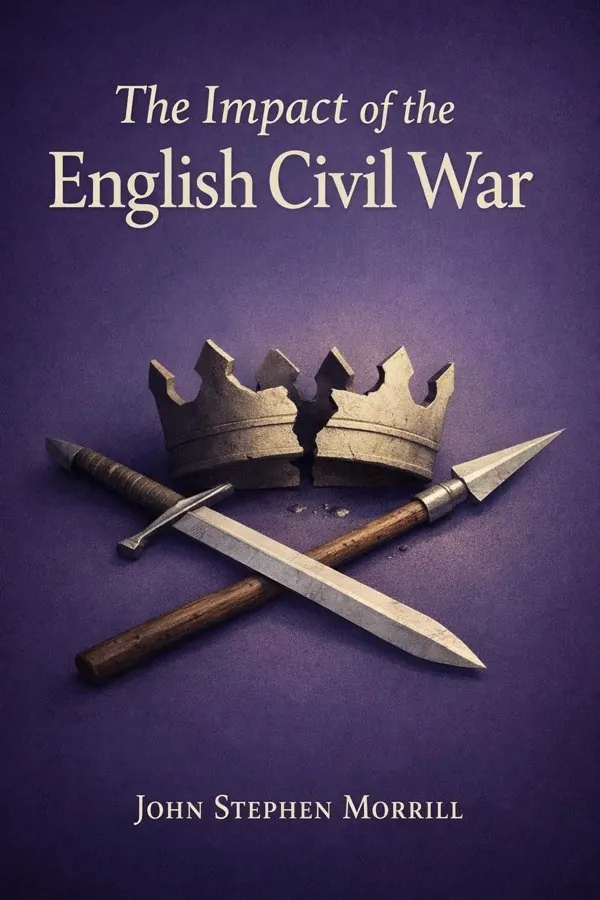
The Impact of the English Civil War: Summary & Key Insights
 10 min8 chaptersAudio available
What Is The Impact of the English Civil War About?
The Impact of the English Civil War by John Stephen Morrill is a world_history book spanning 8 pages. This collection of essays explores the causes, course, and consequences of the English Civil Wars (1642–1651). Edited by historian John Stephen Morrill, it examines political, social, and religious dimensions of the conflict and its lasting impact on English society and governance.
This FizzRead summary covers all 8 key chapters of The Impact of the English Civil War in approximately 10 minutes, distilling the most important ideas, arguments, and takeaways from John Stephen Morrill's work. Also available as an audio summary and Key Quotes Podcast.
The Impact of the English Civil War
This collection of essays explores the causes, course, and consequences of the English Civil Wars (1642–1651). Edited by historian John Stephen Morrill, it examines political, social, and religious dimensions of the conflict and its lasting impact on English society and governance.
Who Should Read The Impact of the English Civil War?
This book is perfect for anyone interested in world_history and looking to gain actionable insights in a short read. Whether you're a student, professional, or lifelong learner, the key ideas from The Impact of the English Civil War by John Stephen Morrill will help you think differently.
- ✓Readers who enjoy world_history and want practical takeaways
- ✓Professionals looking to apply new ideas to their work and life
- ✓Anyone who wants the core insights of The Impact of the English Civil War in just 10 minutes
Want the full summary?
Get instant access to this book summary and 100K+ more with Fizz Moment.
Get Free SummaryAvailable on App Store • Free to download
Key Chapters
Long before musket fire echoed across English fields, there simmered a quieter conflict—a constitutional tug-of-war between an increasingly assertive Parliament and a monarchy that refused to relinquish its divine and absolute prerogative. The reigns of James I and Charles I laid the groundwork for this collision. Both monarchs held deep convictions about divine right, believing that kings ruled by heavenly mandate. Parliament, meanwhile, was evolving into a body that demanded consultation, accountability, and fiscal transparency, especially regarding taxation.
The tension between Crown and Parliament crystallized around the question of sovereignty. Could the monarch act above the law, or was he bound by the statutes and traditions of the realm? When Charles I dissolved Parliament, ruled by decree, and levied taxes without consent, he opened a constitutional abyss. His actions were not isolated impulses but reflections of a worldview—one that saw royal power as sacred. Parliament’s resistance arose from equally powerful ideological roots: the belief that government must serve the common good, and that the consent of the governed mattered.
As political confrontation escalated—from the Petition of Right in 1628 to the Personal Rule of the 1630s—England became a pressure vessel. Each royal edict and parliamentary remonstrance accumulated constitutional tension until there was no turning back. When Charles attempted to govern without parliamentary consent, his actions were seen as tyranny. In response, Parliament claimed a new moral authority—the right, even the duty, to safeguard liberty.
Thus, by 1642, when the king raised his standard at Nottingham, England had already long been at war—constitutionally, intellectually, and spiritually. The battlefields would merely make visible what had become an irreconcilable divide in political philosophy.
Religion was the emotional core of seventeenth-century life, and it was in religion that the deepest fissures appeared. The English Reformation had left the soul of the nation unsettled. The Church of England, as established under Henry VIII and refined under Elizabeth, presented itself as a middle way—a via media between Catholic ritual and Protestant austerity. Yet many found this compromise unsatisfactory.
The Puritans desired a purer form of worship, stripped of ceremony and human hierarchy, guided solely by Scripture. They viewed bishops, altar rails, and vestments as remnants of popery and corruption. At the same time, remnants of old Catholic devotion persisted, especially in the north and west of England. To Charles I and Archbishop Laud, unity under an ordered and ceremonial church was essential for stability; to the Puritans, it was a betrayal of divine truth.
The religious conflict thus became moral and political. For many, to challenge the king’s religious authority was not merely a spiritual act—it was a declaration that conscience trumped state power. When Charles and Laud introduced the Book of Common Prayer in Scotland, igniting rebellion there, the link between religious imposition and political resistance became undeniable.
In my study, I emphasize that religion was not simply a backdrop—it was the lens through which virtually every participant understood the war. The Puritan drive toward moral reformation of society gave the Parliamentarian cause its fervor, its sense of divine mission. Conversely, Royalists saw themselves as defenders of the established order, anointed by God to resist the chaos of sectarianism. These opposing convictions turned theological debate into armed confrontation, leaving no space for neutrality.
The English Civil Wars thus stand as evidence that when faith and power intertwine, political solutions alone cannot heal spiritual divides.
+ 6 more chapters — available in the FizzRead app
All Chapters in The Impact of the English Civil War
About the Author
John Stephen Morrill (born 1946) is a British historian specializing in early modern British history, particularly the English Civil War. He is a Fellow of Selwyn College, Cambridge, and has published extensively on seventeenth-century England.
Get This Summary in Your Preferred Format
Read or listen to the The Impact of the English Civil War summary by John Stephen Morrill anytime, anywhere. FizzRead offers multiple formats so you can learn on your terms — all free.
Available formats: App · Audio · PDF · EPUB — All included free with FizzRead
Download The Impact of the English Civil War PDF and EPUB Summary
Key Quotes from The Impact of the English Civil War
“The reigns of James I and Charles I laid the groundwork for this collision.”
“Religion was the emotional core of seventeenth-century life, and it was in religion that the deepest fissures appeared.”
Frequently Asked Questions about The Impact of the English Civil War
The Impact of the English Civil War by John Stephen Morrill is a world_history book that explores key ideas across 8 chapters. This collection of essays explores the causes, course, and consequences of the English Civil Wars (1642–1651). Edited by historian John Stephen Morrill, it examines political, social, and religious dimensions of the conflict and its lasting impact on English society and governance.
You Might Also Like
The Age of Capital
Eric Hobsbawm
10 min
The Gulag Archipelago
Aleksandr Solzhenitsyn
10 min
Jerusalem: The Biography
Simon Sebag Montefiore
10 min
The Anglo-Saxons
James Campbell
10 min
The Boer War
Thomas Pakenham
10 min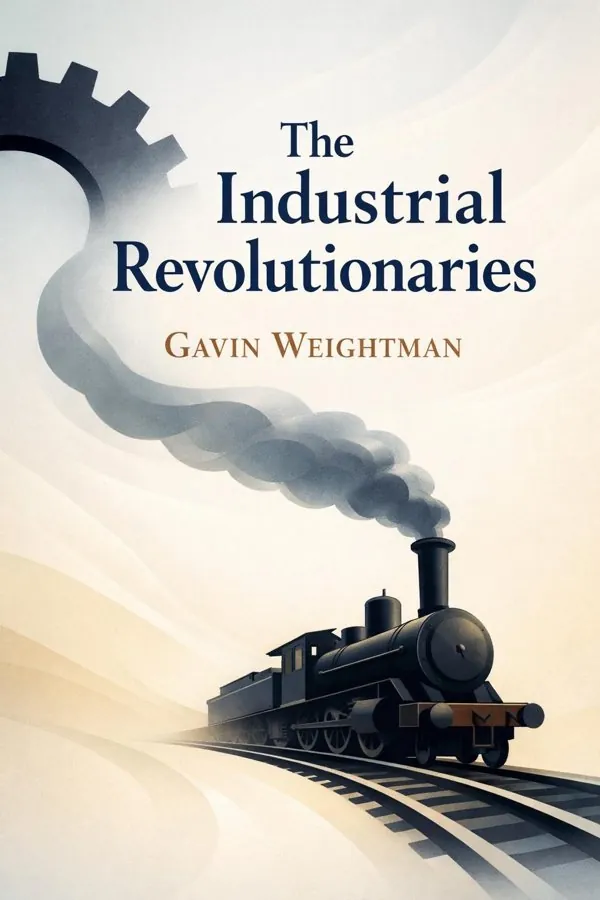
The Industrial Revolutionaries: The Making of the Modern World 1776–1914
Gavin Weightman
10 minBrowse by Category
Ready to read The Impact of the English Civil War?
Get the full summary and 100K+ more books with Fizz Moment.