
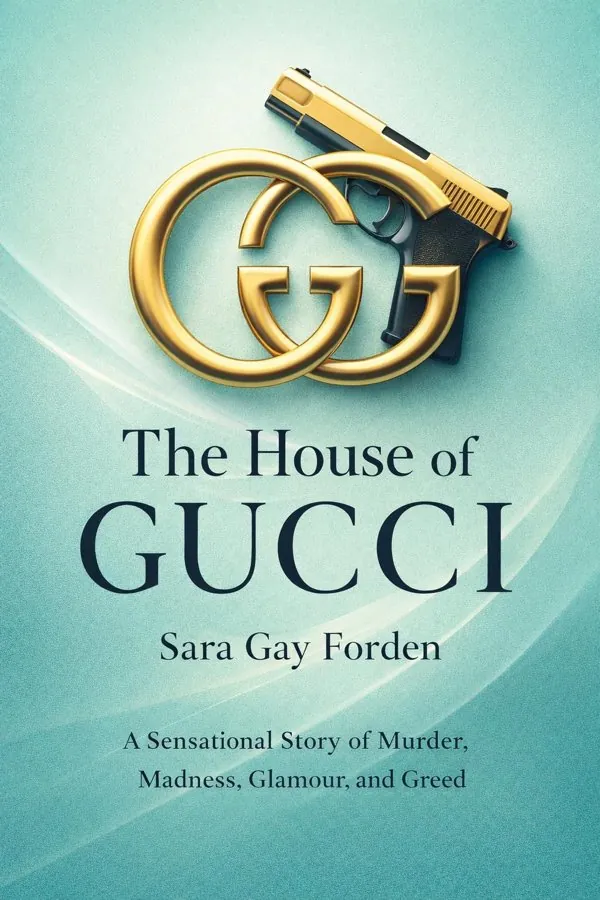
The House of Gucci: A Sensational Story of Murder, Madness, Glamour, and Greed: Summary & Key Insights
 10 min8 chaptersAudio available
Key Takeaways from The House of Gucci: A Sensational Story of Murder, Madness, Glamour, and Greed
Great brands often begin with observation before they become symbols.
Family businesses can turn shared blood into shared conflict when power is unclear.
Expansion is often celebrated as proof of brilliance, yet growth without discipline can quietly weaken the empire it seems to confirm.
Inheritance can create authority on paper without creating readiness in practice.
Private relationships can become public disasters when status, resentment, and money are tangled together.
What Is The House of Gucci: A Sensational Story of Murder, Madness, Glamour, and Greed About?
The House of Gucci: A Sensational Story of Murder, Madness, Glamour, and Greed by Sara Gay Forden is a biographies book spanning 5 pages. The House of Gucci is far more than a true-crime story set in the glittering world of high fashion. In Sara Gay Forden’s richly reported narrative, the history of one of the world’s most famous luxury brands becomes a drama of family ambition, dynastic rivalry, corporate transformation, and personal ruin. Beginning with Guccio Gucci’s humble origins and the creation of a leather goods shop in Florence, the book follows the family through decades of growth, conflict, vanity, lawsuits, tax scandals, and emotional betrayals that eventually culminated in the 1995 murder of Maurizio Gucci. What makes this book matter is its rare ability to connect private family wounds with public business consequences. Forden shows that Gucci’s rise and collapse were not driven by fashion trends alone, but by ego, inheritance battles, weak governance, and the dangerous confusion between family loyalty and corporate control. Her authority comes from years of reporting on Italian business and luxury fashion from Milan, as well as extensive interviews and archival research. The result is an engrossing account of how glamour can conceal instability, and how an iconic brand can survive even when the family behind it cannot.
This FizzRead summary covers all 8 key chapters of The House of Gucci: A Sensational Story of Murder, Madness, Glamour, and Greed in approximately 10 minutes, distilling the most important ideas, arguments, and takeaways from Sara Gay Forden's work. Also available as an audio summary and Key Quotes Podcast.
The House of Gucci: A Sensational Story of Murder, Madness, Glamour, and Greed
The House of Gucci is far more than a true-crime story set in the glittering world of high fashion. In Sara Gay Forden’s richly reported narrative, the history of one of the world’s most famous luxury brands becomes a drama of family ambition, dynastic rivalry, corporate transformation, and personal ruin. Beginning with Guccio Gucci’s humble origins and the creation of a leather goods shop in Florence, the book follows the family through decades of growth, conflict, vanity, lawsuits, tax scandals, and emotional betrayals that eventually culminated in the 1995 murder of Maurizio Gucci.
What makes this book matter is its rare ability to connect private family wounds with public business consequences. Forden shows that Gucci’s rise and collapse were not driven by fashion trends alone, but by ego, inheritance battles, weak governance, and the dangerous confusion between family loyalty and corporate control. Her authority comes from years of reporting on Italian business and luxury fashion from Milan, as well as extensive interviews and archival research. The result is an engrossing account of how glamour can conceal instability, and how an iconic brand can survive even when the family behind it cannot.
Who Should Read The House of Gucci: A Sensational Story of Murder, Madness, Glamour, and Greed?
This book is perfect for anyone interested in biographies and looking to gain actionable insights in a short read. Whether you're a student, professional, or lifelong learner, the key ideas from The House of Gucci: A Sensational Story of Murder, Madness, Glamour, and Greed by Sara Gay Forden will help you think differently.
- ✓Readers who enjoy biographies and want practical takeaways
- ✓Professionals looking to apply new ideas to their work and life
- ✓Anyone who wants the core insights of The House of Gucci: A Sensational Story of Murder, Madness, Glamour, and Greed in just 10 minutes
Want the full summary?
Get instant access to this book summary and 100K+ more with Fizz Moment.
Get Free SummaryAvailable on App Store • Free to download
Key Chapters
Great brands often begin with observation before they become symbols. Guccio Gucci’s genius did not emerge in a boardroom or a fashion studio. It grew from his ability to notice how the wealthy lived, what they carried, and how status could be expressed through objects. While working at London’s Savoy Hotel, he watched elite travelers arrive with finely crafted luggage and absorbed the link between elegance, travel, and aspiration. When he returned to Florence and founded Gucci in 1921, he transformed that insight into a business built on leather goods, workmanship, and an image of refined mobility.
Forden presents Guccio not simply as a craftsman, but as an early brand visionary. He understood that customers were buying more than products. They were buying entry into a world of sophistication. That intuition helped Gucci evolve from a local shop into a recognizable luxury name. The company’s equestrian motifs, polished leatherwork, and later signature symbols reflected a careful attempt to turn artisanal skill into a coherent lifestyle identity.
The practical lesson is that enduring brands usually start with a sharp reading of human desire. Guccio noticed what people admired and built a product that let them participate in that dream. This applies beyond fashion. Whether building a startup, personal brand, or service business, the strongest foundation is often a clear emotional promise, not just technical quality.
Actionable takeaway: Study what your audience aspires to, then design products, services, or communication that connect craftsmanship with identity.
Family businesses can turn shared blood into shared conflict when power is unclear. After Guccio Gucci laid the foundation, his sons Aldo, Vasco, and Rodolfo helped transform the company into an international luxury force. Each brought distinct strengths. Vasco focused on operations and production, Aldo pushed aggressive expansion and marketing, and Rodolfo, with his theatrical background and more reserved temperament, represented a different vision of prestige and control. Their combined efforts fueled Gucci’s growth, but their differences also seeded future instability.
Forden shows that the success of the second generation was inseparable from tension. What looked like a united dynasty from the outside was, internally, a balancing act of pride, resentment, and competing ambitions. The brothers benefited from the strength of the family name, yet that same name made boundaries harder to maintain. Personal disputes became strategic disputes. Questions of succession became emotional battlegrounds. As the company expanded abroad, especially into the American market, those unresolved tensions became more dangerous.
The story illustrates a common problem in family enterprises: informal authority works during early growth, but becomes risky as the organization gets larger. A business can survive personality clashes for years, but eventually scale demands structure. Without clearly defined responsibilities and rules, even talented leaders begin to work at cross-purposes.
For anyone running a family firm, startup with friends, or multigenerational company, the Gucci saga is a warning. Trust and history are not enough. Governance, role clarity, and conflict management must evolve as the business grows.
Actionable takeaway: If leadership is shared among relatives or longtime partners, define decision rights, succession plans, and dispute processes before success magnifies disagreement.
Inheritance can create authority on paper without creating readiness in practice. Maurizio Gucci, the son of Rodolfo, emerged as a central figure in the family’s final struggle for control. After his father’s death, he inherited a major stake in the company and became the focal point of a power contest with Aldo and other relatives. Maurizio saw himself as a modernizer who could restore Gucci’s exclusivity and prestige after years of overextension. He wanted the brand to become more refined, more selective, and better managed.
Forden presents Maurizio as neither hero nor villain, but as a complicated heir with grand ambitions and inconsistent execution. He understood that the brand needed renewal, yet he lacked the managerial discipline to carry out his vision effectively. He spent heavily, trusted poorly, and often operated with more confidence than operational rigor. His strategic instincts about repositioning the brand were not entirely wrong, but his leadership was undermined by financial disorder and personal turmoil.
This section of the book speaks to a broader truth about leadership transitions. Wanting change is not the same as being equipped to lead it. Vision matters, but without systems, capable advisers, and self-awareness, vision can become expensive improvisation. Many companies face similar risks when founders hand control to heirs, charismatic successors, or internal insiders who possess symbolic legitimacy but limited executional strength.
Maurizio’s rise also shows how family politics can make leadership evaluation difficult. People are chosen not only for ability, but for lineage, alliances, and emotional symbolism.
Actionable takeaway: Before handing leadership to a successor, assess operational competence, financial judgment, and emotional maturity as seriously as legacy, title, or ownership stake.
Private relationships can become public disasters when status, resentment, and money are tangled together. One of the most gripping elements of The House of Gucci is the marriage between Maurizio Gucci and Patrizia Reggiani, a union that began in glamour and ended in bitterness, obsession, and murder. Forden traces how their relationship deteriorated as Maurizio distanced himself emotionally, pursued another partner, and left Patrizia feeling humiliated, excluded, and enraged. Their separation was not merely romantic fallout; it unfolded in the context of wealth, identity, and a fiercely visible family name.
Patrizia’s eventual role in arranging Maurizio’s killing gave the story international notoriety, but Forden’s treatment is more insightful than sensational. She shows how emotional injury can be intensified when social status and financial power are at stake. Patrizia had built part of her identity around being a Gucci. When that identity fractured, anger escalated into fixation. The tragedy became a chilling example of what can happen when people lack emotional regulation, healthy boundaries, and support systems in high-pressure, high-visibility lives.
There is a practical lesson here that goes beyond celebrity scandal. In families, partnerships, and businesses, unresolved resentment rarely stays contained. It distorts judgment, hardens narratives, and can drive reckless acts. The more public the relationship and the higher the financial stakes, the more disciplined communication and legal clarity become essential.
Forden reminds readers that collapse does not begin with one explosive moment. It often begins with years of avoidance, vanity, and untreated grievance.
Actionable takeaway: In high-conflict relationships involving money or reputation, address disputes early through clear communication, legal structure, and emotional support before resentment hardens into destructive behavior.
A famous surname can open doors, but it can also trap a company inside outdated loyalties and destructive entitlement. One of the book’s central insights is that the Gucci family’s greatest asset eventually became one of the brand’s biggest liabilities. Because ownership and identity were so tightly fused, business decisions were repeatedly distorted by grudges, vanity, inheritance claims, and efforts to outmaneuver relatives. Instead of acting like stewards of a shared institution, family members often behaved like rivals fighting over symbolic territory.
Forden demonstrates that this pattern is not unique to Gucci. Many family-led businesses struggle when emotional history shapes strategic decisions. Promotions become political. Financial transparency erodes. Conflicts are personalized rather than solved structurally. In Gucci’s case, legal battles, tax investigations, and internal betrayals consumed energy that should have gone toward innovation, discipline, and brand stewardship.
The practical relevance is broad. Organizations of any kind can suffer when identity overrides accountability. A company can become so attached to founders, relatives, or legacy narratives that it resists the systems required for long-term resilience. Boards become weak. Advisers become enablers. Decisions serve ego rather than enterprise.
The Gucci story makes clear that governance is not boring bureaucracy; it is what protects institutions from the instability of human emotion. Professionalization does not dishonor a legacy. It may be the only way to preserve it.
Actionable takeaway: Separate family identity from corporate decision-making by building strong governance, independent oversight, and transparent reporting before internal loyalties start undermining the business.
People often assume luxury is about beauty alone, but true luxury depends on disciplined storytelling and operational rigor. Gucci became powerful not just because it made attractive products, but because it crafted a myth. Equestrian references, Florentine craftsmanship, celebrity association, and a distinctive visual vocabulary all helped create an aura larger than the items themselves. Customers were not simply buying handbags or loafers. They were buying participation in an imagined world of sophistication, heritage, and taste.
Forden’s account shows, however, that myth is fragile. When licensing expands too far, product quality slips, or internal scandal dominates public perception, the symbolic value of luxury begins to erode. That is what made Gucci’s internal conflicts so consequential. Family infighting was not merely a private drama. It threatened the credibility of the brand’s story. If luxury depends on trust in quality and aura, then chaos at the top can eventually damage demand at the bottom.
This insight is highly practical for modern creators, entrepreneurs, and marketers. Every strong brand combines narrative and discipline. Storytelling attracts attention, but consistency earns loyalty. A restaurant, consulting firm, software company, or personal brand can all learn from this. What customers remember is often the emotional frame around the offering, but that frame only holds if the underlying experience is reliable.
The Gucci saga proves that image alone cannot carry a business forever. Prestige must be maintained through control, restraint, and repeated delivery.
Actionable takeaway: Build your brand around a clear narrative, but protect it with consistent quality, selective growth, and operational standards that make the story believable.
Sometimes a brand survives only after the family that created it loses control. One of the most surprising themes in The House of Gucci is that the company’s eventual renewal came not through family reconciliation, but through separation from the dynasty itself. After years of internal warfare, poor management, and financial damage, outside investors and professional executives gained greater influence. This shift helped create the conditions for a modern revival in which Gucci could be repositioned, restructured, and creatively reenergized.
Forden uses this transformation to highlight a difficult truth: legacy can become a burden when nostalgia prevents change. The Gucci family saw the company as inheritance, identity, and battlefield all at once. Professional managers, by contrast, were better able to treat it as a business and a global brand in need of coherent strategy. The revival did not erase the family’s role in creating Gucci, but it did suggest that founding myths are not enough to sustain contemporary success.
This has practical applications for many organizations. Founders and heirs often believe that emotional attachment gives them unique authority, but attachment can also impair judgment. External perspectives, independent leadership, and merit-based management are sometimes essential for renewal. The strongest organizations honor their origins without becoming imprisoned by them.
The Gucci story therefore ends not only in tragedy, but in institutional adaptation. A great brand can outlive the dysfunction of the people who built it, provided it is willing to evolve.
Actionable takeaway: If your organization is stuck in legacy-driven conflict, consider whether outside leadership or independent restructuring is necessary to restore focus, credibility, and growth.
All Chapters in The House of Gucci: A Sensational Story of Murder, Madness, Glamour, and Greed
About the Author
Sara Gay Forden is an American journalist and author best known for her reporting on the global fashion and luxury industries. Based for many years in Milan, she covered Italian business, family-owned companies, and the powerful personalities behind major brands. Her reporting combined financial insight with cultural awareness, allowing her to examine fashion not just as style, but as an industry shaped by strategy, inheritance, and power. That perspective made her uniquely qualified to write The House of Gucci, a book that blends biography, corporate history, and true crime. Forden’s work is widely respected for its depth of research, strong sourcing, and ability to reveal the human conflicts behind famous institutions.
Get This Summary in Your Preferred Format
Read or listen to the The House of Gucci: A Sensational Story of Murder, Madness, Glamour, and Greed summary by Sara Gay Forden anytime, anywhere. FizzRead offers multiple formats so you can learn on your terms — all free.
Available formats: App · Audio · PDF · EPUB — All included free with FizzRead
Download The House of Gucci: A Sensational Story of Murder, Madness, Glamour, and Greed PDF and EPUB Summary
Key Quotes from The House of Gucci: A Sensational Story of Murder, Madness, Glamour, and Greed
“Great brands often begin with observation before they become symbols.”
“Family businesses can turn shared blood into shared conflict when power is unclear.”
“Expansion is often celebrated as proof of brilliance, yet growth without discipline can quietly weaken the empire it seems to confirm.”
“Inheritance can create authority on paper without creating readiness in practice.”
“Private relationships can become public disasters when status, resentment, and money are tangled together.”
Frequently Asked Questions about The House of Gucci: A Sensational Story of Murder, Madness, Glamour, and Greed
The House of Gucci: A Sensational Story of Murder, Madness, Glamour, and Greed by Sara Gay Forden is a biographies book that explores key ideas across 8 chapters. The House of Gucci is far more than a true-crime story set in the glittering world of high fashion. In Sara Gay Forden’s richly reported narrative, the history of one of the world’s most famous luxury brands becomes a drama of family ambition, dynastic rivalry, corporate transformation, and personal ruin. Beginning with Guccio Gucci’s humble origins and the creation of a leather goods shop in Florence, the book follows the family through decades of growth, conflict, vanity, lawsuits, tax scandals, and emotional betrayals that eventually culminated in the 1995 murder of Maurizio Gucci. What makes this book matter is its rare ability to connect private family wounds with public business consequences. Forden shows that Gucci’s rise and collapse were not driven by fashion trends alone, but by ego, inheritance battles, weak governance, and the dangerous confusion between family loyalty and corporate control. Her authority comes from years of reporting on Italian business and luxury fashion from Milan, as well as extensive interviews and archival research. The result is an engrossing account of how glamour can conceal instability, and how an iconic brand can survive even when the family behind it cannot.
You Might Also Like

An American Marriage
Tayari Jones
10 min
Benjamin Franklin: An American Life
Walter Isaacson
10 min
I Know Why The Caged Bird Sings
Maya Angelou
10 min
Long Walk to Freedom
Nelson Mandela
10 min
Persepolis
Marjane Satrapi
10 min
Surely You're Joking, Mr. Feynman!
Richard P. Feynman
10 minBrowse by Category
Ready to read The House of Gucci: A Sensational Story of Murder, Madness, Glamour, and Greed?
Get the full summary and 100K+ more books with Fizz Moment.