
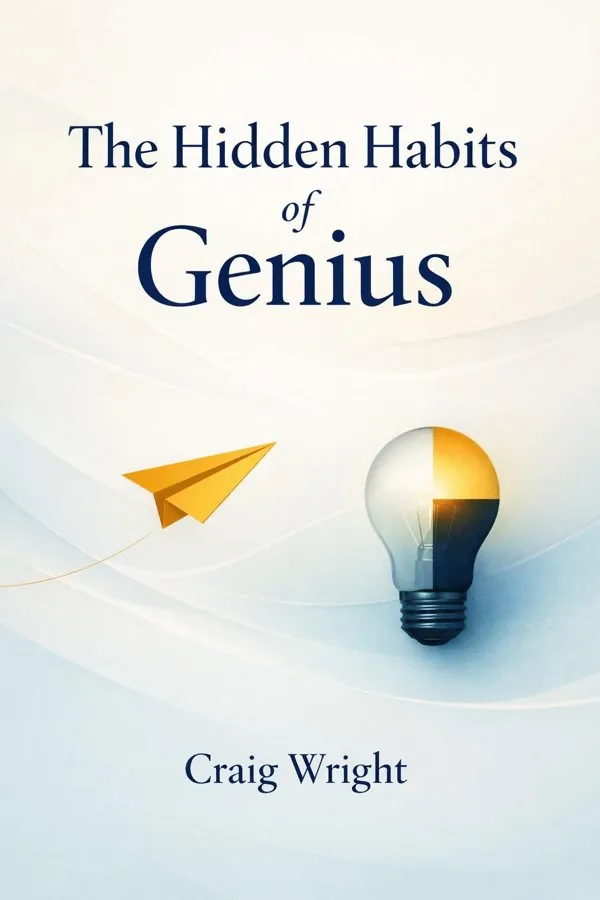
The Hidden Habits of Genius: Beyond Talent, IQ, and Grit—Unlocking the Secrets of Greatness: Summary & Key Insights
by Craig Wright
 10 min11 chaptersAudio available
What Is The Hidden Habits of Genius: Beyond Talent, IQ, and Grit—Unlocking the Secrets of Greatness About?
The Hidden Habits of Genius: Beyond Talent, IQ, and Grit—Unlocking the Secrets of Greatness by Craig Wright is a creativity book spanning 11 pages. In this insightful exploration, Yale professor Craig Wright examines what truly defines genius. Drawing from history, science, and psychology, Wright identifies patterns of behavior and thinking that distinguish extraordinary minds—from Mozart and Einstein to contemporary innovators. He argues that genius is not merely a product of innate talent or intelligence but a combination of curiosity, persistence, and unconventional thinking that can be cultivated and understood.
This FizzRead summary covers all 11 key chapters of The Hidden Habits of Genius: Beyond Talent, IQ, and Grit—Unlocking the Secrets of Greatness in approximately 10 minutes, distilling the most important ideas, arguments, and takeaways from Craig Wright's work. Also available as an audio summary and Key Quotes Podcast.
The Hidden Habits of Genius: Beyond Talent, IQ, and Grit—Unlocking the Secrets of Greatness
In this insightful exploration, Yale professor Craig Wright examines what truly defines genius. Drawing from history, science, and psychology, Wright identifies patterns of behavior and thinking that distinguish extraordinary minds—from Mozart and Einstein to contemporary innovators. He argues that genius is not merely a product of innate talent or intelligence but a combination of curiosity, persistence, and unconventional thinking that can be cultivated and understood.
Who Should Read The Hidden Habits of Genius: Beyond Talent, IQ, and Grit—Unlocking the Secrets of Greatness?
This book is perfect for anyone interested in creativity and looking to gain actionable insights in a short read. Whether you're a student, professional, or lifelong learner, the key ideas from The Hidden Habits of Genius: Beyond Talent, IQ, and Grit—Unlocking the Secrets of Greatness by Craig Wright will help you think differently.
- ✓Readers who enjoy creativity and want practical takeaways
- ✓Professionals looking to apply new ideas to their work and life
- ✓Anyone who wants the core insights of The Hidden Habits of Genius: Beyond Talent, IQ, and Grit—Unlocking the Secrets of Greatness in just 10 minutes
Want the full summary?
Get instant access to this book summary and 100K+ more with Fizz Moment.
Get Free SummaryAvailable on App Store • Free to download
Key Chapters
Humanity has long been enchanted by the idea of genius, from divine inspiration in antiquity to romanticized madness in the Renaissance and empirically measured intelligence in the modern age. In tracing this evolution, I wanted readers to see how our changing definitions reveal more about society’s values than about the geniuses themselves. To the ancient Greeks, genius was external—a daimon whispering wisdom from the gods. During the Enlightenment, it became internal, tied to intelligence and originality. By the nineteenth century, the Romantic poets celebrated genius as passion and rebellion, while the twentieth century introduced tests and measurements that reduced it to numbers.
Yet across all these eras, one truth endures: genius disrupts. It doesn’t merely perform; it transforms. Figures like Copernicus overturn cosmology, while Shakespeare remakes language itself. The key difference lies not in privilege or opportunity but in perception. Geniuses see connections invisible to others, often at great personal cost. My intent here was not to deify historical figures but to humanize them—to show that genius is as much about persistence and failure as brilliance and triumph.
Society loves to speak of ‘born geniuses,’ as though brilliance were inscribed in DNA. But the evidence paints a richer, humbler picture. Mozart, whose myth is central to our notion of prodigy, wasn’t born composing concertos; he was trained rigorously by a father who immersed him in music every day. Einstein struggled academically but maintained unwavering curiosity. In every case I examined, genius emerged from deliberate practice, unrelenting curiosity, and a capacity for unconventional synthesis, not merely inborn aptitude.
This myth of innate talent comforts us because it absolves us of responsibility—it enables us to say, 'I could never do that.' But genuine genius often begins where others give up. Da Vinci’s notebooks brim with errors and false starts, yet within those pages lie the seeds of flight, anatomy, and art. It’s effort absorbed into lifelong curiosity that turns competence into brilliance. Recognizing this truth reclaims genius from exclusivity and restores it as a quality of evolution—a capability we all can expand.
+ 9 more chapters — available in the FizzRead app
All Chapters in The Hidden Habits of Genius: Beyond Talent, IQ, and Grit—Unlocking the Secrets of Greatness
About the Author
Craig Wright is the Henry L. and Lucy G. Moses Professor Emeritus of Music at Yale University, where he created the popular course 'Exploring the Nature of Genius.' His research spans music history, creativity, and the cognitive processes behind exceptional achievement.
Get This Summary in Your Preferred Format
Read or listen to the The Hidden Habits of Genius: Beyond Talent, IQ, and Grit—Unlocking the Secrets of Greatness summary by Craig Wright anytime, anywhere. FizzRead offers multiple formats so you can learn on your terms — all free.
Available formats: App · Audio · PDF · EPUB — All included free with FizzRead
Download The Hidden Habits of Genius: Beyond Talent, IQ, and Grit—Unlocking the Secrets of Greatness PDF and EPUB Summary
Key Quotes from The Hidden Habits of Genius: Beyond Talent, IQ, and Grit—Unlocking the Secrets of Greatness
“Humanity has long been enchanted by the idea of genius, from divine inspiration in antiquity to romanticized madness in the Renaissance and empirically measured intelligence in the modern age.”
“Society loves to speak of ‘born geniuses,’ as though brilliance were inscribed in DNA.”
Frequently Asked Questions about The Hidden Habits of Genius: Beyond Talent, IQ, and Grit—Unlocking the Secrets of Greatness
The Hidden Habits of Genius: Beyond Talent, IQ, and Grit—Unlocking the Secrets of Greatness by Craig Wright is a creativity book that explores key ideas across 11 chapters. In this insightful exploration, Yale professor Craig Wright examines what truly defines genius. Drawing from history, science, and psychology, Wright identifies patterns of behavior and thinking that distinguish extraordinary minds—from Mozart and Einstein to contemporary innovators. He argues that genius is not merely a product of innate talent or intelligence but a combination of curiosity, persistence, and unconventional thinking that can be cultivated and understood.
You Might Also Like
Dimensions Of Creativity
Margaret A. Boden
10 min
How to Fly a Horse: The Secret History of Creation, Invention, and Discovery
Kevin Ashton
10 min
Imagine: How Creativity Works
Jonah Lehrer
10 min
The Accidental Creative: How to Be Brilliant at a Moment's Notice
Todd Henry
10 min
The Origins of Creativity
Edward O. Wilson
10 min
Wired to Create: Unraveling the Mysteries of the Creative Mind
Scott Barry Kaufman, Carolyn Gregoire
10 minBrowse by Category
Ready to read The Hidden Habits of Genius: Beyond Talent, IQ, and Grit—Unlocking the Secrets of Greatness?
Get the full summary and 100K+ more books with Fizz Moment.