
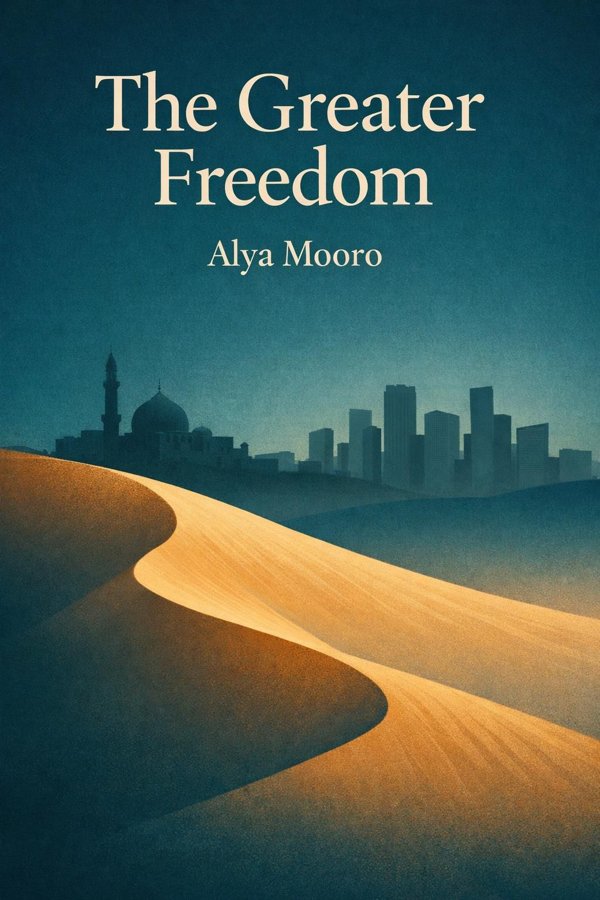
The Greater Freedom: Life as a Middle Eastern Woman Outside the Stereotypes: Summary & Key Insights
by Alya Mooro
 10 min5 chaptersAudio available
What Is The Greater Freedom: Life as a Middle Eastern Woman Outside the Stereotypes About?
The Greater Freedom: Life as a Middle Eastern Woman Outside the Stereotypes by Alya Mooro is a biographies book spanning 5 pages. In this memoir and social commentary, Alya Mooro explores what it means to be an Arab woman living between cultures. Drawing on her experiences growing up in London in an Egyptian family, she examines identity, gender, and cultural expectations, challenging stereotypes about Middle Eastern women and advocating for a more nuanced understanding of freedom and belonging.
This FizzRead summary covers all 5 key chapters of The Greater Freedom: Life as a Middle Eastern Woman Outside the Stereotypes in approximately 10 minutes, distilling the most important ideas, arguments, and takeaways from Alya Mooro's work. Also available as an audio summary and Key Quotes Podcast.
The Greater Freedom: Life as a Middle Eastern Woman Outside the Stereotypes
In this memoir and social commentary, Alya Mooro explores what it means to be an Arab woman living between cultures. Drawing on her experiences growing up in London in an Egyptian family, she examines identity, gender, and cultural expectations, challenging stereotypes about Middle Eastern women and advocating for a more nuanced understanding of freedom and belonging.
Who Should Read The Greater Freedom: Life as a Middle Eastern Woman Outside the Stereotypes?
This book is perfect for anyone interested in biographies and looking to gain actionable insights in a short read. Whether you're a student, professional, or lifelong learner, the key ideas from The Greater Freedom: Life as a Middle Eastern Woman Outside the Stereotypes by Alya Mooro will help you think differently.
- ✓Readers who enjoy biographies and want practical takeaways
- ✓Professionals looking to apply new ideas to their work and life
- ✓Anyone who wants the core insights of The Greater Freedom: Life as a Middle Eastern Woman Outside the Stereotypes in just 10 minutes
Want the full summary?
Get instant access to this book summary and 100K+ more with Fizz Moment.
Get Free SummaryAvailable on App Store • Free to download
Key Chapters
I was born into a loving Egyptian family that carried the rhythm of Cairo in our London living room. My parents had made sacrifices to raise us abroad, and their values—family honor, modesty, respect for elders—were not suggestions but truths that anchored them. For me, these truths sometimes felt like constraints, invisible boundaries that divided what was acceptable inside the home from what was possible outside it.
As a girl, I quickly understood that my brothers and I did not play by the same rules. While their curfews stretched with adolescence, mine seemed to tighten. When I wanted to go out, I was met with the chorus of questions that haunt so many girls of Middle Eastern descent: Who will be there? What time will you be back? What will people say? These weren’t simply about control—they were about the preservation of reputation, the invisible currency that sustains so much of Arab family life.
And yet, I loved my family deeply. Our dinners were filled with laughter, our house pulsed with Arabic music and warmth. In those contradictions—the affection and the discipline—I learned the complexity of love within tradition. I didn’t yet have the language to name it, but I sensed that my journey toward freedom wouldn’t be about rejecting my heritage. It would be about reconciling it with the person I was becoming.
+ 3 more chapters — available in the FizzRead app
All Chapters in The Greater Freedom: Life as a Middle Eastern Woman Outside the Stereotypes
About the Author
Alya Mooro is an Egyptian-born British journalist and writer. She has written for publications such as The Guardian, Refinery29, and Grazia, focusing on issues of identity, culture, and gender. 'The Greater Freedom' is her debut book.
Get This Summary in Your Preferred Format
Read or listen to the The Greater Freedom: Life as a Middle Eastern Woman Outside the Stereotypes summary by Alya Mooro anytime, anywhere. FizzRead offers multiple formats so you can learn on your terms — all free.
Available formats: App · Audio · PDF · EPUB — All included free with FizzRead
Download The Greater Freedom: Life as a Middle Eastern Woman Outside the Stereotypes PDF and EPUB Summary
Key Quotes from The Greater Freedom: Life as a Middle Eastern Woman Outside the Stereotypes
“I was born into a loving Egyptian family that carried the rhythm of Cairo in our London living room.”
“Growing up in London meant that my influences were fluid.”
Frequently Asked Questions about The Greater Freedom: Life as a Middle Eastern Woman Outside the Stereotypes
The Greater Freedom: Life as a Middle Eastern Woman Outside the Stereotypes by Alya Mooro is a biographies book that explores key ideas across 5 chapters. In this memoir and social commentary, Alya Mooro explores what it means to be an Arab woman living between cultures. Drawing on her experiences growing up in London in an Egyptian family, she examines identity, gender, and cultural expectations, challenging stereotypes about Middle Eastern women and advocating for a more nuanced understanding of freedom and belonging.
You Might Also Like

An American Marriage
Tayari Jones
10 min
Benjamin Franklin: An American Life
Walter Isaacson
10 min
I Know Why The Caged Bird Sings
Maya Angelou
10 min
Long Walk to Freedom
Nelson Mandela
10 min
Persepolis
Marjane Satrapi
10 min
Surely You're Joking, Mr. Feynman!
Richard P. Feynman
10 minBrowse by Category
Ready to read The Greater Freedom: Life as a Middle Eastern Woman Outside the Stereotypes?
Get the full summary and 100K+ more books with Fizz Moment.