
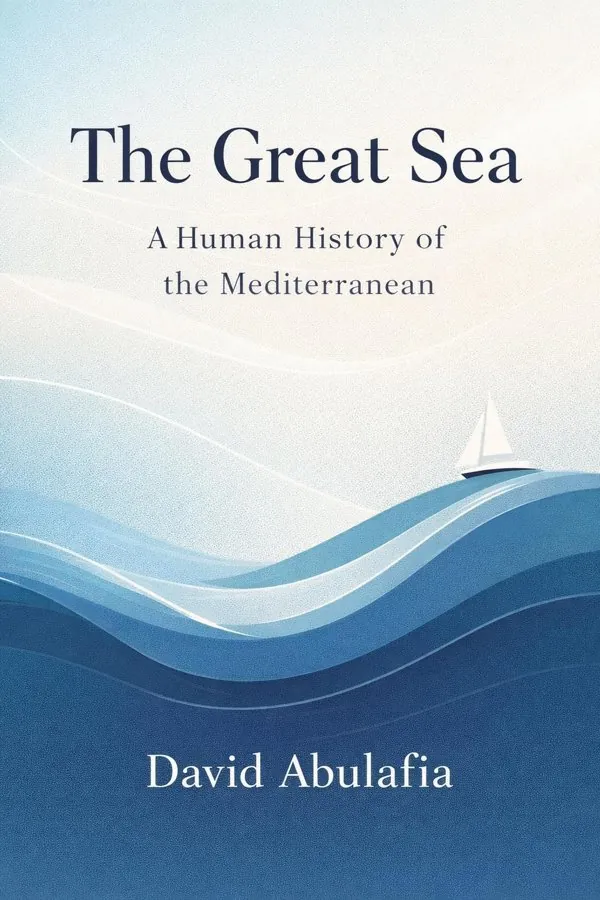
The Great Sea: A Human History of the Mediterranean: Summary & Key Insights
 10 min11 chaptersAudio available
What Is The Great Sea: A Human History of the Mediterranean About?
The Great Sea: A Human History of the Mediterranean by David Abulafia is a world_history book spanning 11 pages. This monumental work traces the history of the Mediterranean Sea from the earliest settlements to the modern era, exploring how its waters have connected diverse civilizations, cultures, and economies. Abulafia presents a sweeping narrative of human interaction across the sea, emphasizing trade, migration, and cultural exchange as central forces shaping world history.
This FizzRead summary covers all 11 key chapters of The Great Sea: A Human History of the Mediterranean in approximately 10 minutes, distilling the most important ideas, arguments, and takeaways from David Abulafia's work. Also available as an audio summary and Key Quotes Podcast.
The Great Sea: A Human History of the Mediterranean
This monumental work traces the history of the Mediterranean Sea from the earliest settlements to the modern era, exploring how its waters have connected diverse civilizations, cultures, and economies. Abulafia presents a sweeping narrative of human interaction across the sea, emphasizing trade, migration, and cultural exchange as central forces shaping world history.
Who Should Read The Great Sea: A Human History of the Mediterranean?
This book is perfect for anyone interested in world_history and looking to gain actionable insights in a short read. Whether you're a student, professional, or lifelong learner, the key ideas from The Great Sea: A Human History of the Mediterranean by David Abulafia will help you think differently.
- ✓Readers who enjoy world_history and want practical takeaways
- ✓Professionals looking to apply new ideas to their work and life
- ✓Anyone who wants the core insights of The Great Sea: A Human History of the Mediterranean in just 10 minutes
Want the full summary?
Get instant access to this book summary and 100K+ more with Fizz Moment.
Get Free SummaryAvailable on App Store • Free to download
Key Chapters
Long before the rise of great cities, the shores of the Mediterranean were already alive with human activity. Early hunters and gatherers established small settlements on its fringes, discovering its bounty of fish and its navigable currents. Over time, seafaring became not only possible but essential. The Mediterranean’s islands—Cyprus, Crete, Sardinia—became laboratories of human adaptation, where communities learned the arts of boatbuilding and navigation. Archaeological evidence reveals obsidian trade between Sicily and the Aegean and early exchanges in stone, shells, and metals. What becomes clear is that even in prehistory, the Mediterranean was not an obstacle—it was a bridge.
In my research, I found that these early maritime exchanges were the foundation for everything to come. When a community sent a boat across the sea, it was not simply trading physical goods—it was transferring ideas, technologies, and beliefs. In these journeys lies the origin of Mediterranean civilization itself. Each voyage expressed an intuitive sense that life beyond the horizon might offer new possibilities. In retrospect, the Mediterranean of prehistory was already international, setting the stage for the great networks of trade and culture that would emerge in the Bronze Age.
By the time bronze tools and weapons appeared, the Mediterranean had become a complex web of interaction. Egypt’s ports along the Nile delta hummed with activity; Mycenaean and Minoan traders journeyed eastward, bringing with them finely crafted pottery and textiles. In return, they sought exotic goods—cedar from Lebanon, silver from Anatolia, and spices from the East. The Bronze Age was the first moment when the Mediterranean became economically unified through maritime commerce. Writing systems such as Linear B on Crete and hieroglyphs along the Nile recorded these exchanges, confirming that seaborne trade was not an occasional phenomenon but a central component of political and cultural life.
These interactions also produced shared religious imagery and art forms. The bull cults of Minoa, for example, found echoes in Egyptian and Levantine art; the symbolism of seafaring gods represented humanity’s growing confidence in riding the waves. What fascinates me most is the fragility and resilience of these networks: the so-called ‘collapse’ of the Late Bronze Age around 1200 BCE, triggered by climate shifts and migrations, did not destroy maritime trade—it merely reconfigured it. The Mediterranean persisted as a stage for connection even in times of upheaval.
+ 9 more chapters — available in the FizzRead app
All Chapters in The Great Sea: A Human History of the Mediterranean
About the Author
David Abulafia is a British historian and professor emeritus of Mediterranean history at the University of Cambridge. He is known for his extensive research on maritime history and the economic and cultural interactions of Mediterranean societies.
Get This Summary in Your Preferred Format
Read or listen to the The Great Sea: A Human History of the Mediterranean summary by David Abulafia anytime, anywhere. FizzRead offers multiple formats so you can learn on your terms — all free.
Available formats: App · Audio · PDF · EPUB — All included free with FizzRead
Download The Great Sea: A Human History of the Mediterranean PDF and EPUB Summary
Key Quotes from The Great Sea: A Human History of the Mediterranean
“Long before the rise of great cities, the shores of the Mediterranean were already alive with human activity.”
“By the time bronze tools and weapons appeared, the Mediterranean had become a complex web of interaction.”
Frequently Asked Questions about The Great Sea: A Human History of the Mediterranean
The Great Sea: A Human History of the Mediterranean by David Abulafia is a world_history book that explores key ideas across 11 chapters. This monumental work traces the history of the Mediterranean Sea from the earliest settlements to the modern era, exploring how its waters have connected diverse civilizations, cultures, and economies. Abulafia presents a sweeping narrative of human interaction across the sea, emphasizing trade, migration, and cultural exchange as central forces shaping world history.
You Might Also Like
The Age of Capital
Eric Hobsbawm
10 min
The Gulag Archipelago
Aleksandr Solzhenitsyn
10 min
Jerusalem: The Biography
Simon Sebag Montefiore
10 min
The Anglo-Saxons
James Campbell
10 min
The Boer War
Thomas Pakenham
10 min
The Industrial Revolutionaries: The Making of the Modern World 1776–1914
Gavin Weightman
10 minBrowse by Category
Ready to read The Great Sea: A Human History of the Mediterranean?
Get the full summary and 100K+ more books with Fizz Moment.