
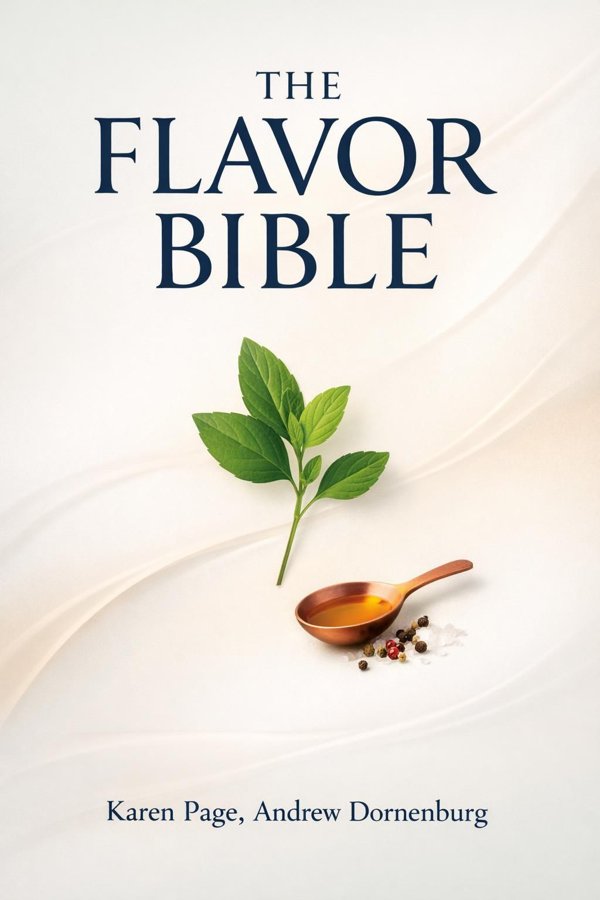
The Flavor Bible: The Essential Guide to Culinary Creativity, Based on the Wisdom of America's Most Imaginative Chefs: Summary & Key Insights
by Karen Page, Andrew Dornenburg
 10 min4 chaptersAudio available
What Is The Flavor Bible: The Essential Guide to Culinary Creativity, Based on the Wisdom of America's Most Imaginative Chefs About?
The Flavor Bible: The Essential Guide to Culinary Creativity, Based on the Wisdom of America's Most Imaginative Chefs by Karen Page, Andrew Dornenburg is a creativity book spanning 4 pages. The Flavor Bible is a comprehensive reference for chefs and home cooks that explores the art and science of flavor pairing. Drawing on insights from leading American chefs, it provides an extensive list of ingredients and their complementary flavors, helping readers create balanced and inspired dishes without relying on recipes.
This FizzRead summary covers all 4 key chapters of The Flavor Bible: The Essential Guide to Culinary Creativity, Based on the Wisdom of America's Most Imaginative Chefs in approximately 10 minutes, distilling the most important ideas, arguments, and takeaways from Karen Page, Andrew Dornenburg's work. Also available as an audio summary and Key Quotes Podcast.
The Flavor Bible: The Essential Guide to Culinary Creativity, Based on the Wisdom of America's Most Imaginative Chefs
The Flavor Bible is a comprehensive reference for chefs and home cooks that explores the art and science of flavor pairing. Drawing on insights from leading American chefs, it provides an extensive list of ingredients and their complementary flavors, helping readers create balanced and inspired dishes without relying on recipes.
Who Should Read The Flavor Bible: The Essential Guide to Culinary Creativity, Based on the Wisdom of America's Most Imaginative Chefs?
This book is perfect for anyone interested in creativity and looking to gain actionable insights in a short read. Whether you're a student, professional, or lifelong learner, the key ideas from The Flavor Bible: The Essential Guide to Culinary Creativity, Based on the Wisdom of America's Most Imaginative Chefs by Karen Page, Andrew Dornenburg will help you think differently.
- ✓Readers who enjoy creativity and want practical takeaways
- ✓Professionals looking to apply new ideas to their work and life
- ✓Anyone who wants the core insights of The Flavor Bible: The Essential Guide to Culinary Creativity, Based on the Wisdom of America's Most Imaginative Chefs in just 10 minutes
Want the full summary?
Get instant access to this book summary and 100K+ more with Fizz Moment.
Get Free SummaryAvailable on App Store • Free to download
Key Chapters
Flavor is not merely a sensory phenomenon — it is philosophy, an exploration of harmony and meaning. Every culture, every cook, every meal carries within it a philosophy of taste, a worldview expressed through the ingredients chosen and the methods applied.
As we spoke with chefs across America, we began to uncover how deeply they thought about flavor. It was not just about taste; it was about connection. Flavor brings people together, evokes memories, awakens emotions, and stirs imagination. It is a universal language through which one can express passion, empathy, and creativity.
The balance of taste — sweetness, sourness, saltiness, bitterness, and umami — forms the foundation of this language. Yet, true flavor arises when those tastes interact dynamically with aroma, temperature, and texture. When a dish possesses this symmetry — crisp against creamy, cool against warm, fragrant against earthy — it becomes multidimensional. Chefs often describe such harmony as 'a chord' or 'a melody.' This metaphor lies at the core of our philosophy: cooking as composition.
A successful flavor composition requires both intellect and intuition. Intellect gives structure — understanding chemistry, technique, and tradition — while intuition breathes life into it. The most profound chefs do not simply replicate what has worked before; they listen deeply to their senses and follow their imagination into new territory.
We encourage every cook to think in terms of resonance rather than rules. Flavor should not be confined to strict matching — sometimes contrast creates the most exciting tension. The brightness of lime against smoky chipotle, or the floral subtlety of lavender beneath rich dark chocolate, produces emotional impact. These experiences remind us that flavor is a medium for human expression, capable of delight, surprise, and revelation.
Ultimately, the philosophy of flavor teaches humility and wonder. It reminds us that creativity in cooking is not about domination but collaboration — a dialogue between taste, aroma, texture, and temperature, guided by our own evolving intuition.
To understand the chef as artist, one must first accept that cooking is a medium of expression equal to painting, music, or poetry. The materials may seem humble — ingredients drawn from earth, sea, and farm — yet when transformed through imagination, they speak eloquently of human experience.
Throughout our conversations with renowned chefs, we saw that they approach cooking as a process of translation: converting sensory impressions and emotions into edible form. Thomas Keller mused that a dish should evoke memory; Grant Achatz viewed cooking as theater. For them, artistry comes from emotional authenticity — a desire to communicate something real through flavor.
As artists, chefs are not only technicians but storytellers. They draw upon cultural heritage, personal memory, and global inspiration to create works of flavor that carry meaning. A perfectly balanced plate can make you smile, recall your grandmother’s kitchen, or even transport you to another continent through its scents and textures.
Creativity in cooking relies upon intuition. While recipes provide structure, artistry flourishes when the chef feels free to improvise — to taste, adjust, and respond moment by moment. This is why we insist that *The Flavor Bible* should liberate cooks from fear of experimentation. Once you understand how flavors interact, you can compose dishes that express your own voice.
Artistry also demands discipline. To create beauty from simplicity, one must learn control: restraining excess, understanding balance, and knowing when to let an ingredient speak for itself. Many of the greatest chefs emphasize restraint as the hallmark of maturity. The most powerful dishes often rely on very few components, each chosen with precision and intention.
Through artistry, cooking becomes more than nourishment. It becomes communion — with the ingredients, the seasons, and the people who partake. The act of creation carries joy and meaning precisely because it is shared. When a diner tastes your food and feels something — nostalgia, surprise, comfort, wonder — your art has fulfilled its purpose.
+ 2 more chapters — available in the FizzRead app
All Chapters in The Flavor Bible: The Essential Guide to Culinary Creativity, Based on the Wisdom of America's Most Imaginative Chefs
About the Authors
Karen Page and Andrew Dornenburg are award-winning culinary authors known for their influential works on gastronomy and creativity in cooking. Their books have received multiple James Beard Awards and are widely used by professional chefs and culinary educators.
Get This Summary in Your Preferred Format
Read or listen to the The Flavor Bible: The Essential Guide to Culinary Creativity, Based on the Wisdom of America's Most Imaginative Chefs summary by Karen Page, Andrew Dornenburg anytime, anywhere. FizzRead offers multiple formats so you can learn on your terms — all free.
Available formats: App · Audio · PDF · EPUB — All included free with FizzRead
Download The Flavor Bible: The Essential Guide to Culinary Creativity, Based on the Wisdom of America's Most Imaginative Chefs PDF and EPUB Summary
Key Quotes from The Flavor Bible: The Essential Guide to Culinary Creativity, Based on the Wisdom of America's Most Imaginative Chefs
“Flavor is not merely a sensory phenomenon — it is philosophy, an exploration of harmony and meaning.”
“To understand the chef as artist, one must first accept that cooking is a medium of expression equal to painting, music, or poetry.”
Frequently Asked Questions about The Flavor Bible: The Essential Guide to Culinary Creativity, Based on the Wisdom of America's Most Imaginative Chefs
The Flavor Bible: The Essential Guide to Culinary Creativity, Based on the Wisdom of America's Most Imaginative Chefs by Karen Page, Andrew Dornenburg is a creativity book that explores key ideas across 4 chapters. The Flavor Bible is a comprehensive reference for chefs and home cooks that explores the art and science of flavor pairing. Drawing on insights from leading American chefs, it provides an extensive list of ingredients and their complementary flavors, helping readers create balanced and inspired dishes without relying on recipes.
You Might Also Like
Dimensions Of Creativity
Margaret A. Boden
10 min
How to Fly a Horse: The Secret History of Creation, Invention, and Discovery
Kevin Ashton
10 min
Imagine: How Creativity Works
Jonah Lehrer
10 min
The Accidental Creative: How to Be Brilliant at a Moment's Notice
Todd Henry
10 min
The Origins of Creativity
Edward O. Wilson
10 min
Wired to Create: Unraveling the Mysteries of the Creative Mind
Scott Barry Kaufman, Carolyn Gregoire
10 minBrowse by Category
Ready to read The Flavor Bible: The Essential Guide to Culinary Creativity, Based on the Wisdom of America's Most Imaginative Chefs?
Get the full summary and 100K+ more books with Fizz Moment.