
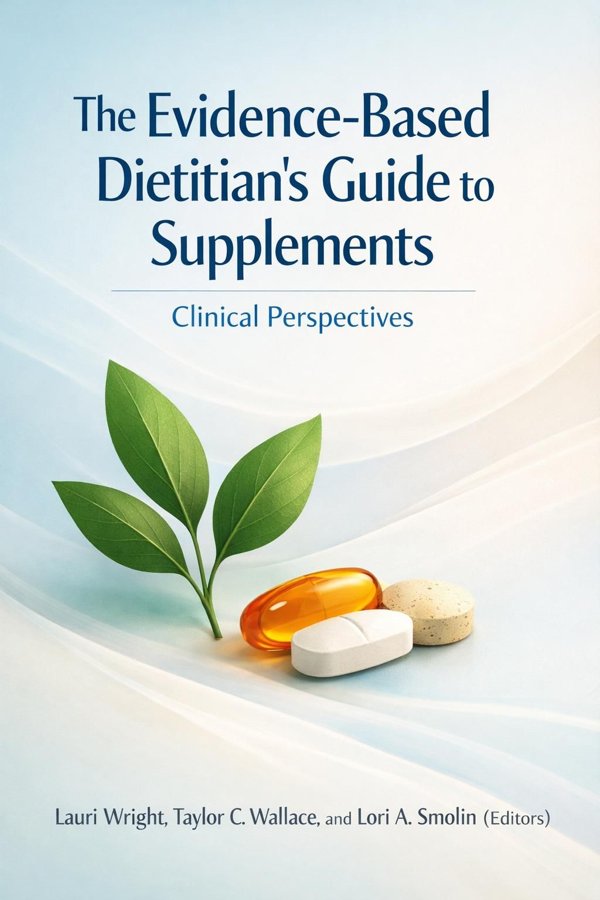
The Evidence-Based Dietitian's Guide to Supplements: Clinical Perspectives: Summary & Key Insights
by Lauri Wright, Taylor C. Wallace, and Lori A. Smolin (Editors)
 10 min9 chaptersAudio available
Key Takeaways from The Evidence-Based Dietitian's Guide to Supplements: Clinical Perspectives
A supplement is never just a pill, powder, or capsule; it is a decision made within a human story.
Many people assume supplements are reviewed like prescription drugs before they reach store shelves.
Not all evidence is created equal, and supplement research often rewards superficial reading.
One of the most important truths in nutrition is also one of the least glamorous: basic vitamins and minerals often matter more than exotic products.
The more dramatic the claim, the more disciplined the clinician must become.
What Is The Evidence-Based Dietitian's Guide to Supplements: Clinical Perspectives About?
The Evidence-Based Dietitian's Guide to Supplements: Clinical Perspectives by Lauri Wright, Taylor C. Wallace, and Lori A. Smolin (Editors) is a health_med book spanning 6 pages. Dietary supplements sit at the crossroads of hope, marketing, and medicine. Patients use them to fill nutritional gaps, improve performance, manage symptoms, or prevent disease, yet the evidence behind these products is often uneven, misunderstood, or distorted by hype. The Evidence-Based Dietitian's Guide to Supplements: Clinical Perspectives was created to help nutrition professionals cut through that confusion. Rather than treating supplements as automatically beneficial or inherently suspect, this reference teaches readers how to evaluate them with scientific rigor, clinical judgment, and ethical responsibility. Edited by Lauri Wright, Taylor C. Wallace, and Lori A. Smolin, the book brings together academic expertise, nutrition science, and applied practice. Its focus is not simply on listing ingredients or claims, but on showing dietitians how to assess efficacy, safety, dosage, quality, regulation, and patient suitability across a wide range of supplement categories. From vitamins and minerals to botanicals, probiotics, and sports products, it frames supplementation as a clinical decision rather than a consumer trend. For dietitians, students, and healthcare professionals who need reliable guidance in a crowded marketplace, this book offers a practical and credible roadmap.
This FizzRead summary covers all 9 key chapters of The Evidence-Based Dietitian's Guide to Supplements: Clinical Perspectives in approximately 10 minutes, distilling the most important ideas, arguments, and takeaways from Lauri Wright, Taylor C. Wallace, and Lori A. Smolin (Editors)'s work. Also available as an audio summary and Key Quotes Podcast.
The Evidence-Based Dietitian's Guide to Supplements: Clinical Perspectives
Dietary supplements sit at the crossroads of hope, marketing, and medicine. Patients use them to fill nutritional gaps, improve performance, manage symptoms, or prevent disease, yet the evidence behind these products is often uneven, misunderstood, or distorted by hype. The Evidence-Based Dietitian's Guide to Supplements: Clinical Perspectives was created to help nutrition professionals cut through that confusion. Rather than treating supplements as automatically beneficial or inherently suspect, this reference teaches readers how to evaluate them with scientific rigor, clinical judgment, and ethical responsibility.
Edited by Lauri Wright, Taylor C. Wallace, and Lori A. Smolin, the book brings together academic expertise, nutrition science, and applied practice. Its focus is not simply on listing ingredients or claims, but on showing dietitians how to assess efficacy, safety, dosage, quality, regulation, and patient suitability across a wide range of supplement categories. From vitamins and minerals to botanicals, probiotics, and sports products, it frames supplementation as a clinical decision rather than a consumer trend. For dietitians, students, and healthcare professionals who need reliable guidance in a crowded marketplace, this book offers a practical and credible roadmap.
Who Should Read The Evidence-Based Dietitian's Guide to Supplements: Clinical Perspectives?
This book is perfect for anyone interested in health_med and looking to gain actionable insights in a short read. Whether you're a student, professional, or lifelong learner, the key ideas from The Evidence-Based Dietitian's Guide to Supplements: Clinical Perspectives by Lauri Wright, Taylor C. Wallace, and Lori A. Smolin (Editors) will help you think differently.
- ✓Readers who enjoy health_med and want practical takeaways
- ✓Professionals looking to apply new ideas to their work and life
- ✓Anyone who wants the core insights of The Evidence-Based Dietitian's Guide to Supplements: Clinical Perspectives in just 10 minutes
Want the full summary?
Get instant access to this book summary and 100K+ more with Fizz Moment.
Get Free SummaryAvailable on App Store • Free to download
Key Chapters
A supplement is never just a pill, powder, or capsule; it is a decision made within a human story. That is the starting point of this book’s approach to evidence-based dietetics. The editors argue that strong clinical practice is built not merely on memorizing studies, but on integrating three forces: the best available research, the practitioner’s professional expertise, and the patient’s needs, preferences, risks, and goals. In the supplement world, this matters enormously because patients often arrive with strong beliefs shaped by advertising, social media, family traditions, or prior experiences.
The book emphasizes that no single study should drive a recommendation. Dietitians must evaluate the hierarchy of evidence, understand study design, and ask whether findings apply to the person in front of them. A trial showing benefit in older adults with a documented deficiency is not automatically relevant to a healthy young adult taking the same product “just in case.” Likewise, absence of conclusive evidence is not always proof of ineffectiveness, but it does require caution.
Clinical context sharpens every decision. For example, recommending iron to a patient with confirmed iron deficiency anemia is evidence-based and clinically appropriate. Suggesting the same supplement to someone without lab confirmation may expose them to unnecessary side effects and obscure the true cause of fatigue. The same reasoning applies to omega-3s, probiotics, vitamin D, and countless other products.
The practical lesson is to use supplements the way good clinicians use any intervention: define the problem, assess the evidence, match it to the patient, monitor outcomes, and revise as needed. Actionable takeaway: before recommending any supplement, ask five questions—What is the goal, what does the evidence show, who was studied, what are the risks, and how will success be measured?
Many people assume supplements are reviewed like prescription drugs before they reach store shelves. They are not, and that misunderstanding creates one of the greatest hazards in clinical nutrition. A central contribution of this book is its clear explanation of the U.S. regulatory framework governing dietary supplements, especially the role of the Dietary Supplement Health and Education Act of 1994. Under this system, manufacturers are generally responsible for ensuring product safety and truthful labeling, but supplements do not undergo premarket approval for efficacy in the way drugs do.
This distinction changes everything for practitioners. It affects how claims should be interpreted, how quality should be assessed, and how confidently one can recommend a given product. The book carefully explains the difference between structure/function claims, health claims, and disease claims. A label that says a supplement “supports immune health” is operating very differently from a product implied to treat an illness. Dietitians who understand these boundaries are better equipped to identify misleading messaging and educate patients.
The regulatory discussion also highlights manufacturing quality concerns, adulteration risks, contamination issues, and the importance of third-party testing. For example, a patient purchasing a botanical online may believe “natural” equals safe, yet the product could contain variable active compounds, inaccurate dosing, or even undeclared ingredients. Sports supplements are especially vulnerable to this problem, with potential consequences ranging from liver injury to failed drug tests.
The practical value here is not legal trivia; it is patient protection. When clinicians understand how the system works, they can guide patients toward reputable brands, safer purchasing channels, and realistic expectations. Actionable takeaway: whenever discussing a supplement, pair efficacy counseling with regulation counseling—teach patients to look for reputable manufacturers, transparent labeling, and third-party verification rather than trusting front-label promises.
Not all evidence is created equal, and supplement research often rewards superficial reading. This book stresses that dietitians must go beyond headlines and abstract conclusions to evaluate methodology carefully. A supplement may appear effective until one notices the study had a tiny sample size, poor blinding, a short duration, weak outcome measures, or funding-related bias. In other cases, a null result may reflect the wrong population, inadequate dosage, or poor adherence rather than true inefficacy.
The text helps readers think like investigators. It encourages examination of randomized controlled trials, meta-analyses, observational studies, and mechanistic data, while also recognizing their limitations. Questions matter: Was the intervention standardized? Was deficiency assessed at baseline? Were outcomes clinically meaningful or merely statistically significant? Did the study compare the supplement with placebo, food intake, usual care, or another active treatment? Without these distinctions, practitioners risk offering advice rooted in noise rather than signal.
Consider magnesium as an example. A patient may cite an article claiming magnesium helps sleep. A careful reader would ask what form was used, at what dose, in what population, and whether sleep quality improved in a meaningful way. The answer may support a trial in one patient but not justify broad recommendation for everyone with insomnia. The same scrutiny is needed for collagen, curcumin, multivitamins, or trendy metabolic boosters.
The book’s broader message is that evidence evaluation is an active process, not passive acceptance. Strong recommendations emerge from patterns across studies, biologic plausibility, safety data, and real-world feasibility. Actionable takeaway: create a simple appraisal checklist for every supplement study you review—population, intervention, comparison, outcomes, duration, safety findings, funding source, and applicability to your patient.
One of the most important truths in nutrition is also one of the least glamorous: basic vitamins and minerals often matter more than exotic products. This book gives substantial attention to micronutrients because deficiencies, insufficiencies, and increased physiologic demands remain common and clinically meaningful. It explains that vitamins and minerals should not be viewed as generic “wellness enhancers,” but as essential compounds with specific functions, identifiable deficiency syndromes, and evidence-based therapeutic roles.
The clinical power of micronutrient supplementation becomes clearest when it is targeted. Folate before and during early pregnancy helps reduce neural tube defects. Vitamin B12 may be necessary in older adults, vegans, or people taking medications that impair absorption. Vitamin D may be useful when deficiency is documented or risk is high. Calcium may support bone health in appropriate contexts, though not as a one-size-fits-all solution. Iron can correct deficiency and restore function, but unnecessary use can be harmful. In each case, the key is matching the nutrient to the physiology and the patient.
The book also helps practitioners distinguish between prevention, repletion, and pharmacologic use. Repleting a deficiency is different from using high-dose niacin for lipid modification, and both differ from routine supplementation in healthy populations. Dosage, bioavailability, laboratory assessment, and side effect profiles all matter. A multivitamin may be reasonable in some circumstances, but it should never replace dietary assessment or individualized care.
For dietitians, this chapter area reinforces a foundational skill: recognize when nutrition problems are specific, measurable, and correctable. Actionable takeaway: prioritize screening for likely deficiencies, dietary gaps, medication-nutrient interactions, and life-stage risks before recommending broad-spectrum supplementation.
The more dramatic the claim, the more disciplined the clinician must become. Botanicals, herbal products, probiotics, and performance supplements occupy a particularly challenging place in practice because they often combine traditional use, emerging science, commercial enthusiasm, and inconsistent product quality. This book treats these categories seriously without becoming credulous. It recognizes that some nontraditional supplements may offer benefit, but only when evaluated with the same scientific standards applied to any intervention.
Botanicals present one major challenge: variability. Two products sold under the same common name may contain different plant parts, extraction methods, concentrations, and active compounds. That means evidence from one preparation may not transfer to another. Probiotics add another layer of complexity because effects are strain-specific, dose-specific, and condition-specific. A probiotic that helps antibiotic-associated diarrhea is not automatically useful for irritable bowel syndrome, immune support, or general digestive wellness.
Performance supplements create a separate risk profile. Products marketed for muscle gain, fat loss, pre-workout energy, or recovery often contain blends that are poorly studied, proprietary, or vulnerable to contamination. Athletes, adolescents, and highly motivated exercisers may be especially susceptible to exaggerated claims and underappreciated dangers. The book encourages practitioners to examine both efficacy and quality assurance before discussing these products.
A useful clinical application is to shift the conversation from “Does this supplement work?” to “For whom, in what form, at what dose, for which outcome, and at what risk?” That reframing immediately improves decision-making. Actionable takeaway: never evaluate botanicals, probiotics, or sports supplements by category alone—assess the exact ingredient, preparation, evidence, and product quality before making a recommendation.
A supplement can be evidence-supported and still be inappropriate for a specific person. This is one of the most clinically relevant lessons in the book. Safety is not a fixed property of a product; it is an interaction between the supplement, the dose, the duration, the patient’s health conditions, medications, age, physiology, and goals. In practice, this means dietitians must assess supplements with the same seriousness given to any other therapeutic agent.
The book highlights adverse effects, contraindications, upper intake levels, and drug-supplement interactions as essential parts of counseling. For instance, vitamin K can complicate anticoagulant management, calcium may interfere with absorption of some medications, and certain botanicals can affect bleeding risk, sedation, or liver function. Patients with kidney disease, liver disease, gastrointestinal disorders, pregnancy, or complex medication regimens are especially vulnerable to harm from seemingly routine products.
Safety also includes cumulative intake. A patient taking a multivitamin, fortified meal replacement, bone-health supplement, and electrolyte powder may unknowingly exceed tolerable upper limits for several nutrients. Similarly, “stacking” multiple products for immunity, weight loss, or athletic performance can create duplication, overstimulation, or hidden interaction risks. The book encourages clinicians to ask for all supplements, not just the one the patient mentions first.
Perhaps most importantly, it frames safety as an ongoing process rather than a one-time screen. Tolerance, labs, symptoms, adherence, and outcomes should be monitored over time. If the goal is not being met, or risks begin to outweigh benefits, the plan should change. Actionable takeaway: perform a full supplement-medication-diet review during assessment and revisit it regularly, especially for patients with chronic disease, polypharmacy, pregnancy, or high-dose use.
The best scientific recommendation can fail if it is delivered without trust, clarity, or respect. This book makes an important practical point: supplement counseling is as much a communication challenge as a scientific one. Patients often arrive with strong opinions, emotional investments, and deeply personal reasons for using supplements. If clinicians dismiss those beliefs too quickly, they may lose the opportunity to influence behavior safely.
Effective counseling begins with curiosity. Why does the patient want the supplement? What outcome are they hoping for? Where did they hear about it? Have they used it before? What do they believe it will do? Answers to these questions reveal not only motivation but also opportunities for education. A patient taking multiple immune products may really be seeking a sense of control. An athlete using a pre-workout blend may be struggling with sleep, recovery, or unrealistic body expectations. A cancer survivor asking about antioxidants may be navigating fear of recurrence.
The book supports a counseling style that is nonjudgmental, evidence-informed, and collaborative. Instead of saying, “That doesn’t work,” a dietitian might say, “Here’s what we know, here’s what we don’t know, and here’s what seems safest and most effective for your situation.” This preserves rapport while still protecting the patient. It also allows for shared decisions, such as trying a lower-risk option, selecting a tested brand, setting a trial period, or prioritizing food-based strategies first.
In day-to-day practice, communication often determines adherence, disclosure, and follow-through more than the evidence itself. Actionable takeaway: use supplement discussions to build partnership—ask open-ended questions, validate patient concerns, explain evidence plainly, and agree on a measurable plan rather than issuing a simple yes-or-no verdict.
The title of the book may focus on supplements, but one of its quiet strengths is that it never lets supplementation eclipse nutrition itself. The editors consistently place dietary supplements within the broader framework of food patterns, lifestyle, and medical nutrition therapy. That perspective is essential because supplements are often used to compensate for problems they cannot fully solve: poor diet quality, low energy intake, restrictive eating, chronic stress, inadequate sleep, or unrealistic health expectations.
A food-first approach does not mean rejecting supplements. It means using them as tools rather than substitutes. For example, a patient with low calcium intake and confirmed bone-health concerns may benefit from supplementation, but long-term management still depends on overall diet, weight-bearing activity, vitamin D status, and lifestyle risk factors. Someone seeking better gut health may experiment with a probiotic, yet fiber intake, meal patterns, and symptom triggers may matter more. A fatigued patient may ask for B vitamins, while the real issues are low energy intake, iron deficiency, sleep deprivation, or medication side effects.
The book’s clinical perspective is valuable because it resists both extremes: reflexive enthusiasm and reflexive dismissal. Instead, it asks whether the supplement fills a true gap, supports a defined therapeutic objective, and fits within a larger care plan. That frame keeps dietitians grounded in their core expertise while still addressing real patient demand.
In practical settings, this means pairing every supplement conversation with a diet and lifestyle conversation. Actionable takeaway: before recommending a product, identify the food-based, behavioral, and medical strategies that should accompany it, and make sure the supplement serves a specific purpose within that broader plan.
In the supplement marketplace, professional ethics are not optional safeguards; they are central clinical tools. This book underscores that dietitians must navigate conflicts of interest, commercial influence, patient vulnerability, and incomplete evidence with unusual care. Supplements are often sold in environments where education and marketing blur together. As a result, practitioners have a special obligation to protect trust and maintain professional integrity.
Ethical practice starts with transparency. If evidence is mixed, say so. If a product appears promising but data are preliminary, communicate that uncertainty clearly. If a patient asks about a popular product with little credible support, the clinician’s responsibility is not to endorse the trend but to explain the limits of current knowledge. This is particularly important when patients are dealing with serious illness, chronic symptoms, infertility, aging concerns, or performance pressure, all of which can increase receptivity to exaggerated claims.
The book also implicitly raises the issue of scope and accountability. Dietitians should make recommendations aligned with their training, based on documented assessment, and connected to measurable goals. Recommending expensive regimens without evidence, selling products that create bias, or promising outcomes that cannot be substantiated undermines both patient care and professional standards. In contrast, thoughtful documentation, informed consent, and careful follow-up strengthen practice.
Ethics also means knowing when not to recommend a supplement. Sometimes the most responsible answer is to defer, investigate further, refer to another professional, or focus on safer alternatives. Restraint can be a sign of expertise, not uncertainty.
Actionable takeaway: use an ethical filter for every recommendation—Would I make this same suggestion without financial incentive, can I justify it with evidence and patient need, and have I communicated benefits, risks, and uncertainty honestly?
All Chapters in The Evidence-Based Dietitian's Guide to Supplements: Clinical Perspectives
About the Authors
Dr. Lauri Wright is a nutrition scholar, educator, and leader in dietetics, known for her work in public health nutrition and academic program leadership at the University of North Florida. Dr. Taylor C. Wallace is a food and nutrition scientist whose career spans research, policy, and science communication, with a strong focus on translating complex nutrition evidence into practical guidance. Dr. Lori A. Smolin is a respected nutrition researcher and educator recognized for her contributions to human metabolism and dietary science. As editors, Wright, Wallace, and Smolin bring complementary expertise in clinical nutrition, evidence evaluation, education, and applied practice. Their collaboration gives this volume both scientific credibility and practical usefulness for dietitians and other healthcare professionals.
Get This Summary in Your Preferred Format
Read or listen to the The Evidence-Based Dietitian's Guide to Supplements: Clinical Perspectives summary by Lauri Wright, Taylor C. Wallace, and Lori A. Smolin (Editors) anytime, anywhere. FizzRead offers multiple formats so you can learn on your terms — all free.
Available formats: App · Audio · PDF · EPUB — All included free with FizzRead
Download The Evidence-Based Dietitian's Guide to Supplements: Clinical Perspectives PDF and EPUB Summary
Key Quotes from The Evidence-Based Dietitian's Guide to Supplements: Clinical Perspectives
“A supplement is never just a pill, powder, or capsule; it is a decision made within a human story.”
“Many people assume supplements are reviewed like prescription drugs before they reach store shelves.”
“Not all evidence is created equal, and supplement research often rewards superficial reading.”
“One of the most important truths in nutrition is also one of the least glamorous: basic vitamins and minerals often matter more than exotic products.”
“The more dramatic the claim, the more disciplined the clinician must become.”
Frequently Asked Questions about The Evidence-Based Dietitian's Guide to Supplements: Clinical Perspectives
The Evidence-Based Dietitian's Guide to Supplements: Clinical Perspectives by Lauri Wright, Taylor C. Wallace, and Lori A. Smolin (Editors) is a health_med book that explores key ideas across 9 chapters. Dietary supplements sit at the crossroads of hope, marketing, and medicine. Patients use them to fill nutritional gaps, improve performance, manage symptoms, or prevent disease, yet the evidence behind these products is often uneven, misunderstood, or distorted by hype. The Evidence-Based Dietitian's Guide to Supplements: Clinical Perspectives was created to help nutrition professionals cut through that confusion. Rather than treating supplements as automatically beneficial or inherently suspect, this reference teaches readers how to evaluate them with scientific rigor, clinical judgment, and ethical responsibility. Edited by Lauri Wright, Taylor C. Wallace, and Lori A. Smolin, the book brings together academic expertise, nutrition science, and applied practice. Its focus is not simply on listing ingredients or claims, but on showing dietitians how to assess efficacy, safety, dosage, quality, regulation, and patient suitability across a wide range of supplement categories. From vitamins and minerals to botanicals, probiotics, and sports products, it frames supplementation as a clinical decision rather than a consumer trend. For dietitians, students, and healthcare professionals who need reliable guidance in a crowded marketplace, this book offers a practical and credible roadmap.
You Might Also Like

On Immunity
Eula Biss
10 min
The Three-Body Problem
Liu Cixin
10 min
Community Health Volunteer Toolkit: Training and Practical Activities
World Health Organization
10 min
Healing Back Pain: The Mind-Body Connection
John E. Sarno
10 min
Health Literacy for All: Practical Guides to Communicate Health Information (Compilations)
World Health Organization
10 min
The Complete Guide to Sports Supplements: An Evidence-Based Review
Anita Bean
10 minBrowse by Category
Ready to read The Evidence-Based Dietitian's Guide to Supplements: Clinical Perspectives?
Get the full summary and 100K+ more books with Fizz Moment.