
Taylor C. Wallace Books
Wallace is a food and nutrition scientist and CEO of the Think Healthy Group.
Known for: The Evidence-Based Dietitian's Guide to Supplements: Clinical Perspectives
Books by Taylor C. Wallace
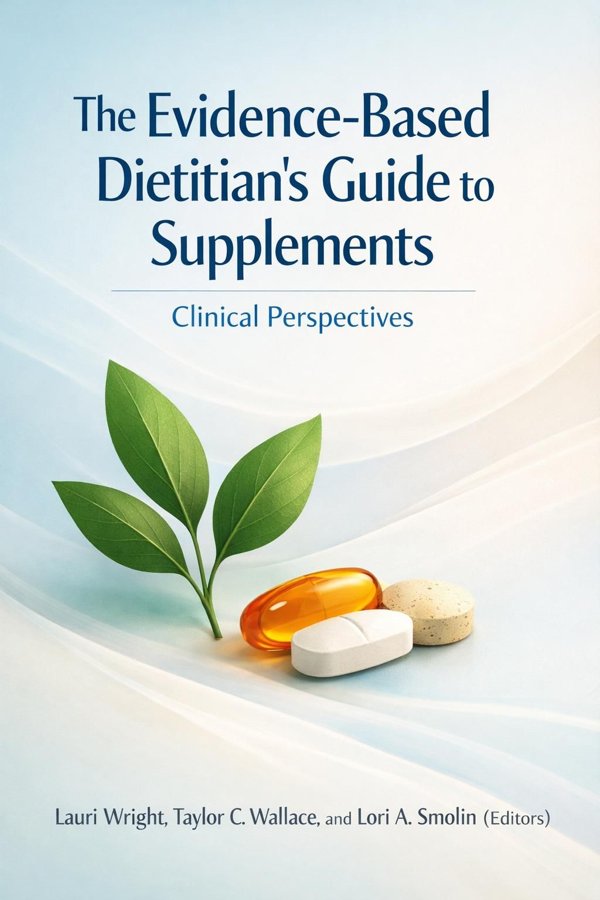
The Evidence-Based Dietitian's Guide to Supplements: Clinical Perspectives
Dietary supplements sit at the crossroads of hope, marketing, and medicine. Patients use them to fill nutritional gaps, improve performance, manage symptoms, or prevent disease, yet the evidence behind these products is often uneven, misunderstood, or distorted by hype. The Evidence-Based Dietitian's Guide to Supplements: Clinical Perspectives was created to help nutrition professionals cut through that confusion. Rather than treating supplements as automatically beneficial or inherently suspect, this reference teaches readers how to evaluate them with scientific rigor, clinical judgment, and ethical responsibility. Edited by Lauri Wright, Taylor C. Wallace, and Lori A. Smolin, the book brings together academic expertise, nutrition science, and applied practice. Its focus is not simply on listing ingredients or claims, but on showing dietitians how to assess efficacy, safety, dosage, quality, regulation, and patient suitability across a wide range of supplement categories. From vitamins and minerals to botanicals, probiotics, and sports products, it frames supplementation as a clinical decision rather than a consumer trend. For dietitians, students, and healthcare professionals who need reliable guidance in a crowded marketplace, this book offers a practical and credible roadmap.
Read SummaryKey Insights from Taylor C. Wallace
Evidence-Based Practice Starts With Context
A supplement is never just a pill, powder, or capsule; it is a decision made within a human story. That is the starting point of this book’s approach to evidence-based dietetics. The editors argue that strong clinical practice is built not merely on memorizing studies, but on integrating three force...
From The Evidence-Based Dietitian's Guide to Supplements: Clinical Perspectives
Regulation Shapes Safety More Than Consumers Realize
Many people assume supplements are reviewed like prescription drugs before they reach store shelves. They are not, and that misunderstanding creates one of the greatest hazards in clinical nutrition. A central contribution of this book is its clear explanation of the U.S. regulatory framework govern...
From The Evidence-Based Dietitian's Guide to Supplements: Clinical Perspectives
Critical Appraisal Prevents Weak Recommendations
Not all evidence is created equal, and supplement research often rewards superficial reading. This book stresses that dietitians must go beyond headlines and abstract conclusions to evaluate methodology carefully. A supplement may appear effective until one notices the study had a tiny sample size, ...
From The Evidence-Based Dietitian's Guide to Supplements: Clinical Perspectives
Micronutrients Matter Most When Need Exists
One of the most important truths in nutrition is also one of the least glamorous: basic vitamins and minerals often matter more than exotic products. This book gives substantial attention to micronutrients because deficiencies, insufficiencies, and increased physiologic demands remain common and cli...
From The Evidence-Based Dietitian's Guide to Supplements: Clinical Perspectives
Botanicals and Novel Supplements Need Skepticism
The more dramatic the claim, the more disciplined the clinician must become. Botanicals, herbal products, probiotics, and performance supplements occupy a particularly challenging place in practice because they often combine traditional use, emerging science, commercial enthusiasm, and inconsistent ...
From The Evidence-Based Dietitian's Guide to Supplements: Clinical Perspectives
Safety Depends on the Whole Patient
A supplement can be evidence-supported and still be inappropriate for a specific person. This is one of the most clinically relevant lessons in the book. Safety is not a fixed property of a product; it is an interaction between the supplement, the dose, the duration, the patient’s health conditions,...
From The Evidence-Based Dietitian's Guide to Supplements: Clinical Perspectives
About Taylor C. Wallace
Wallace is a food and nutrition scientist and CEO of the Think Healthy Group.


Frequently Asked Questions
Wallace is a food and nutrition scientist and CEO of the Think Healthy Group.
Read Taylor C. Wallace's books in 15 minutes
Get AI-powered summaries with key insights from 1 book by Taylor C. Wallace.