
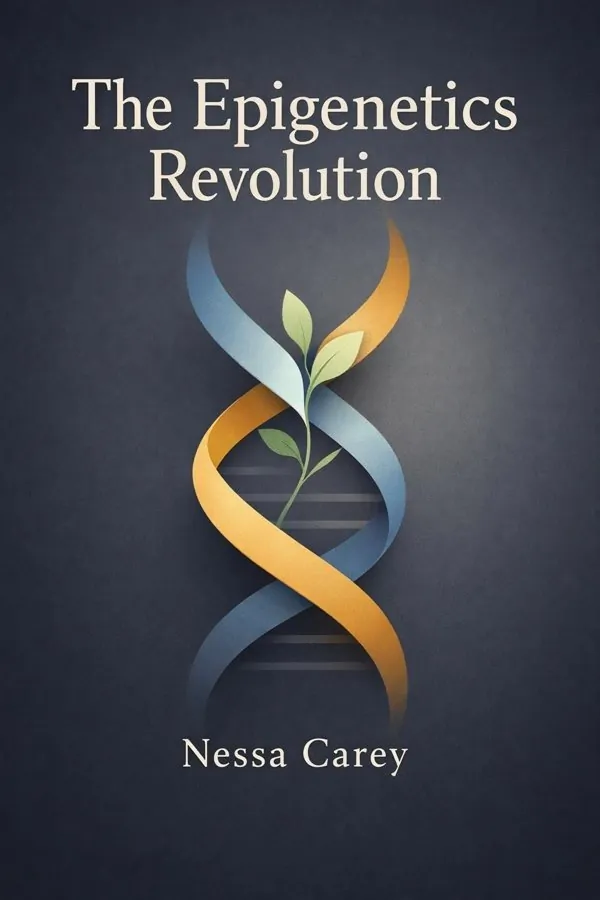
The Epigenetics Revolution: How Modern Biology Is Rewriting Our Understanding of Genetics, Disease and Inheritance: Summary & Key Insights
by Nessa Carey
 10 min5 chaptersAudio available
What Is The Epigenetics Revolution: How Modern Biology Is Rewriting Our Understanding of Genetics, Disease and Inheritance About?
The Epigenetics Revolution: How Modern Biology Is Rewriting Our Understanding of Genetics, Disease and Inheritance by Nessa Carey is a life_science book spanning 5 pages. This book explains how epigenetics—the study of how genes can be switched on or off without changing the DNA sequence—has transformed our understanding of biology. Nessa Carey explores how environmental factors, stress, diet, and experiences can influence gene expression, affecting health, behavior, and evolution. The work bridges molecular biology and everyday life, showing how epigenetic mechanisms shape development, disease, and inheritance.
This FizzRead summary covers all 5 key chapters of The Epigenetics Revolution: How Modern Biology Is Rewriting Our Understanding of Genetics, Disease and Inheritance in approximately 10 minutes, distilling the most important ideas, arguments, and takeaways from Nessa Carey's work. Also available as an audio summary and Key Quotes Podcast.
The Epigenetics Revolution: How Modern Biology Is Rewriting Our Understanding of Genetics, Disease and Inheritance
This book explains how epigenetics—the study of how genes can be switched on or off without changing the DNA sequence—has transformed our understanding of biology. Nessa Carey explores how environmental factors, stress, diet, and experiences can influence gene expression, affecting health, behavior, and evolution. The work bridges molecular biology and everyday life, showing how epigenetic mechanisms shape development, disease, and inheritance.
Who Should Read The Epigenetics Revolution: How Modern Biology Is Rewriting Our Understanding of Genetics, Disease and Inheritance?
This book is perfect for anyone interested in life_science and looking to gain actionable insights in a short read. Whether you're a student, professional, or lifelong learner, the key ideas from The Epigenetics Revolution: How Modern Biology Is Rewriting Our Understanding of Genetics, Disease and Inheritance by Nessa Carey will help you think differently.
- ✓Readers who enjoy life_science and want practical takeaways
- ✓Professionals looking to apply new ideas to their work and life
- ✓Anyone who wants the core insights of The Epigenetics Revolution: How Modern Biology Is Rewriting Our Understanding of Genetics, Disease and Inheritance in just 10 minutes
Want the full summary?
Get instant access to this book summary and 100K+ more with Fizz Moment.
Get Free SummaryAvailable on App Store • Free to download
Key Chapters
For decades, the genome was thought to be life’s master blueprint. After Mendel’s elegant inheritance patterns and the elucidation of DNA’s structure, biologists believed they had found the ultimate code of life. But even as technology advanced—through the Human Genome Project and sequencing breakthroughs—the promise of genetic determinism began to falter. How could humans have only around twenty-five thousand genes, scarcely more than a worm, and yet produce consciousness, complexity, and culture? Something else had to be controlling when, where, and how those genes worked.
Epigenetics arose to fill that void. The word literally means 'above genetics.' It refers to the array of chemical modifications that determine which genes are switched on or off, not by changing DNA’s letters, but by marking them chemically. I often describe it as the annotations upon the text of the genome, guiding how it is read. These marks, made through methyl groups and histone modifications, act as the punctuation and emphasis of biology.
When we study early embryos, the need for an additional layer of control becomes obvious. How does a single fertilized egg produce skin and neurons, pancreas and muscle, all from the same genetic code? Epigenetic marks orchestrate expression, silencing the wrong genes and awakening the right ones as cells commit to their fates. I find this tremendously moving—the idea that your heart and brain started from the same script, but were epigenetically composed into distinct symphonies.
To understand epigenetic regulation, we must look at DNA not as a linear sequence but as a living structure. Inside the nucleus, two meters of DNA are packaged into chromatin—DNA wound around proteins called histones. Histones are more than spools; they are active players, modified by acetyl, methyl, and phosphate groups that signal how accessible the DNA should be. When histones are acetylated, chromatin loosens, allowing genes to be transcribed. When they are deacetylated or methylated in certain positions, the DNA compacts and genes fall silent.
DNA methylation, the best-known epigenetic mechanism, involves adding methyl groups to cytosine bases, often near gene promoters. High levels of methylation usually repress transcription. This single chemical change can determine whether a gene essential for development or one that suppresses tumors is active or silent. During my years in molecular biology, I saw how strikingly sensitive this system is. A small misplacement of methyl groups can silence a crucial tumor suppressor gene, leading to cancer. Conversely, erasing too much methylation can unleash genomic instability.
This biochemical dance gives biology flexibility beyond what genetics alone provides. Epigenetic marks are not static. They change dynamically in response to developmental cues and environmental pressures, ensuring that our genome behaves more like a responsive library than a fixed code.
+ 3 more chapters — available in the FizzRead app
All Chapters in The Epigenetics Revolution: How Modern Biology Is Rewriting Our Understanding of Genetics, Disease and Inheritance
About the Author
Nessa Carey is a British molecular biologist and science writer. She has worked in academia and the biotechnology industry and is known for her accessible explanations of complex genetic and epigenetic concepts. Carey has also written other popular science books on genetics and molecular biology.
Get This Summary in Your Preferred Format
Read or listen to the The Epigenetics Revolution: How Modern Biology Is Rewriting Our Understanding of Genetics, Disease and Inheritance summary by Nessa Carey anytime, anywhere. FizzRead offers multiple formats so you can learn on your terms — all free.
Available formats: App · Audio · PDF · EPUB — All included free with FizzRead
Download The Epigenetics Revolution: How Modern Biology Is Rewriting Our Understanding of Genetics, Disease and Inheritance PDF and EPUB Summary
Key Quotes from The Epigenetics Revolution: How Modern Biology Is Rewriting Our Understanding of Genetics, Disease and Inheritance
“For decades, the genome was thought to be life’s master blueprint.”
“To understand epigenetic regulation, we must look at DNA not as a linear sequence but as a living structure.”
Frequently Asked Questions about The Epigenetics Revolution: How Modern Biology Is Rewriting Our Understanding of Genetics, Disease and Inheritance
The Epigenetics Revolution: How Modern Biology Is Rewriting Our Understanding of Genetics, Disease and Inheritance by Nessa Carey is a life_science book that explores key ideas across 5 chapters. This book explains how epigenetics—the study of how genes can be switched on or off without changing the DNA sequence—has transformed our understanding of biology. Nessa Carey explores how environmental factors, stress, diet, and experiences can influence gene expression, affecting health, behavior, and evolution. The work bridges molecular biology and everyday life, showing how epigenetic mechanisms shape development, disease, and inheritance.
More by Nessa Carey
You Might Also Like
The Selfish Gene
Richard Dawkins
10 min
Awakenings
Oliver Sacks
10 min
Parasite Rex: Inside the Bizarre World of Nature's Most Dangerous Creatures
Carl Zimmer
10 min
The Atlas of Life on Earth
Various
10 min
The Book of Humans: The Story of How We Became Us
Adam Rutherford
10 min
The Horse
Wendy Williams
10 minBrowse by Category
Ready to read The Epigenetics Revolution: How Modern Biology Is Rewriting Our Understanding of Genetics, Disease and Inheritance?
Get the full summary and 100K+ more books with Fizz Moment.