
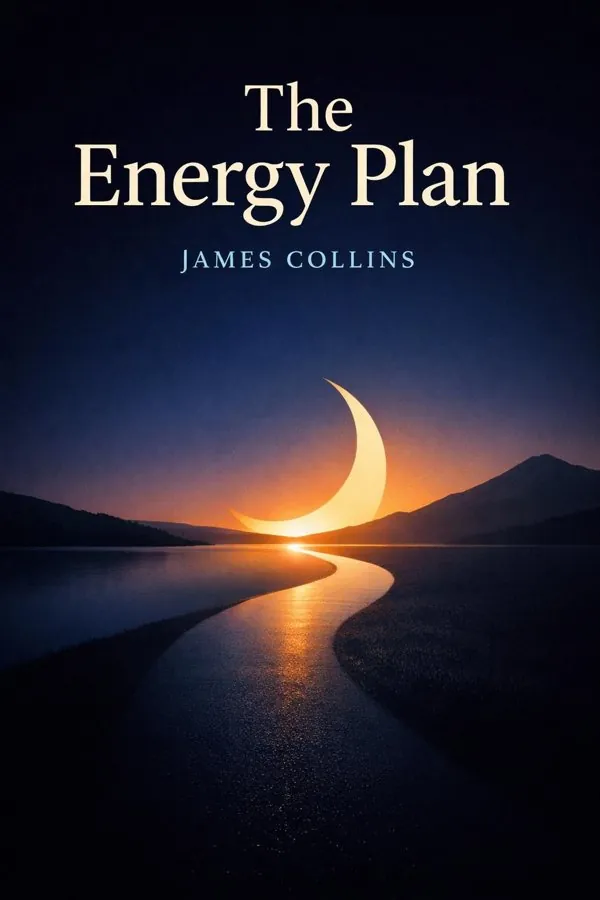
The Energy Plan: Seven Steps to Build Resilience, Boost Vitality and Transform Your Life: Summary & Key Insights
 10 min9 chaptersAudio available
Key Takeaways from The Energy Plan: Seven Steps to Build Resilience, Boost Vitality and Transform Your Life
Most people talk about energy as if it were a mystery, yet James Collins begins by insisting that vague feelings produce vague solutions.
Many people approach food with a weight-loss mindset when what they actually need is a performance mindset.
People often blame low motivation or poor concentration on stress when the problem may be far simpler: they are underhydrated.
Energy is not created only by what you do during the day.
When people feel tired, they often assume the answer is to conserve energy.
What Is The Energy Plan: Seven Steps to Build Resilience, Boost Vitality and Transform Your Life About?
The Energy Plan: Seven Steps to Build Resilience, Boost Vitality and Transform Your Life by James Collins is a health_med book spanning 8 pages. In The Energy Plan, performance nutritionist James Collins argues that energy is not simply something you either have or lack. It is a capacity you can measure, influence, and steadily improve through better daily habits. Drawing on years of experience working with elite athletes, top football clubs, Olympic competitors, and demanding corporate clients, Collins translates high-performance science into practical strategies for ordinary life. His central insight is simple but powerful: most people try to fix tiredness with quick solutions such as caffeine, sugar, or willpower, when the real answer lies in building a reliable system for fueling, hydrating, resting, moving, and focusing well. The book matters because modern life drains us on multiple fronts at once. We face long workdays, poor sleep, mental overload, inconsistent eating, and constant stimulation, then wonder why our energy crashes. Collins offers a structured seven-step method to help readers understand their personal energy patterns, prevent slumps, and create resilience that lasts. Rather than promising a miracle cure, he presents a realistic framework for sustained vitality, sharper thinking, and better performance at work, in training, and in everyday life.
This FizzRead summary covers all 9 key chapters of The Energy Plan: Seven Steps to Build Resilience, Boost Vitality and Transform Your Life in approximately 10 minutes, distilling the most important ideas, arguments, and takeaways from James Collins's work. Also available as an audio summary and Key Quotes Podcast.
The Energy Plan: Seven Steps to Build Resilience, Boost Vitality and Transform Your Life
In The Energy Plan, performance nutritionist James Collins argues that energy is not simply something you either have or lack. It is a capacity you can measure, influence, and steadily improve through better daily habits. Drawing on years of experience working with elite athletes, top football clubs, Olympic competitors, and demanding corporate clients, Collins translates high-performance science into practical strategies for ordinary life. His central insight is simple but powerful: most people try to fix tiredness with quick solutions such as caffeine, sugar, or willpower, when the real answer lies in building a reliable system for fueling, hydrating, resting, moving, and focusing well.
The book matters because modern life drains us on multiple fronts at once. We face long workdays, poor sleep, mental overload, inconsistent eating, and constant stimulation, then wonder why our energy crashes. Collins offers a structured seven-step method to help readers understand their personal energy patterns, prevent slumps, and create resilience that lasts. Rather than promising a miracle cure, he presents a realistic framework for sustained vitality, sharper thinking, and better performance at work, in training, and in everyday life.
Who Should Read The Energy Plan: Seven Steps to Build Resilience, Boost Vitality and Transform Your Life?
This book is perfect for anyone interested in health_med and looking to gain actionable insights in a short read. Whether you're a student, professional, or lifelong learner, the key ideas from The Energy Plan: Seven Steps to Build Resilience, Boost Vitality and Transform Your Life by James Collins will help you think differently.
- ✓Readers who enjoy health_med and want practical takeaways
- ✓Professionals looking to apply new ideas to their work and life
- ✓Anyone who wants the core insights of The Energy Plan: Seven Steps to Build Resilience, Boost Vitality and Transform Your Life in just 10 minutes
Want the full summary?
Get instant access to this book summary and 100K+ more with Fizz Moment.
Get Free SummaryAvailable on App Store • Free to download
Key Chapters
Most people talk about energy as if it were a mystery, yet James Collins begins by insisting that vague feelings produce vague solutions. If you do not know when your energy rises, falls, or disappears, you cannot fix the problem in a meaningful way. The first step is therefore not a diet, supplement, or exercise plan. It is awareness.
Collins encourages readers to see energy as a combination of physical stamina, mental sharpness, emotional steadiness, and recovery capacity. A person may feel physically awake but mentally scattered, or mentally alert but physically depleted. That distinction matters because different causes require different interventions. A midafternoon slump might come from poor meal timing, dehydration, low sleep quality, stress overload, or simply too much uninterrupted sitting.
He recommends tracking your day with more precision. When do you wake feeling refreshed or foggy? When do cravings hit? At what time does concentration drop? How do meetings, workouts, commutes, or late dinners affect the next day? Even a simple journal can reveal patterns you normally miss. For example, you might notice that skipping breakfast leaves you overeating at lunch, or that your best ideas happen in the morning before email begins.
This step shifts energy from a subjective complaint into a practical metric. Once you identify your own rhythm, you can stop copying generic advice and start building a plan that fits your real life.
Actionable takeaway: Track your energy, focus, hunger, and mood for seven days in hourly blocks so you can identify recurring dips and their likely triggers.
Many people approach food with a weight-loss mindset when what they actually need is a performance mindset. Collins argues that energy depends less on eating less and more on eating appropriately. In other words, the question is not simply how much food you consume, but whether you are providing the right fuel at the right time for the demands of your day.
He explains that carbohydrates, protein, and fats each play distinct roles. Carbohydrates provide readily available fuel, especially for the brain and active muscles. Protein supports repair, satiety, and stable functioning. Healthy fats contribute to long-lasting energy, hormonal health, and overall resilience. Problems arise when meals are unbalanced, mistimed, or overly dependent on ultra-processed foods that create spikes and crashes.
A practical example is breakfast. Someone who starts the day with only coffee and a pastry may feel briefly energized, then struggle with hunger and poor concentration later. By contrast, a breakfast containing oats, yogurt, eggs, fruit, or nuts offers a steadier release of energy. The same logic applies to lunch: a heavy meal high in refined carbohydrates can lead to afternoon lethargy, while a balanced meal with vegetables, lean protein, whole grains, and healthy fats sustains focus.
Collins also emphasizes tailoring intake to workload. On intense training days or long workdays, energy needs increase. On lighter days, intake can be simpler. The aim is flexibility, not rigid perfection.
Actionable takeaway: Build each main meal around a balance of protein, fiber-rich carbohydrates, healthy fats, and colorful produce, and match portion size to the demands of your day.
People often blame low motivation or poor concentration on stress when the problem may be far simpler: they are underhydrated. Collins treats hydration as a foundational energy strategy because even mild fluid loss can affect cognition, mood, physical performance, and the body’s ability to regulate temperature and circulation.
One reason hydration is overlooked is that thirst is not always an immediate or reliable guide. By the time you feel obviously thirsty, your mental performance may already have declined. Office workers, travelers, parents, and athletes alike can move through the day with suboptimal hydration, especially if they rely heavily on coffee, skip water during meetings, or spend time in air-conditioned or heated environments.
Collins suggests moving beyond random sipping to a deliberate hydration routine. Begin the day by rehydrating after sleep. Spread fluid intake through the day rather than drinking large amounts only when tired. Pay attention to context: hot weather, exercise, long presentations, and flights all increase needs. He also notes that hydration is not just about water volume but also about electrolyte balance and regularity. For someone who sweats heavily during workouts, replacing sodium and other minerals matters.
Practical examples make the point clear. A student studying for exams may improve concentration simply by keeping a bottle nearby and drinking consistently. A runner may perform better by hydrating before, during, and after training rather than trying to catch up afterward. A professional in back-to-back meetings can set reminders to drink between sessions.
Actionable takeaway: Create a simple hydration plan by drinking on waking, with each meal, and at key transitions during the day, adjusting upward for exercise, heat, and travel.
Energy is not created only by what you do during the day. It is built, restored, and protected by how well you recover. Collins argues that many people try to outwork fatigue instead of respecting recovery as the mechanism that makes high performance possible. The result is a cycle of stimulants, poor decisions, and diminishing returns.
Sleep sits at the center of this recovery system. During sleep, the body repairs tissue, regulates hormones, consolidates memory, and resets many of the processes that support mental clarity and physical resilience. Consistently poor sleep can disrupt appetite, reduce stress tolerance, impair reaction time, and make exercise feel harder. It can also make healthy habits less likely because tired people tend to crave quick energy and struggle with discipline.
Collins encourages readers to think beyond total hours and examine sleep quality. A regular bedtime, reduced evening screen exposure, a cool dark room, and a wind-down routine can all improve recovery. Late heavy meals, alcohol, and intense work close to bedtime may interfere with restorative sleep even if you remain in bed long enough.
Recovery also extends beyond sleep. It includes the pauses that keep stress from accumulating unchecked: light movement after hard training, time away from devices, deliberate relaxation, and alternating demanding periods with easier ones. An athlete understands rest days; Collins suggests that knowledge is equally important for busy professionals and parents.
Instead of treating rest as laziness, he reframes it as preparation. Recovery is what allows you to show up again with consistency rather than burning bright for a short period and then crashing.
Actionable takeaway: Protect a repeatable evening routine and one non-negotiable recovery habit, such as a screen-free final 30 minutes or a consistent bedtime window.
When people feel tired, they often assume the answer is to conserve energy. Collins challenges that instinct by showing that the right kind of movement frequently generates more energy than it consumes. Sedentary living may feel restful in the moment, but over time it contributes to sluggish circulation, lower mood, poorer sleep, and reduced resilience.
Exercise improves cardiovascular efficiency, metabolic health, stress regulation, and mental clarity. But Collins is careful not to present movement as an all-or-nothing proposition. The goal is not to train like an Olympian. It is to use activity strategically so that your body becomes better at producing and sustaining energy.
He highlights the value of matching exercise to your current condition and goals. Structured training, such as strength work, interval sessions, or endurance exercise, can build capacity. At the same time, low-intensity movement matters enormously. Walking between meetings, using the stairs, stretching after long periods at a desk, or taking a short mobility session in the evening can prevent the energy stagnation caused by prolonged sitting.
This principle is easy to observe. A person who takes a brisk 15-minute walk at lunch may return more alert than someone who remains seated scrolling through a phone. Someone who strength trains regularly may experience fewer afternoon slumps because metabolic health and sleep quality improve over time.
Collins promotes consistency over drama. Sporadic extreme workouts can add stress if recovery and nutrition are poor. Sustainable energy comes from a routine your body can absorb and benefit from.
Actionable takeaway: Add one planned movement block and several short activity breaks to your day, aiming for consistency rather than intensity alone.
A full calendar is not always the reason people feel drained. Often the real problem is fragmented attention. Collins broadens the idea of energy beyond food and fitness by focusing on mental energy: the ability to concentrate, make decisions, stay emotionally balanced, and recover from cognitive strain.
Modern environments are hostile to focus. Notifications, multitasking, constant email, and the pressure to switch rapidly between tasks all consume mental bandwidth. Even if you are physically well fueled, your energy can still collapse if your attention is repeatedly broken. Collins suggests that mental fatigue should be treated as seriously as physical fatigue because it affects productivity, mood, and the quality of decisions.
One useful distinction is between deep work and shallow work. Tasks that require creativity, analysis, or judgment should ideally be placed in periods when your natural alertness is highest. Lower-energy windows can be reserved for administrative tasks. This simple sequencing reduces the frustration of trying to do difficult thinking when your brain is already depleted.
He also points to the importance of mental recovery. Short pauses, breathing exercises, time outdoors, and moments without stimulation can reset attention more effectively than endless screen time. For example, stepping away from the desk for ten minutes may do more for focus than another cup of coffee. Likewise, reducing the number of trivial daily decisions can preserve cognitive resources for the work that matters most.
Mental energy is not just about endurance. It is about directing your best attention intentionally instead of letting it be scattered all day.
Actionable takeaway: Identify your highest-focus window each day and protect it for one cognitively demanding task with notifications and distractions turned off.
Many people admire those who seem able to push through endless demands, but Collins suggests that real resilience is not the same as constant endurance. Toughness without recovery, nutrition, or boundaries eventually becomes depletion. Sustainable resilience comes from systems that help the body and mind absorb stress without breaking down.
Stress itself is not the enemy. In training, work, and life, some stress is necessary for growth. The problem is chronic, poorly managed stress with no recovery cycle. When this becomes normal, sleep suffers, appetite regulation worsens, concentration drops, and the immune system may weaken. People then interpret these signals as personal failure rather than biological overload.
Collins uses a performance lens: just as an athlete alternates hard sessions with lighter ones, everyday life should include deliberate modulation. That might mean planning demanding meetings earlier in the day, eating properly before stressful events, taking walking calls when possible, or creating transitions between work and home to prevent mental carryover. Small systems reduce the cost of stress.
He also emphasizes the role of self-awareness. Some people show stress through cravings, irritability, or restlessness rather than obvious anxiety. Recognizing your own signs allows earlier intervention. A leader who notices decision fatigue at 4 p.m. can avoid scheduling critical conversations then. A parent who knows poor sleep increases reactivity can simplify the next day’s commitments.
Resilience is therefore less about heroic willpower and more about designing routines that reduce unnecessary friction while supporting recovery and stable output.
Actionable takeaway: Choose one recurring stress point in your week and build a support system around it, such as better meal timing, a transition walk, or a protected recovery window afterward.
Short bursts of motivation can produce temporary change, but Collins is interested in something more valuable: lasting energy. That requires a plan. The final step of his framework focuses on turning individual tactics into a personalized system that evolves with your goals, workload, age, and life circumstances.
This matters because energy needs are never static. A person training for an event, managing a high-pressure project, recovering from illness, or caring for young children will face different demands. Even within a normal year, seasons, travel, deadlines, and emotional stress can alter sleep, appetite, movement, and concentration. Rigid plans often fail because they do not adapt to reality.
Collins encourages readers to review the basics regularly: Are you eating enough to support your demands? Is hydration slipping during busy periods? Has bedtime drifted later? Are you training in a way you can recover from? Instead of waiting for burnout, use these questions as preventive maintenance. Energy planning works best when it is proactive.
He also highlights the compounding effect of small habits. Going to bed 30 minutes earlier, preparing lunches in advance, walking daily, and protecting focus time may seem modest in isolation. Over weeks and months, they can transform baseline vitality. The goal is not perfection but repeatability. A good plan survives ordinary life, not just ideal days.
The deeper message is empowering: energy is trainable. By making your routines visible, flexible, and intentional, you build a reserve that supports both performance and wellbeing over the long term.
Actionable takeaway: Conduct a weekly 10-minute energy review to assess sleep, food, hydration, movement, stress, and focus, then adjust one habit for the week ahead.
The most important lesson in The Energy Plan is that no single habit can carry the whole load. Better breakfasts cannot fully compensate for poor sleep. More water will not solve chronic stress. Exercise helps, but not if it is layered onto under-fueling and inadequate recovery. Collins therefore ends with integration: energy is the result of interconnected behaviors working together.
This systems view is what gives the book its practical power. Instead of treating health as separate categories, Collins shows how nutrition, hydration, movement, sleep, and mental focus reinforce one another. A well-timed balanced lunch improves afternoon concentration. Better hydration supports exercise quality. Exercise improves sleep. Better sleep reduces cravings and improves decision-making. Stronger focus reduces stress from unfinished work. The gains compound.
Readers can apply this by designing a daily rhythm rather than relying on isolated acts of discipline. For instance, start the morning by hydrating and eating a protein-rich breakfast. Schedule your most demanding task during your best focus window. Use lunch as both nourishment and a movement break. Rehydrate through the afternoon. Avoid late overstimulation. End the day with a consistent wind-down routine. This rhythm is simple, but it aligns the body and mind with sustained performance.
Collins’s integrated model also makes setbacks easier to handle. If one area slips, you can stabilize another instead of abandoning the whole plan. Missed a workout? Prioritize sleep. Busy day with irregular meals? Recover hydration and eat well at dinner. The point is continuity, not perfection.
Actionable takeaway: Build a basic daily energy template that links wake time, meals, hydration, movement, focus periods, and bedtime into one repeatable routine.
All Chapters in The Energy Plan: Seven Steps to Build Resilience, Boost Vitality and Transform Your Life
About the Author
James Collins is a respected performance nutritionist whose work spans elite sport, corporate performance, and public health communication. He has advised Olympic athletes, Premier League football clubs, and senior business leaders, helping them improve energy, recovery, and sustained performance through evidence-based nutrition and lifestyle strategies. Collins is known for making complex science accessible, translating research on fueling, hydration, sleep, and resilience into practical guidance that people can use in everyday life. His approach is shaped by high-performance environments but designed to be realistic beyond them. In The Energy Plan, he brings together his expertise in sports nutrition and behavioral performance to show how better daily habits can improve vitality, focus, and long-term wellbeing.
Get This Summary in Your Preferred Format
Read or listen to the The Energy Plan: Seven Steps to Build Resilience, Boost Vitality and Transform Your Life summary by James Collins anytime, anywhere. FizzRead offers multiple formats so you can learn on your terms — all free.
Available formats: App · Audio · PDF · EPUB — All included free with FizzRead
Download The Energy Plan: Seven Steps to Build Resilience, Boost Vitality and Transform Your Life PDF and EPUB Summary
Key Quotes from The Energy Plan: Seven Steps to Build Resilience, Boost Vitality and Transform Your Life
“Most people talk about energy as if it were a mystery, yet James Collins begins by insisting that vague feelings produce vague solutions.”
“Many people approach food with a weight-loss mindset when what they actually need is a performance mindset.”
“People often blame low motivation or poor concentration on stress when the problem may be far simpler: they are underhydrated.”
“Energy is not created only by what you do during the day.”
“When people feel tired, they often assume the answer is to conserve energy.”
Frequently Asked Questions about The Energy Plan: Seven Steps to Build Resilience, Boost Vitality and Transform Your Life
The Energy Plan: Seven Steps to Build Resilience, Boost Vitality and Transform Your Life by James Collins is a health_med book that explores key ideas across 9 chapters. In The Energy Plan, performance nutritionist James Collins argues that energy is not simply something you either have or lack. It is a capacity you can measure, influence, and steadily improve through better daily habits. Drawing on years of experience working with elite athletes, top football clubs, Olympic competitors, and demanding corporate clients, Collins translates high-performance science into practical strategies for ordinary life. His central insight is simple but powerful: most people try to fix tiredness with quick solutions such as caffeine, sugar, or willpower, when the real answer lies in building a reliable system for fueling, hydrating, resting, moving, and focusing well. The book matters because modern life drains us on multiple fronts at once. We face long workdays, poor sleep, mental overload, inconsistent eating, and constant stimulation, then wonder why our energy crashes. Collins offers a structured seven-step method to help readers understand their personal energy patterns, prevent slumps, and create resilience that lasts. Rather than promising a miracle cure, he presents a realistic framework for sustained vitality, sharper thinking, and better performance at work, in training, and in everyday life.
You Might Also Like

On Immunity
Eula Biss
10 min
The Three-Body Problem
Liu Cixin
10 min
Community Health Volunteer Toolkit: Training and Practical Activities
World Health Organization
10 min
Healing Back Pain: The Mind-Body Connection
John E. Sarno
10 min
Health Literacy for All: Practical Guides to Communicate Health Information (Compilations)
World Health Organization
10 min
The Complete Guide to Sports Supplements: An Evidence-Based Review
Anita Bean
10 minBrowse by Category
Ready to read The Energy Plan: Seven Steps to Build Resilience, Boost Vitality and Transform Your Life?
Get the full summary and 100K+ more books with Fizz Moment.