
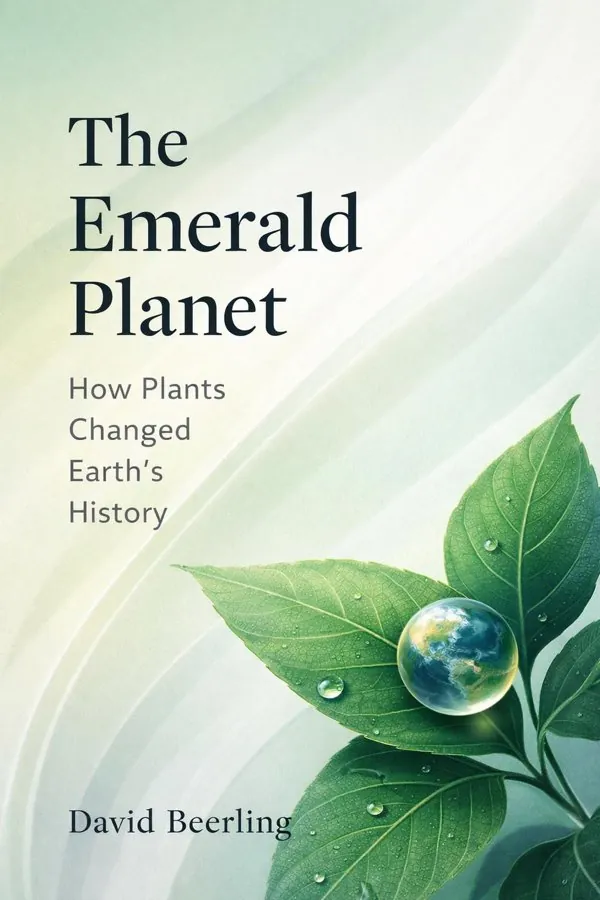
The Emerald Planet: How Plants Changed Earth's History: Summary & Key Insights
 10 min8 chaptersAudio available
Key Takeaways from The Emerald Planet: How Plants Changed Earth's History
It is easy to forget that Earth was once a barren planet with no forests, no grasslands, and no breathable air.
The move from water to land was one of evolution’s boldest experiments.
A forest is not just a collection of trees; it is a machine for changing the Earth.
Some of the fuel that powered the industrial age began as lush, waterlogged forests hundreds of millions of years ago.
Plants are resilient, but they are not invincible.
What Is The Emerald Planet: How Plants Changed Earth's History About?
The Emerald Planet: How Plants Changed Earth's History by David Beerling is a life_science book spanning 7 pages. What if the true engineers of Earth were not animals, volcanoes, or even tectonic forces, but plants? In The Emerald Planet, paleobotanist David Beerling tells the sweeping story of how vegetation transformed a hostile young planet into the habitable world we know today. Moving across hundreds of millions of years, the book shows how plants helped create oxygen-rich air, altered the carbon cycle, cooled the climate, built soils, and reshaped entire ecosystems. Beerling’s central insight is both elegant and radical: the history of life on land is inseparable from the history of plants. What makes this book especially compelling is its interdisciplinary reach. Beerling draws on paleontology, geology, climate science, evolutionary biology, and plant physiology to explain how tiny early land plants eventually gave rise to forests, flowering plants, and the modern biosphere. He writes not only as a gifted science communicator, but as a leading researcher whose work explores the relationship between plants and Earth systems over deep time. The result is a fascinating scientific detective story that changes how we see the green world around us—and why its future matters so much.
This FizzRead summary covers all 8 key chapters of The Emerald Planet: How Plants Changed Earth's History in approximately 10 minutes, distilling the most important ideas, arguments, and takeaways from David Beerling's work. Also available as an audio summary and Key Quotes Podcast.
The Emerald Planet: How Plants Changed Earth's History
What if the true engineers of Earth were not animals, volcanoes, or even tectonic forces, but plants? In The Emerald Planet, paleobotanist David Beerling tells the sweeping story of how vegetation transformed a hostile young planet into the habitable world we know today. Moving across hundreds of millions of years, the book shows how plants helped create oxygen-rich air, altered the carbon cycle, cooled the climate, built soils, and reshaped entire ecosystems. Beerling’s central insight is both elegant and radical: the history of life on land is inseparable from the history of plants.
What makes this book especially compelling is its interdisciplinary reach. Beerling draws on paleontology, geology, climate science, evolutionary biology, and plant physiology to explain how tiny early land plants eventually gave rise to forests, flowering plants, and the modern biosphere. He writes not only as a gifted science communicator, but as a leading researcher whose work explores the relationship between plants and Earth systems over deep time. The result is a fascinating scientific detective story that changes how we see the green world around us—and why its future matters so much.
Who Should Read The Emerald Planet: How Plants Changed Earth's History?
This book is perfect for anyone interested in life_science and looking to gain actionable insights in a short read. Whether you're a student, professional, or lifelong learner, the key ideas from The Emerald Planet: How Plants Changed Earth's History by David Beerling will help you think differently.
- ✓Readers who enjoy life_science and want practical takeaways
- ✓Professionals looking to apply new ideas to their work and life
- ✓Anyone who wants the core insights of The Emerald Planet: How Plants Changed Earth's History in just 10 minutes
Want the full summary?
Get instant access to this book summary and 100K+ more with Fizz Moment.
Get Free SummaryAvailable on App Store • Free to download
Key Chapters
It is easy to forget that Earth was once a barren planet with no forests, no grasslands, and no breathable air. Beerling begins by reminding us that the familiar green world is a relatively late achievement in planetary history. Early Earth was hot, geologically violent, and chemically hostile by modern standards. Long before plants colonized land, life existed mainly in the oceans, where simple photosynthetic organisms slowly started altering the atmosphere.
These ancient microbial communities, especially cyanobacteria, performed the first great environmental revolution: using sunlight to split water and release oxygen. Over vast spans of time, this oxygen accumulated in the atmosphere and oceans, making possible more complex forms of life. Yet the planet remained largely lifeless on land. There were no roots to break rock into soil, no leaves to slow erosion, and no plant-driven carbon cycle moderating the climate. The continents were exposed, dry, and sterile.
Beerling’s point is profound: plants did not simply adapt to Earth; they helped create the conditions under which terrestrial life could exist at all. Understanding this changes how we think about evolution. Life is not only shaped by environments—it also reshapes them. In modern terms, this is similar to how forests today influence rainfall, temperature, and atmospheric chemistry. The biosphere is not a passive passenger on Earth; it is an active force.
A practical way to apply this idea is to view ecosystems as planet-shaping systems rather than scenic backdrops. Whether considering deforestation, agriculture, or rewilding, ask not just what lives in an environment, but how life is engineering it. Actionable takeaway: when thinking about climate and biodiversity, start from the principle that living organisms—especially plants—are architects of planetary conditions, not merely inhabitants of them.
The move from water to land was one of evolution’s boldest experiments. Beerling shows that when algae-like ancestors of land plants first emerged onto damp shorelines around 470 million years ago, they entered an unforgiving world. On land there was intense ultraviolet radiation, a constant risk of drying out, no buoyant water support, and no established soils rich in nutrients. Colonizing land required a complete toolkit of biological innovations.
Early plants evolved waxy cuticles to reduce water loss, spores with protective coatings, and simple structures for anchoring themselves to surfaces. Later came vascular tissues, which allowed water and nutrients to move through the plant body, and stomata, tiny pores that balanced carbon dioxide intake with water conservation. These features were not minor upgrades; they were revolutionary technologies that let plants spread inland and upward.
Once plants established themselves, they transformed the landscape. Their tissues trapped sediments, slowed erosion, and began the long process of soil formation. They also created habitats for fungi, arthropods, and eventually vertebrates. In effect, plants made land livable not just for themselves, but for countless organisms that followed.
A modern example helps clarify the significance of this transition. Today, hardy pioneer species such as mosses and lichens can colonize bare rock after volcanic eruptions or glacial retreat, beginning ecological succession from almost nothing. That process echoes the deep past. Beerling’s broader lesson is that major evolutionary success often depends on solving basic physical problems with elegant biological design.
Actionable takeaway: pay attention to the hidden adaptations behind everyday plant life—roots, leaf coatings, and stomata are reminders that survival often depends on small but decisive innovations that open entirely new worlds.
A forest is not just a collection of trees; it is a machine for changing the Earth. Beerling argues that the Devonian period, roughly 419 to 359 million years ago, marks one of the most consequential turning points in planetary history because this was when plants became taller, deeper-rooted, and structurally complex enough to form the first true forests.
These early forests did far more than create impressive scenery. Deep roots penetrated rock and accelerated chemical weathering, a process that draws carbon dioxide out of the atmosphere. As roots and associated fungi broke down minerals, they released nutrients, built richer soils, and strengthened the links between land and water systems. Meanwhile, taller canopies changed local humidity, shade patterns, and the movement of energy through ecosystems. Entire food webs emerged in response.
Beerling explains that this botanical revolution likely contributed to a substantial decline in atmospheric carbon dioxide, helping cool the climate. This is a critical theme in the book: plant evolution and climate evolution are tightly bound together. As plants became more sophisticated, they did not merely respond to changing environmental conditions; they became major drivers of those changes.
The Devonian story has strong contemporary relevance. Reforestation is often discussed as a climate solution because trees store carbon. Beerling’s deeper point is that forests also affect weathering, hydrology, albedo, and habitat complexity. Their influence extends beyond simple carbon storage. Forests are system-level regulators.
Actionable takeaway: think of forests as infrastructure for planetary stability. Supporting forest conservation or restoration is not only about protecting trees; it is about preserving one of Earth’s most powerful climate- and soil-regulating technologies.
Some of the fuel that powered the industrial age began as lush, waterlogged forests hundreds of millions of years ago. In the Carboniferous period, immense swamp forests dominated parts of the planet. Beerling shows that these ecosystems had an extraordinary planetary effect because vast amounts of plant material accumulated faster than it decomposed, eventually becoming buried and transformed into coal.
This burial mattered because it removed carbon from the short-term carbon cycle. Instead of returning quickly to the atmosphere as carbon dioxide, enormous quantities of carbon were locked away underground for geological timescales. The result was a drawdown of atmospheric CO2 and, according to Beerling, a significant contribution to global cooling. At the same time, oxygen levels rose dramatically, helping create conditions unlike anything seen today.
The Carboniferous reveals a striking principle: the fate of dead plants can be as important as the growth of living ones. Carbon storage depends not only on photosynthesis, but on whether organic matter stays buried. This has obvious modern parallels. Peatlands, wetlands, and old-growth forests are crucial climate allies precisely because they preserve carbon-rich biomass and soils. Disturb them, and that stored carbon can be rapidly released.
Beerling’s discussion also gives historical irony to modern fossil fuel use. The coal we burn today represents ancient plant-driven climate regulation reversed by human activity. What was once carbon safely buried is now being returned to the atmosphere in just a few centuries.
Actionable takeaway: treat long-term carbon storage ecosystems—peatlands, wetlands, mature forests, and healthy soils—as critical assets. Protecting them is one of the most practical ways to avoid undoing the planet-cooling work that plants performed over deep time.
Plants are resilient, but they are not invincible. Beerling shows that the history of vegetation is punctuated by planetary crises—especially the Permian and later Mesozoic transitions—that radically reordered which plant groups dominated Earth. Climate shifts, volcanic upheaval, changing atmospheric chemistry, and mass extinctions repeatedly disrupted established ecosystems and opened evolutionary opportunities for new forms.
The end-Permian mass extinction, the most severe biological crisis in Earth’s history, devastated marine and terrestrial life. Plant communities were transformed as climates became unstable and many long-successful lineages declined. In the aftermath, the Mesozoic world saw the rise of gymnosperms such as conifers, cycads, and ginkgos, which became major components of terrestrial ecosystems before flowering plants took over later.
Beerling’s larger lesson is that dominance in nature is temporary. Ecosystems are dynamic, and the traits that confer success in one atmospheric or climatic regime may fail in another. Seed design, water transport systems, leaf architecture, and reproductive strategies all matter differently under shifting conditions. This is evolution as environmental negotiation.
We can apply this perspective today when considering climate change and land management. Some species will struggle under hotter, drier, or more variable conditions, while others may expand. Forest composition in many regions is already shifting due to warming, drought, fire, and pests. Understanding past transitions helps us avoid the illusion that ecosystems are static.
Actionable takeaway: when evaluating conservation or restoration, plan for resilience rather than permanence. Favor ecological diversity, genetic variation, and habitat connectivity so plant communities have the best chance to adapt to rapidly changing conditions.
The arrival of flowering plants did not just add color to the world; it transformed the pace and structure of terrestrial life. Beerling presents the rise of angiosperms as one of the most consequential evolutionary events in Earth history. Compared with earlier plant groups, flowering plants developed highly efficient vascular systems, flexible growth forms, rapid reproductive cycles, and intricate relationships with pollinators and seed dispersers.
These innovations allowed angiosperms to spread quickly and occupy diverse environments. Their leaves often supported higher rates of photosynthesis, their reproductive structures encouraged coevolution with insects and other animals, and their fruits improved seed distribution. Entire ecosystems became more productive and more interconnected. Food webs expanded, soils changed, and the opportunities available to animals multiplied.
This is one of Beerling’s most compelling themes: plant evolution drives evolutionary cascades. When plants innovate, insects, herbivores, birds, mammals, and microbes respond. The green world sets the terms for much of the animal world. Flowering plants helped create the ecological complexity we often associate with modern terrestrial life.
There is a practical lesson in this history for agriculture and biodiversity. Many of the crops humans rely on are flowering plants whose success depends on pollinators, soil microbes, and climate stability. The elegance of a blossom reflects a much larger network of biological cooperation. If pollinator populations decline or habitats are simplified, the system weakens.
Actionable takeaway: see flowering plants as ecosystem connectors. Supporting pollinator-friendly landscapes, diverse planting, and habitat-rich gardens or farms is a direct way to reinforce the biological partnerships that made modern terrestrial ecosystems flourish.
One of Beerling’s most important scientific contributions is showing that plants and climate do not operate in separate spheres. They are linked by feedback loops. Plants respond to atmospheric carbon dioxide, temperature, and water availability, but they also influence those same variables through photosynthesis, transpiration, weathering, and carbon storage.
Consider stomata, the microscopic pores on leaves. Their density and behavior reflect atmospheric CO2 levels, making fossil leaves a valuable archive of ancient climates. Beerling uses this kind of evidence to reconstruct past atmospheres and show how vegetation influenced long-term environmental change. Plants can cool the climate by removing CO2, alter rainfall through water vapor release, and change surface reflectivity depending on the type and density of vegetation.
This feedback framework has huge implications for the present. Rising CO2 can stimulate plant growth in some contexts, but heat stress, nutrient limits, drought, and land degradation may offset that benefit. Forests can either stabilize climate or, if damaged, become carbon sources. The same system that buffered Earth in the past can be weakened by rapid human disturbance.
Beerling encourages readers to think systemically. Climate is not just a matter of emissions from smokestacks and engines. It is also a matter of how living landscapes absorb, store, and circulate energy and carbon. This is why land use is central to climate policy.
Actionable takeaway: broaden your climate thinking beyond fossil fuels alone. Support strategies that protect and enhance plant-based feedbacks—such as forest conservation, soil regeneration, and restoration of degraded land—because climate stability depends on living systems as much as on emissions cuts.
The modern world is powered, fed, and built in ways that often ignore the deep-time labor of plants. Beerling closes the story by placing humanity in the context of the Anthropocene, an age in which one species is rapidly altering atmospheric chemistry, land cover, and climate. His argument is sobering: human activity is now undoing, at unprecedented speed, some of the stabilizing work plants performed over hundreds of millions of years.
By burning coal, oil, and gas, humans release carbon that ancient ecosystems removed from circulation and buried. By cutting forests, draining wetlands, and degrading soils, we weaken the biosphere’s ability to regulate climate and water. Agriculture, urbanization, and industrial development have simplified ecosystems that once functioned as resilient, interconnected carbon-processing networks.
Yet Beerling is not merely pessimistic. Because plants have always been powerful agents of planetary change, they can also be part of the solution. Reforestation, improved crop systems, enhanced soil carbon storage, and better stewardship of natural ecosystems can help rebuild some of the buffering capacity we have eroded. The point is not that plants alone will save us, but that any serious response to climate change must work with the green machinery of Earth rather than against it.
This idea is highly practical. Decisions about what we plant, what we eat, how we farm, and how we design landscapes all have climate consequences. Beerling invites us to see environmental stewardship as participation in a very old planetary partnership.
Actionable takeaway: make at least one land-related climate choice in your own sphere—support forest protection, reduce products tied to deforestation, improve soil health, or advocate for restoration—because the future atmosphere depends in part on what we allow plants to do.
All Chapters in The Emerald Planet: How Plants Changed Earth's History
About the Author
David Beerling is a British paleobotanist, climate scientist, and professor of Natural Sciences at the University of Sheffield. He is widely known for his research on how plants and Earth’s environment have shaped one another across geological time. His work spans fossil plants, ancient atmospheres, plant physiology, and long-term climate change, with particular emphasis on how vegetation influences carbon dioxide levels and planetary habitability. Beerling is also recognized for translating complex science into accessible writing for general readers. In The Emerald Planet, he brings together decades of scholarship in paleobotany, geology, and Earth system science to tell a sweeping story of plant evolution and planetary transformation. His authority rests not only on academic expertise, but on a rare ability to make deep-time science vivid, relevant, and intellectually exciting.
Get This Summary in Your Preferred Format
Read or listen to the The Emerald Planet: How Plants Changed Earth's History summary by David Beerling anytime, anywhere. FizzRead offers multiple formats so you can learn on your terms — all free.
Available formats: App · Audio · PDF · EPUB — All included free with FizzRead
Download The Emerald Planet: How Plants Changed Earth's History PDF and EPUB Summary
Key Quotes from The Emerald Planet: How Plants Changed Earth's History
“It is easy to forget that Earth was once a barren planet with no forests, no grasslands, and no breathable air.”
“The move from water to land was one of evolution’s boldest experiments.”
“A forest is not just a collection of trees; it is a machine for changing the Earth.”
“Some of the fuel that powered the industrial age began as lush, waterlogged forests hundreds of millions of years ago.”
“Plants are resilient, but they are not invincible.”
Frequently Asked Questions about The Emerald Planet: How Plants Changed Earth's History
The Emerald Planet: How Plants Changed Earth's History by David Beerling is a life_science book that explores key ideas across 8 chapters. What if the true engineers of Earth were not animals, volcanoes, or even tectonic forces, but plants? In The Emerald Planet, paleobotanist David Beerling tells the sweeping story of how vegetation transformed a hostile young planet into the habitable world we know today. Moving across hundreds of millions of years, the book shows how plants helped create oxygen-rich air, altered the carbon cycle, cooled the climate, built soils, and reshaped entire ecosystems. Beerling’s central insight is both elegant and radical: the history of life on land is inseparable from the history of plants. What makes this book especially compelling is its interdisciplinary reach. Beerling draws on paleontology, geology, climate science, evolutionary biology, and plant physiology to explain how tiny early land plants eventually gave rise to forests, flowering plants, and the modern biosphere. He writes not only as a gifted science communicator, but as a leading researcher whose work explores the relationship between plants and Earth systems over deep time. The result is a fascinating scientific detective story that changes how we see the green world around us—and why its future matters so much.
You Might Also Like

The Selfish Gene
Richard Dawkins
10 min
Awakenings
Oliver Sacks
10 min
Parasite Rex: Inside the Bizarre World of Nature's Most Dangerous Creatures
Carl Zimmer
10 min
The Atlas of Life on Earth
Various
10 min
The Book of Humans: The Story of How We Became Us
Adam Rutherford
10 min
The Horse
Wendy Williams
10 minBrowse by Category
Ready to read The Emerald Planet: How Plants Changed Earth's History?
Get the full summary and 100K+ more books with Fizz Moment.