
David Beerling Books
David Beerling is a British paleobotanist and professor of Natural Sciences at the University of Sheffield. His research focuses on the interactions between plants and the environment through geological time, particularly their role in shaping Earth's climate and atmosphere.
Known for: The Emerald Planet: How Plants Changed Earth's History
Books by David Beerling
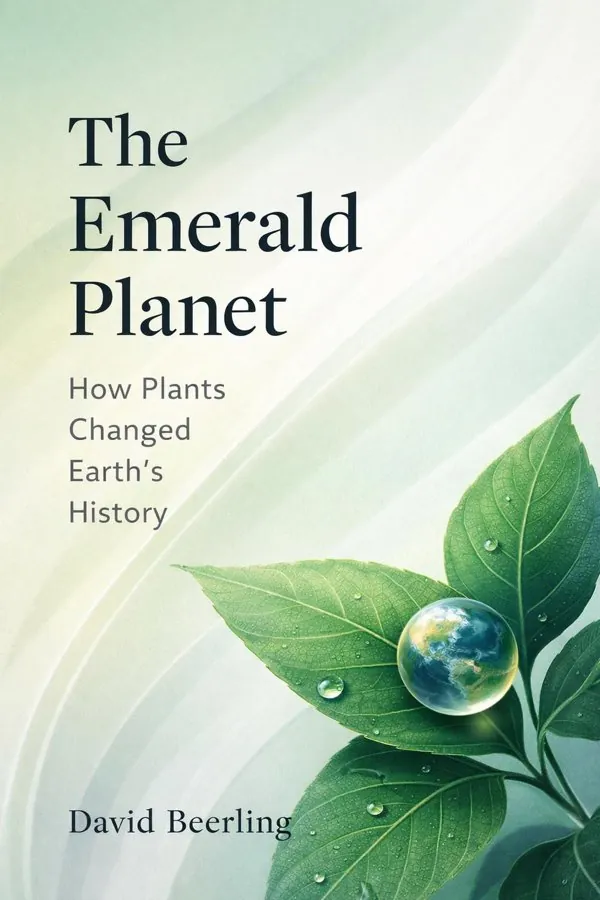
The Emerald Planet: How Plants Changed Earth's History
What if the true engineers of Earth were not animals, volcanoes, or even tectonic forces, but plants? In The Emerald Planet, paleobotanist David Beerling tells the sweeping story of how vegetation transformed a hostile young planet into the habitable world we know today. Moving across hundreds of millions of years, the book shows how plants helped create oxygen-rich air, altered the carbon cycle, cooled the climate, built soils, and reshaped entire ecosystems. Beerling’s central insight is both elegant and radical: the history of life on land is inseparable from the history of plants. What makes this book especially compelling is its interdisciplinary reach. Beerling draws on paleontology, geology, climate science, evolutionary biology, and plant physiology to explain how tiny early land plants eventually gave rise to forests, flowering plants, and the modern biosphere. He writes not only as a gifted science communicator, but as a leading researcher whose work explores the relationship between plants and Earth systems over deep time. The result is a fascinating scientific detective story that changes how we see the green world around us—and why its future matters so much.
Read SummaryKey Insights from David Beerling
Life Began in a Plantless World
It is easy to forget that Earth was once a barren planet with no forests, no grasslands, and no breathable air. Beerling begins by reminding us that the familiar green world is a relatively late achievement in planetary history. Early Earth was hot, geologically violent, and chemically hostile by mo...
From The Emerald Planet: How Plants Changed Earth's History
Plants Conquered Land Through Innovation
The move from water to land was one of evolution’s boldest experiments. Beerling shows that when algae-like ancestors of land plants first emerged onto damp shorelines around 470 million years ago, they entered an unforgiving world. On land there was intense ultraviolet radiation, a constant risk of...
From The Emerald Planet: How Plants Changed Earth's History
The Devonian Forests Rewired the Planet
A forest is not just a collection of trees; it is a machine for changing the Earth. Beerling argues that the Devonian period, roughly 419 to 359 million years ago, marks one of the most consequential turning points in planetary history because this was when plants became taller, deeper-rooted, and s...
From The Emerald Planet: How Plants Changed Earth's History
Coal Swamps Helped Cool the Earth
Some of the fuel that powered the industrial age began as lush, waterlogged forests hundreds of millions of years ago. In the Carboniferous period, immense swamp forests dominated parts of the planet. Beerling shows that these ecosystems had an extraordinary planetary effect because vast amounts of ...
From The Emerald Planet: How Plants Changed Earth's History
Mass Extinctions Reshaped Green Dominance
Plants are resilient, but they are not invincible. Beerling shows that the history of vegetation is punctuated by planetary crises—especially the Permian and later Mesozoic transitions—that radically reordered which plant groups dominated Earth. Climate shifts, volcanic upheaval, changing atmospheri...
From The Emerald Planet: How Plants Changed Earth's History
Flowers Changed Ecosystems and Evolution
The arrival of flowering plants did not just add color to the world; it transformed the pace and structure of terrestrial life. Beerling presents the rise of angiosperms as one of the most consequential evolutionary events in Earth history. Compared with earlier plant groups, flowering plants develo...
From The Emerald Planet: How Plants Changed Earth's History
About David Beerling
David Beerling is a British paleobotanist and professor of Natural Sciences at the University of Sheffield. His research focuses on the interactions between plants and the environment through geological time, particularly their role in shaping Earth's climate and atmosphere.


Frequently Asked Questions
David Beerling is a British paleobotanist and professor of Natural Sciences at the University of Sheffield. His research focuses on the interactions between plants and the environment through geological time, particularly their role in shaping Earth's climate and atmosphere.
Read David Beerling's books in 15 minutes
Get AI-powered summaries with key insights from 1 book by David Beerling.