
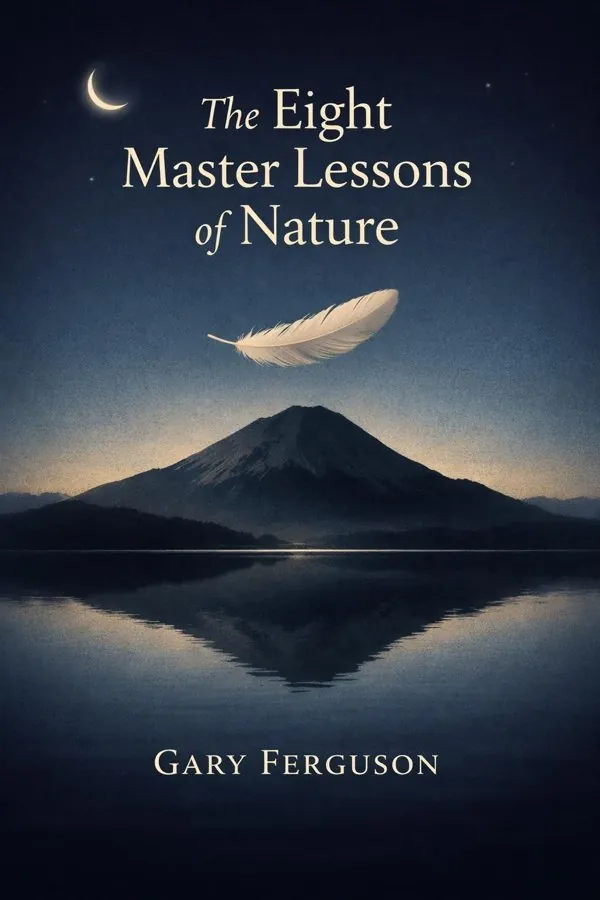
The Eight Master Lessons of Nature: What Nature Teaches Us About Living Well in the World: Summary & Key Insights
 10 min8 chaptersAudio available
What Is The Eight Master Lessons of Nature: What Nature Teaches Us About Living Well in the World About?
The Eight Master Lessons of Nature: What Nature Teaches Us About Living Well in the World by Gary Ferguson is a environment book spanning 8 pages. In this book, Gary Ferguson explores eight profound lessons that nature offers about living a meaningful and balanced life. Drawing from ecology, psychology, and personal experience, Ferguson reveals how the natural world can guide human resilience, creativity, and connection. Each lesson reflects a deep understanding of the interdependence between humans and the environment, encouraging readers to rediscover harmony with the Earth.
This FizzRead summary covers all 8 key chapters of The Eight Master Lessons of Nature: What Nature Teaches Us About Living Well in the World in approximately 10 minutes, distilling the most important ideas, arguments, and takeaways from Gary Ferguson's work. Also available as an audio summary and Key Quotes Podcast.
The Eight Master Lessons of Nature: What Nature Teaches Us About Living Well in the World
In this book, Gary Ferguson explores eight profound lessons that nature offers about living a meaningful and balanced life. Drawing from ecology, psychology, and personal experience, Ferguson reveals how the natural world can guide human resilience, creativity, and connection. Each lesson reflects a deep understanding of the interdependence between humans and the environment, encouraging readers to rediscover harmony with the Earth.
Who Should Read The Eight Master Lessons of Nature: What Nature Teaches Us About Living Well in the World?
This book is perfect for anyone interested in environment and looking to gain actionable insights in a short read. Whether you're a student, professional, or lifelong learner, the key ideas from The Eight Master Lessons of Nature: What Nature Teaches Us About Living Well in the World by Gary Ferguson will help you think differently.
- ✓Readers who enjoy environment and want practical takeaways
- ✓Professionals looking to apply new ideas to their work and life
- ✓Anyone who wants the core insights of The Eight Master Lessons of Nature: What Nature Teaches Us About Living Well in the World in just 10 minutes
Want the full summary?
Get instant access to this book summary and 100K+ more with Fizz Moment.
Get Free SummaryAvailable on App Store • Free to download
Key Chapters
The first lesson is about surrendering to mystery. In the modern world, we’re trained to seek certainty and control. Yet in nature, mystery is the fabric of everything that lives. I’ve stood in an aspen grove at dawn, the light fractured through trembling leaves, and felt that human longing for understanding dissolve into something else—wonder. Mystery, at its heart, is an invitation to humility. When we confront life’s unknowns, our role is not to tame them but to listen and participate.
Psychologists and ecologists alike recognize that awe changes the brain: it expands perception, softens ego, and links us more deeply to the collective. In a forest, you can feel that shift. Questions stop demanding answers; instead, they open doors. We realize that not everything can be measured, and that’s freeing. Accepting mystery is how life itself adapts. Seeds fall into dark soil with no guaranteed outcome. Rivers reroute without maps. To live well, we must cultivate that same faith in the unseen.
Mystery reminds us that our intellect, however brilliant, is not the whole of our intelligence. Nature teaches that knowing is often less useful than attuning. When I write about wolves or wildfires, I try to sense their rhythms rather than impose human metaphors. In that space of not-knowing, the world speaks more clearly. So, the lesson of mystery becomes a practice: choose curiosity over mastery, questions over conclusions, and you’ll find the pulse of life widening around you.
This lesson asks us to come back to our bodies. The natural world doesn’t think its way through survival; it moves, breathes, and responds. In that same way, human well-being depends on physical engagement—with the dirt under our feet, the breath in our lungs, the pulse in our limbs. Being outdoors not only sharpens the senses but anchors the mind in presence. We remember that intelligence is not confined to the skull but resides in every cell.
When I’ve guided people into wilderness who have spent years behind desks, I watch the same transformation each time. At first, their movements are stiff, their awareness narrowed. Then, slowly, walking through uneven ground, their steps begin to flow. The body reawakens its dialogue with the land. Research in physiology and ecology supports this: sensory immersion quiets the constant self-narration that dominates modern life. By climbing, swimming, or simply sitting still among trees, we realign our nervous system with the larger rhythms around us.
Physicality grounds us in truth. When you smell rain approaching or feel the cool descent of dusk, you are experiencing the original language of understanding. To ignore the body is to forget half our wisdom. Nature coaxes us back into motion—and in that motion, we find balance, grace, and joy.
+ 6 more chapters — available in the FizzRead app
All Chapters in The Eight Master Lessons of Nature: What Nature Teaches Us About Living Well in the World
About the Author
Gary Ferguson is an American nature writer and lecturer known for his works on wilderness, ecology, and the human relationship with the natural world. He has authored numerous books blending science, storytelling, and environmental insight, and his writing has appeared in major publications such as National Geographic and Orion.
Get This Summary in Your Preferred Format
Read or listen to the The Eight Master Lessons of Nature: What Nature Teaches Us About Living Well in the World summary by Gary Ferguson anytime, anywhere. FizzRead offers multiple formats so you can learn on your terms — all free.
Available formats: App · Audio · PDF · EPUB — All included free with FizzRead
Download The Eight Master Lessons of Nature: What Nature Teaches Us About Living Well in the World PDF and EPUB Summary
Key Quotes from The Eight Master Lessons of Nature: What Nature Teaches Us About Living Well in the World
“The first lesson is about surrendering to mystery.”
“This lesson asks us to come back to our bodies.”
Frequently Asked Questions about The Eight Master Lessons of Nature: What Nature Teaches Us About Living Well in the World
The Eight Master Lessons of Nature: What Nature Teaches Us About Living Well in the World by Gary Ferguson is a environment book that explores key ideas across 8 chapters. In this book, Gary Ferguson explores eight profound lessons that nature offers about living a meaningful and balanced life. Drawing from ecology, psychology, and personal experience, Ferguson reveals how the natural world can guide human resilience, creativity, and connection. Each lesson reflects a deep understanding of the interdependence between humans and the environment, encouraging readers to rediscover harmony with the Earth.
You Might Also Like

A Life on Our Planet: My Witness Statement and a Vision for the Future
David Attenborough
10 min
A Sky Full Of Birds
Matt Merritt
10 min
Carbon Zero: Imagining Cities That Can Save the Planet
Alex Steffen
10 min
Eaarth: Making a Life on a Tough New Planet
Bill McKibben
10 min
The Social Contract and Environmental Governance
Various Editors
10 min
The Wild Places
Robert Macfarlane
10 minBrowse by Category
Ready to read The Eight Master Lessons of Nature: What Nature Teaches Us About Living Well in the World?
Get the full summary and 100K+ more books with Fizz Moment.