
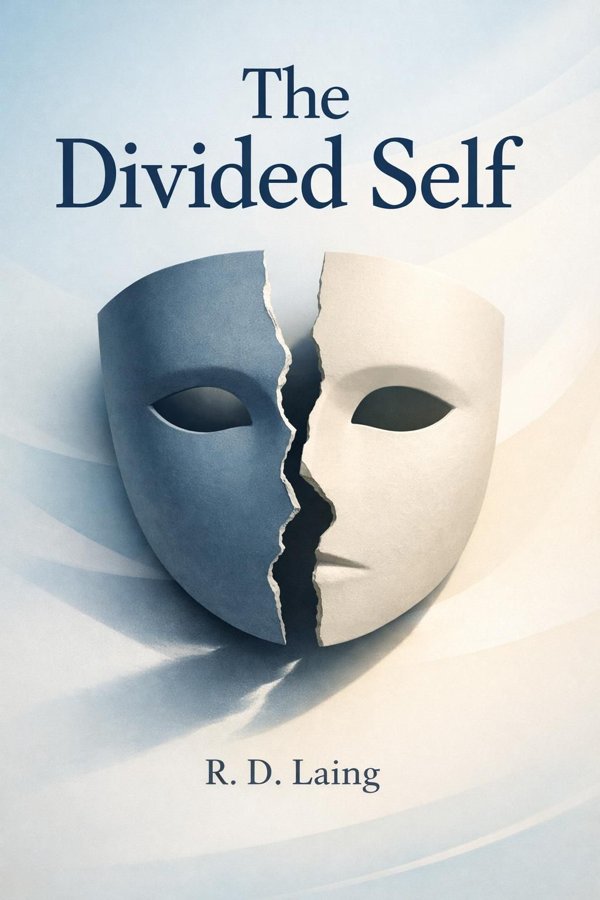
The Divided Self: An Existential Study in Sanity and Madness: Summary & Key Insights
by R. D. Laing
 10 min9 chaptersAudio available
What Is The Divided Self: An Existential Study in Sanity and Madness About?
The Divided Self: An Existential Study in Sanity and Madness by R. D. Laing is a psychology book spanning 9 pages. Originally published in 1960, this groundbreaking work by Scottish psychiatrist R. D. Laing explores the nature of mental illness through an existential and phenomenological lens. Laing argues that schizophrenia and other forms of psychosis can be understood as intelligible responses to an alienating social world, rather than as mere biological disorders. The book challenges conventional psychiatric approaches and emphasizes the subjective experience of the individual, making it a foundational text in existential psychology and anti-psychiatry.
This FizzRead summary covers all 9 key chapters of The Divided Self: An Existential Study in Sanity and Madness in approximately 10 minutes, distilling the most important ideas, arguments, and takeaways from R. D. Laing's work. Also available as an audio summary and Key Quotes Podcast.
The Divided Self: An Existential Study in Sanity and Madness
Originally published in 1960, this groundbreaking work by Scottish psychiatrist R. D. Laing explores the nature of mental illness through an existential and phenomenological lens. Laing argues that schizophrenia and other forms of psychosis can be understood as intelligible responses to an alienating social world, rather than as mere biological disorders. The book challenges conventional psychiatric approaches and emphasizes the subjective experience of the individual, making it a foundational text in existential psychology and anti-psychiatry.
Who Should Read The Divided Self: An Existential Study in Sanity and Madness?
This book is perfect for anyone interested in psychology and looking to gain actionable insights in a short read. Whether you're a student, professional, or lifelong learner, the key ideas from The Divided Self: An Existential Study in Sanity and Madness by R. D. Laing will help you think differently.
- ✓Readers who enjoy psychology and want practical takeaways
- ✓Professionals looking to apply new ideas to their work and life
- ✓Anyone who wants the core insights of The Divided Self: An Existential Study in Sanity and Madness in just 10 minutes
Want the full summary?
Get instant access to this book summary and 100K+ more with Fizz Moment.
Get Free SummaryAvailable on App Store • Free to download
Key Chapters
Ontological insecurity is the condition from which the divided self springs. To feel ontologically secure is to feel real—to trust one’s identity, continuity, and boundaries of selfhood. It means being confident that one’s existence persists even when unseen, unheard, or unacknowledged by others. But when this security is fragile, the world becomes a constant threat. The insecure self fears that it may cease to exist at any moment, disintegrate into nothingness, or be engulfed by others. This feeling is not merely anxiety—it is terror at the level of being.
I encountered this in patients who spoke of feeling hollow, ghost-like, or unreal. The problem was not that they failed to perceive reality correctly, but that reality itself had ceased to feel trustworthy. They could no longer experience others as steady presences or themselves as enduring beings. In such insecurity, defenses emerge: withdrawal, depersonalization, and even psychotic reconstruction of reality. But at the heart of these defenses lies the yearning to reclaim a sense of self that feels more than illusion.
In an ontologically insecure person, every encounter is existentially risky. To be seen may mean being invaded. To be ignored may mean ceasing to exist. This is why many retreat from genuine contact—they fear annihilation through intimacy as much as through isolation. Understanding this kind of insecurity is essential if psychiatry is to move beyond treating symbolic behavior to engaging with the actual experience of being.
Human existence unfolds in various modes of experience, and the difference between what is commonly called the 'normal' and the 'schizoid' modes of being lies in how reality and selfhood are felt. In the normal mode, the person experiences themselves as embodied, continuous, and engaged with a shared world. The schizoid mode is marked by alienation—a withdrawal from lived contact with the world and others.
The schizoid person lives largely within their thoughts, separated from the immediacy of being-in-the-world. They may be aware of their distance, yet powerless to bridge it. The world appears unsafe, unpredictable, even predatory. Behind the detachment lies vulnerability and fear. I have met patients who seemed emotionless, yet in private they revealed overwhelming sensitivity—so acute that ordinary social contact felt unbearable.
What the schizoid mode shows is that 'madness' may be an attempt to preserve existence under unbearable strain. The more a person retreats inward to protect their core, the less they can participate in shared reality. This results not from laziness or defect, but from an existential survival mechanism. Our task, as therapists and as fellow human beings, is not to force re-entry into the social world, but to create a space in which the person’s withdrawn self may feel safe enough to emerge without fear of dissolution.
+ 7 more chapters — available in the FizzRead app
All Chapters in The Divided Self: An Existential Study in Sanity and Madness
About the Author
Ronald David Laing (1927–1989) was a Scottish psychiatrist and psychoanalyst known for his influential work in existential psychology and the anti-psychiatry movement. Educated at the University of Glasgow, Laing’s writings questioned traditional psychiatric practices and emphasized understanding mental illness through the lived experience of patients. His major works include 'The Divided Self', 'Self and Others', and 'The Politics of Experience'.
Get This Summary in Your Preferred Format
Read or listen to the The Divided Self: An Existential Study in Sanity and Madness summary by R. D. Laing anytime, anywhere. FizzRead offers multiple formats so you can learn on your terms — all free.
Available formats: App · Audio · PDF · EPUB — All included free with FizzRead
Download The Divided Self: An Existential Study in Sanity and Madness PDF and EPUB Summary
Key Quotes from The Divided Self: An Existential Study in Sanity and Madness
“Ontological insecurity is the condition from which the divided self springs.”
“Human existence unfolds in various modes of experience, and the difference between what is commonly called the 'normal' and the 'schizoid' modes of being lies in how reality and selfhood are felt.”
Frequently Asked Questions about The Divided Self: An Existential Study in Sanity and Madness
The Divided Self: An Existential Study in Sanity and Madness by R. D. Laing is a psychology book that explores key ideas across 9 chapters. Originally published in 1960, this groundbreaking work by Scottish psychiatrist R. D. Laing explores the nature of mental illness through an existential and phenomenological lens. Laing argues that schizophrenia and other forms of psychosis can be understood as intelligible responses to an alienating social world, rather than as mere biological disorders. The book challenges conventional psychiatric approaches and emphasizes the subjective experience of the individual, making it a foundational text in existential psychology and anti-psychiatry.
More by R. D. Laing
You Might Also Like
The Body Keeps the Score
Bessel van der Kolk
10 min
Surrounded by Idiots
Thomas Erikson
10 min
Emotional Intelligence
Daniel Goleman
10 min
Attached
Amir Levine
10 min
Why Does He Do That
Lundy Bancroft
10 min
Women Who Run with the Wolves
Clarissa Pinkola Estés
10 minBrowse by Category
Ready to read The Divided Self: An Existential Study in Sanity and Madness?
Get the full summary and 100K+ more books with Fizz Moment.