
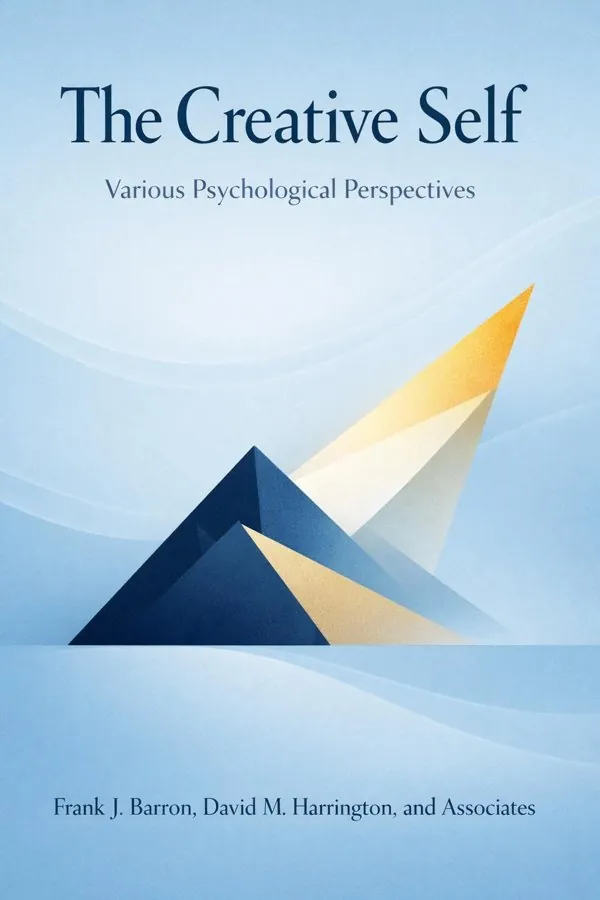
The Creative Self: Various Psychological Perspectives: Summary & Key Insights
by Frank J. Barron, David M. Harrington, and Associates
 10 min13 chaptersAudio available
What Is The Creative Self: Various Psychological Perspectives About?
The Creative Self: Various Psychological Perspectives by Frank J. Barron, David M. Harrington, and Associates is a creativity book spanning 13 pages. This volume, first published in 1988, brings together sixteen chapters by leading psychologists exploring the richness and diversity of psychological approaches to creativity. It examines the creative process, personality, and environment from multiple theoretical perspectives, offering a comprehensive view of how creativity manifests in human behavior and thought.
This FizzRead summary covers all 13 key chapters of The Creative Self: Various Psychological Perspectives in approximately 10 minutes, distilling the most important ideas, arguments, and takeaways from Frank J. Barron, David M. Harrington, and Associates's work. Also available as an audio summary and Key Quotes Podcast.
The Creative Self: Various Psychological Perspectives
This volume, first published in 1988, brings together sixteen chapters by leading psychologists exploring the richness and diversity of psychological approaches to creativity. It examines the creative process, personality, and environment from multiple theoretical perspectives, offering a comprehensive view of how creativity manifests in human behavior and thought.
Who Should Read The Creative Self: Various Psychological Perspectives?
This book is perfect for anyone interested in creativity and looking to gain actionable insights in a short read. Whether you're a student, professional, or lifelong learner, the key ideas from The Creative Self: Various Psychological Perspectives by Frank J. Barron, David M. Harrington, and Associates will help you think differently.
- ✓Readers who enjoy creativity and want practical takeaways
- ✓Professionals looking to apply new ideas to their work and life
- ✓Anyone who wants the core insights of The Creative Self: Various Psychological Perspectives in just 10 minutes
Want the full summary?
Get instant access to this book summary and 100K+ more with Fizz Moment.
Get Free SummaryAvailable on App Store • Free to download
Key Chapters
We begin with roots that stretch back to the earliest days of psychology, when creativity was still a poetic term rather than a scholarly construct. The psychoanalytic thinkers, led by Freud and his followers, regarded creativity as the channeling of unconscious impulses into symbolic form. The artist or scientist, in this view, found socially acceptable expressions for drives otherwise repressed. Jung, meanwhile, turned the focus from repression to transformation. He saw the creative act as an archetypal process, the mind’s dialogue with the collective unconscious. These ideas, though speculative, seeded a lasting fascination with the inner depths of invention.
The humanistic psychologists of the mid‑twentieth century—Maslow, Rogers, and May—shifted emphasis from pathology to potential. They argued that creativity was not an anomaly but a core human capability linked to self‑actualization. Maslow’s actualizing individual, for instance, experienced creativity as a natural extension of authenticity. Rogers described it as an expression of psychological freedom, emerging when the self is open to experience. This humanistic turn liberated creativity from the shadow of illness and placed it within the normal spectrum of human thriving.
In these early frameworks we find both conflict and continuity. The psychoanalytic legacy reminds us that creativity is born of tension; the humanistic legacy reminds us that it flourishes in openness. Our purpose in revisiting these foundations is not nostalgia but understanding. They reveal how psychological inquiry evolved from seeing creativity as symptom to seeing it as strength—a shift that fundamentally shaped all later research.
Every creative act carries the signature of a person. For decades, my own research and that of others, such as MacKinnon and Guilford, has shown that certain personality traits consistently distinguish the creative from the conventional. Openness to experience, tolerance for ambiguity, independence of judgment, and intrinsic motivation appear again and again. These traits do not merely predict original output; they define a way of being—a relationship to one’s own curiosity.
Creative individuals tend to live at the boundaries of order and chaos. They are not easily confined by rules, yet they rarely reject structure altogether. This balance allows them to remain experimental while still purposeful. In personality studies conducted at the Institute of Personality Assessment and Research, we found that highly creative architects, writers, and scientists combined what seemed paradoxical: sensitivity with resilience, impulsiveness with discipline, imagination with realism. Their self‑concepts were rich and complex, and their emotions ran deep, but not out of control. They possessed what I have often called an integrative complexity—a capacity to hold opposing truths until a new synthesis emerges.
When I speak of personality and creativity, I do not mean that certain people are destined to be creators while others are not. Rather, I believe personality provides a set of potentials. Creative development depends on whether these potentials find a world that welcomes rather than punishes difference. Personality provides the spark; the environment decides whether the flame can grow.
+ 11 more chapters — available in the FizzRead app
All Chapters in The Creative Self: Various Psychological Perspectives
About the Authors
Frank J. Barron was an American psychologist known for his pioneering research on creativity and personality. David M. Harrington was a psychologist specializing in creativity and cognitive processes. Together, they contributed significantly to the study of creative behavior and its psychological foundations.
Get This Summary in Your Preferred Format
Read or listen to the The Creative Self: Various Psychological Perspectives summary by Frank J. Barron, David M. Harrington, and Associates anytime, anywhere. FizzRead offers multiple formats so you can learn on your terms — all free.
Available formats: App · Audio · PDF · EPUB — All included free with FizzRead
Download The Creative Self: Various Psychological Perspectives PDF and EPUB Summary
Key Quotes from The Creative Self: Various Psychological Perspectives
“We begin with roots that stretch back to the earliest days of psychology, when creativity was still a poetic term rather than a scholarly construct.”
“Every creative act carries the signature of a person.”
Frequently Asked Questions about The Creative Self: Various Psychological Perspectives
The Creative Self: Various Psychological Perspectives by Frank J. Barron, David M. Harrington, and Associates is a creativity book that explores key ideas across 13 chapters. This volume, first published in 1988, brings together sixteen chapters by leading psychologists exploring the richness and diversity of psychological approaches to creativity. It examines the creative process, personality, and environment from multiple theoretical perspectives, offering a comprehensive view of how creativity manifests in human behavior and thought.
You Might Also Like
Dimensions Of Creativity
Margaret A. Boden
10 min
How to Fly a Horse: The Secret History of Creation, Invention, and Discovery
Kevin Ashton
10 min
Imagine: How Creativity Works
Jonah Lehrer
10 min
The Accidental Creative: How to Be Brilliant at a Moment's Notice
Todd Henry
10 min
The Origins of Creativity
Edward O. Wilson
10 min
Wired to Create: Unraveling the Mysteries of the Creative Mind
Scott Barry Kaufman, Carolyn Gregoire
10 minBrowse by Category
Ready to read The Creative Self: Various Psychological Perspectives?
Get the full summary and 100K+ more books with Fizz Moment.