
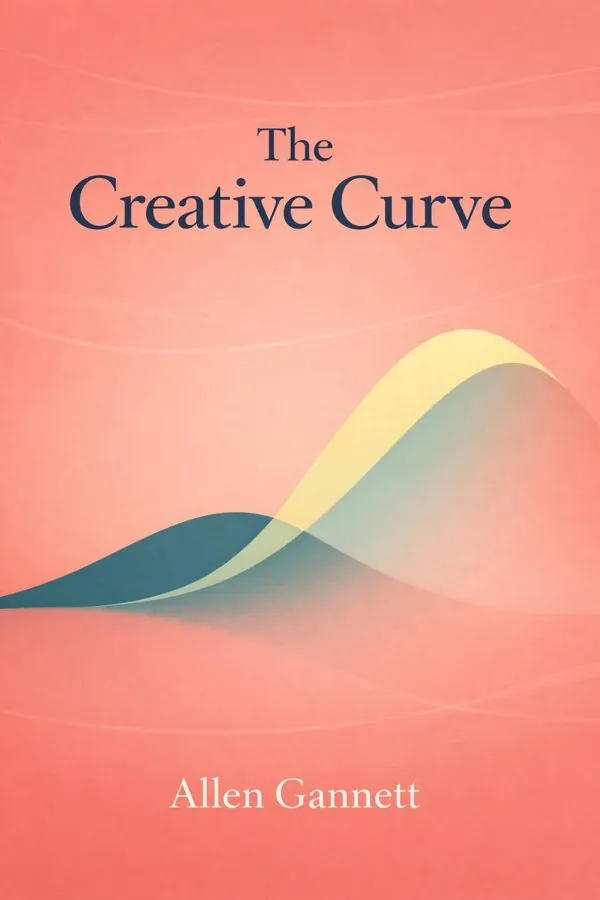
The Creative Curve: How to Develop the Right Idea, at the Right Time: Summary & Key Insights
 10 min12 chaptersAudio available
What Is The Creative Curve: How to Develop the Right Idea, at the Right Time About?
The Creative Curve: How to Develop the Right Idea, at the Right Time by Allen Gannett is a creativity book spanning 12 pages. The Creative Curve explores the science and patterns behind creativity, arguing that creative success is not purely innate but can be cultivated through deliberate practice and exposure. Allen Gannett combines research from psychology and neuroscience with interviews of successful creators to reveal how timing, familiarity, and novelty interact to produce ideas that resonate with audiences.
This FizzRead summary covers all 12 key chapters of The Creative Curve: How to Develop the Right Idea, at the Right Time in approximately 10 minutes, distilling the most important ideas, arguments, and takeaways from Allen Gannett's work. Also available as an audio summary and Key Quotes Podcast.
The Creative Curve: How to Develop the Right Idea, at the Right Time
The Creative Curve explores the science and patterns behind creativity, arguing that creative success is not purely innate but can be cultivated through deliberate practice and exposure. Allen Gannett combines research from psychology and neuroscience with interviews of successful creators to reveal how timing, familiarity, and novelty interact to produce ideas that resonate with audiences.
Who Should Read The Creative Curve: How to Develop the Right Idea, at the Right Time?
This book is perfect for anyone interested in creativity and looking to gain actionable insights in a short read. Whether you're a student, professional, or lifelong learner, the key ideas from The Creative Curve: How to Develop the Right Idea, at the Right Time by Allen Gannett will help you think differently.
- ✓Readers who enjoy creativity and want practical takeaways
- ✓Professionals looking to apply new ideas to their work and life
- ✓Anyone who wants the core insights of The Creative Curve: How to Develop the Right Idea, at the Right Time in just 10 minutes
Want the full summary?
Get instant access to this book summary and 100K+ more with Fizz Moment.
Get Free SummaryAvailable on App Store • Free to download
Key Chapters
If you’ve ever wondered why certain songs hook you instantly while others feel uncomfortable, the secret lies in familiarity. Humans are neurologically wired to prefer the familiar. We find comfort in what we recognize, yet we crave enough novelty to keep us interested. Psychologists call this phenomenon the 'mere exposure effect': the more we encounter something, the more we tend to like it. However, exposure alone isn’t enough—too much familiarity and the excitement fades; too much novelty and we feel alienated. The magic happens in between.
Creative success thrives on this balance. Popular culture operates on the delicate tension between ‘I know this’ and ‘I’ve never seen this before.’ Think about blockbuster films, chart-topping songs, or viral apps—they often remix familiar elements in fresh ways. J.K. Rowling’s Harry Potter series, for instance, wove together the classic school story (familiar) with a magical universe (novel). That hybrid made millions fall in love with something they didn’t know they wanted. As creators, we must learn to surf that psychological current—to introduce enough familiarity to build trust and enough novelty to spark curiosity.
When I studied creative phenomena across industries, I found the same pattern everywhere. From the rise of sushi in the West to the success of Apple’s product design, familiarity served as the foundation of audience comfort. Each successful creator intuitively or deliberately calibrated their ideas to sit on that sweet spot of the curve. The Familiarity Principle makes creativity accessible because it replaces the myth of divine genius with a principle that can be practiced: expose yourself to patterns audiences love, then twist them just enough to make them feel new.
Once you understand that, you realize creativity isn’t about rejecting the known; it’s about reimagining it.
Timing is often described as luck—but in reality, it’s learned perception. Throughout history, the greatest creators have displayed a finely tuned intuition for when the audience is ready. Timing is the heartbeat of the creative curve, because even the most brilliant ideas fail if they arrive before the world can understand them—or after the trend has passed.
Consider the music industry: researchers have shown how musical styles evolve cyclically. The public grows comfortable with a certain sound until saturation sets in, at which point something slightly different captures attention. The Beatles were masters of timing, evolving their sound precisely as audiences were ready for change. Similarly, new technologies—whether it’s social media platforms or electric cars—follow predictable adoption curves. Understanding these curves doesn’t require clairvoyance; it requires attentiveness to cultural signals.
In my conversations with leading innovators, I discovered they spend enormous time observing—not just creating. They track how consumer sentiment shifts, how visual aesthetics evolve, how memes rise and die. Timing, in truth, is a form of empathy. It’s listening so deeply to what the audience feels that you know when its heart is open for something new. The creative curve isn’t static—it’s alive, breathing with the rhythm of public taste. For creators, mastering timing is about positioning your ideas where familiarity meets readiness, so that when your creation appears, people feel it was meant for that exact moment.
+ 10 more chapters — available in the FizzRead app
All Chapters in The Creative Curve: How to Develop the Right Idea, at the Right Time
About the Author
Allen Gannett is an American entrepreneur, author, and speaker known for his work on creativity and data-driven marketing. He founded TrackMaven, a marketing analytics company, and frequently writes and speaks about the intersection of creativity and technology.
Get This Summary in Your Preferred Format
Read or listen to the The Creative Curve: How to Develop the Right Idea, at the Right Time summary by Allen Gannett anytime, anywhere. FizzRead offers multiple formats so you can learn on your terms — all free.
Available formats: App · Audio · PDF · EPUB — All included free with FizzRead
Download The Creative Curve: How to Develop the Right Idea, at the Right Time PDF and EPUB Summary
Key Quotes from The Creative Curve: How to Develop the Right Idea, at the Right Time
“If you’ve ever wondered why certain songs hook you instantly while others feel uncomfortable, the secret lies in familiarity.”
“Timing is often described as luck—but in reality, it’s learned perception.”
Frequently Asked Questions about The Creative Curve: How to Develop the Right Idea, at the Right Time
The Creative Curve: How to Develop the Right Idea, at the Right Time by Allen Gannett is a creativity book that explores key ideas across 12 chapters. The Creative Curve explores the science and patterns behind creativity, arguing that creative success is not purely innate but can be cultivated through deliberate practice and exposure. Allen Gannett combines research from psychology and neuroscience with interviews of successful creators to reveal how timing, familiarity, and novelty interact to produce ideas that resonate with audiences.
You Might Also Like
Dimensions Of Creativity
Margaret A. Boden
10 min
How to Fly a Horse: The Secret History of Creation, Invention, and Discovery
Kevin Ashton
10 min
Imagine: How Creativity Works
Jonah Lehrer
10 min
The Accidental Creative: How to Be Brilliant at a Moment's Notice
Todd Henry
10 min
The Origins of Creativity
Edward O. Wilson
10 min
Wired to Create: Unraveling the Mysteries of the Creative Mind
Scott Barry Kaufman, Carolyn Gregoire
10 minBrowse by Category
Ready to read The Creative Curve: How to Develop the Right Idea, at the Right Time?
Get the full summary and 100K+ more books with Fizz Moment.