
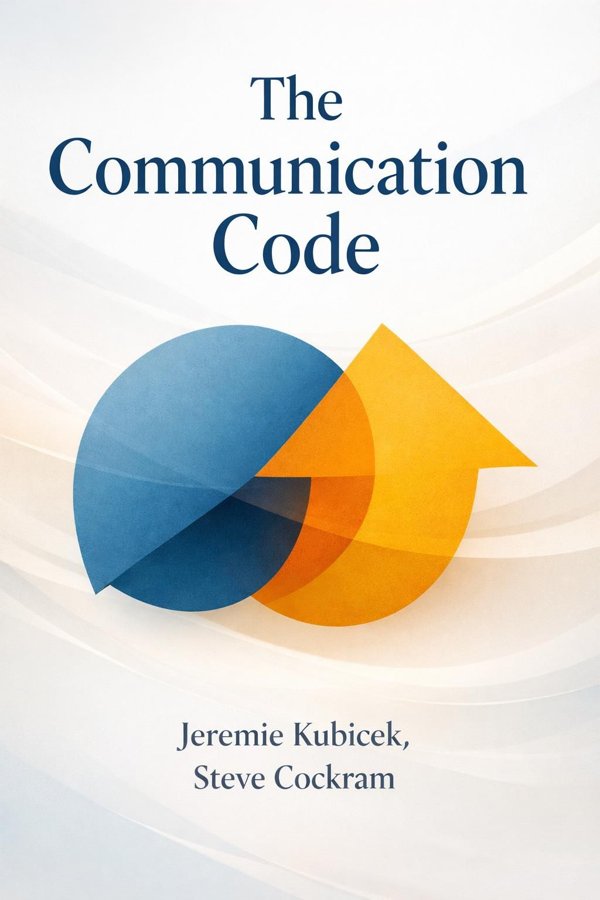
The Communication Code: Summary & Key Insights
by Jeremie Kubicek, Steve Cockram
 10 min5 chaptersAudio available
What Is The Communication Code About?
The Communication Code by Jeremie Kubicek, Steve Cockram is a communication book spanning 5 pages. The Communication Code is a leadership and communication guide that introduces a practical framework for improving interpersonal understanding and team collaboration. It presents five distinct communication modes—encourage, challenge, clarify, collaborate, and connect—designed to help leaders and professionals communicate with greater empathy and effectiveness. The book emphasizes self-awareness and relational intelligence as keys to building trust and influence in both personal and organizational contexts.
This FizzRead summary covers all 5 key chapters of The Communication Code in approximately 10 minutes, distilling the most important ideas, arguments, and takeaways from Jeremie Kubicek, Steve Cockram's work. Also available as an audio summary and Key Quotes Podcast.
The Communication Code
The Communication Code is a leadership and communication guide that introduces a practical framework for improving interpersonal understanding and team collaboration. It presents five distinct communication modes—encourage, challenge, clarify, collaborate, and connect—designed to help leaders and professionals communicate with greater empathy and effectiveness. The book emphasizes self-awareness and relational intelligence as keys to building trust and influence in both personal and organizational contexts.
Who Should Read The Communication Code?
This book is perfect for anyone interested in communication and looking to gain actionable insights in a short read. Whether you're a student, professional, or lifelong learner, the key ideas from The Communication Code by Jeremie Kubicek, Steve Cockram will help you think differently.
- ✓Readers who enjoy communication and want practical takeaways
- ✓Professionals looking to apply new ideas to their work and life
- ✓Anyone who wants the core insights of The Communication Code in just 10 minutes
Want the full summary?
Get instant access to this book summary and 100K+ more with Fizz Moment.
Get Free SummaryAvailable on App Store • Free to download
Key Chapters
Encouragement might sound like a soft word, but in leadership, it is one of the greatest forces of strength. When we talk about ‘encouraging,’ we’re not referring to empty flattery or superficial praise. To encourage is literally to give courage—to remind someone of their value, their capacity, and their progress.
Throughout our coaching work, we’ve seen countless teams where people are starved for affirmation. Leaders assume their teams ‘already know’ they’re appreciated. But human beings thrive on recognition of who they are and what they contribute. When I encourage a colleague properly, I’m saying, ‘I see you, I value what you bring, and I believe in you.’ Those words build trust far more effectively than any policy or incentive program ever could.
Encouragement must always be authentic and context-specific. A generic ‘good job’ rings hollow, but a targeted affirmation that names strengths—‘the clarity in your presentation really helped the team understand the strategic risk’—lands deeply. Encouragement acknowledges both the person and their impact.
The key is intentionality. Misplaced or excessive encouragement can feel insincere, but the absence of it creates an atmosphere of scarcity, where people become defensive or disengaged. Leaders who master encouragement create a relational environment in which performance flourishes because people feel safe to bring their best selves.
Encouragement without challenge leads to complacency. Challenge without encouragement breeds resentment. But together, they create transformation. The ‘Challenge’ mode of communication is about bringing truth, not aggression; accountability, not accusation.
To challenge effectively, I must first earn the right. That right only comes through trust—built often in moments of encouragement. Once a person knows I’m for them, not against them, I can place weight on the relationship by introducing necessary stretch. Challenge, in our definition, is an act of love. It’s saying, ‘I refuse to let you settle for less than your potential.’
In our leadership practice, we often meet two extremes: leaders who avoid confrontation to preserve peace, and those who confront without empathy, eroding safety. The Communication Code helps leaders find the balance. A healthy challenge is specific, timely, and framed within the other person’s growth context. It points toward a clear outcome.
When leaders learn to challenge well, they create cultures of accountability rather than fear. They build teams that can handle difficult feedback because they know it comes from a place of shared desire for excellence. That is the pivot point where relational intelligence becomes performance intelligence.
+ 3 more chapters — available in the FizzRead app
All Chapters in The Communication Code
About the Authors
Jeremie Kubicek and Steve Cockram are leadership experts and co-founders of GiANT Worldwide, a global leadership consultancy. They are known for their work on leadership development, team dynamics, and personal growth, and have co-authored several books including 5 Voices and 5 Gears.
Get This Summary in Your Preferred Format
Read or listen to the The Communication Code summary by Jeremie Kubicek, Steve Cockram anytime, anywhere. FizzRead offers multiple formats so you can learn on your terms — all free.
Available formats: App · Audio · PDF · EPUB — All included free with FizzRead
Download The Communication Code PDF and EPUB Summary
Key Quotes from The Communication Code
“Encouragement might sound like a soft word, but in leadership, it is one of the greatest forces of strength.”
“Encouragement without challenge leads to complacency.”
Frequently Asked Questions about The Communication Code
The Communication Code by Jeremie Kubicek, Steve Cockram is a communication book that explores key ideas across 5 chapters. The Communication Code is a leadership and communication guide that introduces a practical framework for improving interpersonal understanding and team collaboration. It presents five distinct communication modes—encourage, challenge, clarify, collaborate, and connect—designed to help leaders and professionals communicate with greater empathy and effectiveness. The book emphasizes self-awareness and relational intelligence as keys to building trust and influence in both personal and organizational contexts.
More by Jeremie Kubicek, Steve Cockram

You Might Also Like

Magic Words: The Science and Secrets Behind Seven Words That Motivate, Engage, and Influence
Tim David
10 min
Talking Across The Divide: How to Communicate with People You Disagree with and Maybe Even Change the World
Justin Lee
10 min
The Exceptional Presenter: A Proven Formula to Open Up! and Own the Room
Timothy J. Koegel
10 min
4 Essential Keys to Effective Communication in Love, Life, Work--Anywhere!: Including the 12-Day Communication Challenge!
Bento C. Leal III
10 min
Active Listening Techniques: 30 Practical Tools to Hone Your Communication Skills
Nisha Gupta
10 min
Bargaining for Advantage: Negotiation Strategies for Reasonable People
G. Richard Shell
10 minBrowse by Category
Ready to read The Communication Code?
Get the full summary and 100K+ more books with Fizz Moment.