
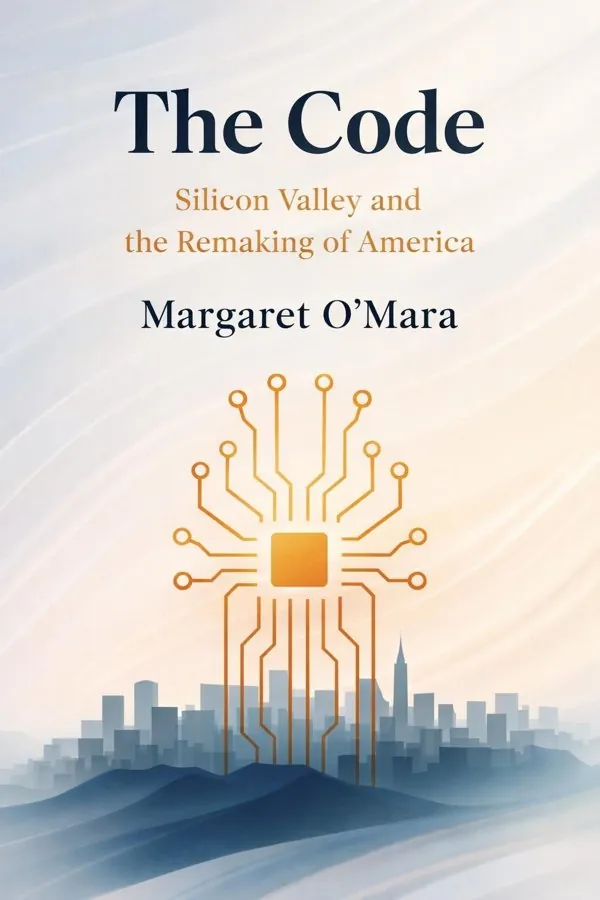
The Code: Silicon Valley and the Remaking of America: Summary & Key Insights
 10 min11 chaptersAudio available
What Is The Code: Silicon Valley and the Remaking of America About?
The Code: Silicon Valley and the Remaking of America by Margaret O'Mara is a world_history book spanning 11 pages. A comprehensive history of Silicon Valley, exploring how government policy, academic institutions, and entrepreneurial culture combined to create the world’s most influential technology hub. O'Mara traces the region’s evolution from postwar defense research to the digital revolution, revealing the social, political, and economic forces that shaped modern America.
This FizzRead summary covers all 11 key chapters of The Code: Silicon Valley and the Remaking of America in approximately 10 minutes, distilling the most important ideas, arguments, and takeaways from Margaret O'Mara's work. Also available as an audio summary and Key Quotes Podcast.
The Code: Silicon Valley and the Remaking of America
A comprehensive history of Silicon Valley, exploring how government policy, academic institutions, and entrepreneurial culture combined to create the world’s most influential technology hub. O'Mara traces the region’s evolution from postwar defense research to the digital revolution, revealing the social, political, and economic forces that shaped modern America.
Who Should Read The Code: Silicon Valley and the Remaking of America?
This book is perfect for anyone interested in world_history and looking to gain actionable insights in a short read. Whether you're a student, professional, or lifelong learner, the key ideas from The Code: Silicon Valley and the Remaking of America by Margaret O'Mara will help you think differently.
- ✓Readers who enjoy world_history and want practical takeaways
- ✓Professionals looking to apply new ideas to their work and life
- ✓Anyone who wants the core insights of The Code: Silicon Valley and the Remaking of America in just 10 minutes
Want the full summary?
Get instant access to this book summary and 100K+ more with Fizz Moment.
Get Free SummaryAvailable on App Store • Free to download
Key Chapters
The seeds of Silicon Valley were planted not in a venture capitalist’s office but within government contracts and defense laboratories after World War II. America emerged from the war anxious about national security and eager to invest in technological superiority. The Cold War turned scientific research into a matter of survival, and California—with its universities, open spaces, and emerging engineering talent—became a primary recipient of federal funds. These investments were not merely financial; they established enduring networks between scientists, policymakers, and military strategists.
During this era, electronics and computing were tools of defense, powered by government needs rather than consumer demand. Radar, missiles, and intelligence systems created opportunities for innovation that spread beyond warfare. Engineers trained under these programs learned to think big, collaborate across institutions, and approach complexity with a sense of mission. The postwar foundation of Silicon Valley was built upon this unique blend of patriotic purpose and relentless scientific curiosity.
I often describe Silicon Valley’s origins as paradoxical. The very region celebrated today for its libertarian ethos was born from heavy federal spending and bureaucratic priorities. Yet this contradiction became its strength. Those early government-funded projects cultivated the technical expertise, infrastructure, and culture of innovation that later allowed it to flourish independently. In essence, the Valley’s first code was written by the Cold War itself.
Stanford University was the beating heart of the Valley’s transformation. Under the leadership of Frederick Terman, Stanford pursued an unprecedented partnership model linking academia, industry, and government. Terman believed the university should not be isolated within intellectual ivory towers but serve as a breeding ground for practical innovation. He nurtured a vision where students and professors turned scientific discoveries into commercial ventures.
Terman encouraged his alumni to stay local and start businesses. He established the Stanford Industrial Park—later known as the Stanford Research Park—to house these startups adjacent to campus. This proximity created a living ecosystem of collaboration where professors, engineers, and entrepreneurs exchanged ideas daily. What emerged was a template for regional innovation that countless other institutions would attempt to replicate.
Stanford’s role also illuminated a broader truth about American science: universities could drive economic growth when aligned with both corporate and government interests. This unorthodox fusion transformed academic knowledge into industrial power and laid the groundwork for what I call the ‘innovation commons’—a space where intellect and profit grew symbiotically.
As I reflect on Terman’s legacy, I see him as Silicon Valley’s quiet architect. His philosophy redefined the relationship between education and enterprise, showing how public knowledge could catalyze private prosperity. Without Stanford’s experimental spirit and Terman’s mentorship, Silicon Valley might have remained just another sunny California suburb.
+ 9 more chapters — available in the FizzRead app
All Chapters in The Code: Silicon Valley and the Remaking of America
About the Author
Margaret O'Mara is an American historian and professor at the University of Washington. Her research focuses on the intersection of technology, politics, and society in modern U.S. history. She is known for her works on Silicon Valley and the broader history of innovation and urban development.
Get This Summary in Your Preferred Format
Read or listen to the The Code: Silicon Valley and the Remaking of America summary by Margaret O'Mara anytime, anywhere. FizzRead offers multiple formats so you can learn on your terms — all free.
Available formats: App · Audio · PDF · EPUB — All included free with FizzRead
Download The Code: Silicon Valley and the Remaking of America PDF and EPUB Summary
Key Quotes from The Code: Silicon Valley and the Remaking of America
“The seeds of Silicon Valley were planted not in a venture capitalist’s office but within government contracts and defense laboratories after World War II.”
“Stanford University was the beating heart of the Valley’s transformation.”
Frequently Asked Questions about The Code: Silicon Valley and the Remaking of America
The Code: Silicon Valley and the Remaking of America by Margaret O'Mara is a world_history book that explores key ideas across 11 chapters. A comprehensive history of Silicon Valley, exploring how government policy, academic institutions, and entrepreneurial culture combined to create the world’s most influential technology hub. O'Mara traces the region’s evolution from postwar defense research to the digital revolution, revealing the social, political, and economic forces that shaped modern America.
You Might Also Like
The Age of Capital
Eric Hobsbawm
10 min
The Gulag Archipelago
Aleksandr Solzhenitsyn
10 min
Jerusalem: The Biography
Simon Sebag Montefiore
10 min
The Anglo-Saxons
James Campbell
10 min
The Boer War
Thomas Pakenham
10 min
The Industrial Revolutionaries: The Making of the Modern World 1776–1914
Gavin Weightman
10 minBrowse by Category
Ready to read The Code: Silicon Valley and the Remaking of America?
Get the full summary and 100K+ more books with Fizz Moment.