
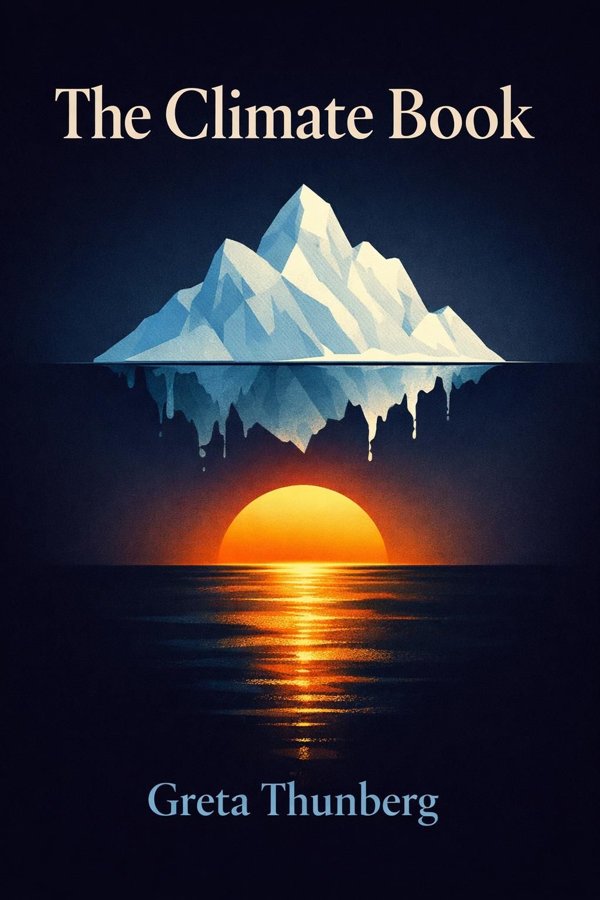
The Climate Book: Summary & Key Insights
 10 min6 chaptersAudio available
What Is The Climate Book About?
The Climate Book by Greta Thunberg is a environment book spanning 6 pages. In this comprehensive anthology, Greta Thunberg brings together over one hundred experts, activists, and writers to explain the science, impacts, and solutions to the climate crisis. The book offers a clear, accessible overview of climate change, its causes, and the urgent actions needed to address it, combining scientific insight with moral clarity and global perspectives.
This FizzRead summary covers all 6 key chapters of The Climate Book in approximately 10 minutes, distilling the most important ideas, arguments, and takeaways from Greta Thunberg's work. Also available as an audio summary and Key Quotes Podcast.
The Climate Book
In this comprehensive anthology, Greta Thunberg brings together over one hundred experts, activists, and writers to explain the science, impacts, and solutions to the climate crisis. The book offers a clear, accessible overview of climate change, its causes, and the urgent actions needed to address it, combining scientific insight with moral clarity and global perspectives.
Who Should Read The Climate Book?
This book is perfect for anyone interested in environment and looking to gain actionable insights in a short read. Whether you're a student, professional, or lifelong learner, the key ideas from The Climate Book by Greta Thunberg will help you think differently.
- ✓Readers who enjoy environment and want practical takeaways
- ✓Professionals looking to apply new ideas to their work and life
- ✓Anyone who wants the core insights of The Climate Book in just 10 minutes
Want the full summary?
Get instant access to this book summary and 100K+ more with Fizz Moment.
Get Free SummaryAvailable on App Store • Free to download
Key Chapters
Science is the foundation upon which everything else in this conversation stands. In this section, leading climatologists and Earth system experts explain the mechanisms that govern our planet’s climate in language meant for everyone. They start from the essential — the natural greenhouse effect, which holds Earth's warmth and makes life possible — and show how human activity has now amplified it beyond safe limits.
We trace the journey of carbon dioxide and methane from factory smokestacks and cow pastures into the atmosphere, watching how these invisible gases trap heat. The contributors describe the feedback loops that accelerate destabilization — melting ice reduces reflectivity, warmer oceans release stored carbon, thawing permafrost liberates methane. They show how each fraction of a degree compounds the crisis.
Central here is the certainty of the evidence. Satellite records, ice cores, and temperature measurements leave no room for doubt: since industrialization, global average temperature has already risen by more than one degree Celsius, leading to changes in rainfall patterns, rising seas, and disrupted seasons. The physics is simple, but its consequences unfold with terrifying complexity.
In the voices of scientists like Johan Rockström and others, you sense both awe and alarm. They discuss tipping points — thresholds beyond which ecosystems can collapse irreversibly — and the concept of planetary boundaries, the limits within which humanity can operate safely. Together, these lessons dismantle denial. The facts are undeniable, and the implications clear: we are pushing Earth's systems faster than they can adapt.
When I first learned these realities, what struck me most was that they are not opinions; they are measurements, consistent and replicable. The conclusion is that we must treat them as such. This book begins with science because knowledge is the only antidote to false comfort. Without understanding how and why the planet warms, every conversation about solutions floats unanchored.
Once you grasp the physics, you start to see the human stories embedded in every data point. This section unfolds those stories — the lived consequences of a destabilized climate. Here, meteorologists and humanitarian experts describe how the intensifying heatwaves, floods, storms, and droughts translate into hunger, displacement, and inequality.
A farmer in Madagascar watching his crops fail, a family in Pakistan losing their home to monsoon floods, Arctic communities witnessing the disappearance of ice that has defined their existence — these realities are already here. Climate change is not tomorrow’s crisis; it is today’s catastrophe for millions.
The contributors show how fragile systems — agriculture, water, energy — are compounding social vulnerability. Biodiversity loss erodes resilience, undermining food security and medicine. Species extinction rates are speeding up, with repercussions echoing through the web of life we depend upon. Economically, those least responsible for emissions suffer the most severe consequences. That imbalance is the moral heart of the crisis.
We examine the connections between the climate emergency and inequality. Rising temperatures magnify existing injustices: women and children in poor regions bear disproportionate burdens, while wealthy nations often insulate themselves temporarily behind infrastructure and politics. The section insists that climate policy must therefore be inseparable from social justice. Climate change does not create inequality, but it amplifies it brutally.
While reading these accounts, you realize that empathy and evidence must unite. Understanding impact means seeing people, not statistics. You start to understand that the climate issue is not solely environmental — it is humanitarian, systemic, and deeply ethical. Knowing how climate change affects us is knowing how it tests our humanity.
+ 4 more chapters — available in the FizzRead app
All Chapters in The Climate Book
About the Author
Greta Thunberg is a Swedish environmental activist known for her efforts to raise global awareness of climate change and her role in inspiring the international youth climate movement. She began her activism by striking outside the Swedish parliament in 2018, leading to the global 'Fridays for Future' movement.
Get This Summary in Your Preferred Format
Read or listen to the The Climate Book summary by Greta Thunberg anytime, anywhere. FizzRead offers multiple formats so you can learn on your terms — all free.
Available formats: App · Audio · PDF · EPUB — All included free with FizzRead
Download The Climate Book PDF and EPUB Summary
Key Quotes from The Climate Book
“Science is the foundation upon which everything else in this conversation stands.”
“Once you grasp the physics, you start to see the human stories embedded in every data point.”
Frequently Asked Questions about The Climate Book
The Climate Book by Greta Thunberg is a environment book that explores key ideas across 6 chapters. In this comprehensive anthology, Greta Thunberg brings together over one hundred experts, activists, and writers to explain the science, impacts, and solutions to the climate crisis. The book offers a clear, accessible overview of climate change, its causes, and the urgent actions needed to address it, combining scientific insight with moral clarity and global perspectives.
You Might Also Like
A Life on Our Planet: My Witness Statement and a Vision for the Future
David Attenborough
10 min
A Sky Full Of Birds
Matt Merritt
10 min
Carbon Zero: Imagining Cities That Can Save the Planet
Alex Steffen
10 min
Eaarth: Making a Life on a Tough New Planet
Bill McKibben
10 min
The Social Contract and Environmental Governance
Various Editors
10 min
The Wild Places
Robert Macfarlane
10 minBrowse by Category
Ready to read The Climate Book?
Get the full summary and 100K+ more books with Fizz Moment.