
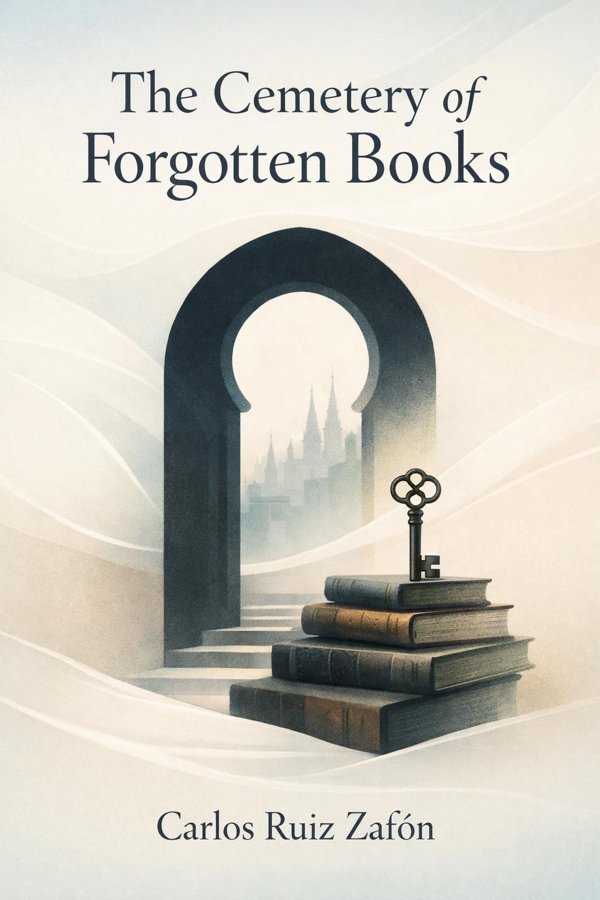
The Cemetery of Forgotten Books: Summary & Key Insights
 10 min9 chaptersAudio available
Key Takeaways from The Cemetery of Forgotten Books
Every forgotten book suggests a forgotten life.
Talent can be a gift, but unchecked ambition can turn it into a trap.
The past does not stay buried simply because people agree not to speak of it.
Power survives by controlling stories, but truth survives by refusing to disappear.
A society is most vulnerable when it forgets what it has suffered.
What Is The Cemetery of Forgotten Books About?
The Cemetery of Forgotten Books by Carlos Ruiz Zafón is a classics book spanning 4 pages. The Cemetery of Forgotten Books is Carlos Ruiz Zafón’s sweeping four-novel cycle set in Barcelona, where books are not just objects but living forces that shape destinies across generations. Comprising The Shadow of the Wind, The Angel’s Game, The Prisoner of Heaven, and The Labyrinth of the Spirits, the series blends literary mystery, Gothic suspense, historical trauma, romance, and family drama into one richly interconnected world. At its center lies a hidden library—the Cemetery of Forgotten Books—a secret sanctuary for abandoned volumes and the memories they carry. What makes this saga matter is not only its intricate plotting, but its profound belief that stories can preserve truth when institutions fail, and that reading can become a form of resistance against oblivion. Zafón writes with cinematic intensity, lush atmosphere, and emotional precision, turning postwar Barcelona into a haunted character in its own right. Few modern literary works so gracefully unite page-turning suspense with reflections on memory, censorship, identity, and grief. This tetralogy is both an immersive reading experience and a meditation on why books continue to matter in a fragile, easily manipulated world.
This FizzRead summary covers all 9 key chapters of The Cemetery of Forgotten Books in approximately 10 minutes, distilling the most important ideas, arguments, and takeaways from Carlos Ruiz Zafón's work. Also available as an audio summary and Key Quotes Podcast.
The Cemetery of Forgotten Books
The Cemetery of Forgotten Books is Carlos Ruiz Zafón’s sweeping four-novel cycle set in Barcelona, where books are not just objects but living forces that shape destinies across generations. Comprising The Shadow of the Wind, The Angel’s Game, The Prisoner of Heaven, and The Labyrinth of the Spirits, the series blends literary mystery, Gothic suspense, historical trauma, romance, and family drama into one richly interconnected world. At its center lies a hidden library—the Cemetery of Forgotten Books—a secret sanctuary for abandoned volumes and the memories they carry.
What makes this saga matter is not only its intricate plotting, but its profound belief that stories can preserve truth when institutions fail, and that reading can become a form of resistance against oblivion. Zafón writes with cinematic intensity, lush atmosphere, and emotional precision, turning postwar Barcelona into a haunted character in its own right. Few modern literary works so gracefully unite page-turning suspense with reflections on memory, censorship, identity, and grief. This tetralogy is both an immersive reading experience and a meditation on why books continue to matter in a fragile, easily manipulated world.
Who Should Read The Cemetery of Forgotten Books?
This book is perfect for anyone interested in classics and looking to gain actionable insights in a short read. Whether you're a student, professional, or lifelong learner, the key ideas from The Cemetery of Forgotten Books by Carlos Ruiz Zafón will help you think differently.
- ✓Readers who enjoy classics and want practical takeaways
- ✓Professionals looking to apply new ideas to their work and life
- ✓Anyone who wants the core insights of The Cemetery of Forgotten Books in just 10 minutes
Want the full summary?
Get instant access to this book summary and 100K+ more with Fizz Moment.
Get Free SummaryAvailable on App Store • Free to download
Key Chapters
Every forgotten book suggests a forgotten life. That insight drives The Shadow of the Wind, the opening novel of the series, in which young Daniel Sempere is taken by his father to the secret Cemetery of Forgotten Books in 1945 Barcelona. There he chooses a mysterious novel by Julián Carax, only to discover that someone has been systematically destroying every copy of Carax’s work. What begins as literary curiosity evolves into a dangerous search through buried histories, impossible loves, betrayals, and scars left by civil war and repression.
This first volume introduces the series’ central idea: books are not passive relics but vessels of memory. Daniel’s quest to understand Carax becomes a mirror of his own emotional awakening. As he investigates the vanished author, he learns that stories can reveal truths society would rather bury. Zafón uses the structure of a mystery to explore a deeper reality: when official history is censored, literature becomes an archive of human pain, desire, and survival.
In practical terms, the novel invites readers to think differently about the books they encounter. A neglected novel, a family letter, or an old photograph may contain the emotional logic of a whole era. Daniel’s search is a reminder to approach art not just as entertainment, but as a clue to other lives.
Actionable takeaway: revisit one forgotten book on your shelf and ask what hidden human story it might still be waiting to reveal.
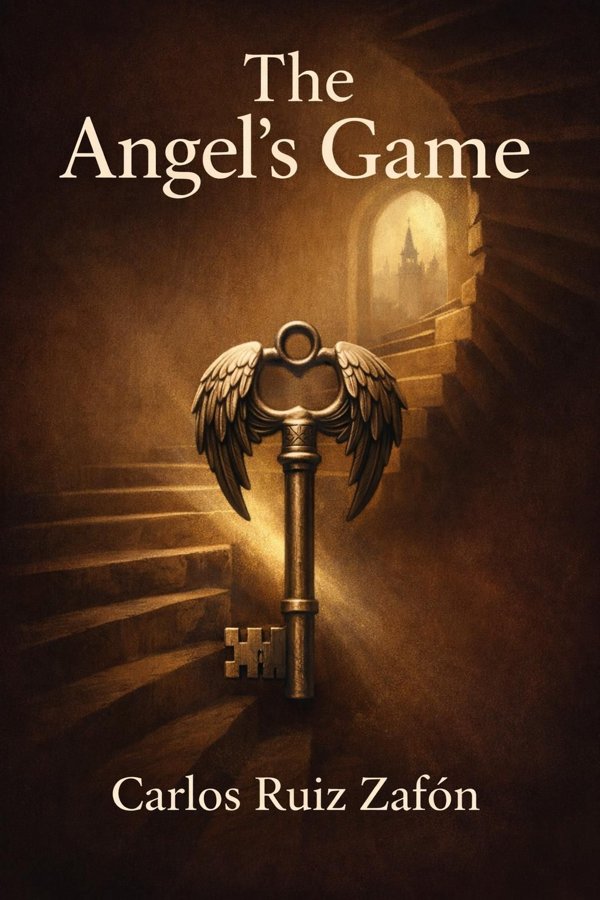
Talent can be a gift, but unchecked ambition can turn it into a trap. In The Angel’s Game, Zafón moves back to 1920s Barcelona and follows David Martín, a gifted but tormented writer who rises from poverty into literary success under increasingly sinister circumstances. Offered a fortune by a mysterious publisher to write a strange and transformative book, David becomes entangled in obsession, manipulation, madness, and the shadowy origins of the Cemetery itself.
This novel deepens the saga’s darker philosophical terrain. If The Shadow of the Wind celebrates the power of books to preserve memory, The Angel’s Game asks what happens when creation is corrupted by vanity, desperation, or external control. David’s story reveals that writing can become both salvation and self-destruction. The imagination opens worlds, but it also exposes the mind to illusion. Zafón blurs the line between supernatural horror and psychological breakdown, forcing readers to consider whether the monsters haunting David are real entities or products of guilt and longing.
The broader application is clear: creative work always involves a negotiation between integrity and reward. Whether in writing, business, or public life, the desire for recognition can make people vulnerable to deals that distort their values. David’s spiral is an extreme version of a common modern dilemma—how much of yourself are you willing to trade for success?
Actionable takeaway: whenever a major opportunity appears, pause and define the values you refuse to surrender in exchange for achievement.
The past does not stay buried simply because people agree not to speak of it. In The Prisoner of Heaven, Zafón returns to Daniel Sempere and his friend Fermín Romero de Torres, but with a tighter, more intimate focus. A mysterious visitor and a cryptic dedication trigger revelations about Fermín’s brutal imprisonment under the Franco regime and his connection to Daniel’s family. This shorter installment functions like a hidden hinge in the tetralogy, showing how personal loyalty and political terror are tightly intertwined.
What makes this novel so important is its insistence that charming surfaces often conceal unresolved trauma. Fermín, one of the series’ most witty and exuberant characters, is revealed in fuller depth as a survivor of torture, humiliation, and loss. Through him, Zafón illustrates how humor can coexist with suffering and how friendship can become a form of rescue. The novel also reminds us that authoritarian systems do not merely imprison bodies; they distort memories, identities, and family histories for decades.
In everyday life, many relationships operate similarly. People often know each other through selective stories, not complete truths. A friend’s habits, defenses, or eccentricities may be rooted in experiences we cannot see. The novel encourages a more compassionate reading of others, especially those whose resilience masks pain.
Actionable takeaway: choose one important relationship in your life and create space for a deeper, more honest conversation about the experiences that shaped both of you.
Power survives by controlling stories, but truth survives by refusing to disappear. The Labyrinth of the Spirits, the final and most expansive volume, follows Alicia Gris, an intelligent and wounded investigator drawn into the disappearance of a government minister tied to old crimes. Her inquiry gradually uncovers the hidden architecture beneath the entire series: political corruption, personal betrayals, institutional violence, and the intimate costs of fear.
Alicia is one of Zafón’s greatest creations because she embodies contradiction. She is brilliant yet fragile, seductive yet guarded, cynical yet morally driven. Through her, the series broadens beyond family mystery into a full reckoning with the structures of Francoist repression. The labyrinth of the title is not merely a place or a plot device; it is a metaphor for memory itself, where every corridor leads to another version of truth. The novel argues that justice is rarely clean or complete, but pursuing it remains necessary.
This has strong real-world resonance. In any society, institutions may prefer silence over accountability. Yet hidden archives, testimonies, and persistent investigation can eventually expose what official narratives conceal. Alicia’s search shows that truth often arrives fragmented, and courage lies in assembling those fragments despite exhaustion and danger.
Actionable takeaway: when confronting a confusing problem, resist the urge for quick answers; gather evidence patiently, connect patterns, and let the fuller truth emerge over time.
A society is most vulnerable when it forgets what it has suffered. Across all four novels, the Cemetery of Forgotten Books represents more than a magical library: it is a moral response to erasure. Each book hidden there has been neglected, suppressed, or abandoned, yet preserved in the hope that one day a reader will restore it to life. Zafón turns reading into an act of guardianship. To remember a story is to resist the forces that would destroy it.
This idea reaches beyond literature. Families lose history when elders die unheard. Communities lose identity when archives are neglected. Nations repeat violence when inconvenient memories are edited out. Zafón suggests that memory needs caretakers, not just institutions. The individual reader matters because attention itself is preservation. Daniel choosing Carax’s novel is not a random event; it is an ethical act, even if he does not understand that at first.
In modern life, where information is constant but attention is scarce, this theme becomes especially relevant. We often confuse access with remembrance. Yet a digital file, like an unread book, can still vanish emotionally and culturally. Meaning survives only when someone engages with it deeply enough to pass it on.
Actionable takeaway: preserve one meaningful story this month—record a family memory, revisit a neglected classic, or share a forgotten piece of history with someone who has never heard it.
Some stories happen in a city; others could not exist without it. In The Cemetery of Forgotten Books, Barcelona is not a backdrop but a breathing presence—foggy, wounded, seductive, divided, and full of secret passageways both literal and emotional. Zafón’s Barcelona contains elegant mansions, decaying bookshops, prisons, cemeteries, boarding houses, government offices, and hidden libraries, all layered with political tension and old sorrow. The city reflects the inner lives of the characters and the moral climate of the era.
This setting matters because place shapes memory. Streets carry traces of love affairs, betrayals, disappearances, and violence long after individuals are gone. Zafón repeatedly shows that to investigate a mystery is also to read a city. Architecture becomes evidence. Ruins become testimony. The urban landscape stores what people try to forget.
Readers can apply this insight in their own lives by paying attention to the emotional geography around them. A neighborhood, classroom, workplace, or family home is never merely functional. It accumulates meaning through events and relationships. When we notice how place influences behavior, nostalgia, fear, or belonging, we better understand both ourselves and others.
Zafón also demonstrates the storytelling power of atmosphere. The weather, light, and physical textures of a city can deepen emotional truth more effectively than abstract explanation.
Actionable takeaway: take a walk through a familiar place and ask what memories, tensions, and hidden stories are embedded in its spaces.
People often imagine history is driven by ideologies and institutions, yet private loves and losses may shape fate just as powerfully. Throughout the tetralogy, romantic obsession, parental devotion, friendship, jealousy, and mourning drive the choices that ripple across generations. Julián Carax’s doomed love, Daniel’s coming-of-age attachments, David Martín’s yearning, Fermín’s loyalty, and Alicia Gris’s guarded heart all reveal the same truth: emotional wounds are never merely personal when they influence how people act in the world.
Zafón refuses to treat love as sentimental decoration. In his hands, it is redemptive and destructive, clarifying and blinding. Characters commit heroic acts because they love; they also lie, flee, betray, and unravel because they cannot bear loss. Grief, similarly, is not presented as a phase to complete but as a force that alters identity. The dead remain present through memory, absence, guilt, and longing.
This makes the series deeply relatable. Most readers know what it means to be shaped by someone who is gone or by a relationship that changed everything. The tetralogy suggests that healing does not require forgetting. Instead, maturity comes from integrating love and grief into a fuller understanding of self.
Actionable takeaway: identify one unresolved grief or enduring attachment in your life and ask how it still influences your decisions, habits, or view of the future.
No life is fully self-contained. One of Zafón’s greatest achievements is the way he constructs the tetralogy as an intricate web of intergenerational echoes. Characters who seem secondary in one novel become central in another. A hidden letter, a prison memory, a lost manuscript, or a passing name gains new significance hundreds of pages later. The effect is more than clever plotting. It expresses a worldview: individuals inherit unfinished stories, whether they know it or not.
This interconnection has two major implications. First, identity is partly archival. We become who we are not only through our own choices but through the secrets, silences, debts, and loves passed down to us. Second, understanding often arrives retrospectively. Events that once appeared random become meaningful when placed in a larger narrative pattern. Zafón rewards patient reading because he wants us to experience revelation the way life often delivers it—late, incomplete, but transformative.
Outside fiction, this insight applies to families, institutions, and cultures. Conflicts rarely begin where we think they begin. Habits, fears, loyalties, and privileges are inherited as much as chosen. When we investigate causes rather than reacting only to surfaces, we gain greater empathy and clarity.
Actionable takeaway: map one recurring pattern in your family or personal life and trace it backward; understanding its origin may change how you respond to it now.
In the bleakest worlds, laughter can be a survival strategy. Although The Cemetery of Forgotten Books is filled with murder, dictatorship, betrayal, and melancholy, Zafón repeatedly offsets darkness with wit, tenderness, and companionship. No character embodies this better than Fermín Romero de Torres, whose comic brilliance, verbal extravagance, and fierce loyalty bring warmth into scenes that might otherwise collapse under their own sorrow. Through him and others, the series argues that friendship is not a decorative subplot but a force that keeps people human.
This matters because suffering often narrows attention and isolates the self. Humor interrupts that contraction. It creates distance from fear without denying fear’s reality. Friendship performs a similar function: it restores proportion, offers witness, and sometimes gives people the courage to continue when they would otherwise surrender. Zafón understands that resilience is rarely solitary.
In practical life, people often underestimate the moral value of lightness. A joke shared during hardship, a meal with a loyal friend, or a voice that refuses to let despair define the whole story can become transformative. The tetralogy’s emotional range works precisely because it does not confuse seriousness with gloom.
Actionable takeaway: when life feels heavy, do not withdraw completely—reach out to someone who brings honesty, warmth, or humor, and let connection become part of your endurance.
All Chapters in The Cemetery of Forgotten Books
About the Author
Carlos Ruiz Zafón (1964–2020) was a Spanish novelist born in Barcelona, a city that became the haunting heart of his most celebrated fiction. Before dedicating himself fully to writing, he worked in advertising, an experience that helped shape his vivid, cinematic narrative style. He first published young adult novels, but achieved global recognition with The Shadow of the Wind, the opening volume of The Cemetery of Forgotten Books series. His fiction is known for blending mystery, Gothic atmosphere, romance, historical memory, and a profound love of literature. Zafón later lived in Los Angeles, where he continued writing while maintaining a deep imaginative connection to Barcelona. He remains one of the most widely read and beloved Spanish-language authors of the 21st century.
Get This Summary in Your Preferred Format
Read or listen to the The Cemetery of Forgotten Books summary by Carlos Ruiz Zafón anytime, anywhere. FizzRead offers multiple formats so you can learn on your terms — all free.
Available formats: App · Audio · PDF · EPUB — All included free with FizzRead
Download The Cemetery of Forgotten Books PDF and EPUB Summary
Key Quotes from The Cemetery of Forgotten Books
“Every forgotten book suggests a forgotten life.”
“Talent can be a gift, but unchecked ambition can turn it into a trap.”
“The past does not stay buried simply because people agree not to speak of it.”
“Power survives by controlling stories, but truth survives by refusing to disappear.”
“A society is most vulnerable when it forgets what it has suffered.”
Frequently Asked Questions about The Cemetery of Forgotten Books
The Cemetery of Forgotten Books by Carlos Ruiz Zafón is a classics book that explores key ideas across 9 chapters. The Cemetery of Forgotten Books is Carlos Ruiz Zafón’s sweeping four-novel cycle set in Barcelona, where books are not just objects but living forces that shape destinies across generations. Comprising The Shadow of the Wind, The Angel’s Game, The Prisoner of Heaven, and The Labyrinth of the Spirits, the series blends literary mystery, Gothic suspense, historical trauma, romance, and family drama into one richly interconnected world. At its center lies a hidden library—the Cemetery of Forgotten Books—a secret sanctuary for abandoned volumes and the memories they carry. What makes this saga matter is not only its intricate plotting, but its profound belief that stories can preserve truth when institutions fail, and that reading can become a form of resistance against oblivion. Zafón writes with cinematic intensity, lush atmosphere, and emotional precision, turning postwar Barcelona into a haunted character in its own right. Few modern literary works so gracefully unite page-turning suspense with reflections on memory, censorship, identity, and grief. This tetralogy is both an immersive reading experience and a meditation on why books continue to matter in a fragile, easily manipulated world.
More by Carlos Ruiz Zafón
You Might Also Like

Browse by Category
Ready to read The Cemetery of Forgotten Books?
Get the full summary and 100K+ more books with Fizz Moment.