
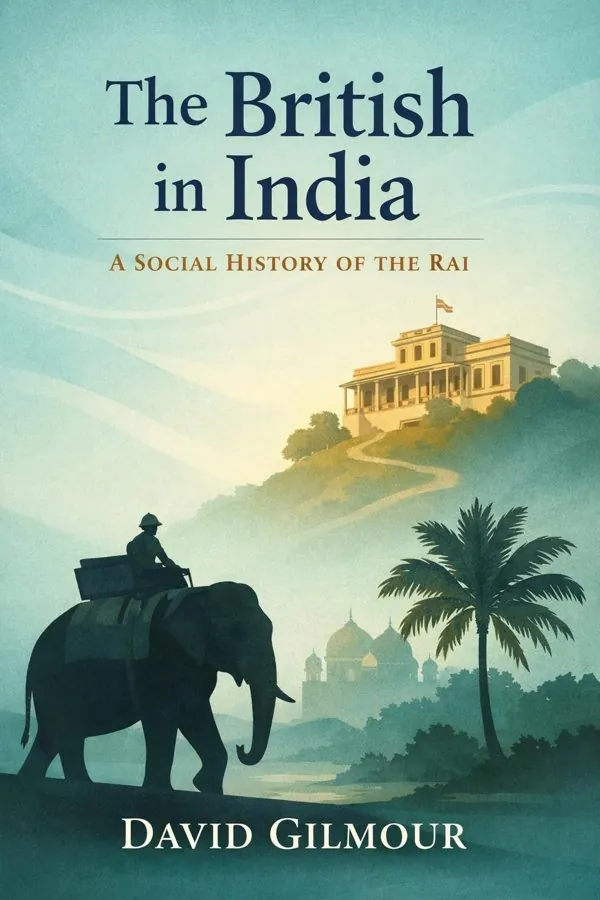
The British in India: A Social History of the Raj: Summary & Key Insights
 10 min12 chaptersAudio available
What Is The British in India: A Social History of the Raj About?
The British in India: A Social History of the Raj by David Gilmour is a world_history book spanning 12 pages. This book offers a comprehensive social history of the British presence in India during the period of the Raj. David Gilmour explores the lives, habits, and attitudes of British men and women who lived and worked in India, from administrators and soldiers to missionaries and merchants. Through detailed research and vivid storytelling, Gilmour reconstructs the everyday experiences of the British community, their interactions with Indian society, and the cultural legacy of colonial rule.
This FizzRead summary covers all 12 key chapters of The British in India: A Social History of the Raj in approximately 10 minutes, distilling the most important ideas, arguments, and takeaways from David Gilmour's work. Also available as an audio summary and Key Quotes Podcast.
The British in India: A Social History of the Raj
This book offers a comprehensive social history of the British presence in India during the period of the Raj. David Gilmour explores the lives, habits, and attitudes of British men and women who lived and worked in India, from administrators and soldiers to missionaries and merchants. Through detailed research and vivid storytelling, Gilmour reconstructs the everyday experiences of the British community, their interactions with Indian society, and the cultural legacy of colonial rule.
Who Should Read The British in India: A Social History of the Raj?
This book is perfect for anyone interested in world_history and looking to gain actionable insights in a short read. Whether you're a student, professional, or lifelong learner, the key ideas from The British in India: A Social History of the Raj by David Gilmour will help you think differently.
- ✓Readers who enjoy world_history and want practical takeaways
- ✓Professionals looking to apply new ideas to their work and life
- ✓Anyone who wants the core insights of The British in India: A Social History of the Raj in just 10 minutes
Want the full summary?
Get instant access to this book summary and 100K+ more with Fizz Moment.
Get Free SummaryAvailable on App Store • Free to download
Key Chapters
In the early seventeenth century, the British came to India not as conquerors but as merchants of the East India Company. They were granted trading privileges by Mughal emperors and nestled into coastal enclaves—Surat, Madras, Calcutta, and Bombay—where they sought spices, textiles, and profits. Many of these early Company servants were young men of modest backgrounds, sent abroad by families eager to secure commercial prosperity. Their letters home reveal the harsh realities of distance and disease, but also the thrill of opportunity. Their cultural adaptation was pragmatic: they learned Indian languages, took local mistresses, and sometimes dressed and dined as Indians did. The early British presence was porous, absorbing influences readily, long before racial hierarchies hardened.
By the eighteenth century, these men thrived as “nabobs,” wealthy traders whose fortunes made them influential back in Britain. Critics at home accused them of moral corruption—tempted by Oriental luxury—but in India they were symbols of adaptability. The British had not yet imposed empire; they were part of India’s commercial world, dependent on Indian bankers, clerks, and artisans. This period reminds us that the British encounter with India began not in domination but in negotiation and fascination.
The mid-nineteenth century transformed everything. The East India Company’s commercial façade crumbled under political and military ambition, culminating in the 1857 Rebellion—an uprising that shattered trust and forever altered the nature of British presence. When the dust settled, the British state assumed direct control, ushering in the Raj. Administration replaced commerce as the primary occupation of Britons in India.
The new order required an expanded bureaucracy, the Indian Civil Service, whose members prided themselves on their incorruptibility and efficiency. They saw themselves as moral custodians, destined to bring order and progress to what they called the “jewel in the crown.” Yet the rebellion also deepened racial divisions. The openness of earlier times gave way to segregation and suspicion. British residents retreated to exclusive clubs and cantonments, convinced that cordiality with Indians endangered control.
The Raj’s governing ethos blended paternalism and detachment. Officials genuinely believed they were preserving peace and civilization, but their rule relied on distance—both physical and emotional. The transformation from traders to rulers thus carried moral cost: the flexibility of the early Company years yielded to rigid hierarchy.
+ 10 more chapters — available in the FizzRead app
All Chapters in The British in India: A Social History of the Raj
About the Author
David Gilmour is a British historian and biographer known for his works on British imperial history and notable figures such as Rudyard Kipling and Lord Curzon. His writing combines scholarly depth with accessible narrative, focusing on the social and cultural dimensions of historical events.
Get This Summary in Your Preferred Format
Read or listen to the The British in India: A Social History of the Raj summary by David Gilmour anytime, anywhere. FizzRead offers multiple formats so you can learn on your terms — all free.
Available formats: App · Audio · PDF · EPUB — All included free with FizzRead
Download The British in India: A Social History of the Raj PDF and EPUB Summary
Key Quotes from The British in India: A Social History of the Raj
“In the early seventeenth century, the British came to India not as conquerors but as merchants of the East India Company.”
“The mid-nineteenth century transformed everything.”
Frequently Asked Questions about The British in India: A Social History of the Raj
The British in India: A Social History of the Raj by David Gilmour is a world_history book that explores key ideas across 12 chapters. This book offers a comprehensive social history of the British presence in India during the period of the Raj. David Gilmour explores the lives, habits, and attitudes of British men and women who lived and worked in India, from administrators and soldiers to missionaries and merchants. Through detailed research and vivid storytelling, Gilmour reconstructs the everyday experiences of the British community, their interactions with Indian society, and the cultural legacy of colonial rule.
You Might Also Like
The Age of Capital
Eric Hobsbawm
10 min
The Gulag Archipelago
Aleksandr Solzhenitsyn
10 min
Jerusalem: The Biography
Simon Sebag Montefiore
10 min
The Anglo-Saxons
James Campbell
10 min
The Boer War
Thomas Pakenham
10 min
The Industrial Revolutionaries: The Making of the Modern World 1776–1914
Gavin Weightman
10 minBrowse by Category
Ready to read The British in India: A Social History of the Raj?
Get the full summary and 100K+ more books with Fizz Moment.