
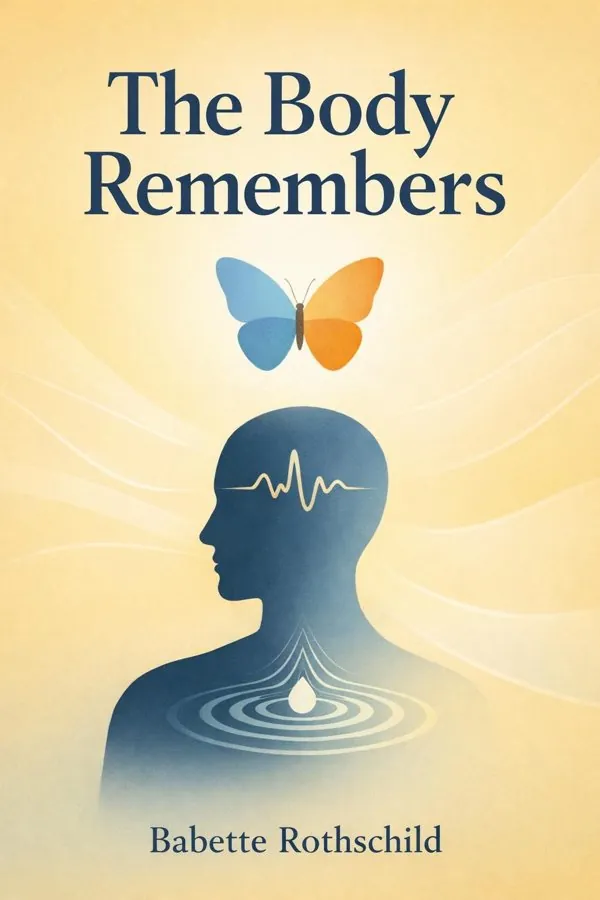
The Body Remembers: The Psychophysiology of Trauma and Trauma Treatment: Summary & Key Insights
 10 min6 chaptersAudio available
What Is The Body Remembers: The Psychophysiology of Trauma and Trauma Treatment About?
The Body Remembers: The Psychophysiology of Trauma and Trauma Treatment by Babette Rothschild is a mental_health book spanning 6 pages. This book provides a comprehensive understanding of how trauma affects the body and mind, integrating psychophysiological insights with practical therapeutic approaches. Babette Rothschild explains how trauma is stored in the body and offers clinicians tools to help clients safely process traumatic memories without retraumatization. It bridges the gap between theory and practice, emphasizing body awareness and self-regulation in trauma treatment.
This FizzRead summary covers all 6 key chapters of The Body Remembers: The Psychophysiology of Trauma and Trauma Treatment in approximately 10 minutes, distilling the most important ideas, arguments, and takeaways from Babette Rothschild's work. Also available as an audio summary and Key Quotes Podcast.
The Body Remembers: The Psychophysiology of Trauma and Trauma Treatment
This book provides a comprehensive understanding of how trauma affects the body and mind, integrating psychophysiological insights with practical therapeutic approaches. Babette Rothschild explains how trauma is stored in the body and offers clinicians tools to help clients safely process traumatic memories without retraumatization. It bridges the gap between theory and practice, emphasizing body awareness and self-regulation in trauma treatment.
Who Should Read The Body Remembers: The Psychophysiology of Trauma and Trauma Treatment?
This book is perfect for anyone interested in mental_health and looking to gain actionable insights in a short read. Whether you're a student, professional, or lifelong learner, the key ideas from The Body Remembers: The Psychophysiology of Trauma and Trauma Treatment by Babette Rothschild will help you think differently.
- ✓Readers who enjoy mental_health and want practical takeaways
- ✓Professionals looking to apply new ideas to their work and life
- ✓Anyone who wants the core insights of The Body Remembers: The Psychophysiology of Trauma and Trauma Treatment in just 10 minutes
Want the full summary?
Get instant access to this book summary and 100K+ more with Fizz Moment.
Get Free SummaryAvailable on App Store • Free to download
Key Chapters
Trauma imprints itself not only in memory but also in physiology. When a person faces overwhelming threat, survival is prioritized above all else. The autonomic nervous system takes over, activating fight, flight, or freeze responses. These automatic mobilizations are life-saving during danger but become problematic when they persist beyond the trauma’s end. The body then lives as though danger remains.
To understand trauma treatment, we must recognize that trauma is not stored as a neat narrative; it is retained as fragmented sensations, patterns of muscle tension, and physiological dysregulation. Long after an event, a smell, a sound, or a posture may trigger the same bodily responses that once ensured survival. The result is that trauma survivors often feel hijacked by their own physiology. They might know cognitively that they are safe, yet their bodies signal threat.
This discrepancy is central to what I describe as the body’s remembering. The goal of therapy is not to erase those bodily memories, but to create new experiences of safety strong enough to transform them. By teaching clients to recognize bodily cues of arousal, dissociation, and calm, we give them tools to regulate themselves. The therapist becomes a guide who helps the client differentiate between then and now – between past terror and present safety.
The autonomic nervous system (ANS) – composed of the sympathetic and parasympathetic branches – orchestrates our response to threat. The sympathetic system prepares us for action, flooding muscles with energy, accelerating the heartbeat, and sharpening focus for fight or flight. The parasympathetic system, particularly through the vagus nerve, enables immobilization, rest, or freezing when escape seems impossible.
In trauma, the ANS may become dysregulated. Chronic hyperarousal leads to anxiety, insomnia, exaggerated startle responses, and emotional volatility. Conversely, excessive parasympathetic dominance results in numbness, depression, and dissociation. Understanding a client’s physiological state provides essential clues for pacing therapy. For instance, a client in high arousal cannot process traumatic memory effectively; they require grounding and down-regulation before exploration can safely occur.
By cultivating awareness of how bodily states shift – perhaps a tightening chest signalling rising fear, or a sudden calmness masking dissociation – both therapist and client learn to track the nervous system’s rhythm. Our task is to support the gradual restoration of flexibility, so the ANS can move fluidly between activation and rest rather than remaining stuck in defensive mode. This balance, or self-regulation, is the physiological foundation of psychological recovery.
+ 4 more chapters — available in the FizzRead app
All Chapters in The Body Remembers: The Psychophysiology of Trauma and Trauma Treatment
About the Author
Babette Rothschild is a psychotherapist and educator specializing in trauma and body psychotherapy. She is the founder of the Somatic Trauma Therapy approach and has written extensively on the integration of body and mind in trauma recovery. With decades of clinical experience, she has trained professionals worldwide in trauma-informed care.
Get This Summary in Your Preferred Format
Read or listen to the The Body Remembers: The Psychophysiology of Trauma and Trauma Treatment summary by Babette Rothschild anytime, anywhere. FizzRead offers multiple formats so you can learn on your terms — all free.
Available formats: App · Audio · PDF · EPUB — All included free with FizzRead
Download The Body Remembers: The Psychophysiology of Trauma and Trauma Treatment PDF and EPUB Summary
Key Quotes from The Body Remembers: The Psychophysiology of Trauma and Trauma Treatment
“Trauma imprints itself not only in memory but also in physiology.”
“The autonomic nervous system (ANS) – composed of the sympathetic and parasympathetic branches – orchestrates our response to threat.”
Frequently Asked Questions about The Body Remembers: The Psychophysiology of Trauma and Trauma Treatment
The Body Remembers: The Psychophysiology of Trauma and Trauma Treatment by Babette Rothschild is a mental_health book that explores key ideas across 6 chapters. This book provides a comprehensive understanding of how trauma affects the body and mind, integrating psychophysiological insights with practical therapeutic approaches. Babette Rothschild explains how trauma is stored in the body and offers clinicians tools to help clients safely process traumatic memories without retraumatization. It bridges the gap between theory and practice, emphasizing body awareness and self-regulation in trauma treatment.
You Might Also Like

Big Feelings: How to Be Okay When Things Are Not Okay
Liz Fosslien, Mollie West Duffy
10 min
Creative Arts Therapies Handbook: Art, Music and Dance Therapy Practices for Wellbeing
Susan I. Buchalter
10 min
Emotional First Aid: Healing Rejection, Guilt, Failure, and Other Everyday Hurts
Guy Winch
10 min
Lost Connections: Why You're Depressed and How to Find Hope
Johann Hari
10 min
No Time to Panic: How to Stop Worrying and Embrace Life
Matt Gutman
10 min
Overcoming Mobbing: A Recovery Guide for Workplace Aggression and Bullying
Maureen Duffy, Len Sperry
10 minBrowse by Category
Ready to read The Body Remembers: The Psychophysiology of Trauma and Trauma Treatment?
Get the full summary and 100K+ more books with Fizz Moment.