
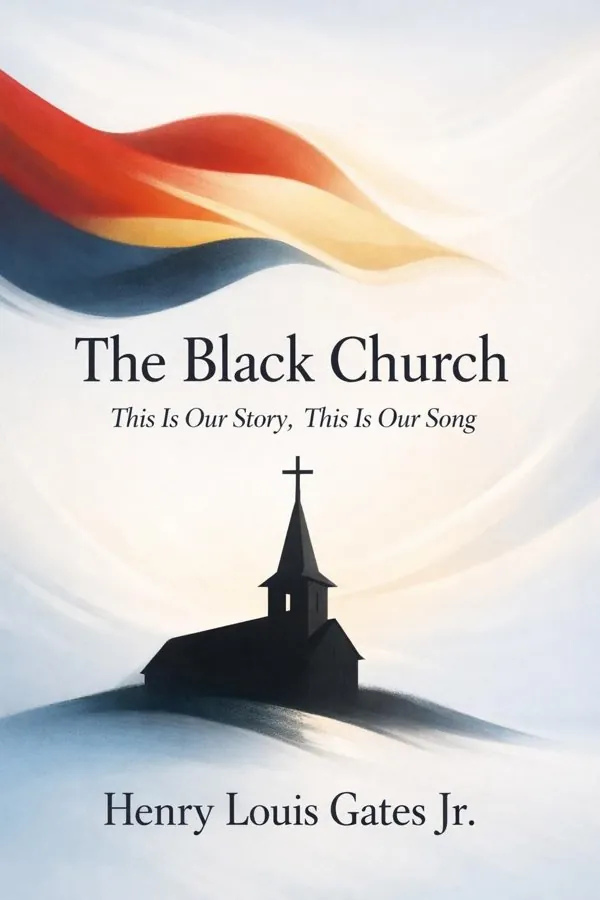
The Black Church: This Is Our Story, This Is Our Song: Summary & Key Insights
 10 min9 chaptersAudio available
Key Takeaways from The Black Church: This Is Our Story, This Is Our Song
One of the book’s deepest insights is that the Black Church did not begin in freedom; it was forged in captivity.
Freedom becomes durable when it builds institutions.
A powerful community often begins with a place to gather.
Sometimes a people’s deepest theology is sung before it is formally preached.
Movements need moral language, disciplined networks, and trusted leaders.
What Is The Black Church: This Is Our Story, This Is Our Song About?
The Black Church: This Is Our Story, This Is Our Song by Henry Louis Gates Jr. is a civilization book spanning 11 pages. Henry Louis Gates Jr.’s The Black Church: This Is Our Story, This Is Our Song is a sweeping account of one of the most important institutions in American history. More than a religious history, the book shows how the Black Church became a sanctuary, schoolhouse, political platform, artistic engine, and moral headquarters for generations of African Americans. Gates follows its development from the brutal conditions of slavery, through Reconstruction and Jim Crow, into the civil rights era and the complex realities of modern America. Along the way, he reveals how faith and collective worship helped transform suffering into endurance, endurance into organization, and organization into social power. What makes this book especially compelling is Gates’s ability to unite scholarship, storytelling, and cultural insight. As a distinguished historian, literary critic, and documentary filmmaker, he brings both authority and accessibility to the subject. He does not present the Black Church as a simple or monolithic institution. Instead, he shows its diversity, its contradictions, and its extraordinary influence on American identity. This book matters because to understand Black history in America, one must understand the church that carried memory, hope, protest, music, and community across centuries.
This FizzRead summary covers all 9 key chapters of The Black Church: This Is Our Story, This Is Our Song in approximately 10 minutes, distilling the most important ideas, arguments, and takeaways from Henry Louis Gates Jr.'s work. Also available as an audio summary and Key Quotes Podcast.
The Black Church: This Is Our Story, This Is Our Song
Henry Louis Gates Jr.’s The Black Church: This Is Our Story, This Is Our Song is a sweeping account of one of the most important institutions in American history. More than a religious history, the book shows how the Black Church became a sanctuary, schoolhouse, political platform, artistic engine, and moral headquarters for generations of African Americans. Gates follows its development from the brutal conditions of slavery, through Reconstruction and Jim Crow, into the civil rights era and the complex realities of modern America. Along the way, he reveals how faith and collective worship helped transform suffering into endurance, endurance into organization, and organization into social power.
What makes this book especially compelling is Gates’s ability to unite scholarship, storytelling, and cultural insight. As a distinguished historian, literary critic, and documentary filmmaker, he brings both authority and accessibility to the subject. He does not present the Black Church as a simple or monolithic institution. Instead, he shows its diversity, its contradictions, and its extraordinary influence on American identity. This book matters because to understand Black history in America, one must understand the church that carried memory, hope, protest, music, and community across centuries.
Who Should Read The Black Church: This Is Our Story, This Is Our Song?
This book is perfect for anyone interested in civilization and looking to gain actionable insights in a short read. Whether you're a student, professional, or lifelong learner, the key ideas from The Black Church: This Is Our Story, This Is Our Song by Henry Louis Gates Jr. will help you think differently.
- ✓Readers who enjoy civilization and want practical takeaways
- ✓Professionals looking to apply new ideas to their work and life
- ✓Anyone who wants the core insights of The Black Church: This Is Our Story, This Is Our Song in just 10 minutes
Want the full summary?
Get instant access to this book summary and 100K+ more with Fizz Moment.
Get Free SummaryAvailable on App Store • Free to download
Key Chapters
One of the book’s deepest insights is that the Black Church did not begin in freedom; it was forged in captivity. Enslaved Africans were torn from diverse spiritual traditions and thrust into a world that used Christianity both as a tool of oppression and, paradoxically, as a source of hope. Plantation owners often promoted a version of Christianity centered on obedience, suffering, and submission. Yet enslaved people listened differently. They found in biblical stories of Exodus, deliverance, and divine justice a language for dignity and resistance.
Gates shows that this reinterpretation was revolutionary. Black worshippers did not simply absorb the religion handed to them; they reshaped it through African cultural memory, oral tradition, rhythm, improvisation, and communal expression. The invisible institution of hush harbors and secret meetings became crucial. In those hidden gatherings, enslaved people prayed freely, sang spiritually charged songs, and imagined a God who stood with the oppressed rather than the master.
This history matters because it reveals how institutions are often born from creative survival. The Black Church emerged not as a replica of white Christianity, but as a transformed spiritual world built from pain, memory, and collective longing. That helps explain why it has always been more than a Sunday gathering. It began as a place where people reclaimed personhood.
In practical terms, this idea reminds us to look beneath formal institutions to find where real meaning is being made. Communities under pressure often create hidden spaces of renewal long before they gain public visibility. Actionable takeaway: when studying any movement or institution, ask how marginalized people reinterpreted inherited systems to create freedom within constraint.
Freedom becomes durable when it builds institutions. Gates traces how Black Christians moved from worshipping under white supervision to founding independent congregations, denominations, and conventions that they could govern themselves. This shift was not merely administrative. It marked a profound declaration of spiritual and civic autonomy.
The rise of churches such as the African Methodist Episcopal Church and other independent Black denominations gave African Americans control over preaching, property, leadership, mutual aid, and moral direction. Leaders like Richard Allen recognized that worship without self-governance was incomplete. If Black people were to flourish, they needed institutions that reflected their humanity rather than tolerated their presence.
These churches quickly became much more than religious centers. They organized education, burial societies, charitable relief, political meetings, and pathways to leadership. In communities where Black citizens were excluded from public power, the church became a framework for building it. Reconstruction and the post-emancipation era made this especially visible, as churches multiplied across the South and became among the first stable Black-controlled institutions.
The broader lesson is that symbolic freedom is not enough. Real freedom needs structures: places, networks, leadership pipelines, and financial support systems. This applies today in civic life, entrepreneurship, education, and cultural work. Communities thrive when they own the institutions that shape their future.
Actionable takeaway: if you care about long-term change, invest not only in ideas or protest, but in independent institutions that can preserve values, train leaders, and support people across generations.
A powerful community often begins with a place to gather. Gates emphasizes that the Black Church functioned as the central organizing space of African American life for generations. In a society that denied Black people equal access to schools, banks, political offices, newspapers, and social services, the church became all of these at once.
This role was practical as much as spiritual. Churches hosted literacy classes, civic meetings, fundraising drives, voter education efforts, youth mentorship, and emergency relief. They supported families in mourning, celebrated marriages and births, and created networks of mutual responsibility. In rural and urban communities alike, the church was often the one institution Black people could trust to belong to them.
Because it was dependable, it became formative. The church produced public speakers, organizers, teachers, and musicians. It taught people how to lead meetings, manage budgets, build consensus, and communicate moral vision. These skills later flowed into labor movements, school boards, social clubs, and civil rights campaigns.
The concept is still relevant. Every strong community needs a dependable gathering place where trust can be built and sustained. It may be a church, cultural center, neighborhood association, or digital network, but it must offer more than transaction. It must create belonging.
Actionable takeaway: identify the institutions in your own community that already hold trust, then strengthen them. Social change becomes more effective when it grows from spaces where people already gather, share burdens, and learn to act together.
Sometimes a people’s deepest theology is sung before it is formally preached. Gates highlights the central role of spirituals, gospel music, and later sacred performance traditions in shaping the identity of the Black Church. These songs were not decorative additions to worship. They were vessels of memory, coded speech, emotional release, and collective survival.
Spirituals emerged from slavery as compressed testimonies of grief and hope. Songs about crossing the Jordan, going home, or chariots coming low were religious in one sense and liberatory in another. They helped enslaved people name pain while imagining deliverance. In later periods, gospel music transformed church worship into a public art form of astonishing expressive range, carrying Black sacred traditions into American culture at large.
Gates shows that music in the Black Church served several functions at once: teaching doctrine, building solidarity, preserving historical experience, and turning suffering into beauty. It gave ordinary people a way to speak when direct speech was dangerous or inadequate. It also nurtured many of the artists and musical forms that shaped American music more broadly, from blues and jazz to soul and contemporary gospel.
For modern readers, this is a reminder that culture is not a side effect of faith or politics. It is one of the main ways communities transmit values and endure hardship. Songs, stories, and rituals can hold truths that formal arguments cannot.
Actionable takeaway: pay attention to the art your community creates. If you want to understand what people fear, hope for, and remember, listen to what they sing, repeat, and celebrate together.
Movements need moral language, disciplined networks, and trusted leaders. Gates shows that the Black Church supplied all three during the civil rights movement. While activists emerged from many backgrounds, the church offered an infrastructure that no other institution could match. It provided meeting spaces, communication channels, fundraising capacity, and leaders trained in public speaking, moral persuasion, and personal sacrifice.
Figures such as Martin Luther King Jr. did not simply happen to be ministers. Their authority was shaped within a tradition that linked biblical justice to public responsibility. Sermons became strategic tools. Biblical narratives of liberation gave ordinary people courage to confront segregation, violence, and humiliation. At the same time, church choirs, prayer meetings, and disciplined congregational life sustained people emotionally through prolonged struggle.
Gates also helps us see that the church’s contribution was collective, not only charismatic. Countless unnamed congregants cooked meals, hosted organizers, raised bail money, attended marches, and turned worship into action. The movement was not built on inspiration alone. It depended on institutions able to transform conviction into coordination.
The lesson extends beyond this historical moment. Lasting social change requires organizations that combine ethical vision with practical capacity. Outrage may ignite attention, but institutions sustain pressure and protect participants.
Actionable takeaway: if you want to support a cause, do more than admire its leaders. Strengthen the local organizations that provide meeting space, training, logistics, care, and moral clarity. Movements endure when communities build the machinery behind the message.
A striking tension in the history of the Black Church is that women have often been its most consistent labor force while being denied equal recognition and authority. Gates examines this imbalance with care, showing how Black women served as the backbone of congregational life through teaching, fundraising, organizing, caregiving, music ministry, missionary work, and moral leadership.
In many churches, women formed the majority of members and carried much of the institution’s daily work. They organized auxiliaries, fed families, mentored children, sustained charitable efforts, and maintained the social fabric of church life. Yet formal power, especially in the pulpit or denominational leadership, was often restricted by patriarchal interpretations of scripture and custom.
Gates does not flatten this issue into simple condemnation. Instead, he presents it as one of the church’s enduring contradictions: an institution that empowered Black communities while sometimes limiting Black women within them. At the same time, many women found ways to lead regardless, whether through evangelism, music, scholarship, community work, or eventually ordination in more open traditions.
This history encourages a broader question: who actually makes institutions function, and who gets credit? Looking honestly at labor, influence, and authority often reveals hidden inequalities beneath celebrated histories.
Actionable takeaway: in any organization you value, examine whether recognition matches contribution. Support structures that expand leadership opportunities for those already carrying the work, and ask whose gifts are being used without being fully honored.
The Black Church is often spoken of as if it were one unified body, but Gates insists on its diversity. That diversity is theological, denominational, regional, class-based, and political. Baptist, Methodist, Pentecostal, Holiness, Catholic, and non-denominational traditions all shaped Black religious life differently. Some emphasized social justice and intellectual engagement; others stressed ecstatic worship, healing, holiness, and personal transformation.
This diversity matters because it prevents romantic simplification. The Black Church has contained conservatives and radicals, formal liturgies and improvised worship, middle-class respectability and populist emotional intensity. It has nurtured liberationist preaching and prosperity theology, nationalist visions and universalist ethics. Even within one denomination, local churches may differ dramatically in style and emphasis.
Gates’s portrait helps readers understand that complexity is not weakness. It is a sign of a living tradition responding to varied needs. A storefront Pentecostal church in an urban neighborhood and a historically prominent Baptist congregation in a major city may look very different, yet each can offer meaning, identity, and resilience to its members.
For contemporary readers, this idea is useful far beyond religion. We often misunderstand communities by treating them as monoliths. Real understanding starts when we ask how internal differences shape shared identity.
Actionable takeaway: replace broad labels with better questions. Instead of asking what a group believes in general, ask which tradition, which region, which generation, and which lived conditions are shaping that belief. Nuance leads to better judgment and better dialogue.
No institution remains untouched by social change. Gates explores how the Black Church has faced major challenges in the modern era: declining attendance in some communities, generational shifts, new political priorities, skepticism toward organized religion, economic strain, and debates over sexuality, gender, and public engagement. These pressures do not mean the church has disappeared, but they do mean its historic centrality can no longer be assumed.
Part of the challenge comes from success. As African Americans gained access to institutions once closed to them, the church no longer served as the sole platform for leadership, education, or public expression. Media, universities, nonprofits, political organizations, and digital communities now compete for attention and authority. Younger generations may still value spirituality, justice, and identity while feeling alienated from traditional church structures.
Yet Gates suggests that decline is only one part of the story. The church continues to adapt through livestream worship, community partnerships, mental health programming, social advocacy, and renewed attention to local needs. In many places, it still provides food support, crisis response, mentoring, and moral anchoring.
The broader lesson is that institutions survive by discerning their enduring purpose beneath changing forms. Nostalgia is not a strategy. Renewal requires honesty about what has changed and creativity about what still matters.
Actionable takeaway: if you lead or support an institution, distinguish between its mission and its habits. Preserve the mission fiercely, but be willing to reinvent the methods so the institution can serve the present rather than only memorialize the past.
Religion does not leave the public square simply because society becomes more secular. Gates shows that the Black Church continues to influence politics, media, and cultural identity even when its role looks different from the past. Its language of justice, redemption, witness, and community still shapes debates about voting rights, policing, poverty, education, and racial dignity.
At the same time, the church’s public presence has become more contested. Some congregations remain deeply engaged in activism; others focus on personal salvation, economic self-help, or local service. Media representations may celebrate the church’s historic role while also critiquing hypocrisy, exclusion, or celebrity culture. Films, television, music, and public discourse repeatedly return to the Black Church because it remains symbolically powerful, even for people who no longer attend.
Gates’s insight is that the Black Church is not only an institution but also a reservoir of symbols, sounds, ethics, and identities. Its cadences echo in speeches. Its musical forms shape entertainment. Its moral imagination informs protest traditions. Even those who distance themselves from church life often inherit its rhetorical and cultural grammar.
This matters for anyone trying to understand American civilization. The Black Church is not a niche subject. It is one of the central forces that shaped national debates about freedom, equality, suffering, joy, and democratic belonging.
Actionable takeaway: when analyzing politics or culture, look for the moral traditions operating underneath public language. Understanding those roots can clarify why certain messages resonate, why certain leaders gain trust, and how communities connect history to action.
All Chapters in The Black Church: This Is Our Story, This Is Our Song
About the Author
Henry Louis Gates Jr. is an acclaimed American literary critic, historian, editor, and filmmaker whose work has transformed the public understanding of African American history and culture. He serves as the Alphonse Fletcher University Professor at Harvard University and directs the Hutchins Center for African and African American Research. Gates is widely recognized for combining rigorous scholarship with accessible storytelling, making complex historical subjects available to broad audiences through books, essays, and documentary series. His work spans African American literature, genealogy, race, and the history of Black intellectual life. He is also well known for documentary projects that explore ancestry and identity, including Finding Your Roots. In The Black Church, Gates brings together his strengths as a scholar and public educator to illuminate a central institution in American civilization.
Get This Summary in Your Preferred Format
Read or listen to the The Black Church: This Is Our Story, This Is Our Song summary by Henry Louis Gates Jr. anytime, anywhere. FizzRead offers multiple formats so you can learn on your terms — all free.
Available formats: App · Audio · PDF · EPUB — All included free with FizzRead
Download The Black Church: This Is Our Story, This Is Our Song PDF and EPUB Summary
Key Quotes from The Black Church: This Is Our Story, This Is Our Song
“One of the book’s deepest insights is that the Black Church did not begin in freedom; it was forged in captivity.”
“Freedom becomes durable when it builds institutions.”
“A powerful community often begins with a place to gather.”
“Sometimes a people’s deepest theology is sung before it is formally preached.”
“Movements need moral language, disciplined networks, and trusted leaders.”
Frequently Asked Questions about The Black Church: This Is Our Story, This Is Our Song
The Black Church: This Is Our Story, This Is Our Song by Henry Louis Gates Jr. is a civilization book that explores key ideas across 9 chapters. Henry Louis Gates Jr.’s The Black Church: This Is Our Story, This Is Our Song is a sweeping account of one of the most important institutions in American history. More than a religious history, the book shows how the Black Church became a sanctuary, schoolhouse, political platform, artistic engine, and moral headquarters for generations of African Americans. Gates follows its development from the brutal conditions of slavery, through Reconstruction and Jim Crow, into the civil rights era and the complex realities of modern America. Along the way, he reveals how faith and collective worship helped transform suffering into endurance, endurance into organization, and organization into social power. What makes this book especially compelling is Gates’s ability to unite scholarship, storytelling, and cultural insight. As a distinguished historian, literary critic, and documentary filmmaker, he brings both authority and accessibility to the subject. He does not present the Black Church as a simple or monolithic institution. Instead, he shows its diversity, its contradictions, and its extraordinary influence on American identity. This book matters because to understand Black history in America, one must understand the church that carried memory, hope, protest, music, and community across centuries.
You Might Also Like
The Structure of Scientific Revolutions
Thomas S. Kuhn
10 min
Genius
Harold Bloom
10 min
A Cultural History of the Medieval Age
Various Editors
10 min
A History of God: The 4,000-Year Quest of Judaism, Christianity and Islam
Karen Armstrong
10 min
A History of the World in 10½ Chapters
Julian Barnes
10 min
A Short History of Progress
Ronald Wright
10 minBrowse by Category
Ready to read The Black Church: This Is Our Story, This Is Our Song?
Get the full summary and 100K+ more books with Fizz Moment.