
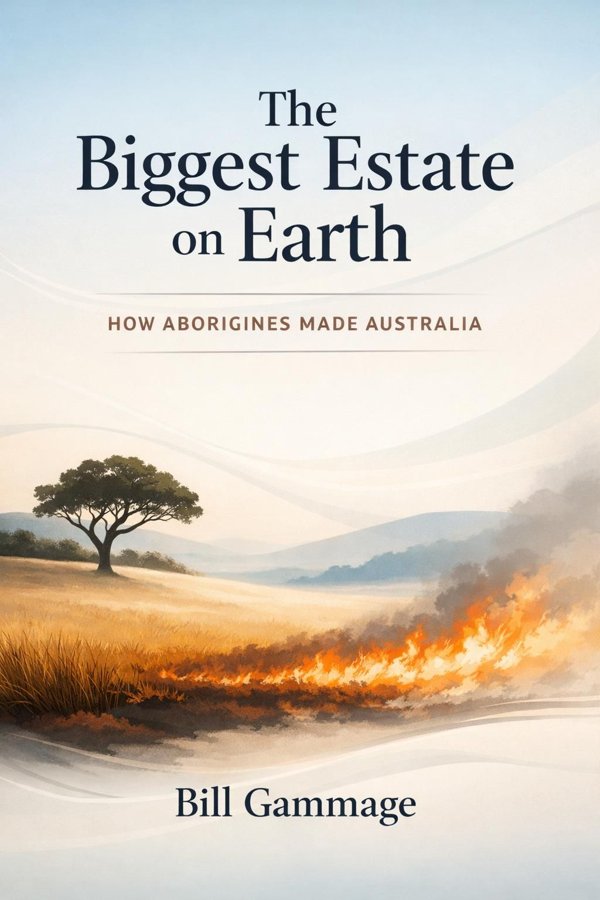
The Biggest Estate on Earth: How Aborigines Made Australia: Summary & Key Insights
by Bill Gammage
 10 min9 chaptersAudio available
What Is The Biggest Estate on Earth: How Aborigines Made Australia About?
The Biggest Estate on Earth: How Aborigines Made Australia by Bill Gammage is a environment book spanning 9 pages. This groundbreaking work by Australian historian Bill Gammage reveals how Aboriginal people managed the Australian landscape before European settlement. Drawing on early colonial records, paintings, and ecological evidence, Gammage argues that Aboriginal Australians used sophisticated fire-based land management techniques to shape the environment into a vast, productive estate. The book challenges long-held assumptions about pre-colonial Australia and redefines the understanding of Indigenous ecological knowledge.
This FizzRead summary covers all 9 key chapters of The Biggest Estate on Earth: How Aborigines Made Australia in approximately 10 minutes, distilling the most important ideas, arguments, and takeaways from Bill Gammage's work. Also available as an audio summary and Key Quotes Podcast.
The Biggest Estate on Earth: How Aborigines Made Australia
This groundbreaking work by Australian historian Bill Gammage reveals how Aboriginal people managed the Australian landscape before European settlement. Drawing on early colonial records, paintings, and ecological evidence, Gammage argues that Aboriginal Australians used sophisticated fire-based land management techniques to shape the environment into a vast, productive estate. The book challenges long-held assumptions about pre-colonial Australia and redefines the understanding of Indigenous ecological knowledge.
Who Should Read The Biggest Estate on Earth: How Aborigines Made Australia?
This book is perfect for anyone interested in environment and looking to gain actionable insights in a short read. Whether you're a student, professional, or lifelong learner, the key ideas from The Biggest Estate on Earth: How Aborigines Made Australia by Bill Gammage will help you think differently.
- ✓Readers who enjoy environment and want practical takeaways
- ✓Professionals looking to apply new ideas to their work and life
- ✓Anyone who wants the core insights of The Biggest Estate on Earth: How Aborigines Made Australia in just 10 minutes
Want the full summary?
Get instant access to this book summary and 100K+ more with Fizz Moment.
Get Free SummaryAvailable on App Store • Free to download
Key Chapters
To understand how Aboriginal people shaped Australia, I began with the words of observers—those first Europeans who stepped into this new world. Their accounts were not vague impressions; they described fields cleared of debris, woodlands where trees stood in spaced order, and grasslands stretching like manicured estates. The settlers marveled at the abundance of game and the ease of movement through country they expected to be wild. Many saw landscapes resembling English parks but far grander, calling them open, beautiful, and tended.
When I examined paintings from the early colonial period, they confirmed what the explorers wrote. The scenes showed evenly spaced trees, plains of vibrant grass, and clear watercourses. This was not coincidence—it reflected consistent land conditions before European agriculture altered the scene. The ‘park-like’ Australia was no accident of nature but the product of human care.
In those descriptions lies evidence of a continent-wide system of land management. Different observers, separated by thousands of kilometers, reported similar scenes. Whether in Tasmania, Victoria, or the Northern Territory, they found regions seemingly prepared—maintained for beauty and usefulness. This was not random. Aboriginal people understood the rhythm of each region and its ecological needs. What Europeans mistook for natural perfection was in fact the legacy of planned, cyclical practice.
At the center of Aboriginal land management was fire. Yet to call it simple burning would miss its artistry. Fire was not destruction—it was creation, a means of renewing the country, calling forth life, and maintaining balance. Aboriginal people understood how fuel loads built and how species responded. They burned carefully, often in small, patterned pulses, creating mosaics of vegetation at different stages of growth. In this way, they could control food sources, attract grazing animals, and prevent catastrophic conflagrations.
Each burn was timed to season, wind, and moisture. A late-season fire might damage the soil; an early one might encourage fresh shoots. Through generations of observation, Aboriginal communities learned the behavior of plants and animals so intimately that their fire patterns became part of cultural law, taught ritually and practiced with precision. Fire was a language—the means of communicating with country, of asking it to yield its best.
European settlers saw fire only as threat or waste. They suppressed it, altering the cycles that had protected the land for millennia. As a result, fuel accumulated, and the gentle, low-intensity fires that had preserved diversity were replaced by catastrophic infernos. In telling this story, I want readers to see how fire, wielded in wisdom, can be both an ecological tool and a moral practice—a way of living in conversation with territory rather than ruling over it.
+ 7 more chapters — available in the FizzRead app
All Chapters in The Biggest Estate on Earth: How Aborigines Made Australia
About the Author
Bill Gammage is an Australian historian and academic known for his research on Australian history and Indigenous land management. He is an adjunct professor at the Australian National University and has written extensively on the experiences of Australians in war and the environment. His work 'The Biggest Estate on Earth' has been widely acclaimed for its contribution to understanding Aboriginal land practices.
Get This Summary in Your Preferred Format
Read or listen to the The Biggest Estate on Earth: How Aborigines Made Australia summary by Bill Gammage anytime, anywhere. FizzRead offers multiple formats so you can learn on your terms — all free.
Available formats: App · Audio · PDF · EPUB — All included free with FizzRead
Download The Biggest Estate on Earth: How Aborigines Made Australia PDF and EPUB Summary
Key Quotes from The Biggest Estate on Earth: How Aborigines Made Australia
“To understand how Aboriginal people shaped Australia, I began with the words of observers—those first Europeans who stepped into this new world.”
“At the center of Aboriginal land management was fire.”
Frequently Asked Questions about The Biggest Estate on Earth: How Aborigines Made Australia
The Biggest Estate on Earth: How Aborigines Made Australia by Bill Gammage is a environment book that explores key ideas across 9 chapters. This groundbreaking work by Australian historian Bill Gammage reveals how Aboriginal people managed the Australian landscape before European settlement. Drawing on early colonial records, paintings, and ecological evidence, Gammage argues that Aboriginal Australians used sophisticated fire-based land management techniques to shape the environment into a vast, productive estate. The book challenges long-held assumptions about pre-colonial Australia and redefines the understanding of Indigenous ecological knowledge.
You Might Also Like
A Life on Our Planet: My Witness Statement and a Vision for the Future
David Attenborough
10 min
A Sky Full Of Birds
Matt Merritt
10 min
Carbon Zero: Imagining Cities That Can Save the Planet
Alex Steffen
10 min
Eaarth: Making a Life on a Tough New Planet
Bill McKibben
10 min
The Social Contract and Environmental Governance
Various Editors
10 min
The Wild Places
Robert Macfarlane
10 minBrowse by Category
Ready to read The Biggest Estate on Earth: How Aborigines Made Australia?
Get the full summary and 100K+ more books with Fizz Moment.