
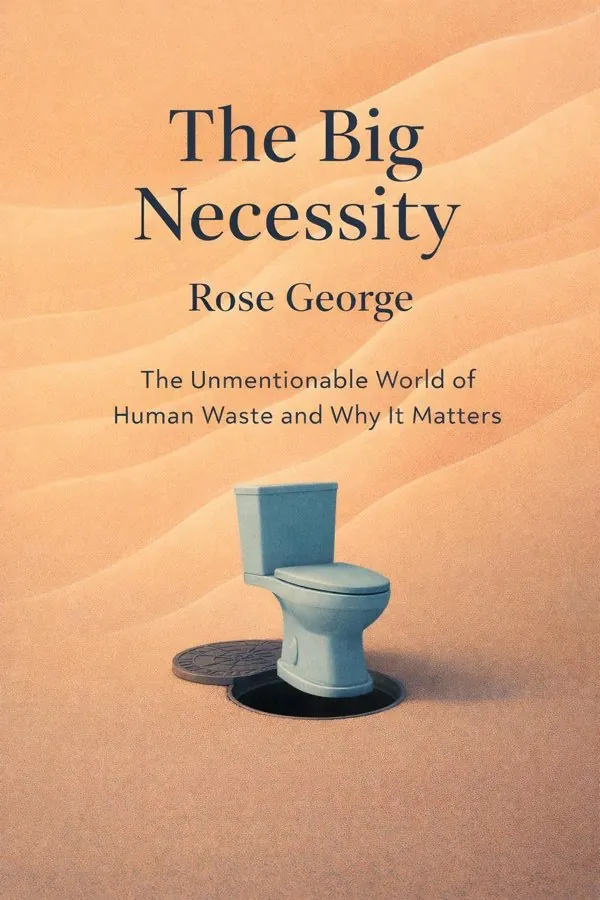
The Big Necessity: The Unmentionable World of Human Waste and Why It Matters: Summary & Key Insights
by Rose George
 10 min7 chaptersAudio available
What Is The Big Necessity: The Unmentionable World of Human Waste and Why It Matters About?
The Big Necessity: The Unmentionable World of Human Waste and Why It Matters by Rose George is a environment book spanning 7 pages. An exploration of the global sanitation crisis, this book investigates how societies handle human waste and the profound implications for health, dignity, and development. Rose George travels from sewage systems in developed cities to open defecation in impoverished regions, revealing the hidden infrastructure and politics behind one of humanity’s most basic needs.
This FizzRead summary covers all 7 key chapters of The Big Necessity: The Unmentionable World of Human Waste and Why It Matters in approximately 10 minutes, distilling the most important ideas, arguments, and takeaways from Rose George's work. Also available as an audio summary and Key Quotes Podcast.
The Big Necessity: The Unmentionable World of Human Waste and Why It Matters
An exploration of the global sanitation crisis, this book investigates how societies handle human waste and the profound implications for health, dignity, and development. Rose George travels from sewage systems in developed cities to open defecation in impoverished regions, revealing the hidden infrastructure and politics behind one of humanity’s most basic needs.
Who Should Read The Big Necessity: The Unmentionable World of Human Waste and Why It Matters?
This book is perfect for anyone interested in environment and looking to gain actionable insights in a short read. Whether you're a student, professional, or lifelong learner, the key ideas from The Big Necessity: The Unmentionable World of Human Waste and Why It Matters by Rose George will help you think differently.
- ✓Readers who enjoy environment and want practical takeaways
- ✓Professionals looking to apply new ideas to their work and life
- ✓Anyone who wants the core insights of The Big Necessity: The Unmentionable World of Human Waste and Why It Matters in just 10 minutes
Want the full summary?
Get instant access to this book summary and 100K+ more with Fizz Moment.
Get Free SummaryAvailable on App Store • Free to download
Key Chapters
Sanitation is as old as civilization itself. When I visited archaeological sites and spoke with historians, I learned how ancient societies solved what we now call the sanitation problem long before modern plumbing existed. The Indus Valley civilization, for example, had remarkably advanced waste systems: brick-built drains ran beneath streets, and houses had private bathing areas connected to covered sewers. The Romans, so famed for their aqueducts, were just as sophisticated in taking waste away. Their public latrines weren’t merely for practical use — they were social spaces, where ideas and gossip flowed as freely as the water beneath.
But the progress wasn’t linear. With the collapse of Rome came centuries of decline. Medieval Europe reverted to primitive waste habits, dumping refuse into city streets and rivers. Epidemics followed — not just the Black Death, but countless lesser plagues that thrived on filth. Meanwhile, other cultures pursued different paths. In Edo-period Japan, waste wasn’t waste at all — it was valuable fertilizer, collected and sold. The difference between these histories isn’t just technological, it’s cultural: how societies perceive human waste determines how they manage it.
In industrial London, the problem reached crisis when the River Thames became a giant cesspool. The “Great Stink” of 1858 forced Parliament to act, commissioning Joseph Bazalgette’s monumental sewer network — a feat of engineering that not only removed waste but transformed public health. Yet that lesson, that sanitation saves lives, didn’t spread everywhere equally. Wealthy nations invested in sewers, while colonies and poorer regions were left behind. The modern world inherited this uneven legacy: flushing toilets in one place, disease and indignity in another.
When we speak of progress, we often draw the line between rich and poor nations in terms of GDP, education, or access to technology. But one of the most telling divides is the toilet divide. In places like Japan, toilets talk, sing, and even heat seats; in other regions, 2.6 billion people still defecate in fields, streets, or slums. This divide isn’t just about infrastructure — it’s about values and visibility.
I met officials who told me sanitation doesn’t win elections; voters don’t cheer for sewers. Yet the consequences of neglect are staggering. In urban slums from Nairobi to Dhaka, people pay per use for filthy communal toilets or risk violence going outdoors. In rural areas, women wait until nightfall to relieve themselves, risking assault in the dark. Meanwhile, affluent societies flush and forget, consuming vast amounts of clean water in the process.
The divide persists because waste management exists in a policy blind spot. It’s too mundane for most aid agencies and too expensive for governments focused on immediate returns. But toilets are the foundation of development. Without sanitation, clean water projects are undone, schooling attendance drops — especially for girls — and hospitals fill with preventable illnesses. Whenever I saw these realities firsthand, I was reminded of the absurd imbalance of our priorities: we can mobilize billions to fight terrorism or build the next smartphone, yet struggle to provide every person a simple latrine.
+ 5 more chapters — available in the FizzRead app
All Chapters in The Big Necessity: The Unmentionable World of Human Waste and Why It Matters
About the Author
Rose George is a British journalist and author known for her investigative works on overlooked global issues, including sanitation, shipping, and blood donation. She writes for major publications such as The Guardian and The New York Times.
Get This Summary in Your Preferred Format
Read or listen to the The Big Necessity: The Unmentionable World of Human Waste and Why It Matters summary by Rose George anytime, anywhere. FizzRead offers multiple formats so you can learn on your terms — all free.
Available formats: App · Audio · PDF · EPUB — All included free with FizzRead
Download The Big Necessity: The Unmentionable World of Human Waste and Why It Matters PDF and EPUB Summary
Key Quotes from The Big Necessity: The Unmentionable World of Human Waste and Why It Matters
“Sanitation is as old as civilization itself.”
“When we speak of progress, we often draw the line between rich and poor nations in terms of GDP, education, or access to technology.”
Frequently Asked Questions about The Big Necessity: The Unmentionable World of Human Waste and Why It Matters
The Big Necessity: The Unmentionable World of Human Waste and Why It Matters by Rose George is a environment book that explores key ideas across 7 chapters. An exploration of the global sanitation crisis, this book investigates how societies handle human waste and the profound implications for health, dignity, and development. Rose George travels from sewage systems in developed cities to open defecation in impoverished regions, revealing the hidden infrastructure and politics behind one of humanity’s most basic needs.
You Might Also Like

A Life on Our Planet: My Witness Statement and a Vision for the Future
David Attenborough
10 min
A Sky Full Of Birds
Matt Merritt
10 min
Carbon Zero: Imagining Cities That Can Save the Planet
Alex Steffen
10 min
Eaarth: Making a Life on a Tough New Planet
Bill McKibben
10 min
The Social Contract and Environmental Governance
Various Editors
10 min
The Wild Places
Robert Macfarlane
10 minBrowse by Category
Ready to read The Big Necessity: The Unmentionable World of Human Waste and Why It Matters?
Get the full summary and 100K+ more books with Fizz Moment.