
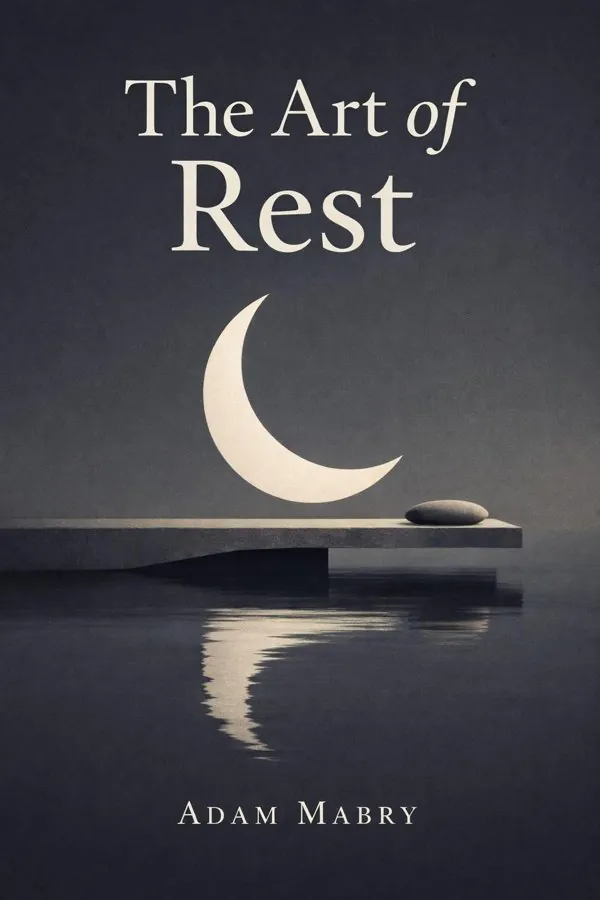
The Art of Rest: Faith to Hit Pause in a World That Never Stops: Summary & Key Insights
by Adam Mabry
 10 min10 chaptersAudio available
What Is The Art of Rest: Faith to Hit Pause in a World That Never Stops About?
The Art of Rest: Faith to Hit Pause in a World That Never Stops by Adam Mabry is a eastern_wisdom book spanning 10 pages. In this book, pastor and author Adam Mabry explores the biblical and practical importance of rest in a culture obsessed with productivity. He argues that true rest is not laziness but an act of faith, trusting that God is in control even when we stop working. Through theological reflection and personal insight, Mabry invites readers to rediscover Sabbath as a rhythm of grace that restores the soul and reorients life toward what truly matters.
This FizzRead summary covers all 10 key chapters of The Art of Rest: Faith to Hit Pause in a World That Never Stops in approximately 10 minutes, distilling the most important ideas, arguments, and takeaways from Adam Mabry's work. Also available as an audio summary and Key Quotes Podcast.
The Art of Rest: Faith to Hit Pause in a World That Never Stops
In this book, pastor and author Adam Mabry explores the biblical and practical importance of rest in a culture obsessed with productivity. He argues that true rest is not laziness but an act of faith, trusting that God is in control even when we stop working. Through theological reflection and personal insight, Mabry invites readers to rediscover Sabbath as a rhythm of grace that restores the soul and reorients life toward what truly matters.
Who Should Read The Art of Rest: Faith to Hit Pause in a World That Never Stops?
This book is perfect for anyone interested in eastern_wisdom and looking to gain actionable insights in a short read. Whether you're a student, professional, or lifelong learner, the key ideas from The Art of Rest: Faith to Hit Pause in a World That Never Stops by Adam Mabry will help you think differently.
- ✓Readers who enjoy eastern_wisdom and want practical takeaways
- ✓Professionals looking to apply new ideas to their work and life
- ✓Anyone who wants the core insights of The Art of Rest: Faith to Hit Pause in a World That Never Stops in just 10 minutes
Want the full summary?
Get instant access to this book summary and 100K+ more with Fizz Moment.
Get Free SummaryAvailable on App Store • Free to download
Key Chapters
Many of us confuse rest with leisure, idleness, or even laziness. But biblical rest is entirely different—it’s not about doing nothing, it's about doing the right kind of nothing. When I pause, I’m making a declaration: God is God, and I am not. This simple distinction changes everything. In the biblical imagination, rest is not passive—it’s profoundly active faith. Every time we rest in obedience, we’re choosing to trust that the universe doesn’t collapse when we stop working.
This idea strikes at the core of our cultural idols. Productivity promises meaning; busyness impersonates purpose. Yet, the Bible consistently shows that rest redefines both. When God commanded Israel to rest on the seventh day, it wasn’t because they had earned it, but because they were His people. Rest was a sign of identity, not output. In my own experience, this truth became painfully clear: my never-ending labor was a symptom of fear—the fear that if I stopped, I’d lose relevance, opportunity, or control. But in Scripture, rest functions like a trust exercise. It stretches our faith to believe that God’s provision continues even when we cease effort.
Biblical rest also involves a rhythm—a cycle of work and restoration that shapes character. When we resist that rhythm, we are effectively declaring independence from God, living as if we are self-made. But when we embrace rest, we align our hearts to His sovereignty. In the end, rest is not the absence of movement but the presence of peace. It’s grace embodied. It’s faith lived out not in words but in stillness.
In the opening chapters of Genesis, before sin entered the story, there was rest. That detail alone should arrest our attention. God created for six days—and then He rested. Not because He was exhausted, but because His work was complete. Rest, therefore, was not a repair mechanism but a celebration of wholeness. It was woven into the DNA of creation as a rhythm for all living beings.
When I meditate on this truth, I see that rest is not a human invention—it’s divine in origin. God sanctified the seventh day, setting it apart as holy, not for His sake but for ours. In this pattern, we discover that rest is an act of imitation: we are designed to bear the image of God by working and resting like Him.
The theological significance of rest becomes even greater when we consider its relational aspect. The seventh day signals that creation only finds its fulfillment in communion with the Creator. Work is good—it’s part of our purpose—but it is not ultimate. When we rest, we reorient ourselves toward the ultimate purpose of being: fellowship with God. This truth reshapes the way we see success, ambition, and achievement. Productivity ceases to be a measure of identity; intimacy with God becomes the pulse of life.
In Genesis, rest precedes the fall, reminding us that rest is part of perfection. To neglect it is to live out of sync with divine intention. It’s a distortion of the created order. That’s why many of us feel so disoriented in perpetual hustle—we’re living against the grain of grace.
+ 8 more chapters — available in the FizzRead app
All Chapters in The Art of Rest: Faith to Hit Pause in a World That Never Stops
About the Author
Adam Mabry is a pastor, author, and church planter based in Boston, Massachusetts. He leads Aletheia Church and writes on topics of faith, culture, and spiritual formation. His works often focus on helping modern believers live out ancient truths in a fast-paced world.
Get This Summary in Your Preferred Format
Read or listen to the The Art of Rest: Faith to Hit Pause in a World That Never Stops summary by Adam Mabry anytime, anywhere. FizzRead offers multiple formats so you can learn on your terms — all free.
Available formats: App · Audio · PDF · EPUB — All included free with FizzRead
Download The Art of Rest: Faith to Hit Pause in a World That Never Stops PDF and EPUB Summary
Key Quotes from The Art of Rest: Faith to Hit Pause in a World That Never Stops
“Many of us confuse rest with leisure, idleness, or even laziness.”
“In the opening chapters of Genesis, before sin entered the story, there was rest.”
Frequently Asked Questions about The Art of Rest: Faith to Hit Pause in a World That Never Stops
The Art of Rest: Faith to Hit Pause in a World That Never Stops by Adam Mabry is a eastern_wisdom book that explores key ideas across 10 chapters. In this book, pastor and author Adam Mabry explores the biblical and practical importance of rest in a culture obsessed with productivity. He argues that true rest is not laziness but an act of faith, trusting that God is in control even when we stop working. Through theological reflection and personal insight, Mabry invites readers to rediscover Sabbath as a rhythm of grace that restores the soul and reorients life toward what truly matters.
You Might Also Like
A New Earth
Eckhart Tolle
10 min
The Daily Stoic
Ryan Holiday, Stephen Hanselman
10 min
Buddhism: Plain and Simple
Steve Hagen
10 min
Enchiridion
Epictetus
10 min
The Book of Tea
Kakuzō Okakura
10 min
The Light We Give: How Sikh Wisdom Can Transform Your Life
Simran Jeet Singh
10 minBrowse by Category
Ready to read The Art of Rest: Faith to Hit Pause in a World That Never Stops?
Get the full summary and 100K+ more books with Fizz Moment.