
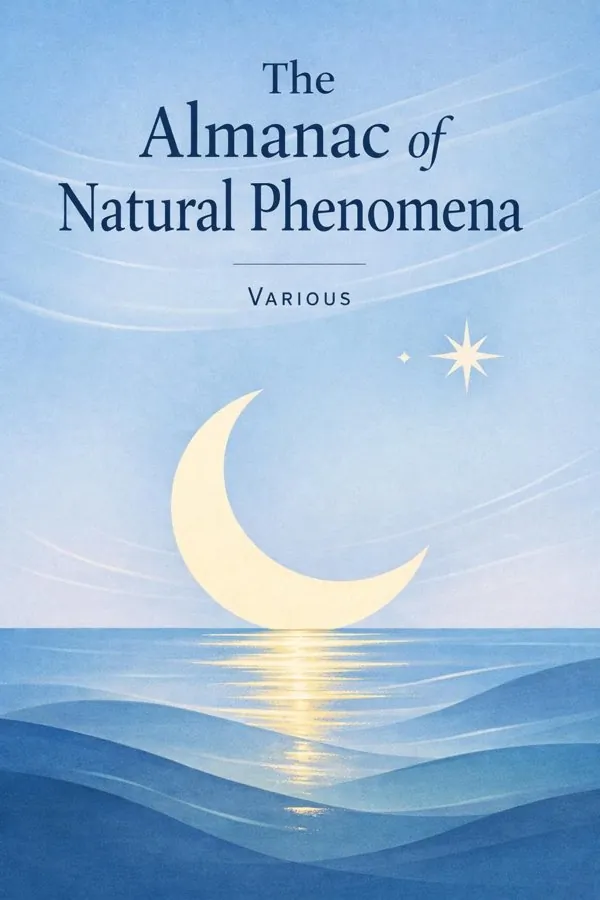
The Almanac of Natural Phenomena: Summary & Key Insights
by Various
 10 min5 chaptersAudio available
What Is The Almanac of Natural Phenomena About?
The Almanac of Natural Phenomena by Various is a popular_sci book spanning 5 pages. Originally published in the United States, *The Almanac of Natural Phenomena* is a compendium of seasonal observations, astronomical events, weather patterns, and ecological cycles. It provides readers with month-by-month insights into the natural world, blending scientific facts with folklore and traditional wisdom about nature’s rhythms.
This FizzRead summary covers all 5 key chapters of The Almanac of Natural Phenomena in approximately 10 minutes, distilling the most important ideas, arguments, and takeaways from Various's work. Also available as an audio summary and Key Quotes Podcast.
The Almanac of Natural Phenomena
Originally published in the United States, *The Almanac of Natural Phenomena* is a compendium of seasonal observations, astronomical events, weather patterns, and ecological cycles. It provides readers with month-by-month insights into the natural world, blending scientific facts with folklore and traditional wisdom about nature’s rhythms.
Who Should Read The Almanac of Natural Phenomena?
This book is perfect for anyone interested in popular_sci and looking to gain actionable insights in a short read. Whether you're a student, professional, or lifelong learner, the key ideas from The Almanac of Natural Phenomena by Various will help you think differently.
- ✓Readers who enjoy popular_sci and want practical takeaways
- ✓Professionals looking to apply new ideas to their work and life
- ✓Anyone who wants the core insights of The Almanac of Natural Phenomena in just 10 minutes
Want the full summary?
Get instant access to this book summary and 100K+ more with Fizz Moment.
Get Free SummaryAvailable on App Store • Free to download
Key Chapters
January begins in the deep aftermath of the solstice. The sun hangs low, its arcs short and hesitant, as if reluctant to return. In the northern hemisphere, this is a season of stillness—fields frozen, streams crystallized, and most creatures drawn inward. As the authorial voice of this Almanac, I invite readers to look not for absence, but for resilience. Beneath that crust of ice, life waits. Burrowing mammals dream in insulated dens; frogs and turtles settle under mud; bears drift in suspended rhythm with the darkness.
Above, however, there is brilliance. The winter sky unveils its most dazzling architecture. Orion commands the night, his belt clearly etched against the black dome; Taurus and the Pleiades flicker close beside him. Sirius, the Dog Star, burns as the brightest beacon visible from Earth, reminding us that even in cold, there is luminescence. January’s air, crisp and dry, offers unrivaled clarity—ideal for stargazing and for rediscovering the celestial map our ancestors read by.
Human custom has always answered this austerity with observance. Folklore speaks of January’s storms as nature’s cleansing rituals, the Earth’s method for clearing old energy before renewal begins. It is a time for reflection on endurance—the way frost both stills and protects, the way the long night nourishes unseen processes destined to rise when warmth returns. As we note the sun’s gradually increasing presence, we discern hope nested within restraint. The year has awakened, though softly, and the first chapter of nature’s story recommences.
February carries a quiet tension—a month balanced between frost and thaw. Days lengthen almost imperceptibly, yet creatures notice before we do. The chickadee begins its mating calls; willow buds swell with soft promise; rivers groan under melting ice. This is when one learns the patience of seasonal change. Nature does not switch from one state to another abruptly; transition itself is alive and observable.
Astronomically, February marks the continuation of winter constellations, yet the dawn sky begins to hint at spring formations. In folktales and farmer’s lore, this is the season of prediction: will winter hold, or yield? Groundhog Day, derived from older European weather superstitions, symbolizes our enduring desire to measure the future through signs of the natural present. And indeed, ancient farmers watched the behavior of animals as reliable indicators of temperature trends.
So February teaches discernment. It reminds us that beneath apparent stillness, there is motion—a slow loosening of the icy grip, an invitation to notice subtleties: the pitch of sunlight, the tone of winds. To observe February well is to practice attentiveness, which is the first requirement of understanding nature.
+ 3 more chapters — available in the FizzRead app
All Chapters in The Almanac of Natural Phenomena
About the Author
Get This Summary in Your Preferred Format
Read or listen to the The Almanac of Natural Phenomena summary by Various anytime, anywhere. FizzRead offers multiple formats so you can learn on your terms — all free.
Available formats: App · Audio · PDF · EPUB — All included free with FizzRead
Download The Almanac of Natural Phenomena PDF and EPUB Summary
Key Quotes from The Almanac of Natural Phenomena
“January begins in the deep aftermath of the solstice.”
“February carries a quiet tension—a month balanced between frost and thaw.”
Frequently Asked Questions about The Almanac of Natural Phenomena
The Almanac of Natural Phenomena by Various is a popular_sci book that explores key ideas across 5 chapters. Originally published in the United States, *The Almanac of Natural Phenomena* is a compendium of seasonal observations, astronomical events, weather patterns, and ecological cycles. It provides readers with month-by-month insights into the natural world, blending scientific facts with folklore and traditional wisdom about nature’s rhythms.
More by Various


You Might Also Like

Structures: Or Why Things Don"t Fall Down
J.E. Gordon
10 min
The Road to Wigan Pier
George Orwell
10 min
Bonk: The Curious Coupling of Science and Sex
Mary Roach
10 min
First Bite: How We Learn to Eat
Bee Wilson
10 min
In Pursuit Of The Unknown: 17 Equations That Changed The World
Ian Stewart
10 min
Napoleon's Buttons: 17 Molecules That Changed History
Penny Le Couteur and Jay Burreson
10 minBrowse by Category
Ready to read The Almanac of Natural Phenomena?
Get the full summary and 100K+ more books with Fizz Moment.