
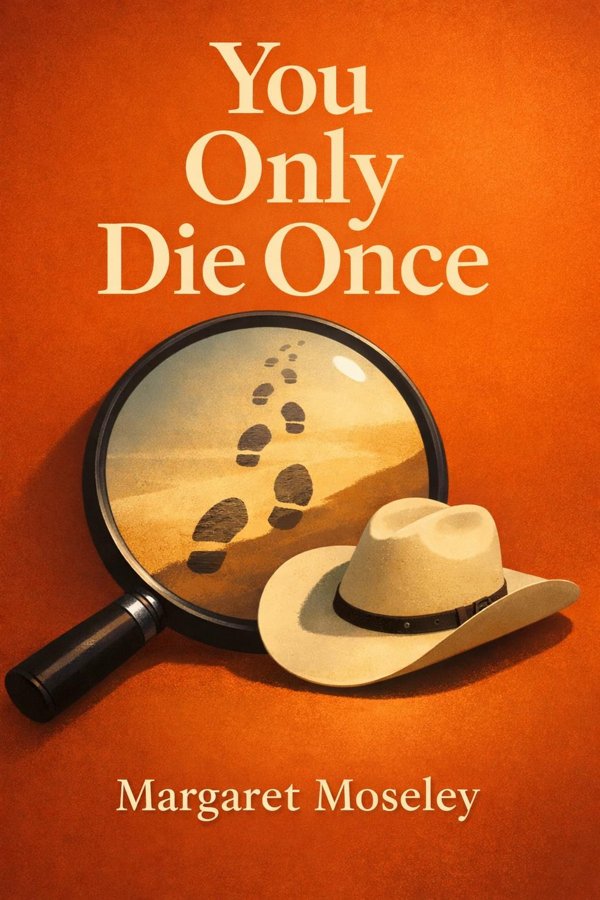
You Only Die Once: Summary & Key Insights
by Various
 10 min9 chaptersAudio available
Key Takeaways from You Only Die Once
The most compelling mysteries begin with a simple truth: ordinary life can collapse without warning.
A mystery becomes more memorable when the investigator is imperfect in interesting ways.
Fear is easier to bear when laughter is allowed into the room.
In close-knit settings, everyone knows something and no one knows everything.
A good mystery reminds us that what people show is rarely the whole truth.
What Is You Only Die Once About?
You Only Die Once by Various is a fiction book. You Only Die Once is a playful, fast-moving mystery that blends comedy, suspense, and small-town eccentricity into an entertaining whodunit. At the center of the story is Honey Huckleberry, an offbeat and appealing heroine whose ordinary life takes a sharp turn when she stumbles into a murder and finds herself drawn into an investigation she never asked for. What follows is not just a search for a killer, but a comic journey through misunderstandings, hidden motives, local gossip, and the unpredictable logic of human behavior. The novel matters because it shows how mystery fiction can do more than deliver clues and surprises; it can also offer warmth, wit, and a sharp eye for the absurdity of everyday life. Its humor makes the suspense more enjoyable, while its mystery gives structure and momentum to the comedy. Credited to Various, the work reflects a storytelling tradition that values entertainment, clever plotting, and memorable characters over heavy moralizing. For readers who enjoy quirky heroines, amusing dialogue, and crime stories that never take themselves too seriously, You Only Die Once delivers a satisfying mix of laughter and intrigue.
This FizzRead summary covers all 9 key chapters of You Only Die Once in approximately 10 minutes, distilling the most important ideas, arguments, and takeaways from Various's work. Also available as an audio summary and Key Quotes Podcast.
You Only Die Once
You Only Die Once is a playful, fast-moving mystery that blends comedy, suspense, and small-town eccentricity into an entertaining whodunit. At the center of the story is Honey Huckleberry, an offbeat and appealing heroine whose ordinary life takes a sharp turn when she stumbles into a murder and finds herself drawn into an investigation she never asked for. What follows is not just a search for a killer, but a comic journey through misunderstandings, hidden motives, local gossip, and the unpredictable logic of human behavior. The novel matters because it shows how mystery fiction can do more than deliver clues and surprises; it can also offer warmth, wit, and a sharp eye for the absurdity of everyday life. Its humor makes the suspense more enjoyable, while its mystery gives structure and momentum to the comedy. Credited to Various, the work reflects a storytelling tradition that values entertainment, clever plotting, and memorable characters over heavy moralizing. For readers who enjoy quirky heroines, amusing dialogue, and crime stories that never take themselves too seriously, You Only Die Once delivers a satisfying mix of laughter and intrigue.
Who Should Read You Only Die Once?
This book is perfect for anyone interested in fiction and looking to gain actionable insights in a short read. Whether you're a student, professional, or lifelong learner, the key ideas from You Only Die Once by Various will help you think differently.
- ✓Readers who enjoy fiction and want practical takeaways
- ✓Professionals looking to apply new ideas to their work and life
- ✓Anyone who wants the core insights of You Only Die Once in just 10 minutes
Want the full summary?
Get instant access to this book summary and 100K+ more with Fizz Moment.
Get Free SummaryAvailable on App Store • Free to download
Key Chapters
The most compelling mysteries begin with a simple truth: ordinary life can collapse without warning. In You Only Die Once, Honey Huckleberry is not introduced as a hardened detective or criminal mastermind, but as a quirky, recognizable person whose routine is interrupted by a murder. That disruption is what gives the story its energy. The crime does not occur in some distant, abstract world; it bursts into familiar spaces and forces everyday people to confront fear, suspicion, and uncertainty.
This idea matters because the novel turns the classic mystery premise into something more accessible and human. Honey’s involvement feels accidental rather than professional, which makes her reactions more believable and often more humorous. She is not equipped with formal investigative skills, yet she has something just as useful: curiosity, instinct, and a refusal to ignore what seems wrong. The book suggests that people do not need expertise to notice inconsistencies or to recognize when appearances fail to match reality.
In practical terms, this is one reason humorous mysteries are so satisfying. Readers can imagine themselves in Honey’s position, navigating awkward conversations, reading social cues, and trying to figure out who is lying. The investigation grows out of observation rather than theatrical heroism. A strange glance, a contradictory comment, or an overrehearsed alibi becomes meaningful because it intrudes on the normal rhythm of life.
The actionable takeaway is simple: pay attention when something feels out of place. Whether in fiction or in life, meaningful truths often reveal themselves when the ordinary suddenly stops making sense.
A mystery becomes more memorable when the investigator is imperfect in interesting ways. Honey Huckleberry stands out because she is not a conventional sleuth. Her charm comes from her eccentricity, her wit, and the way she approaches danger with a mixture of confusion, bravery, and stubborn persistence. Rather than flattening her into a puzzle-solving machine, the story lets her personality shape the investigation.
This matters because detective fiction often relies on highly competent protagonists who dominate every scene. Honey offers a different model. Her quirks make her vulnerable, but they also make her observant. People underestimate unusual individuals, and that gives her access to truths others miss. Humor also works in her favor. A heroine who can laugh, blunder, or improvise under pressure feels more alive than one who simply announces solutions.
The book uses Honey’s perspective to transform the mystery into a character-driven experience. Readers are not only curious about who committed the crime; they are also invested in how Honey will respond, what she will misread, and how she will eventually make sense of the chaos. Her personality becomes a method of detection. What looks like comic disorder often hides a pattern of intuitive intelligence.
This has a broader application for readers and writers alike. People solve problems differently, and unconventional styles can be strengths rather than weaknesses. Someone who notices emotional tone, social oddities, or hidden tension may understand a situation better than a purely analytical observer.
The actionable takeaway: do not dismiss your distinctive traits when facing a problem. What makes you unconventional may be exactly what helps you see what others overlook.
Fear is easier to bear when laughter is allowed into the room. One of the strongest features of You Only Die Once is its use of humor to complement, rather than weaken, the mystery. The comic tone does not erase the seriousness of murder, but it changes how readers experience tension. Instead of becoming grim or oppressive, the story stays lively, unpredictable, and emotionally varied.
This balance is difficult to achieve, which is why it stands out. Humor in a mystery can come from dialogue, social awkwardness, mistaken assumptions, exaggerated personalities, or the heroine’s own running commentary. In Honey Huckleberry’s case, the comedy seems rooted in perspective: the absurdity of people’s behavior becomes visible when she is forced to navigate lies, secrets, and local drama. The result is a story that entertains on multiple levels at once.
Humor also reveals character. A person’s jokes, evasions, or overreactions can expose guilt, insecurity, arrogance, or fear. In that sense, comedy is not merely decoration; it becomes another investigative tool. An uncomfortable laugh at the wrong moment or a ridiculous attempt to seem innocent can tell Honey as much as a physical clue. Readers enjoy the amusement, but they are also being guided toward the truth.
In everyday life, humor often functions the same way. It can defuse tension, create connection, or uncover hidden motives. People frequently reveal themselves most clearly when they are trying to be casual or clever.
The actionable takeaway is to treat humor as information, not just entertainment. In any tense situation, notice what people joke about, what they avoid, and how laughter changes the mood. It may reveal more than direct questioning ever could.
In close-knit settings, everyone knows something and no one knows everything. That dynamic gives You Only Die Once much of its intrigue. The world surrounding Honey Huckleberry appears socially connected, conversational, and perhaps even cozy on the surface, yet those same qualities make it fertile ground for gossip, hidden resentments, and carefully managed appearances. A murder in such a setting is never just a private event; it disturbs the whole social fabric.
This idea is central to many successful mysteries because a small community creates both intimacy and pressure. People watch one another. Histories overlap. Old grudges linger beneath polite exchanges. The detective, especially an accidental one like Honey, must sort through a flood of half-truths, rumors, and biased recollections. Every person may have a story, but every story may be shaped by loyalty, jealousy, or fear.
The novel likely uses this social density to increase both comedy and suspense. In a tightly connected environment, even a casual conversation can feel loaded. One person’s attempt to protect a friend may accidentally hide a clue. Another person’s appetite for gossip may uncover useful information but also distort it. Honey’s challenge is not merely to find facts, but to understand the relationships that give those facts meaning.
This has a practical parallel in real life. In any group, whether a neighborhood, office, or family, information is filtered through emotion and status. Understanding a problem often requires more than gathering statements; it requires seeing who benefits from a certain version of events.
The actionable takeaway: when trying to understand a conflict, map the relationships, not just the facts. Secrets thrive where loyalties, fears, and reputations are tightly intertwined.
A good mystery reminds us that what people show is rarely the whole truth. You Only Die Once appears to rely on this classic principle, using charm, eccentricity, and comic misdirection to keep both Honey Huckleberry and the reader off balance. Characters are likely to present themselves one way while concealing motives, histories, or anxieties that matter far more than their outward behavior suggests.
This is what makes mystery fiction intellectually satisfying. Solving a murder is not only about identifying who had opportunity; it is about piercing performance. In everyday social life, people constantly manage impressions. They appear helpful, harmless, offended, calm, or innocent for reasons that may have little to do with what they actually think or feel. A skilled sleuth learns to notice the gap between what is said and what is signaled.
Honey’s likely strength is not technical analysis but social reading. She has to notice when someone is too polished, too eager, or oddly detached. She must distinguish true grief from theatrical grief, sincere confusion from strategic confusion. The book’s humor probably sharpens this process by making exaggerated performances easier to spot. A person trying too hard to seem normal often becomes suspiciously memorable.
Readers can apply the same lesson outside fiction. In negotiations, friendships, or workplaces, surface impressions matter, but they should never be accepted uncritically. The important question is not simply, “What is this person doing?” but “Why are they presenting themselves this way now?”
The actionable takeaway: trust observation more than appearance. When someone’s words, tone, and actions do not align, pay attention to the inconsistency. That gap is often where the truth begins.
Many heroes are defined not by fearlessness but by their refusal to stop asking questions. Honey Huckleberry embodies that kind of courage. She is not drawn into murder because she seeks danger for its own sake. Instead, her curiosity pushes her forward even when the situation becomes uncomfortable, risky, or socially inconvenient. The novel suggests that investigation begins with a moral impulse: the sense that confusion should be clarified and wrongdoing should not be ignored.
This idea gives the story emotional weight beneath its comic tone. Curiosity is often treated as light or even intrusive, but in mysteries it becomes a serious virtue. Without it, lies remain unchallenged and crimes remain hidden. Honey’s determination to understand what happened transforms her from a bystander into an agent of truth. Her courage lies in persistence, especially when others would prefer silence, distraction, or easy explanations.
The practical power of this idea is broad. In many real situations, from personal misunderstandings to workplace problems, the most useful questions are the ones people hesitate to ask. Why did this happen? Who gains from this version of events? What is being left unsaid? Curiosity does not guarantee safety, but it often prevents manipulation.
The novel likely shows that curiosity must be paired with judgment. Asking questions recklessly can create trouble, while asking them thoughtfully can expose vital patterns. Honey’s growth as a heroine may involve learning when to press, when to pause, and whom to trust.
The actionable takeaway is to treat curiosity as disciplined courage. When something important does not add up, resist the temptation to look away. Ask one more question, follow one more clue, and let careful attention guide your next move.
People often mistake disorder for incompetence. One of the pleasures of a humorous mystery is discovering that what first appears chaotic may actually conceal insight. Honey Huckleberry’s quirks, detours, and comic mishaps may make her seem like an unlikely problem-solver, yet those very qualities help her uncover what more obvious thinkers miss. The novel plays with this contrast to challenge assumptions about what intelligence looks like.
This matters because readers are trained to recognize certain detective stereotypes: the cold logician, the polished professional, the intuitive genius. Honey seems to disrupt those categories. She may stumble socially, react unpredictably, or move through situations in a way that appears improvised. But intelligence in mystery fiction is not just about deduction. It can also mean noticing emotional undercurrents, resisting misleading narratives, and staying flexible when facts shift.
Comic chaos is especially useful because it disarms others. Suspects may relax around someone they do not perceive as threatening. They may talk too much, reveal too much, or fail to hide their reactions. Honey’s apparent unpredictability becomes an investigative advantage. The story invites readers to look beneath style and examine substance.
This lesson applies beyond fiction. Many capable people are overlooked because they do not fit expected models of seriousness or efficiency. A person who seems unconventional, humorous, or informal may still be deeply perceptive. In group settings, underestimating such people is often a costly mistake.
The actionable takeaway: evaluate people by the quality of their observations and results, not by whether they match a familiar image of competence. Insight often arrives in unexpected forms, and the person who seems least traditional may understand the situation best.
The best whodunits are not just stories to consume; they are puzzles to participate in. You Only Die Once likely invites readers to track clues, test suspicions, and reinterpret earlier scenes as the truth gradually comes into view. This active engagement is one reason mystery fiction remains so enduringly popular. Readers are not passive witnesses to events; they become mental partners in the investigation.
The novel’s humorous tone probably makes that participation even more enjoyable. Comedy can distract, misdirect, and sharpen attention all at once. A funny exchange may hide a clue. A ridiculous scene may carry important information. The reader must stay alert not only to dramatic developments but also to subtle inconsistencies buried in casual moments. Honey Huckleberry’s perspective likely amplifies this experience, since her observations may be insightful even when the situation feels absurd.
Active reading means asking useful questions throughout the book. Who benefits from the crime? Which details are repeated? Which reactions seem too strong or too weak? Why does a seemingly minor character matter? These habits increase suspense because the reader feels personally involved in solving the mystery. Even when the final reveal surprises, it should feel earned rather than arbitrary.
There is a broader benefit here as well. Mystery fiction strengthens analytical reading by training attention, memory, and inference. It reminds us that meaning often depends on details we almost ignored the first time.
The actionable takeaway: read mysteries like a detective. Keep track of motives, contradictions, and recurring details. Whether or not you solve the case before the ending, approaching the story actively will make the book far richer and more satisfying.
Lighthearted fiction is sometimes dismissed as if pleasure and substance were opposites. You Only Die Once argues otherwise through its very structure. It is entertaining because it is funny, brisk, and filled with colorful characters, yet it also explores serious human realities: deception, fear, social performance, and the difficulty of knowing whom to trust. The book’s achievement lies in delivering these themes without becoming heavy or self-important.
This balance matters because readers often turn to fiction for both escape and understanding. A humorous mystery provides narrative pleasure while still reflecting recognizable truths about human behavior. People lie for many reasons. Communities create stories to protect themselves. Individuals are rarely as simple as they seem. Justice depends not only on evidence, but on someone caring enough to pursue it. These insights are folded into the entertainment rather than presented as formal lessons.
Honey Huckleberry’s role is crucial here. Through her, the novel can remain comic and accessible while still guiding readers through moral complexity. She brings warmth to the investigation and makes the darker elements of the story easier to approach. That combination is one reason cozy and comic mysteries have such enduring appeal: they acknowledge danger without surrendering to cynicism.
For readers, this offers an important reminder. Books do not need to be solemn to be meaningful. Enjoyment can deepen attention, and laughter can make difficult truths more memorable.
The actionable takeaway: do not underestimate fiction that feels fun. Ask what it reveals beneath the wit and suspense. Some of the most lasting insights come from stories that entertain first and instruct almost by stealth.
All Chapters in You Only Die Once
About the Author
“Various” is typically used as a collective or placeholder author credit when a work is associated with multiple contributors, uncertain cataloging, or metadata that does not clearly identify a single writer. In cases like You Only Die Once, the label may reflect an editorial, anthology, or archival listing rather than a conventional named author profile. Although this makes the personal biography less specific than usual, the storytelling itself still reflects the qualities readers care about most: engaging plot construction, memorable characterization, and a confident sense of tone. The work belongs to a lively tradition of mystery fiction that blends intrigue with humor and invites readers to solve a crime alongside an appealing, unconventional protagonist. For exact authorship details, readers should consult the particular edition or publisher record for the book.
Get This Summary in Your Preferred Format
Read or listen to the You Only Die Once summary by Various anytime, anywhere. FizzRead offers multiple formats so you can learn on your terms — all free.
Available formats: App · Audio · PDF · EPUB — All included free with FizzRead
Download You Only Die Once PDF and EPUB Summary
Key Quotes from You Only Die Once
“The most compelling mysteries begin with a simple truth: ordinary life can collapse without warning.”
“A mystery becomes more memorable when the investigator is imperfect in interesting ways.”
“Fear is easier to bear when laughter is allowed into the room.”
“In close-knit settings, everyone knows something and no one knows everything.”
“A good mystery reminds us that what people show is rarely the whole truth.”
Frequently Asked Questions about You Only Die Once
You Only Die Once by Various is a fiction book that explores key ideas across 9 chapters. You Only Die Once is a playful, fast-moving mystery that blends comedy, suspense, and small-town eccentricity into an entertaining whodunit. At the center of the story is Honey Huckleberry, an offbeat and appealing heroine whose ordinary life takes a sharp turn when she stumbles into a murder and finds herself drawn into an investigation she never asked for. What follows is not just a search for a killer, but a comic journey through misunderstandings, hidden motives, local gossip, and the unpredictable logic of human behavior. The novel matters because it shows how mystery fiction can do more than deliver clues and surprises; it can also offer warmth, wit, and a sharp eye for the absurdity of everyday life. Its humor makes the suspense more enjoyable, while its mystery gives structure and momentum to the comedy. Credited to Various, the work reflects a storytelling tradition that values entertainment, clever plotting, and memorable characters over heavy moralizing. For readers who enjoy quirky heroines, amusing dialogue, and crime stories that never take themselves too seriously, You Only Die Once delivers a satisfying mix of laughter and intrigue.
More by Various


You Might Also Like



Browse by Category
Ready to read You Only Die Once?
Get the full summary and 100K+ more books with Fizz Moment.