
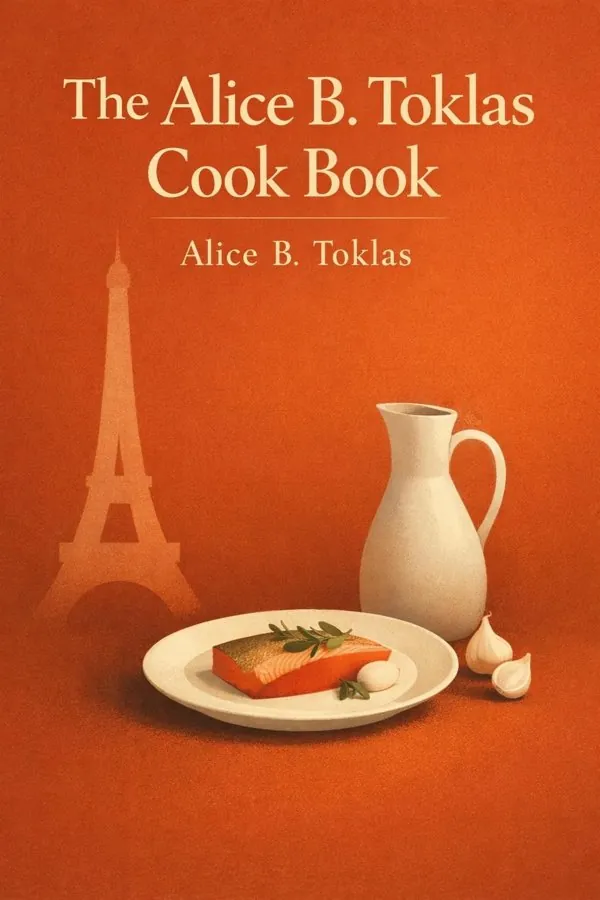
The Alice B. Toklas Cook Book: Summary & Key Insights
 10 min10 chaptersAudio available
Key Takeaways from The Alice B. Toklas Cook Book
A recipe can reveal a biography more honestly than a formal memoir.
Great cultural movements often depend on ordinary acts of domestic care.
Good cooking begins long before the stove; it begins with the eye, the hand, and the willingness to choose carefully.
Recipes are rarely solitary creations; they travel through friendships.
Scarcity tests character, and Toklas’s wartime chapters show how cooking can become a discipline of endurance.
What Is The Alice B. Toklas Cook Book About?
The Alice B. Toklas Cook Book by Alice B. Toklas is a biographies book spanning 10 pages. The Alice B. Toklas Cook Book is far more than a collection of recipes. First published in 1954, it is a memoir disguised as a cookbook, a portrait of modernist Paris told through menus, markets, friendships, war years, and domestic rituals. Alice B. Toklas writes not as a trained chef but as a hostess, observer, and keeper of one of the twentieth century’s most remarkable households: the home she shared with Gertrude Stein. Through descriptions of provincial French dishes, dinner parties with artists, and the daily labor of feeding people well, Toklas reveals how food can preserve a culture and a life. What makes the book enduring is its unusual authority. Toklas stood at the center of an extraordinary social world, yet she writes from the kitchen, the dining room, and the market stall rather than from the podium. Her perspective turns grand literary history into lived experience. Painters, poets, servants, and farmers all enter the story through ingredients and meals. The result is a deeply personal book about taste, memory, companionship, and survival. It matters because it shows that cooking is never only about food; it is also about identity, hospitality, love, and the art of making a life.
This FizzRead summary covers all 10 key chapters of The Alice B. Toklas Cook Book in approximately 10 minutes, distilling the most important ideas, arguments, and takeaways from Alice B. Toklas's work. Also available as an audio summary and Key Quotes Podcast.
The Alice B. Toklas Cook Book
The Alice B. Toklas Cook Book is far more than a collection of recipes. First published in 1954, it is a memoir disguised as a cookbook, a portrait of modernist Paris told through menus, markets, friendships, war years, and domestic rituals. Alice B. Toklas writes not as a trained chef but as a hostess, observer, and keeper of one of the twentieth century’s most remarkable households: the home she shared with Gertrude Stein. Through descriptions of provincial French dishes, dinner parties with artists, and the daily labor of feeding people well, Toklas reveals how food can preserve a culture and a life.
What makes the book enduring is its unusual authority. Toklas stood at the center of an extraordinary social world, yet she writes from the kitchen, the dining room, and the market stall rather than from the podium. Her perspective turns grand literary history into lived experience. Painters, poets, servants, and farmers all enter the story through ingredients and meals. The result is a deeply personal book about taste, memory, companionship, and survival. It matters because it shows that cooking is never only about food; it is also about identity, hospitality, love, and the art of making a life.
Who Should Read The Alice B. Toklas Cook Book?
This book is perfect for anyone interested in biographies and looking to gain actionable insights in a short read. Whether you're a student, professional, or lifelong learner, the key ideas from The Alice B. Toklas Cook Book by Alice B. Toklas will help you think differently.
- ✓Readers who enjoy biographies and want practical takeaways
- ✓Professionals looking to apply new ideas to their work and life
- ✓Anyone who wants the core insights of The Alice B. Toklas Cook Book in just 10 minutes
Want the full summary?
Get instant access to this book summary and 100K+ more with Fizz Moment.
Get Free SummaryAvailable on App Store • Free to download
Key Chapters
A recipe can reveal a biography more honestly than a formal memoir. That insight lies at the heart of The Alice B. Toklas Cook Book. Toklas does not simply list ingredients and methods; she lets dishes open doors into childhood, travel, friendship, love, and loss. Her early life in California appears not as isolated fact but as contrast: a practical upbringing that makes her later immersion in French domestic culture feel transformative. When she meets Gertrude Stein, the event becomes not only a romantic and intellectual turning point but also the beginning of a shared household in which menus, routines, and guests define a way of living.
This approach changes what a cookbook can be. Instead of presenting cooking as technical mastery, Toklas presents it as a map of experience. The dishes matter because they are attached to moments: the first meal in a new home, the tastes of a market town, the careful feeding of guests whose conversation might shape an artistic age. The personal and culinary become inseparable.
For readers, this offers a practical lesson in how memory works. Family recipes, favorite cafés, holiday dishes, and everyday meals can become a record of who we are. You do not need to be a great chef to preserve a meaningful life through food. Writing down where a dish came from, who loved it, and when it was served can turn an ordinary recipe into family history.
Actionable takeaway: choose one meaningful recipe from your own life and write its story alongside the ingredients and method. Preserve the memory, not just the meal.
Great cultural movements often depend on ordinary acts of domestic care. Toklas shows that the famous Stein salon in Paris was not sustained by ideas alone. It depended on rooms being prepared, meals being planned, guests being welcomed, and conversations being gently held together by the atmosphere of the household. Their apartment became a gathering place for artists and writers including Picasso, Matisse, Braque, Hemingway, and many others, but the salon’s magic emerged from more than celebrity. It came from attention to environment.
Toklas makes clear that hospitality is a creative act. The salon was full of argument, wit, rivalry, and artistic discovery, yet it rested on the quiet labor of arranging comfort. Paintings on the walls, food on the table, and timing in service all shaped the experience. In this sense, Toklas was not merely assisting culture from the margins; she was helping stage the conditions under which culture flourished.
This idea has modern application. Creative communities today still need hosts, organizers, and people who make others feel welcome enough to think freely. A book club, dinner gathering, workplace retreat, or artistic circle succeeds not only because of brilliant participants but because someone tends to the details that lower social tension and invite openness.
Toklas’s portrait also expands our definition of influence. Cultural history often celebrates the loudest voices. Her book reminds us to value the invisible work that allows those voices to be heard.
Actionable takeaway: if you want richer conversations in your own circle, focus on hospitality first. Create a setting where people feel relaxed, fed, and genuinely received.
Good cooking begins long before the stove; it begins with the eye, the hand, and the willingness to choose carefully. Toklas’s loving descriptions of French markets are among the book’s most instructive passages because they show that ingredients are not anonymous commodities. They come from seasons, regions, skilled producers, and local traditions. Shopping, in her world, is not a chore to complete quickly but an education in quality and proportion.
She notices vegetables at their peak, the difference between ordinary and exceptional butter, the pride of merchants, and the rhythms of local availability. These details reveal a philosophy of cooking grounded in respect. You do not force dishes onto ingredients; you allow ingredients to suggest the dish. A beautiful mushroom, ripe melon, or fresh fish asks for restraint rather than showiness. Simplicity, then, is not lack of ambition but evidence of discernment.
Modern readers can apply this without living in rural France. Whether at a farmers’ market, neighborhood grocer, or supermarket, paying attention to seasonality and freshness often improves meals more than buying expensive gadgets or following complicated recipes. Planning dinner around what looks best instead of around rigid expectation can reduce waste and improve flavor. It also reconnects cooking to place and time.
Toklas teaches that market life is part of cultural literacy. To know a community, one should know what it grows, sells, values, and eats. Food shopping becomes a form of listening.
Actionable takeaway: on your next grocery trip, choose one ingredient that is clearly in season and build a simple meal around it instead of beginning with a fixed recipe.
Scarcity tests character, and Toklas’s wartime chapters show how cooking can become a discipline of endurance. During the difficult years of war in France, meals were shaped by shortages, uncertainty, bureaucracy, and fear. Under such conditions, food loses any illusion of being merely decorative. It becomes practical, political, and moral. To feed oneself and others under rationing is to practice ingenuity, patience, and courage.
Toklas records these experiences without sentimentalizing them. She reveals how habits formed in easier times had to adapt. Ingredients disappeared. Substitutions became necessary. Familiar comforts could no longer be assumed. Yet the effort to maintain meals, however modest, helped preserve dignity and structure. Cooking in wartime became a way of refusing collapse.
This section broadens the meaning of hospitality. True hospitality is not entertaining in abundance; it is sustaining people when resources are limited. The cook’s task becomes one of stewardship: stretching supplies, preventing waste, improvising with care, and understanding that nourishment includes emotional steadiness as well as calories.
The practical relevance remains strong. Even outside war, households face periods of stress, inflation, illness, or disruption. Toklas suggests that a resilient kitchen is built on adaptability: knowing basic techniques, valuing simple ingredients, and avoiding dependence on luxury. Creativity thrives when ego is removed.
Her example also invites gratitude. Readers in times of plenty can better appreciate food by understanding how fragile normal abundance can be.
Actionable takeaway: build a short list of simple, nourishing meals you can prepare from basic pantry ingredients so your kitchen remains calm and functional during difficult periods.
The most memorable food is often the least pretentious. Toklas’s affection for provincial French cooking reflects her understanding that regional cuisine expresses local wisdom accumulated over generations. These dishes are not designed to impress through novelty; they endure because they fit the land, the climate, and the people who make them. A countryside stew, tart, roast, or soup carries the logic of necessity transformed into pleasure.
By drawing attention to provincial meals, Toklas resists the idea that culinary value belongs only to urban sophistication or restaurant formality. She honors the intelligence of ordinary cooking: knowing how to use inexpensive cuts, preserve seasonal produce, flavor dishes deeply without excess, and feed many people with grace. Such recipes teach economy and beauty at once.
This perspective remains useful today, especially in a food culture often driven by trend and display. Regional traditions remind us that good meals are usually built on coherence rather than complexity. Ingredients that naturally belong together, prepared with patience, often outlast fashionable experimentation. Learning one cuisine deeply can be more rewarding than sampling many superficially.
Toklas also implies that travel should involve tasting local identity, not merely consuming famous dishes. To understand a place, one should eat what its people actually cook. Home cooks can extend this by exploring the culinary traditions of their own region or ancestry.
Provincial cooking becomes, in her hands, an ethic of humility. One does not conquer food; one learns from it.
Actionable takeaway: choose one regional or family dish with simple ingredients and learn to cook it well, focusing on technique, patience, and the history behind it.
Sometimes one eccentric recipe can overshadow an entire book. The famous hashish fudge recipe associated with Toklas has achieved a notoriety far beyond the rest of The Alice B. Toklas Cook Book, and that fact is revealing. Readers are often drawn to what is scandalous, unusual, or mythic, yet Toklas’s work as a whole is richer and more varied than this single moment of culinary legend.
The recipe’s fame says as much about public appetite as it does about the book itself. It turned Toklas into a pop-cultural reference point, sometimes reducing her to a symbol of bohemian daring. But within the larger context of the cookbook, the episode reflects something more nuanced: the permeability of art, experimentation, pleasure, and social life in the circles she inhabited. The avant-garde did not stop at painting or writing; it touched manners, tastes, conversation, and occasionally appetite in more provocative ways.
For modern readers, the lesson is about reading beyond reputation. A widely quoted passage, controversial detail, or viral anecdote can distort an author’s larger achievement. Toklas deserves attention not because of one notorious confection but because she transformed domestic life into literature.
There is also a broader cultural point here. Novelty can attract readers, but substance keeps a work alive. The book’s longevity rests on voice, memory, and atmosphere, not on shock value.
Actionable takeaway: when approaching any classic, set aside the one detail everyone mentions and ask what the full work is actually trying to preserve, argue, or celebrate.
Distance from the city can sharpen one’s understanding of what truly matters. Toklas’s reflections on life in the French countryside reveal a shift in tempo and value. Away from the intensity of Paris, domestic life becomes more visibly tied to seasons, local labor, gardens, and the rhythms of weather. Meals arise less from cosmopolitan abundance and more from close attention to what the land and nearby communities provide.
In these passages, Toklas demonstrates that refinement does not depend on glamour. Rural life can produce a deeper form of elegance: practical, observant, and rooted in repetition. The countryside demands planning, preservation, and adaptability, but it also offers intimacy with ingredients and with daily routine. Cooking becomes part of a larger pattern of living rather than a separate performance.
This idea has enduring appeal in a fast, urbanized age. Many people feel detached from the origins of food and from the pace required to enjoy it. Toklas suggests that a meaningful domestic life often depends on slowing down enough to notice. Washing vegetables from a garden, planning around ripeness, or preparing food for a quiet shared meal can restore a sense of order and proportion.
Her country scenes also reveal that simplicity can be restorative after cultural intensity. A life rich in thought still needs grounding in practical tasks.
Actionable takeaway: create one small ritual that reconnects your meals to natural rhythm, such as cooking seasonally each week, growing herbs, or setting aside one unhurried meal prepared from scratch.
After a great loss, everyday objects become bearers of history. In the later parts of the book, following Gertrude Stein’s death, Toklas’s recollections acquire a different emotional tone. Food and domestic routine no longer serve only as records of lively companionship; they become ways of keeping the dead present. The kitchen, table, and remembered menu take on the work of mourning.
This is one of the book’s most moving contributions. Toklas shows that grief is often held not in dramatic declarations but in repeated habits, remembered preferences, and the continued use of shared forms. To make a dish once loved by someone absent is to experience both continuity and ache. Memory is sustained through practice.
Her writing also reveals how deeply partnership can shape identity. Because her life with Stein was built through shared rooms, travel, entertaining, and daily meals, bereavement is not abstract. It enters the ordinary spaces of life. The cookbook form becomes unexpectedly powerful here because recipes preserve what conversation cannot. They allow the past to be enacted, not merely recalled.
Readers can learn from Toklas’s refusal to separate emotional life from domestic life. Cooking for remembrance can be meaningful in families, friendships, and communities. Memorial meals, inherited dishes, and holiday traditions all help transform grief into continuity.
The broader message is tender but practical: care does not end when a person dies. It can continue in the forms they shaped with us.
Actionable takeaway: honor someone you miss by preparing a dish connected to them and sharing the story of that connection with others at the table.
To welcome someone well is to say that their presence matters. Across Toklas’s book, hospitality emerges as more than social polish or culinary performance. It is an ethical practice grounded in attentiveness, generosity, and memory. A host notices what guests need, what they enjoy, how they might be put at ease, and what kind of atmosphere encourages conversation, pleasure, and belonging.
Toklas’s understanding of hospitality is especially compelling because it includes both beauty and labor. Good hosting involves menus, timing, shopping, serving, and cleanup, but these tasks are not merely logistical. They express values. To prepare food thoughtfully is to create a temporary world in which people can feel recognized. Her dinner tables become sites where art, friendship, and personality can unfold more fully.
This idea remains highly relevant. In a distracted age, hospitality can counter superficial connection. Inviting people into one’s home, cooking a simple meal, or even preparing tea with care can foster depth that digital contact rarely achieves. Importantly, Toklas shows that hospitality does not require extravagance. What matters most is intention: suitability, warmth, and the sense that one has prepared for another person with pleasure rather than obligation.
Her example also teaches self-forgetfulness. The best host is not trying to impress but to make others feel at ease. In that sense, hospitality becomes a moral art of decentering oneself.
Actionable takeaway: the next time you host, choose one thoughtful detail tailored to your guests’ comfort or delight, and let that act of attention define the gathering more than the menu’s complexity.
All Chapters in The Alice B. Toklas Cook Book
About the Author
Alice Babette Toklas was born in San Francisco in 1877 and became an important literary figure through both her own writing and her lifelong partnership with Gertrude Stein. After moving to Paris in the early twentieth century, Toklas became part of the celebrated modernist circle that gathered around Stein, hosting artists and writers who would define an era. Though she spent much of her life in the role of companion, organizer, and hostess, Toklas developed a distinct literary voice marked by wit, precision, and warmth. She is best known for The Alice B. Toklas Cook Book, a unique blend of memoir and recipes that captures expatriate life, French food, and the domestic side of artistic history. Toklas died in 1967, leaving a lasting legacy in both culinary and literary culture.
Get This Summary in Your Preferred Format
Read or listen to the The Alice B. Toklas Cook Book summary by Alice B. Toklas anytime, anywhere. FizzRead offers multiple formats so you can learn on your terms — all free.
Available formats: App · Audio · PDF · EPUB — All included free with FizzRead
Download The Alice B. Toklas Cook Book PDF and EPUB Summary
Key Quotes from The Alice B. Toklas Cook Book
“A recipe can reveal a biography more honestly than a formal memoir.”
“Great cultural movements often depend on ordinary acts of domestic care.”
“Good cooking begins long before the stove; it begins with the eye, the hand, and the willingness to choose carefully.”
“Recipes are rarely solitary creations; they travel through friendships.”
“Scarcity tests character, and Toklas’s wartime chapters show how cooking can become a discipline of endurance.”
Frequently Asked Questions about The Alice B. Toklas Cook Book
The Alice B. Toklas Cook Book by Alice B. Toklas is a biographies book that explores key ideas across 10 chapters. The Alice B. Toklas Cook Book is far more than a collection of recipes. First published in 1954, it is a memoir disguised as a cookbook, a portrait of modernist Paris told through menus, markets, friendships, war years, and domestic rituals. Alice B. Toklas writes not as a trained chef but as a hostess, observer, and keeper of one of the twentieth century’s most remarkable households: the home she shared with Gertrude Stein. Through descriptions of provincial French dishes, dinner parties with artists, and the daily labor of feeding people well, Toklas reveals how food can preserve a culture and a life. What makes the book enduring is its unusual authority. Toklas stood at the center of an extraordinary social world, yet she writes from the kitchen, the dining room, and the market stall rather than from the podium. Her perspective turns grand literary history into lived experience. Painters, poets, servants, and farmers all enter the story through ingredients and meals. The result is a deeply personal book about taste, memory, companionship, and survival. It matters because it shows that cooking is never only about food; it is also about identity, hospitality, love, and the art of making a life.
You Might Also Like

An American Marriage
Tayari Jones
10 min
Benjamin Franklin: An American Life
Walter Isaacson
10 min
I Know Why The Caged Bird Sings
Maya Angelou
10 min
Long Walk to Freedom
Nelson Mandela
10 min
Persepolis
Marjane Satrapi
10 min
Surely You're Joking, Mr. Feynman!
Richard P. Feynman
10 minBrowse by Category
Ready to read The Alice B. Toklas Cook Book?
Get the full summary and 100K+ more books with Fizz Moment.