
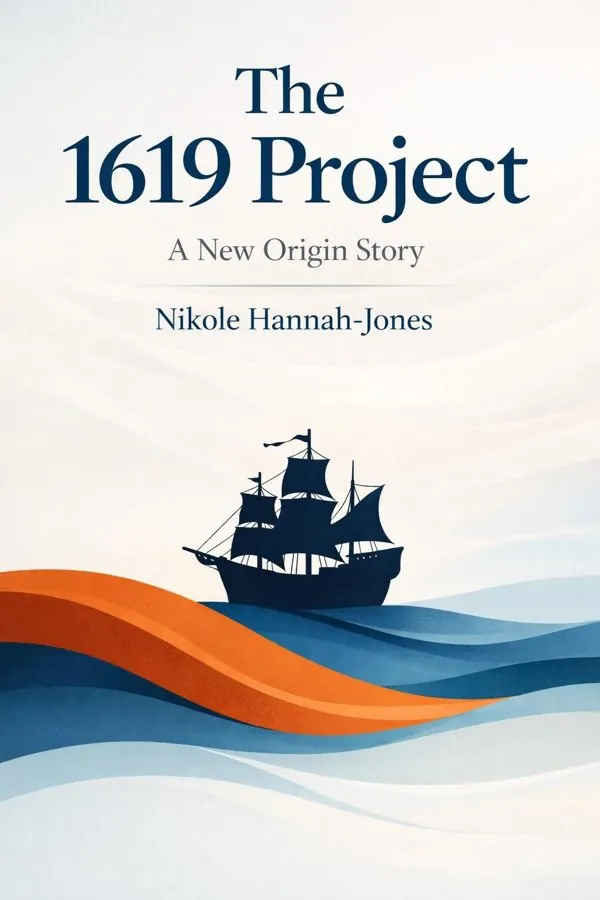
The 1619 Project: A New Origin Story: Summary & Key Insights
 10 min13 chaptersAudio available
What Is The 1619 Project: A New Origin Story About?
The 1619 Project: A New Origin Story by Nikole Hannah-Jones is a world_history book spanning 13 pages. The 1619 Project: A New Origin Story es una antología de ensayos y poesía que amplía el trabajo original del proyecto 1619, publicado por The New York Times Magazine. El libro reúne dieciocho ensayos y treinta y seis poemas que exploran el legado de la esclavitud y su impacto en la sociedad estadounidense contemporánea, abordando temas como la democracia, la economía, la educación y la cultura. Dirigido por la periodista ganadora del Premio Pulitzer Nikole Hannah-Jones, el volumen busca reexaminar la historia de Estados Unidos a partir del año 1619, cuando los primeros africanos esclavizados llegaron a Virginia.
This FizzRead summary covers all 13 key chapters of The 1619 Project: A New Origin Story in approximately 10 minutes, distilling the most important ideas, arguments, and takeaways from Nikole Hannah-Jones's work. Also available as an audio summary and Key Quotes Podcast.
The 1619 Project: A New Origin Story
The 1619 Project: A New Origin Story es una antología de ensayos y poesía que amplía el trabajo original del proyecto 1619, publicado por The New York Times Magazine. El libro reúne dieciocho ensayos y treinta y seis poemas que exploran el legado de la esclavitud y su impacto en la sociedad estadounidense contemporánea, abordando temas como la democracia, la economía, la educación y la cultura. Dirigido por la periodista ganadora del Premio Pulitzer Nikole Hannah-Jones, el volumen busca reexaminar la historia de Estados Unidos a partir del año 1619, cuando los primeros africanos esclavizados llegaron a Virginia.
Who Should Read The 1619 Project: A New Origin Story?
This book is perfect for anyone interested in world_history and looking to gain actionable insights in a short read. Whether you're a student, professional, or lifelong learner, the key ideas from The 1619 Project: A New Origin Story by Nikole Hannah-Jones will help you think differently.
- ✓Readers who enjoy world_history and want practical takeaways
- ✓Professionals looking to apply new ideas to their work and life
- ✓Anyone who wants the core insights of The 1619 Project: A New Origin Story in just 10 minutes
Want the full summary?
Get instant access to this book summary and 100K+ more with Fizz Moment.
Get Free SummaryAvailable on App Store • Free to download
Key Chapters
To understand 1619’s significance, we must first confront the vast machinery of the transatlantic slave trade. This was not a marginal or accidental phenomenon—it was the cornerstone of the emerging Atlantic economy and the engine that propelled European colonial powers into global dominance. The capture and forced migration of millions of Africans created the labor foundations for plantations in the Americas, and the profits extracted from their bodies financed empires.
In the American colonies, particularly in Virginia, the enslaved quickly became indispensable to the production of tobacco, which would sustain the colonial economy for generations. Over time, the social fabric of the colonies began to organize itself around the institution of slavery. Laws hardened racial hierarchies, elevating whiteness as the badge of freedom and defining Blackness as synonymous with bondage. The paradox became glaring: a society that proclaimed liberty for some was constructing unfreedom for many.
By looking back at this early period, we see how slavery predated and shaped every American institution that followed. The legal codes, property systems, and ideas about race and labor that emerged in the seventeenth century persist, often in altered forms, to this day. Understanding that continuity is essential if we are to make sense of contemporary inequalities.
The founding ideal of America—that all men are created equal—was born in hypocrisy. The same men who declared independence from tyranny maintained it over others. Yet, paradoxically, it was the enslaved and their descendants who would force this nation to live up to its own rhetoric.
In this way, Black Americans became democracy’s most ardent defenders, even when the state denied them its protections. Their struggles—on plantations, in courts, in the streets—exposed the gap between American ideals and practices. Every major expansion of democracy in this country has come, directly or indirectly, through Black resistance: from abolition to Reconstruction, from the civil rights movement to present-day activism for voting rights and criminal justice reform.
In retelling the story of American democracy through this lens, I argue that the true founders of our democratic project were not those who wrote lofty words on parchment, but those who forced those words to be true through sacrifice and relentless demands for justice.
+ 11 more chapters — available in the FizzRead app
All Chapters in The 1619 Project: A New Origin Story
About the Author
Nikole Hannah-Jones es una periodista estadounidense reconocida por su trabajo en temas de raza y desigualdad. Es autora principal del proyecto 1619 de The New York Times Magazine, por el cual recibió el Premio Pulitzer. Su trabajo se centra en la historia y las consecuencias contemporáneas de la esclavitud y la segregación en Estados Unidos.
Get This Summary in Your Preferred Format
Read or listen to the The 1619 Project: A New Origin Story summary by Nikole Hannah-Jones anytime, anywhere. FizzRead offers multiple formats so you can learn on your terms — all free.
Available formats: App · Audio · PDF · EPUB — All included free with FizzRead
Download The 1619 Project: A New Origin Story PDF and EPUB Summary
Key Quotes from The 1619 Project: A New Origin Story
“To understand 1619’s significance, we must first confront the vast machinery of the transatlantic slave trade.”
“The founding ideal of America—that all men are created equal—was born in hypocrisy.”
Frequently Asked Questions about The 1619 Project: A New Origin Story
The 1619 Project: A New Origin Story by Nikole Hannah-Jones is a world_history book that explores key ideas across 13 chapters. The 1619 Project: A New Origin Story es una antología de ensayos y poesía que amplía el trabajo original del proyecto 1619, publicado por The New York Times Magazine. El libro reúne dieciocho ensayos y treinta y seis poemas que exploran el legado de la esclavitud y su impacto en la sociedad estadounidense contemporánea, abordando temas como la democracia, la economía, la educación y la cultura. Dirigido por la periodista ganadora del Premio Pulitzer Nikole Hannah-Jones, el volumen busca reexaminar la historia de Estados Unidos a partir del año 1619, cuando los primeros africanos esclavizados llegaron a Virginia.
You Might Also Like
The Age of Capital
Eric Hobsbawm
10 min
The Gulag Archipelago
Aleksandr Solzhenitsyn
10 min
Jerusalem: The Biography
Simon Sebag Montefiore
10 min
The Anglo-Saxons
James Campbell
10 min
The Boer War
Thomas Pakenham
10 min
The Industrial Revolutionaries: The Making of the Modern World 1776–1914
Gavin Weightman
10 minBrowse by Category
Ready to read The 1619 Project: A New Origin Story?
Get the full summary and 100K+ more books with Fizz Moment.