
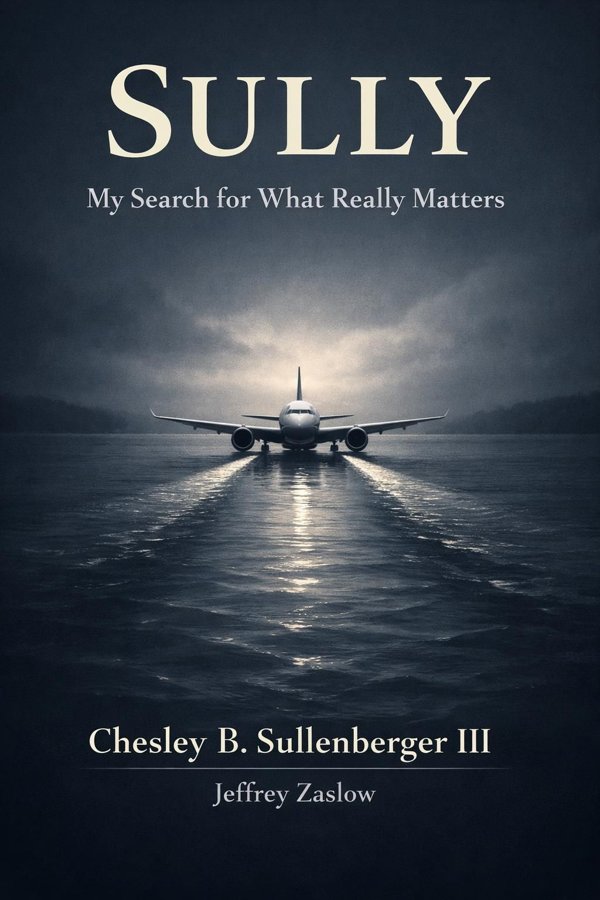
Sully: My Search for What Really Matters: Summary & Key Insights
by Chesley B. Sullenberger III, Jeffrey Zaslow
 10 min9 chaptersAudio available
Key Takeaways from Sully: My Search for What Really Matters
Character is formed long before it is tested in public.
Confidence without discipline is dangerous, especially when lives depend on your judgment.
Professionalism is most visible in the details people rarely notice.
In moments of crisis, reality moves faster than fear.
A crisis does not end when the immediate danger passes.
What Is Sully: My Search for What Really Matters About?
Sully: My Search for What Really Matters by Chesley B. Sullenberger III, Jeffrey Zaslow is a biographies book spanning 7 pages. Sully: My Search for What Really Matters is far more than the story of a famous emergency landing. In this memoir, Captain Chesley “Sully” Sullenberger reflects on the habits, values, and life experiences that prepared him to guide US Airways Flight 1549 safely onto the Hudson River after a catastrophic bird strike in January 2009. What emerges is not a tale of sudden heroism, but a powerful argument that excellence under pressure is built slowly through discipline, humility, training, and character. The book matters because it reframes a headline-making event as the product of a lifetime of preparation. Sullenberger shows how family values, military rigor, aviation professionalism, and a deep respect for safety all shaped his choices in the cockpit. He also explores the emotional and moral dimensions of leadership: responsibility for others, calm in uncertainty, and integrity after public praise. Sullenberger writes with unusual authority. As a veteran pilot, Air Force-trained aviator, airline captain, and safety advocate, he brings technical credibility and lived wisdom to every page. Co-written with journalist Jeffrey Zaslow, the memoir is both inspiring and deeply practical for anyone interested in leadership, resilience, and what really matters when everything is on the line.
This FizzRead summary covers all 9 key chapters of Sully: My Search for What Really Matters in approximately 10 minutes, distilling the most important ideas, arguments, and takeaways from Chesley B. Sullenberger III, Jeffrey Zaslow's work. Also available as an audio summary and Key Quotes Podcast.
Sully: My Search for What Really Matters
Sully: My Search for What Really Matters is far more than the story of a famous emergency landing. In this memoir, Captain Chesley “Sully” Sullenberger reflects on the habits, values, and life experiences that prepared him to guide US Airways Flight 1549 safely onto the Hudson River after a catastrophic bird strike in January 2009. What emerges is not a tale of sudden heroism, but a powerful argument that excellence under pressure is built slowly through discipline, humility, training, and character.
The book matters because it reframes a headline-making event as the product of a lifetime of preparation. Sullenberger shows how family values, military rigor, aviation professionalism, and a deep respect for safety all shaped his choices in the cockpit. He also explores the emotional and moral dimensions of leadership: responsibility for others, calm in uncertainty, and integrity after public praise.
Sullenberger writes with unusual authority. As a veteran pilot, Air Force-trained aviator, airline captain, and safety advocate, he brings technical credibility and lived wisdom to every page. Co-written with journalist Jeffrey Zaslow, the memoir is both inspiring and deeply practical for anyone interested in leadership, resilience, and what really matters when everything is on the line.
Who Should Read Sully: My Search for What Really Matters?
This book is perfect for anyone interested in biographies and looking to gain actionable insights in a short read. Whether you're a student, professional, or lifelong learner, the key ideas from Sully: My Search for What Really Matters by Chesley B. Sullenberger III, Jeffrey Zaslow will help you think differently.
- ✓Readers who enjoy biographies and want practical takeaways
- ✓Professionals looking to apply new ideas to their work and life
- ✓Anyone who wants the core insights of Sully: My Search for What Really Matters in just 10 minutes
Want the full summary?
Get instant access to this book summary and 100K+ more with Fizz Moment.
Get Free SummaryAvailable on App Store • Free to download
Key Chapters
Character is formed long before it is tested in public. One of the book’s most important insights is that Sully’s composure on Flight 1549 did not begin in the cockpit; it began in childhood. Growing up in Denison, Texas, he was shaped by a culture that prized honesty, responsibility, modesty, and doing a job well even when no one was watching. His father, a dentist, modeled precision and professional duty. His mother, a teacher, reinforced curiosity, discipline, and high standards. These influences created a moral framework that later became essential in aviation, where small lapses can carry enormous consequences.
Sullenberger’s early fascination with airplanes was not treated as a fantasy but as something worthy of effort and study. He learned that enthusiasm alone was not enough; mastery required patience and repetition. That lesson applies broadly. In any field, people often admire peak performance while overlooking the quiet years spent building it. Sully reminds readers that excellence is usually the cumulative result of countless ordinary choices made carefully over time.
His upbringing also gave him emotional steadiness. Because he learned to value duty over ego, he became the kind of person who could focus on the task rather than the spotlight. That distinction mattered later, when he faced both crisis and celebrity.
The broader practical lesson is simple: your future responses are being shaped by your present habits. Integrity, self-control, and competence are not emergency tools you suddenly acquire in a crisis. They are muscles developed in daily life.
Actionable takeaway: Identify three values you want to be known for under pressure, then create one small daily practice for each so your character is trained before it is tested.
Confidence without discipline is dangerous, especially when lives depend on your judgment. In recounting his years at the U.S. Air Force Academy and in military flight training, Sullenberger shows that becoming a pilot meant far more than learning to operate an aircraft. It meant entering a culture where preparation, accountability, and precision were nonnegotiable. The training was intense because the stakes were real: mistakes in aviation are unforgiving, and overconfidence can be fatal.
The Air Force years taught Sully to think systematically under stress. Procedures, checklists, simulations, and debriefs were not bureaucratic rituals; they were tools for survival. Military training also reinforced the importance of teamwork. A pilot may appear solitary, but aviation is always collaborative, relying on trust, communication, and shared standards. Learning to accept critique and continuously improve became central to his identity.
This part of the memoir also challenges the romantic image of talent. Sully was not simply born gifted. He became capable through rigorous repetition, self-examination, and the willingness to be corrected. In modern work culture, many people want rapid advancement without submitting to deep practice. Sullenberger’s experience suggests a different path: build skill through structure, invite feedback, and respect process.
There is a practical application here for leaders and professionals. Whether you are managing a team, practicing medicine, writing code, or teaching students, performance improves when systems support clear thinking. Checklists, post-project reviews, and defined standards may feel tedious, but they reduce preventable errors.
Actionable takeaway: Choose one important area of your work and create a repeatable pre-performance routine, including preparation, execution steps, and a brief review afterward to turn experience into expertise.
Professionalism is most visible in the details people rarely notice. In his airline career, Sullenberger emphasizes that safe outcomes are not created by dramatic acts but by thousands of careful decisions made long before trouble arises. Commercial aviation, at its best, is a culture of vigilance. Pilots monitor systems, study weather, communicate with crews, follow procedures, and prepare for scenarios they hope never happen. Sully’s civilian career deepened his conviction that safety is not a slogan; it is a mindset supported by habits, training, and institutional honesty.
He became increasingly aware that modern organizations can drift into complacency when success becomes routine. When flights land safely every day, people may start assuming safety is automatic rather than actively maintained. Sullenberger resists that illusion. He argues that reliability is fragile and must be protected by continuous learning. Near misses, maintenance concerns, staffing pressures, and procedural shortcuts all deserve serious attention.
This insight applies beyond aviation. In business, healthcare, engineering, and even family life, systems often fail not because of one spectacular mistake but because many small warnings were ignored. A culture of safety means encouraging people to report problems early, rewarding caution, and resisting the temptation to prioritize speed or image over sound judgment.
Sullenberger also underscores the importance of professionalism under ordinary conditions. The way a crew prepares for a normal day directly affects its ability to handle an abnormal one. Calm competence is built when standards are followed even when no crisis exists.
Actionable takeaway: In your workplace or personal routines, identify one area where “everything usually works” and ask what hidden risks are being overlooked. Create a simple habit of reviewing weak points before they become emergencies.
In moments of crisis, reality moves faster than fear. The most famous section of the memoir recounts the seconds after US Airways Flight 1549 struck a flock of geese shortly after takeoff from LaGuardia Airport. Both engines lost thrust, and the aircraft immediately became something no airline crew ever wants: a jet with almost no power over one of the most densely populated regions in the country. The miracle, as Sullenberger presents it, was not magic. It was the result of rapid assessment, cockpit teamwork, and a refusal to waste mental energy on denial.
Sully and First Officer Jeff Skiles had only moments to diagnose the situation, run what procedures they could, communicate with air traffic control, and decide whether returning to LaGuardia or diverting to Teterboro was possible. Sullenberger’s judgment that neither runway could be reached was the defining decision. He chose the Hudson River because it offered the best available path to save lives. It was not a perfect option, only the least deadly one.
A major lesson here is that good decision-making under pressure depends on accepting facts quickly. In many crises, people lose valuable time hoping reality will improve. Sullenberger instead moved from shock to action. He did not search for an ideal outcome; he searched for a viable one.
For readers, this is a powerful model. In emergencies at work or in life, we often cannot control the event itself. We can control how quickly we orient ourselves, simplify the problem, and act on what is still possible.
Actionable takeaway: When facing a high-pressure problem, ask three questions immediately: What has changed? What options remain? What action best protects the most important priority right now?
A crisis does not end when the immediate danger passes. After the aircraft landed on the Hudson, another phase of leadership began: evacuation, accountability, and care for others. Sullenberger describes how, even after the successful ditching, he remained responsible for every person on board. He and the crew worked to evacuate passengers into freezing conditions, coordinate with rescuers, and ensure that no one was left behind. One of the most memorable details is Sully walking the cabin twice to verify it was empty before exiting himself. That act reflects the deeper ethic of the book: leadership means responsibility, not status.
This section also explores the emotional aftermath. Surviving a catastrophe does not instantly produce clarity or celebration. There is shock, reflection, gratitude, and the burden of replaying events mentally. Sullenberger does not present himself as invulnerable. Instead, he shows that steadiness and humanity can coexist. A capable leader can be composed in action and still emotionally affected afterward.
The practical value of this idea is significant. In many organizations, leaders focus heavily on the decisive moment but neglect what comes next: communication, follow-up, care for people, and honest review. Yet trust is often built after the event, when people see whether leaders remain engaged once the headline moment has passed.
Sully’s conduct after the landing also illustrates servant leadership. He did not rush to claim victory. He stayed with the responsibility until the last possible moment. That is a model for managers, parents, teachers, and anyone entrusted with others’ well-being.
Actionable takeaway: After any high-stakes event, ask not only “Did we get through it?” but also “Who still needs support, confirmation, or care?” Finish the responsibility, not just the task.
True confidence welcomes examination. After Flight 1549, Sullenberger faced not only praise but also formal investigation. In aviation, every major incident is studied in detail, and rightly so. The goal is not to assign simplistic blame but to understand what happened and improve future safety. Sully describes the tension of this process, especially when simulator reconstructions initially suggested that the aircraft might have made it back to a runway. Such findings had the potential to recast a celebrated decision as an avoidable risk.
What matters in this section is Sullenberger’s commitment to truth over reputation. He respected the investigative process because he believed safety depends on honest analysis. At the same time, he insisted on the importance of realism. Simulations that begin with pilots already expecting engine failure do not capture the human delay required to perceive, diagnose, and respond in real life. When those human factors were properly included, the conclusion aligned with his judgment: returning to a runway was not realistically possible.
This episode highlights a broader leadership principle. Good systems must account for how people actually behave under stress, not how they behave in perfect hindsight. It is easy to criticize decisions after outcomes are known. It is far harder, and more useful, to evaluate decisions based on the information available in the moment.
For readers, this is an invitation to build integrity into performance reviews, project evaluations, and postmortems. Don’t ask only whether the result was good. Ask whether the reasoning was sound given the circumstances.
Actionable takeaway: In reviewing any major decision, separate outcome from process. Evaluate what was known at the time, what constraints existed, and whether the judgment was reasonable under real conditions.
People borrow calm from leaders before they borrow strategy. Throughout the memoir, Sullenberger demonstrates that leadership in a crisis is not loud, theatrical, or self-congratulatory. It is grounded, disciplined, and attentive. On Flight 1549, his brief cabin announcement, “Brace for impact,” has become famous precisely because it was clear, timely, and stripped of unnecessary emotion. In a rapidly unfolding emergency, clarity is compassion.
Sully’s leadership style rests on three pillars. First, preparation: he had spent years developing technical competence and disciplined habits. Second, communication: he coordinated effectively with Jeff Skiles, the cabin crew, and air traffic control. Third, emotional regulation: he prevented panic from spreading by remaining focused on the next essential action. This combination allowed others to perform their roles well.
The lesson extends to everyday leadership. During organizational change, family emergencies, or high-pressure projects, people often do not need grand speeches. They need reliable behavior, honest information, and a sense that someone is thinking clearly. Calm is not passivity; it is controlled energy directed toward useful action.
Sullenberger also models humility. He repeatedly credits the crew, ferry operators, first responders, trainers, and systems that contributed to the successful outcome. This refusal to center himself strengthens rather than weakens his authority. People trust leaders who recognize interdependence.
Actionable takeaway: In your next stressful situation, do three things in order: state the reality clearly, define the immediate priority, and give others one concrete next step. Calm leadership begins with simple, usable communication.
A dramatic accomplishment can clarify life, but it should not distort it. One of the memoir’s most reflective themes is that public recognition after the Hudson landing forced Sullenberger to examine what he truly valued. Fame arrived suddenly, yet he understood that applause is unstable and often shallow. The deeper rewards in life are not headlines but relationships, integrity, service, and the knowledge that one has tried to do good work for good reasons.
This is where the title becomes especially meaningful. Sully’s search for what really matters leads him back to gratitude, family, duty, and moral purpose. He values competence, but not as an ego project. Skill matters because it allows us to serve others well. He values success, but only when joined to character. He values recognition, but only if it does not eclipse the contributions of others. In a culture often obsessed with visibility, this perspective is quietly radical.
Readers can apply this insight by reconsidering how they define a meaningful life. Is success measured by status, income, and praise alone? Or by whether you are trustworthy, useful, and present for the people who depend on you? Sullenberger’s answer is clear: what endures is not the image people have of you, but the values you consistently live.
The memoir does not reject ambition. Instead, it places ambition inside a larger ethical frame. Achievement without integrity is hollow; recognition without service is fleeting.
Actionable takeaway: Write down your current definition of success, then revise it to include at least three nonpublic measures, such as trustworthiness, contribution, or quality of relationships. Use that new definition to guide your choices.
We often imagine resilience as a hidden trait revealed in hard times, but Sullenberger shows that resilience is mostly accumulated in advance. The ability to stay functional under pressure comes from preparation, life experience, emotional discipline, and a realistic acceptance of uncertainty. Sully did not become resilient because of Flight 1549; Flight 1549 revealed the resilience he had built over decades.
This idea is especially useful because it turns resilience from a vague personality quality into something trainable. Sullenberger’s life demonstrates several building blocks: competence through repetition, humility about risk, commitment to learning, and the habit of focusing on what can still be done rather than what has been lost. He also benefited from purpose. When responsibility for others is clear, it can cut through confusion and organize action.
In practical life, resilience may look less dramatic than a river landing. It may mean responding well to a job loss, health challenge, family disruption, or public setback. In those moments, prior habits matter. Do you pause before reacting? Do you gather facts? Do you communicate honestly? Do you ask for help? Do you return to principles instead of spiraling into blame?
Sullenberger’s story suggests that resilience is not fearlessness. It is the capacity to act constructively despite fear. That distinction matters because it makes resilience accessible. You do not need to eliminate emotion; you need to train your response.
Actionable takeaway: Build a personal resilience system now by strengthening one skill in each of these areas: technical competence, emotional regulation, trusted relationships, and decision-making under stress.
All Chapters in Sully: My Search for What Really Matters
About the Authors
Chesley Burnett Sullenberger III is an American retired airline captain, former U.S. Air Force fighter pilot, aviation safety expert, and author. He is best known for commanding US Airways Flight 1549, which he safely landed on the Hudson River in January 2009 after both engines failed following a bird strike. Widely respected for his calm judgment and professionalism, Sullenberger has since become a prominent advocate for aviation safety, leadership, and public service. Jeffrey Zaslow was an American journalist, columnist, and bestselling author known for co-writing deeply human memoirs and narrative nonfiction. A former Wall Street Journal writer, he brought warmth, clarity, and storytelling skill to collaborative works, helping transform personal experiences into widely accessible and memorable books.
Get This Summary in Your Preferred Format
Read or listen to the Sully: My Search for What Really Matters summary by Chesley B. Sullenberger III, Jeffrey Zaslow anytime, anywhere. FizzRead offers multiple formats so you can learn on your terms — all free.
Available formats: App · Audio · PDF · EPUB — All included free with FizzRead
Download Sully: My Search for What Really Matters PDF and EPUB Summary
Key Quotes from Sully: My Search for What Really Matters
“Character is formed long before it is tested in public.”
“Confidence without discipline is dangerous, especially when lives depend on your judgment.”
“Professionalism is most visible in the details people rarely notice.”
“In moments of crisis, reality moves faster than fear.”
“A crisis does not end when the immediate danger passes.”
Frequently Asked Questions about Sully: My Search for What Really Matters
Sully: My Search for What Really Matters by Chesley B. Sullenberger III, Jeffrey Zaslow is a biographies book that explores key ideas across 9 chapters. Sully: My Search for What Really Matters is far more than the story of a famous emergency landing. In this memoir, Captain Chesley “Sully” Sullenberger reflects on the habits, values, and life experiences that prepared him to guide US Airways Flight 1549 safely onto the Hudson River after a catastrophic bird strike in January 2009. What emerges is not a tale of sudden heroism, but a powerful argument that excellence under pressure is built slowly through discipline, humility, training, and character. The book matters because it reframes a headline-making event as the product of a lifetime of preparation. Sullenberger shows how family values, military rigor, aviation professionalism, and a deep respect for safety all shaped his choices in the cockpit. He also explores the emotional and moral dimensions of leadership: responsibility for others, calm in uncertainty, and integrity after public praise. Sullenberger writes with unusual authority. As a veteran pilot, Air Force-trained aviator, airline captain, and safety advocate, he brings technical credibility and lived wisdom to every page. Co-written with journalist Jeffrey Zaslow, the memoir is both inspiring and deeply practical for anyone interested in leadership, resilience, and what really matters when everything is on the line.
You Might Also Like

An American Marriage
Tayari Jones
10 min
Benjamin Franklin: An American Life
Walter Isaacson
10 min
I Know Why The Caged Bird Sings
Maya Angelou
10 min
Long Walk to Freedom
Nelson Mandela
10 min
Persepolis
Marjane Satrapi
10 min
Surely You're Joking, Mr. Feynman!
Richard P. Feynman
10 minBrowse by Category
Ready to read Sully: My Search for What Really Matters?
Get the full summary and 100K+ more books with Fizz Moment.