
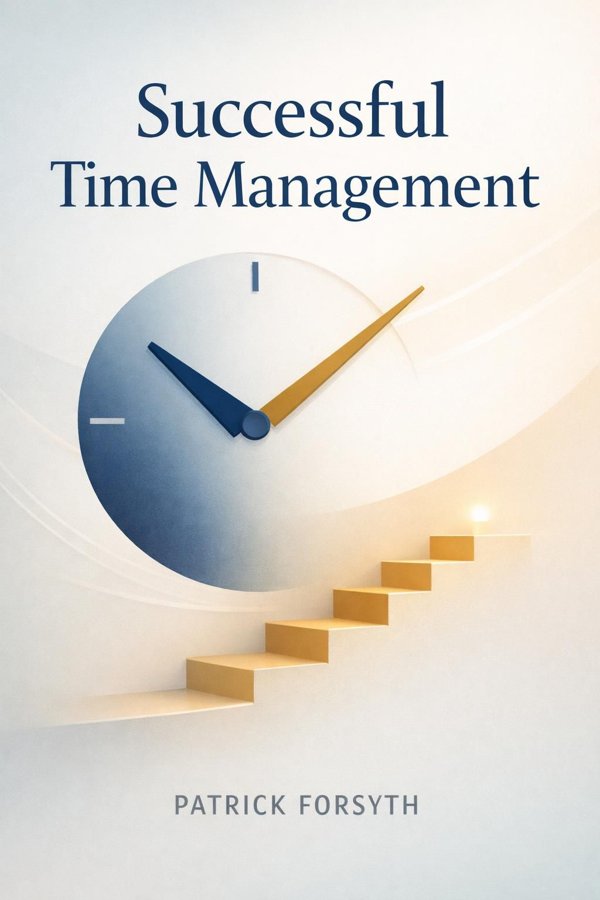
Successful Time Management: Summary & Key Insights
 10 min9 chaptersAudio available
What Is Successful Time Management About?
Successful Time Management by Patrick Forsyth is a productivity book spanning 9 pages. This practical guide provides strategies and techniques to help individuals manage their time more effectively, prioritize tasks, and increase productivity. It offers actionable advice on planning, delegation, and overcoming procrastination, aimed at professionals seeking to improve efficiency and achieve better work-life balance.
This FizzRead summary covers all 9 key chapters of Successful Time Management in approximately 10 minutes, distilling the most important ideas, arguments, and takeaways from Patrick Forsyth's work. Also available as an audio summary and Key Quotes Podcast.
Successful Time Management
This practical guide provides strategies and techniques to help individuals manage their time more effectively, prioritize tasks, and increase productivity. It offers actionable advice on planning, delegation, and overcoming procrastination, aimed at professionals seeking to improve efficiency and achieve better work-life balance.
Who Should Read Successful Time Management?
This book is perfect for anyone interested in productivity and looking to gain actionable insights in a short read. Whether you're a student, professional, or lifelong learner, the key ideas from Successful Time Management by Patrick Forsyth will help you think differently.
- ✓Readers who enjoy productivity and want practical takeaways
- ✓Professionals looking to apply new ideas to their work and life
- ✓Anyone who wants the core insights of Successful Time Management in just 10 minutes
Want the full summary?
Get instant access to this book summary and 100K+ more with Fizz Moment.
Get Free SummaryAvailable on App Store • Free to download
Key Chapters
Forsyth begins his process by asking us to confront our current reality. Most people assume they know how they spend their time, yet when asked to analyze their days, they are startled by how little is used productively. The author guides you through a self-audit—examining what you do, when you do it, and why. This isn’t about guilt; it’s about awareness.
He suggests tracking activities for several days to create a factual record. Time logs reveal your patterns—where the minutes evaporate, what tasks consume disproportionate energy, and how interruptions shape your flow. Through examples drawn from office life, Forsyth illustrates how minor inefficiencies—like long email chains, chatting between tasks, or unclear priorities—cascade into significant losses.
The key is to identify real time-wasters: unplanned calls, poorly defined objectives, procrastination disguised as preparation. Forsyth explains that understanding these leaks prepares you to plug them intelligently. He reminds us that not all ‘busy’ work equals productive work. Activity must serve results.
He encourages an attitude of constructive detachment: view your days as an observer might. Only then can you see where choice replaces habit. The exercise of self-assessment is empowering because, once you know your true time pattern, you can redesign it deliberately.
Planning, Forsyth declares, is the cornerstone of successful time management. Without plans, we drift. With plans, we direct energy with purpose. He distinguishes between reactive and proactive workers—the former respond to demands as they arise, while the latter sculpt their days around defined goals.
Forsyth’s guidance centers on clarity: you must know what you are trying to achieve before you can decide how to spend your time. He introduces the essential hierarchy of objectives—long-term aims, medium-term targets, and daily priorities. Everything flows downward from purpose. This hierarchy transforms vague ambition into practical action.
To bring clarity, he emphasizes prioritization. In every workload, there are urgent tasks and important tasks, sometimes conflicting. He urges readers to resist the seduction of urgency that leads to firefighting rather than progress. True effectiveness lies in tackling what truly advances your goals. Examples range from business projects to personal development schedules, illustrating how a well-ordered plan aligns effort with outcome.
Planning is not a one-time act but an ongoing discipline. Each day begins with reviewing objectives, aligning tasks, scheduling, and noting contingencies. Forsyth’s rule of thumb: never start work without knowing what ‘success’ will look like by day’s end. Planning allows flexibility, not rigidity—it’s a living document. When the inevitable disruption arrives, you adjust without losing focus, because you understand what matters most.
+ 7 more chapters — available in the FizzRead app
All Chapters in Successful Time Management
About the Author
Patrick Forsyth is a British author and consultant specializing in management, marketing, and communication skills. He has written numerous books on business effectiveness and personal development, known for his clear, practical approach to professional improvement.
Get This Summary in Your Preferred Format
Read or listen to the Successful Time Management summary by Patrick Forsyth anytime, anywhere. FizzRead offers multiple formats so you can learn on your terms — all free.
Available formats: App · Audio · PDF · EPUB — All included free with FizzRead
Download Successful Time Management PDF and EPUB Summary
Key Quotes from Successful Time Management
“Forsyth begins his process by asking us to confront our current reality.”
“Planning, Forsyth declares, is the cornerstone of successful time management.”
Frequently Asked Questions about Successful Time Management
Successful Time Management by Patrick Forsyth is a productivity book that explores key ideas across 9 chapters. This practical guide provides strategies and techniques to help individuals manage their time more effectively, prioritize tasks, and increase productivity. It offers actionable advice on planning, delegation, and overcoming procrastination, aimed at professionals seeking to improve efficiency and achieve better work-life balance.
You Might Also Like



Browse by Category
Ready to read Successful Time Management?
Get the full summary and 100K+ more books with Fizz Moment.