
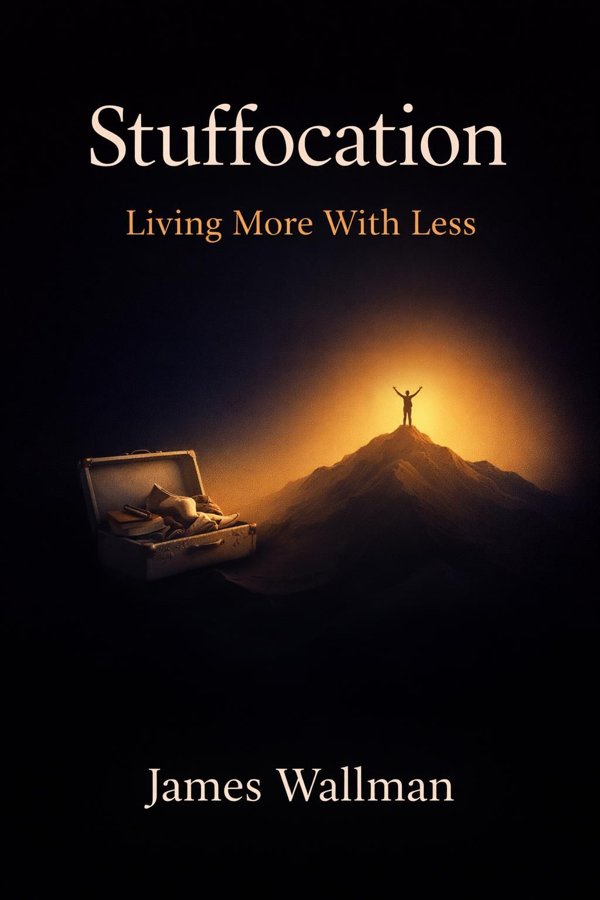
Stuffocation: Living More With Less: Summary & Key Insights
 10 min9 chaptersAudio available
Key Takeaways from Stuffocation: Living More With Less
What if our attachment to possessions is not natural at all, but a historical habit shaped by a specific moment in time?
More choice is supposed to mean more freedom, yet too much often feels like a trap.
If material success worked the way advertising promises, wealthy societies would be overflowing with contentment.
A cultural revolution often begins quietly, and Wallman argues that one is already underway.
The most valuable things in life may not be things at all.
What Is Stuffocation: Living More With Less About?
Stuffocation: Living More With Less by James Wallman is a sociology book spanning 5 pages. Stuffocation: Living More With Less is James Wallman’s sharp, timely critique of consumer culture and its hidden emotional costs. At first glance, modern abundance looks like success: bigger homes, fuller wardrobes, endless upgrades, and constant access to new products. But Wallman argues that this flood of possessions has not made us happier. Instead, it has left many people anxious, indebted, distracted, and strangely unsatisfied. We are surrounded by things, yet starved for meaning. The book explores how postwar consumerism taught us to define ourselves through what we own, then shows why that model is now breaking down. Drawing from sociology, psychology, economics, design, and trend research, Wallman introduces an alternative he calls “experientialism”: a way of living that prioritizes memorable experiences, relationships, and personal growth over the endless accumulation of goods. As a journalist and futurist who has written for major international publications, Wallman brings both cultural analysis and practical insight. His book matters because it does more than criticize materialism—it offers a realistic, hopeful vision for living more freely, lightly, and intentionally in an age of excess.
This FizzRead summary covers all 9 key chapters of Stuffocation: Living More With Less in approximately 10 minutes, distilling the most important ideas, arguments, and takeaways from James Wallman's work. Also available as an audio summary and Key Quotes Podcast.
Stuffocation: Living More With Less
Stuffocation: Living More With Less is James Wallman’s sharp, timely critique of consumer culture and its hidden emotional costs. At first glance, modern abundance looks like success: bigger homes, fuller wardrobes, endless upgrades, and constant access to new products. But Wallman argues that this flood of possessions has not made us happier. Instead, it has left many people anxious, indebted, distracted, and strangely unsatisfied. We are surrounded by things, yet starved for meaning. The book explores how postwar consumerism taught us to define ourselves through what we own, then shows why that model is now breaking down. Drawing from sociology, psychology, economics, design, and trend research, Wallman introduces an alternative he calls “experientialism”: a way of living that prioritizes memorable experiences, relationships, and personal growth over the endless accumulation of goods. As a journalist and futurist who has written for major international publications, Wallman brings both cultural analysis and practical insight. His book matters because it does more than criticize materialism—it offers a realistic, hopeful vision for living more freely, lightly, and intentionally in an age of excess.
Who Should Read Stuffocation: Living More With Less?
This book is perfect for anyone interested in sociology and looking to gain actionable insights in a short read. Whether you're a student, professional, or lifelong learner, the key ideas from Stuffocation: Living More With Less by James Wallman will help you think differently.
- ✓Readers who enjoy sociology and want practical takeaways
- ✓Professionals looking to apply new ideas to their work and life
- ✓Anyone who wants the core insights of Stuffocation: Living More With Less in just 10 minutes
Want the full summary?
Get instant access to this book summary and 100K+ more with Fizz Moment.
Get Free SummaryAvailable on App Store • Free to download
Key Chapters
What if our attachment to possessions is not natural at all, but a historical habit shaped by a specific moment in time? Wallman argues that the culture of accumulation took off after World War II, when industrial economies needed consumers to keep factories busy and growth strong. Advertising, retail expansion, and suburban lifestyles all encouraged people to buy not only what they needed, but what symbolized success, security, and belonging. Over time, possessions became more than useful objects. They became social signals. A car meant freedom or status. A house full of furniture meant respectability. Fashion expressed aspiration. Shopping evolved into a way of building identity.
This shift matters because it explains why buying can feel emotional rather than rational. People do not merely purchase a sofa; they buy a version of themselves. They do not just collect gadgets; they collect proof that they are modern, competent, and successful. Yet the system has a built-in flaw: identity based on possessions is unstable. Trends change, products age, and comparison never ends. The result is a cycle of desire that never fully satisfies.
You can see this in everyday life. Someone upgrades a phone that still works because the old one now feels socially outdated. A family fills a larger house, only to need more storage. A professional buys luxury items to project achievement, then feels pressure to maintain that image. In each case, things are doing symbolic labor.
Wallman’s insight is not that stuff is evil, but that we have been taught to lean on it too heavily. The actionable takeaway is to ask one question before any meaningful purchase: am I buying utility, or am I buying identity? That single distinction can change how you consume.
More choice is supposed to mean more freedom, yet too much often feels like a trap. Wallman describes stuffocation as a form of invisible suffocation created by abundance. The problem is not only clutter in a physical sense, but also the mental load that comes with owning too much. Every possession requires some level of attention: choosing it, paying for it, storing it, cleaning it, repairing it, organizing it, and deciding whether to keep it. What appears to be convenience can become background stress.
Psychology helps explain this. The paradox of choice shows that when options multiply, decision-making becomes harder and satisfaction often decreases. Instead of enjoying what we have, we second-guess whether we made the best choice. Social comparison deepens the problem. In consumer culture, possessions become a scoreboard. Someone else always has a newer kitchen, a better vacation setup, or a more stylish home. As a result, abundance produces anxiety rather than peace.
Wallman’s argument resonates in ordinary settings. Open a wardrobe full of clothes and still feel you have nothing to wear. Spend weekends tidying a garage packed with rarely used equipment. Pay off purchases for months after the excitement has faded. Even digital stuff contributes: overflowing photo libraries, endless shopping tabs, and constant product recommendations create their own kind of clutter.
The larger point is that possessions do not merely occupy space; they consume energy. A simpler environment often creates a calmer mind, better attention, and more room for relationships and creativity. Wallman invites readers to see decluttering not as an aesthetic trend but as psychological self-defense.
A practical takeaway is to conduct a stress audit of your belongings. Identify three categories of items that create more maintenance, guilt, or indecision than joy, and begin reducing them. The goal is not less for its own sake, but less friction in everyday life.
If material success worked the way advertising promises, wealthy societies would be overflowing with contentment. Wallman points out that they are not. Despite rising consumption, many people report persistent dissatisfaction, stress, and restlessness. This is because material acquisition is subject to hedonic adaptation: we quickly get used to new possessions, and what once excited us soon becomes normal. The thrill of buying fades, but the habit of wanting remains.
This dynamic is central to the logic of consumer capitalism. Products are designed, marketed, and updated to keep desire in motion. Satisfaction is always temporary because the system depends on renewal. Once a purchase becomes ordinary, the market offers another upgrade, another variation, another promise of transformation. The buyer mistakes stimulation for fulfillment.
In practice, this can look like a person chasing lifestyle upgrades in search of a stable emotional payoff. A bigger television entertains for a week, then blends into the room. Designer shoes feel special until they become familiar. Home renovations delight at first, then become part of the visual background. None of this means objects are useless. It means they are poor long-term containers for happiness.
Wallman contrasts fleeting purchase highs with deeper forms of satisfaction that come from connection, challenge, novelty, and meaning. That is why the emotional return from learning a skill, taking a trip, hosting friends, or volunteering often lasts longer than the return from buying another item.
The takeaway is to test purchases against a simple time horizon. Ask: will this improve my life for a week, or will it enrich my life for years? If the answer points to only short-lived excitement, redirect at least part of that spending toward an experience that creates memories, relationships, or growth.
A cultural revolution often begins quietly, and Wallman argues that one is already underway. As material abundance loses its power to impress or satisfy, many people are shifting from materialism to what he calls experientialism. This is not anti-consumption in the strict sense. It is a different pattern of consumption, one that values doing over owning, memories over merchandise, and identity expressed through life lived rather than goods displayed.
Experientialism appeals because experiences meet human needs that possessions often miss. They create stories, deepen relationships, interrupt routine, and can become part of who we are. A cooking class, a backpacking trip, a concert with friends, a language course, or a weekend spent exploring a nearby city can all produce lasting emotional value. Experiences are also less vulnerable to direct comparison. While objects invite side-by-side judgment, experiences tend to feel more personal.
Wallman also notes that status has not disappeared; it has changed form. Increasingly, cultural prestige comes from taste, creativity, wellness, travel, meaningful work, and unique experiences. In that sense, experientialism is both a response to material saturation and a new social language. People still want identity and distinction, but many seek them through curation of life rather than accumulation of stuff.
This shift can be seen in spending patterns and lifestyle trends: smaller homes, minimalist design, travel over luxury goods, interest in festivals, co-working, fitness communities, and shared spaces. Even gifts are changing, with people preferring event tickets or time together over more physical items.
The actionable takeaway is to build an experience budget. Set aside a defined amount each month for activities that create memory, connection, or growth. Treat those experiences not as indulgences after all obligations are met, but as central investments in a richer life.
The most valuable things in life may not be things at all. Wallman emphasizes that experiences often deliver greater and more durable well-being than possessions because they shape identity from the inside out. We remember what we did, who we were with, what we learned, and how we changed. Experiences become part of our personal narrative. A possession may decorate life, but an experience often transforms it.
There is also a relational advantage. Experiences are frequently shared, and shared events strengthen bonds. Friends may forget which restaurant chair they sat on, but they remember the laughter from the meal. Families may not treasure every toy, but they remember the road trip, the camping disaster, or the holiday tradition. Because experiences generate conversation and retelling, they continue to produce value long after the event ends.
Even difficult experiences can be meaningful. A physically demanding hike, a challenging project, or a period of travel mishaps may become a source of pride and growth. Possessions rarely improve in memory, but experiences often do. We reinterpret them, revisit them in stories, and integrate them into our sense of self.
This does not mean every experience must be expensive or dramatic. Walking with a friend, taking a dance lesson, visiting a museum, volunteering, or trying a new hobby can all matter. The point is intentionality. When people choose experiences that align with their values, they gain more than entertainment; they build identity, confidence, and belonging.
The practical takeaway is to replace at least one routine purchase each month with a shared experience. Instead of another household item, book a class, plan a day trip, or host a meal. Ask not, “What do I want to own next?” but, “What do I want to remember next?”
Technology has made it possible to access more while owning less, and Wallman sees this as an important ally of experiential living. In the past, status and convenience often depended on private ownership. Today, digital platforms allow people to stream music instead of storing shelves of CDs, summon transportation instead of buying a second car, rent accommodation instead of maintaining vacation property, and access tools, offices, and services on demand. Connectivity changes the economics of possession.
This matters because many items are used only occasionally. Ownership made sense when access was hard, but in a networked world, access can often replace storage. The shift from owning to using reduces clutter, lowers costs, and increases flexibility. It also changes design and business models. Subscription services, sharing platforms, and rental marketplaces create lifestyles based more on circulation than accumulation.
Yet Wallman is not naively techno-optimistic. Digital life can create new kinds of overload: endless recommendations, online shopping temptations, subscription creep, and performative social media consumption. The connected age can free us from stuff while simultaneously pushing new desires into our pockets every hour. The challenge is to use technology as a tool for lightness rather than as a delivery system for distraction and comparison.
Applied well, this means embracing access where ownership adds little value. Borrow specialized equipment. Use libraries. Rent formalwear. Share office or studio space. Stream rather than stockpile. The aim is not deprivation but agility.
The actionable takeaway is to review your possessions and identify five things you could reliably access without owning. Replacing ownership with access in even a few categories can save money, reduce maintenance, and support a more experiential way of living.
People do not stop caring what others think just because they reject materialism. Wallman makes an important sociological point: status is a constant of human life, but the markers of status change. In a world where many consumer goods are widely available, owning more no longer guarantees distinction. When nearly everyone can buy similar furniture, phones, or clothes, possessions lose some of their signaling power. New forms of status emerge.
Experientialism becomes attractive partly because it offers a new way to communicate taste, education, values, and identity. Cultural capital increasingly comes from how one lives: where one travels, what one learns, what one creates, which communities one joins, and how intentionally one spends time. A person may signal sophistication through a well-curated life rather than a heavily furnished one.
This insight helps explain why some trends spread quickly among urban professionals and younger generations. Wellness retreats, food culture, creative side projects, eco-conscious living, and artisanal experiences all carry symbolic meaning. They say something about discernment and values. Wallman’s point is not cynical, but realistic. Even noble shifts are socially embedded. People may move toward experiences partly because they genuinely enrich life and partly because they fit new aspirations.
Recognizing this can keep experientialism honest. It should not become another competitive performance where people collect adventures like luxury items. The purpose is not to replace one form of status anxiety with another, but to choose social signals that are at least more humanizing than endless accumulation.
The takeaway is to examine your own status habits. Notice where you may be buying, posting, or planning for impression rather than meaning. Then choose one upcoming purchase or activity based on genuine interest instead of external validation. That is where experientialism becomes liberating rather than fashionable.
A home should support living, yet many homes function increasingly as warehouses for underused possessions. Wallman encourages readers to rethink domestic space not as a container for stuff, but as a stage for experience. This is a subtle but powerful shift. When homes are organized around display, storage, and accumulation, they often demand constant maintenance. When they are organized around comfort, gathering, creativity, and rest, they become more humane.
This idea has practical architectural and behavioral implications. A smaller, well-used space may support a better life than a larger home full of neglected rooms and overflowing closets. Furniture can be chosen for use rather than image. Rooms can be arranged to encourage conversation, hobbies, reading, music, shared meals, and calm. Even decluttering becomes easier when the question is not “Can I fit this somewhere?” but “Does this help this home do what I want life here to be?”
For example, a dining table used regularly with friends may be more valuable than decorative storage full of rarely touched items. Open floor space for children to play, exercise, or create can produce more happiness than another cabinet of forgotten belongings. A guest room that doubles as a studio may contribute more than a room preserved for appearances.
Wallman’s larger argument is that spatial freedom supports emotional freedom. Less crowded environments often invite spontaneity, hospitality, and attention. We do not merely store things in homes; we shape our habits around them.
The actionable takeaway is to choose one room and redesign it around a desired experience. Ask whether you want that space to support rest, creativity, socializing, or focus, then remove and rearrange accordingly. The best homes are not the fullest ones, but the ones that help us live well.
Individual decluttering helps, but Wallman insists that stuffocation is also a cultural problem. Consumerism is sustained not only by personal weakness, but by economic systems, advertising, urban design, workplace pressure, and social norms that continually push acquisition. If society equates progress with more production and more consumption, people will struggle to define success in any other way. That is why the book ends by widening the lens.
A healthier culture would reward quality of life, not just quantity of goods. Education could teach media literacy and the psychology of consumption. Cities could invest in parks, public events, libraries, and shared spaces that make meaningful experiences accessible. Employers could value time, flexibility, and well-being rather than feeding work-and-spend cycles. Businesses could design for durability, repair, rental, and circular use instead of planned obsolescence.
This broader view also makes the message more inclusive. Experientialism should not be confused with expensive travel or elite lifestyle branding. Many of the richest experiences are low-cost or communal: conversation, nature, local culture, learning, volunteering, art, celebration, and civic participation. A society organized for experience would make these easier, safer, and more available to more people.
Wallman ultimately offers a new idea of prosperity. Real wealth is not endless ownership, but a life with enough space, enough time, enough connection, and enough meaning. In that sense, living with less is not a sacrifice. It is a strategic refusal of an outdated model of happiness.
The practical takeaway is to support one institution or habit that expands shared experience over private accumulation. Join your library, attend a local event, repair instead of replace, or back businesses that prioritize durability and access. Cultural change begins with repeated personal choices.
All Chapters in Stuffocation: Living More With Less
About the Author
James Wallman is a British author, journalist, speaker, and futurist whose work focuses on consumer culture, social change, and the future of how people live. He has written for leading publications including The New York Times, The Economist, and GQ, building a reputation for translating cultural trends into clear, engaging analysis. Wallman is especially known for examining the relationship between modern lifestyles, status, and well-being. In addition to his writing, he has worked in trend forecasting and innovation, helping businesses and organizations understand emerging shifts in behavior and values. His book Stuffocation brought wider attention to the idea that material abundance can undermine happiness and that a more experience-focused life may offer a better model of prosperity. His work sits at the intersection of sociology, psychology, design, and future thinking.
Get This Summary in Your Preferred Format
Read or listen to the Stuffocation: Living More With Less summary by James Wallman anytime, anywhere. FizzRead offers multiple formats so you can learn on your terms — all free.
Available formats: App · Audio · PDF · EPUB — All included free with FizzRead
Download Stuffocation: Living More With Less PDF and EPUB Summary
Key Quotes from Stuffocation: Living More With Less
“What if our attachment to possessions is not natural at all, but a historical habit shaped by a specific moment in time?”
“More choice is supposed to mean more freedom, yet too much often feels like a trap.”
“If material success worked the way advertising promises, wealthy societies would be overflowing with contentment.”
“A cultural revolution often begins quietly, and Wallman argues that one is already underway.”
“The most valuable things in life may not be things at all.”
Frequently Asked Questions about Stuffocation: Living More With Less
Stuffocation: Living More With Less by James Wallman is a sociology book that explores key ideas across 9 chapters. Stuffocation: Living More With Less is James Wallman’s sharp, timely critique of consumer culture and its hidden emotional costs. At first glance, modern abundance looks like success: bigger homes, fuller wardrobes, endless upgrades, and constant access to new products. But Wallman argues that this flood of possessions has not made us happier. Instead, it has left many people anxious, indebted, distracted, and strangely unsatisfied. We are surrounded by things, yet starved for meaning. The book explores how postwar consumerism taught us to define ourselves through what we own, then shows why that model is now breaking down. Drawing from sociology, psychology, economics, design, and trend research, Wallman introduces an alternative he calls “experientialism”: a way of living that prioritizes memorable experiences, relationships, and personal growth over the endless accumulation of goods. As a journalist and futurist who has written for major international publications, Wallman brings both cultural analysis and practical insight. His book matters because it does more than criticize materialism—it offers a realistic, hopeful vision for living more freely, lightly, and intentionally in an age of excess.
More by James Wallman
You Might Also Like

Between the World and Me
Ta-Nehisi Coates
10 min
Half the Sky
Nicholas D. Kristof, Sheryl WuDunn
10 min
Men Explain Things To Me
Rebecca Solnit
10 min
Rational Ritual
Michael Suk-Young Chwe
10 min
The New Jim Crow
Michelle Alexander
10 min
Beyond Culture
Edward T. Hall
10 minBrowse by Category
Ready to read Stuffocation: Living More With Less?
Get the full summary and 100K+ more books with Fizz Moment.