
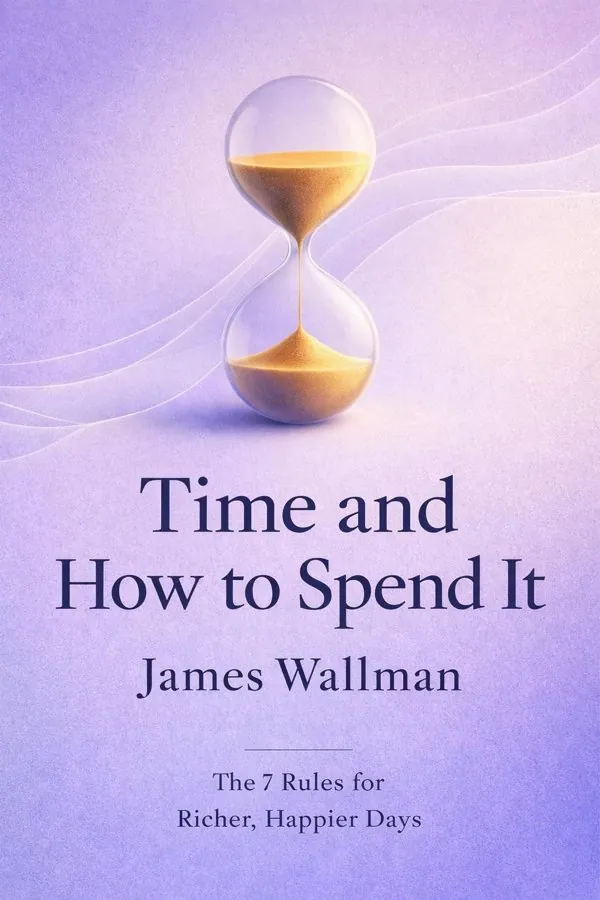
Time and How to Spend It: The 7 Rules for Richer, Happier Days: Summary & Key Insights
 10 min10 chaptersAudio available
What Is Time and How to Spend It: The 7 Rules for Richer, Happier Days About?
Time and How to Spend It: The 7 Rules for Richer, Happier Days by James Wallman is a mindset book spanning 10 pages. In this book, James Wallman explores how people can make the most of their time by applying insights from psychology, economics, and philosophy. He introduces seven rules that help readers choose experiences that lead to greater happiness and fulfillment, rather than simply filling time with busyness or consumption. The book blends research with practical advice to guide readers toward more meaningful living.
This FizzRead summary covers all 10 key chapters of Time and How to Spend It: The 7 Rules for Richer, Happier Days in approximately 10 minutes, distilling the most important ideas, arguments, and takeaways from James Wallman's work. Also available as an audio summary and Key Quotes Podcast.
Time and How to Spend It: The 7 Rules for Richer, Happier Days
In this book, James Wallman explores how people can make the most of their time by applying insights from psychology, economics, and philosophy. He introduces seven rules that help readers choose experiences that lead to greater happiness and fulfillment, rather than simply filling time with busyness or consumption. The book blends research with practical advice to guide readers toward more meaningful living.
Who Should Read Time and How to Spend It: The 7 Rules for Richer, Happier Days?
This book is perfect for anyone interested in mindset and looking to gain actionable insights in a short read. Whether you're a student, professional, or lifelong learner, the key ideas from Time and How to Spend It: The 7 Rules for Richer, Happier Days by James Wallman will help you think differently.
- ✓Readers who enjoy mindset and want practical takeaways
- ✓Professionals looking to apply new ideas to their work and life
- ✓Anyone who wants the core insights of Time and How to Spend It: The 7 Rules for Richer, Happier Days in just 10 minutes
Want the full summary?
Get instant access to this book summary and 100K+ more with Fizz Moment.
Get Free SummaryAvailable on App Store • Free to download
Key Chapters
The story of experientialism began with a simple observation: material wealth was supposed to make us happy, but it hasn’t. Since the mid-twentieth century, the promise of consumer culture has been that if we buy enough—cars, clothes, gadgets—we will be fulfilled. Yet data consistently show that beyond a certain point, more money or more things do not correlate with more happiness. In fact, they often burden us. Our homes are cluttered; our minds even more so.
Experientialism is the philosophy that true happiness arises not from what we own but from what we live through. It’s about valuing moments over materials, pursuits over possessions. Experiences connect us to others, challenge us, make us feel alive. They become stories, and those stories build our sense of identity.
When we spend time on experiences rather than consumption, we gain three forms of wealth simultaneously: emotional, social, and existential. Emotionally, because the joy of anticipation and memory far outlasts that of a new object. Socially, because experiences tend to bring us together—whether it’s hiking with friends or sharing a meal. Existentially, because experiences often stretch us; they write chapters in our personal story.
Of course, not all experiences are equal. A binge-watching weekend can consume as much time as a mountain trek, but only one genuinely adds to our narrative of who we are. That is why intentionality matters so deeply. Experientialism challenges us not simply to do more but to choose better—to spend time in ways that feed growth, connection, and purpose.
I distilled years of research and reflection into a framework that could guide anyone toward richer, happier days. I called it STORIES—a mnemonic that captures the seven essential ingredients of meaningful experiences: Story, Transformation, Outside and Offline, Relationships, Intensity, Extraordinary, and Status and Significance.
Each rule is both intuitive and evidence-based. Together, they form a dynamic lens through which every time choice can be judged. Should I take this job? Go on that trip? Spend the weekend as planned or try something new? The STORIES framework helps you evaluate those options by asking whether they contribute to your life’s unfolding story in ways that enhance connection, depth, and meaning.
Unlike most productivity systems, which aim to help you do *more*, STORIES helps you do *better*. It’s not about managing your minutes but magnifying your moments. The framework is built from a fusion of psychology and practical philosophy. From studies on eudaimonia—Aristotle’s concept of human flourishing—to cutting-edge work on behavioral science, each rule provides a tested path toward time well spent. What follows are the seven rules in detail, not as commands, but as invitations to reshape how you live and what you value.
+ 8 more chapters — available in the FizzRead app
All Chapters in Time and How to Spend It: The 7 Rules for Richer, Happier Days
About the Author
James Wallman is a British author, futurist, and keynote speaker. He is known for his work on trends, experience design, and the future of living. His previous book, 'Stuffocation', examined the shift from materialism to experientialism. Wallman has advised major organizations and governments on cultural and consumer trends.
Get This Summary in Your Preferred Format
Read or listen to the Time and How to Spend It: The 7 Rules for Richer, Happier Days summary by James Wallman anytime, anywhere. FizzRead offers multiple formats so you can learn on your terms — all free.
Available formats: App · Audio · PDF · EPUB — All included free with FizzRead
Download Time and How to Spend It: The 7 Rules for Richer, Happier Days PDF and EPUB Summary
Key Quotes from Time and How to Spend It: The 7 Rules for Richer, Happier Days
“The story of experientialism began with a simple observation: material wealth was supposed to make us happy, but it hasn’t.”
“I distilled years of research and reflection into a framework that could guide anyone toward richer, happier days.”
Frequently Asked Questions about Time and How to Spend It: The 7 Rules for Richer, Happier Days
Time and How to Spend It: The 7 Rules for Richer, Happier Days by James Wallman is a mindset book that explores key ideas across 10 chapters. In this book, James Wallman explores how people can make the most of their time by applying insights from psychology, economics, and philosophy. He introduces seven rules that help readers choose experiences that lead to greater happiness and fulfillment, rather than simply filling time with busyness or consumption. The book blends research with practical advice to guide readers toward more meaningful living.
More by James Wallman
You Might Also Like

Browse by Category
Ready to read Time and How to Spend It: The 7 Rules for Richer, Happier Days?
Get the full summary and 100K+ more books with Fizz Moment.