
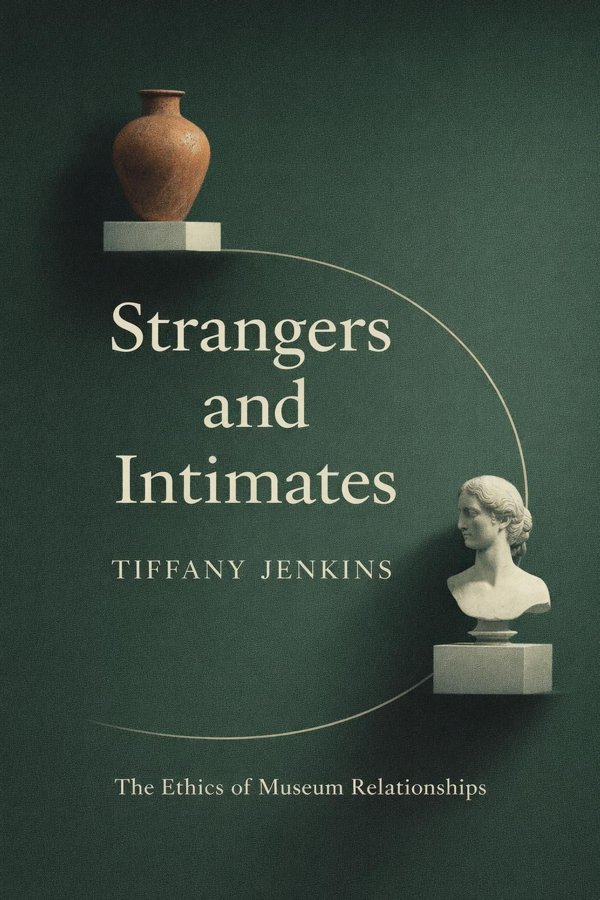
Strangers and Intimates: The Ethics of Museum Relationships: Summary & Key Insights
 10 min9 chaptersAudio available
What Is Strangers and Intimates: The Ethics of Museum Relationships About?
Strangers and Intimates: The Ethics of Museum Relationships by Tiffany Jenkins is a civilization book spanning 9 pages. This book explores the complex relationships between art, museums, and society, examining how intimacy and distance shape our understanding of cultural heritage. Jenkins investigates the ethical and emotional dimensions of collecting and displaying objects, offering a nuanced perspective on the role of museums in modern life.
This FizzRead summary covers all 9 key chapters of Strangers and Intimates: The Ethics of Museum Relationships in approximately 10 minutes, distilling the most important ideas, arguments, and takeaways from Tiffany Jenkins's work. Also available as an audio summary and Key Quotes Podcast.
Strangers and Intimates: The Ethics of Museum Relationships
This book explores the complex relationships between art, museums, and society, examining how intimacy and distance shape our understanding of cultural heritage. Jenkins investigates the ethical and emotional dimensions of collecting and displaying objects, offering a nuanced perspective on the role of museums in modern life.
Who Should Read Strangers and Intimates: The Ethics of Museum Relationships?
This book is perfect for anyone interested in civilization and looking to gain actionable insights in a short read. Whether you're a student, professional, or lifelong learner, the key ideas from Strangers and Intimates: The Ethics of Museum Relationships by Tiffany Jenkins will help you think differently.
- ✓Readers who enjoy civilization and want practical takeaways
- ✓Professionals looking to apply new ideas to their work and life
- ✓Anyone who wants the core insights of Strangers and Intimates: The Ethics of Museum Relationships in just 10 minutes
Want the full summary?
Get instant access to this book summary and 100K+ more with Fizz Moment.
Get Free SummaryAvailable on App Store • Free to download
Key Chapters
To understand the museum’s ethical complexity, we must begin with its history. Museums did not emerge fully formed as public institutions; they evolved from private collections assembled by individuals driven by curiosity, prestige, or personal devotion. In early modern Europe, collectors gathered natural curiosities and artistic wonders into cabinets of curiosities—objects of wonder that blurred the lines between science and spectacle.
These collections were profoundly intimate. They reflected the collector’s tastes, beliefs, and ambitions. Yet as such collections began to be shared or donated to public bodies, the objects were transformed. The act of opening private spaces to the public redefined ownership, access, and authority. Museums began to serve not only as sites of display but as moral institutions, places where societies could contemplate their own cultural inheritance.
The nineteenth century cemented this transformation. National museums arose alongside the formation of modern states, symbolizing public ownership of culture and identity. Yet within that shift lay new ethical tensions: who had the right to collect, to interpret, to preserve? Colonial expansion turned collecting into conquest, filling European museums with artifacts from other cultures, sometimes seized under unequal conditions. Thus the museum inherited both the glory and the guilt of empire.
In tracing this development, I show how museums became emblematic of civilization itself—a mirror of society’s moral values. But history also reminds us that these values were contested. Each era redefined the museum’s purpose: from aristocratic display to democratic education, from imperial authority to global dialogue. Understanding these transformations reminds us that museum ethics are not fixed; they are born of history, shaped by changing notions of intimacy, property, and the public good.
Collecting begins with desire—the yearning to possess something that speaks to one’s identity or dreams. For collectors, objects are not mere things; they are extensions of self. They embody moments of discovery, emotions of ownership, and a deeply personal relationship with material culture. Yet this intimacy carries moral consequences, for the desire to possess can easily become domination.
Historically, collectors cultivated their treasures with an almost romantic attachment. They touched, arranged, and contemplated their objects daily, weaving them into the fabric of private life. But when these collections enter museums, the emotional energy of possession is transformed. Objects become part of a collective domain, stripped of their domestic context and reframed within public narratives. This change raises a question that sits at the heart of museum ethics: can intimacy survive institutionalization?
I argue that museums must neither deny nor romanticize the collector’s intimacy. It is a vital source of empathy toward objects, yet it must be tempered by reflexivity and respect. When curators inherit collections, they also inherit the emotions and motivations that formed them. Understanding those origins helps prevent the ethical blindness that can occur when power masks personal desire.
Behind every acquisition lies a moral story—a negotiation between love and control. The act of collecting, whether private or institutional, embodies care and conquest in equal measure. My aim in this chapter is to expose that ambivalence, showing how collectors and museums can turn intimacy into ethical stewardship rather than possessive ownership.
+ 7 more chapters — available in the FizzRead app
All Chapters in Strangers and Intimates: The Ethics of Museum Relationships
About the Author
Tiffany Jenkins is a British sociologist, writer, and cultural commentator known for her work on museums, heritage, and the politics of culture. She has written widely on the intersection of art, ethics, and public policy, contributing to major publications and broadcasting on cultural issues.
Get This Summary in Your Preferred Format
Read or listen to the Strangers and Intimates: The Ethics of Museum Relationships summary by Tiffany Jenkins anytime, anywhere. FizzRead offers multiple formats so you can learn on your terms — all free.
Available formats: App · Audio · PDF · EPUB — All included free with FizzRead
Download Strangers and Intimates: The Ethics of Museum Relationships PDF and EPUB Summary
Key Quotes from Strangers and Intimates: The Ethics of Museum Relationships
“To understand the museum’s ethical complexity, we must begin with its history.”
“Collecting begins with desire—the yearning to possess something that speaks to one’s identity or dreams.”
Frequently Asked Questions about Strangers and Intimates: The Ethics of Museum Relationships
Strangers and Intimates: The Ethics of Museum Relationships by Tiffany Jenkins is a civilization book that explores key ideas across 9 chapters. This book explores the complex relationships between art, museums, and society, examining how intimacy and distance shape our understanding of cultural heritage. Jenkins investigates the ethical and emotional dimensions of collecting and displaying objects, offering a nuanced perspective on the role of museums in modern life.
You Might Also Like
The Structure of Scientific Revolutions
Thomas S. Kuhn
10 min
Genius
Harold Bloom
10 min
A Cultural History of the Medieval Age
Various Editors
10 min
A History of God: The 4,000-Year Quest of Judaism, Christianity and Islam
Karen Armstrong
10 min
A History of the World in 10½ Chapters
Julian Barnes
10 min
A Short History of Progress
Ronald Wright
10 minBrowse by Category
Ready to read Strangers and Intimates: The Ethics of Museum Relationships?
Get the full summary and 100K+ more books with Fizz Moment.