
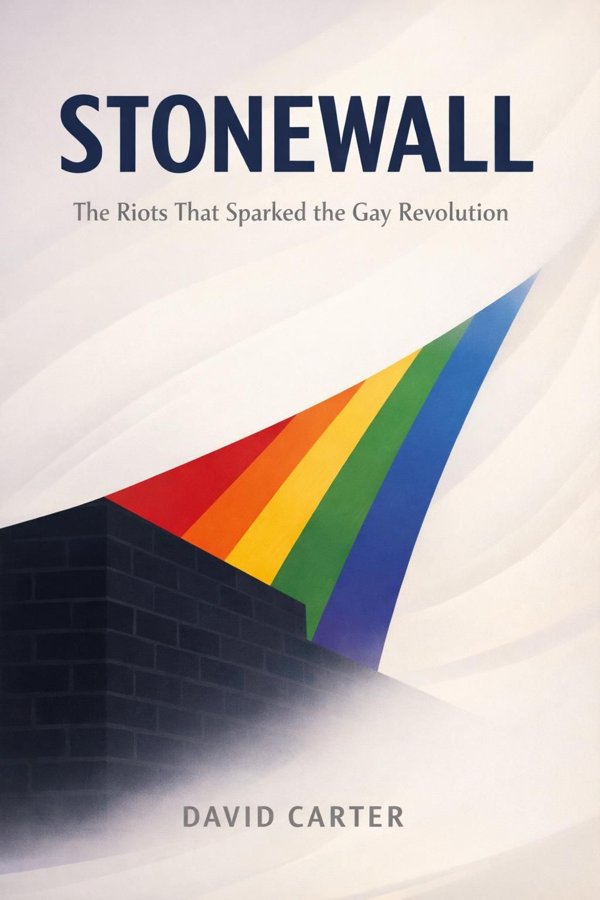
Stonewall: The Riots That Sparked the Gay Revolution: Summary & Key Insights
by David Carter
 10 min10 chaptersAudio available
What Is Stonewall: The Riots That Sparked the Gay Revolution About?
Stonewall: The Riots That Sparked the Gay Revolution by David Carter is a world_history book spanning 10 pages. Stonewall: The Riots That Sparked the Gay Revolution es una obra de no ficción que documenta los disturbios de Stonewall de 1969 en la ciudad de Nueva York, un evento crucial que marcó el inicio del movimiento moderno por los derechos LGBTQ+. David Carter ofrece una investigación exhaustiva basada en entrevistas, archivos y reportes contemporáneos, reconstruyendo los hechos y el contexto social que llevaron a la rebelión contra la represión policial en el bar Stonewall Inn.
This FizzRead summary covers all 10 key chapters of Stonewall: The Riots That Sparked the Gay Revolution in approximately 10 minutes, distilling the most important ideas, arguments, and takeaways from David Carter's work. Also available as an audio summary and Key Quotes Podcast.
Stonewall: The Riots That Sparked the Gay Revolution
Stonewall: The Riots That Sparked the Gay Revolution es una obra de no ficción que documenta los disturbios de Stonewall de 1969 en la ciudad de Nueva York, un evento crucial que marcó el inicio del movimiento moderno por los derechos LGBTQ+. David Carter ofrece una investigación exhaustiva basada en entrevistas, archivos y reportes contemporáneos, reconstruyendo los hechos y el contexto social que llevaron a la rebelión contra la represión policial en el bar Stonewall Inn.
Who Should Read Stonewall: The Riots That Sparked the Gay Revolution?
This book is perfect for anyone interested in world_history and looking to gain actionable insights in a short read. Whether you're a student, professional, or lifelong learner, the key ideas from Stonewall: The Riots That Sparked the Gay Revolution by David Carter will help you think differently.
- ✓Readers who enjoy world_history and want practical takeaways
- ✓Professionals looking to apply new ideas to their work and life
- ✓Anyone who wants the core insights of Stonewall: The Riots That Sparked the Gay Revolution in just 10 minutes
Want the full summary?
Get instant access to this book summary and 100K+ more with Fizz Moment.
Get Free SummaryAvailable on App Store • Free to download
Key Chapters
Before Stonewall, gay life in New York existed in fragments and shadows. The 1960s were a paradoxical time: while art, music, and cultural rebellion flourished, homosexuality remained criminalized and pathologized. Bars that catered to queer clientele were controlled largely by the Mafia, who exploited the community’s vulnerability—charging inflated prices for watered-down drinks, running operations under bribery, and using threats of exposure as leverage.
Police raids were common and cruelly ritualistic. Officers stormed bars, arrested patrons for dancing together, and hauled employees to jail for liquor violations manufactured as pretexts. The language of law was used to maintain moral order, treating gay existence as disorderly conduct. But within those hidden places—bars, house parties, and Village cafés—a fragile sense of community was forming. People began to recognize that their isolation wasn’t personal failure but systemic repression.
I wanted readers to grasp this atmosphere clearly: life before Stonewall was not completely hopeless, but joy was rationed, always conditional. You could celebrate, but you had to be ready to run. The book traces these underground networks—how the Mafia’s involvement paradoxically created spaces where the community could gather, even under exploitation; how fear of raids instilled habits of secrecy; how gay journalists, artists, and radicals began planting seeds of resistance. Stonewall did not occur in a vacuum; it was the product of years of simmering frustration and fragile solidarity.
That humid Friday night began like so many before it. The Stonewall Inn filled slowly—street kids who lived on Christopher Street, drag performers who found rare acceptance, couples seeking anonymity. Police were known to raid the bar periodically, and few expected this night would be different. Yet something about June 27 carried a tension—perhaps the accumulation of months of harassment, perhaps the changing mood of the times.
Shortly after midnight, plainclothes officers entered with a warrant. The routine began: lights on, patrons lined up for identification, arrests for those dressed in what the law defined as "gender inappropriate" clothing. Yet the humiliation, this time, met resistance. Word spread to the street that a raid was taking place, and outside, a crowd began to gather—some curious, some angry, all aware that another violation was unfolding.
In reconstructing that night, I listened to dozens of voices—some fearful, others exhilarated. There was a spark when one young man refused to go quietly, when others began to jeer at the police. As the wagons arrived to transport the arrested, the mood turned electric, the air heavy with defiance. It was the moment when repression collided with exhaustion, and something irreversible awakened.
+ 8 more chapters — available in the FizzRead app
All Chapters in Stonewall: The Riots That Sparked the Gay Revolution
About the Author
David Carter (1952–2020) fue un historiador y escritor estadounidense especializado en temas de derechos civiles y cultura LGBTQ+. Es reconocido por su trabajo meticuloso sobre los disturbios de Stonewall y por su contribución a la preservación de la historia queer en Estados Unidos.
Get This Summary in Your Preferred Format
Read or listen to the Stonewall: The Riots That Sparked the Gay Revolution summary by David Carter anytime, anywhere. FizzRead offers multiple formats so you can learn on your terms — all free.
Available formats: App · Audio · PDF · EPUB — All included free with FizzRead
Download Stonewall: The Riots That Sparked the Gay Revolution PDF and EPUB Summary
Key Quotes from Stonewall: The Riots That Sparked the Gay Revolution
“Before Stonewall, gay life in New York existed in fragments and shadows.”
“That humid Friday night began like so many before it.”
Frequently Asked Questions about Stonewall: The Riots That Sparked the Gay Revolution
Stonewall: The Riots That Sparked the Gay Revolution by David Carter is a world_history book that explores key ideas across 10 chapters. Stonewall: The Riots That Sparked the Gay Revolution es una obra de no ficción que documenta los disturbios de Stonewall de 1969 en la ciudad de Nueva York, un evento crucial que marcó el inicio del movimiento moderno por los derechos LGBTQ+. David Carter ofrece una investigación exhaustiva basada en entrevistas, archivos y reportes contemporáneos, reconstruyendo los hechos y el contexto social que llevaron a la rebelión contra la represión policial en el bar Stonewall Inn.
You Might Also Like
The Age of Capital
Eric Hobsbawm
10 min
The Gulag Archipelago
Aleksandr Solzhenitsyn
10 min
Jerusalem: The Biography
Simon Sebag Montefiore
10 min
The Anglo-Saxons
James Campbell
10 min
The Boer War
Thomas Pakenham
10 min
The Industrial Revolutionaries: The Making of the Modern World 1776–1914
Gavin Weightman
10 minBrowse by Category
Ready to read Stonewall: The Riots That Sparked the Gay Revolution?
Get the full summary and 100K+ more books with Fizz Moment.