
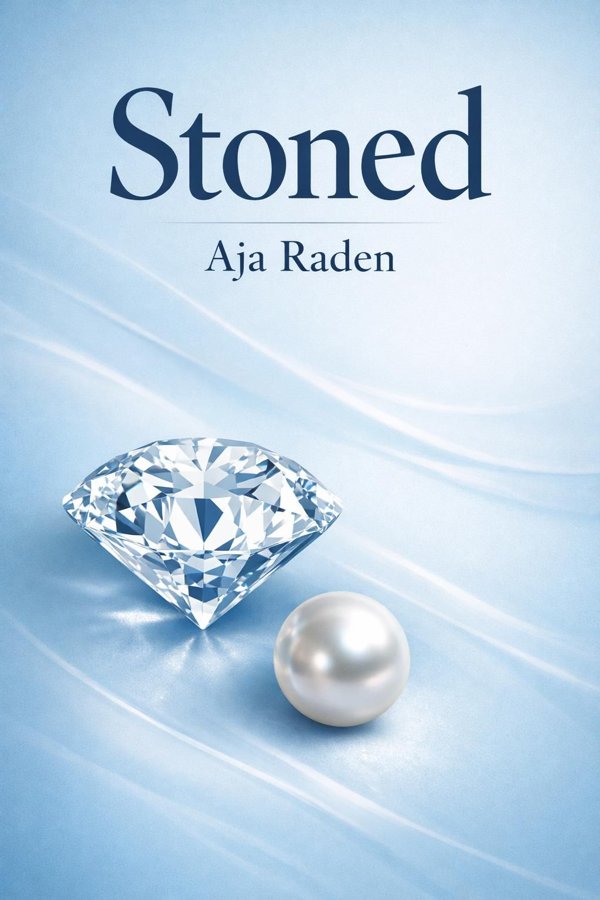
Stoned: Jewelry, Obsession, and How Desire Shapes the World: Summary & Key Insights
by Aja Raden
 10 min8 chaptersAudio available
What Is Stoned: Jewelry, Obsession, and How Desire Shapes the World About?
Stoned: Jewelry, Obsession, and How Desire Shapes the World by Aja Raden is a civilization book spanning 8 pages. Stoned explora la historia fascinante de ocho joyas icónicas y cómo han influido en el deseo humano, la riqueza, el poder y la cultura. Aja Raden combina historia, ciencia y psicología para mostrar cómo la percepción del valor y la obsesión por lo raro han moldeado el mundo.
This FizzRead summary covers all 8 key chapters of Stoned: Jewelry, Obsession, and How Desire Shapes the World in approximately 10 minutes, distilling the most important ideas, arguments, and takeaways from Aja Raden's work. Also available as an audio summary and Key Quotes Podcast.
Stoned: Jewelry, Obsession, and How Desire Shapes the World
Stoned explora la historia fascinante de ocho joyas icónicas y cómo han influido en el deseo humano, la riqueza, el poder y la cultura. Aja Raden combina historia, ciencia y psicología para mostrar cómo la percepción del valor y la obsesión por lo raro han moldeado el mundo.
Who Should Read Stoned: Jewelry, Obsession, and How Desire Shapes the World?
This book is perfect for anyone interested in civilization and looking to gain actionable insights in a short read. Whether you're a student, professional, or lifelong learner, the key ideas from Stoned: Jewelry, Obsession, and How Desire Shapes the World by Aja Raden will help you think differently.
- ✓Readers who enjoy civilization and want practical takeaways
- ✓Professionals looking to apply new ideas to their work and life
- ✓Anyone who wants the core insights of Stoned: Jewelry, Obsession, and How Desire Shapes the World in just 10 minutes
Want the full summary?
Get instant access to this book summary and 100K+ more with Fizz Moment.
Get Free SummaryAvailable on App Store • Free to download
Key Chapters
If there was ever a gem that embodied the dual nature of human fascination—our love of beauty and our fear of its consequences—it’s the Hope Diamond. We look at this magnificent blue stone and see allure, fortune, and danger entwined together. Its storied path through royal courts, thieves’ hands, and museum vaults is less the tale of a cursed jewel than the chronicle of our obsession with what we cannot truly own.
The Hope Diamond’s legend began long before it was cut or named. The deep blue hue of this diamond—caused by trace boron within the crystal lattice—was once thought to be divinely touched. When it was brought from India to France in the seventeenth century, it became a symbol of status beyond rational measure. Louis XIV possessed it as an emblem of his own worldly and divine power; yet every owner who followed seemed to pay a price not in money, but in misfortune. Tales of suicides, executions, and downfall clung to the gem like an invisible aura. The ‘curse’ was merely our own projection—a story born of envy and awe, a myth that simplified what luxury always does: tempt fate.
What fascinates me is not whether the diamond was cursed, but how the myth persisted. We crave narratives that justify inequality. When we see unimaginable wealth condensed into a single stone, we need to believe it carries danger. It’s easier than admitting that we ourselves would trade almost anything for the same power. The Hope Diamond didn’t create chaos; it revealed our limits—how far we’ll go to touch something rare, and how quickly we assign morality to material things. That is the power of jewelry: it doesn’t just adorn us, it exposes us.
No piece of jewelry has ever done more political damage than the ill-fated necklace that France never quite forgot. The Affair of the Diamond Necklace wasn’t simply a scandal of greed or deceit; it was a symptom of a world ready to burn. In the late eighteenth century, the court was still locked in an ancient dance of excess while the people starved outside Versailles. When a fraudulent scheme involving an enormous pearl-and-diamond necklace was pinned on Queen Marie Antoinette, it didn’t matter that she was innocent. In the public imagination, she became everything they already hated.
To understand the power of that necklace, we have to understand pearls themselves. Pearls are organic, made from irritation and time. They symbolize purity and perfection, but they are also the product of suffering. Marie Antoinette adored them for their softness and light—yet in the gossip-soaked world of Paris, those same pearls came to represent empty privilege. A necklace valued at more than most citizens would earn in a lifetime became a stand-in for royal indifference. When pamphlets and caricatures depicted the Queen as lustful and wasteful, adorned in jewels while France collapsed, truth was irrelevant. The object had already become a weapon.
As a historian, I find this story endlessly revealing. Jewelry doesn’t only show who has power; it can dismantle power when symbols shift. The necklace that was supposed to glorify monarchy instead accelerated its destruction. The French Revolution wasn’t sparked by hunger alone—it was ignited by perception, by the belief that beauty and privilege were unjustly hoarded. In that moment, pearls ceased to be pretty; they became political. And with that shift, an entire world order began to dissolve.
+ 6 more chapters — available in the FizzRead app
All Chapters in Stoned: Jewelry, Obsession, and How Desire Shapes the World
About the Author
Get This Summary in Your Preferred Format
Read or listen to the Stoned: Jewelry, Obsession, and How Desire Shapes the World summary by Aja Raden anytime, anywhere. FizzRead offers multiple formats so you can learn on your terms — all free.
Available formats: App · Audio · PDF · EPUB — All included free with FizzRead
Download Stoned: Jewelry, Obsession, and How Desire Shapes the World PDF and EPUB Summary
Key Quotes from Stoned: Jewelry, Obsession, and How Desire Shapes the World
“If there was ever a gem that embodied the dual nature of human fascination—our love of beauty and our fear of its consequences—it’s the Hope Diamond.”
“No piece of jewelry has ever done more political damage than the ill-fated necklace that France never quite forgot.”
Frequently Asked Questions about Stoned: Jewelry, Obsession, and How Desire Shapes the World
Stoned: Jewelry, Obsession, and How Desire Shapes the World by Aja Raden is a civilization book that explores key ideas across 8 chapters. Stoned explora la historia fascinante de ocho joyas icónicas y cómo han influido en el deseo humano, la riqueza, el poder y la cultura. Aja Raden combina historia, ciencia y psicología para mostrar cómo la percepción del valor y la obsesión por lo raro han moldeado el mundo.
You Might Also Like
The Structure of Scientific Revolutions
Thomas S. Kuhn
10 min
Genius
Harold Bloom
10 min
A Cultural History of the Medieval Age
Various Editors
10 min
A History of God: The 4,000-Year Quest of Judaism, Christianity and Islam
Karen Armstrong
10 min
A History of the World in 10½ Chapters
Julian Barnes
10 min
A Short History of Progress
Ronald Wright
10 minBrowse by Category
Ready to read Stoned: Jewelry, Obsession, and How Desire Shapes the World?
Get the full summary and 100K+ more books with Fizz Moment.